Friday, August 28, 2026

These Handy Charts Will Help Stop a Migraine in Its Tracks

 A migraine can be quite unbearable. During a migraine, the blood vessels around your brain expand and begin to irritate the tissue and nerves around them causing the pain. So, if you, or someone you know, suffers from migraines and headaches, be sure to check out these warning signs, tips and remedies to help you avoid a migraine.

1. The Difference Between a Migraine and a Headache 

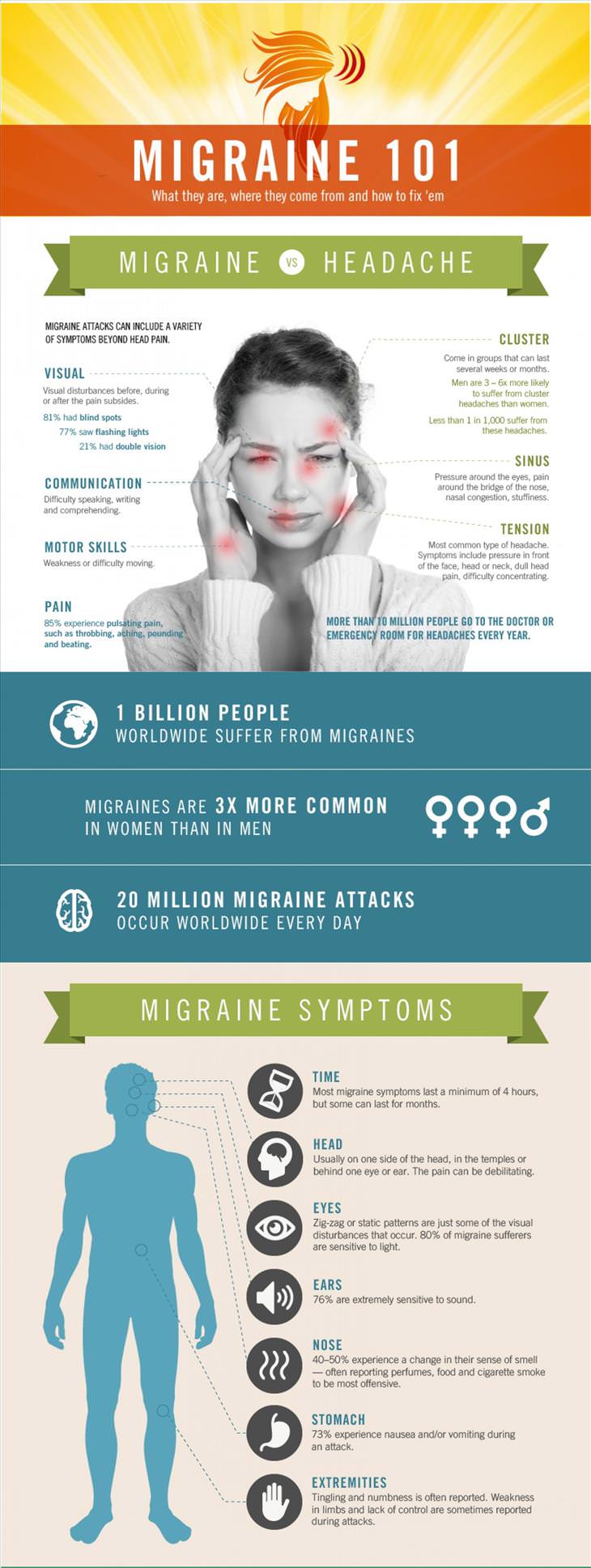
The exact cause of a migraine is unknown. Researchers believe that it's a neurological problem, however a number of factors can trigger pain, some of which include tension or stress, hormonal or environmental changes, long term exposure to the sun, a lack of sleep, the consumption of alcohol and certain foods as well as skipped meals and poor diet. The chart below gives a clear overview on migraines, as well as three common types of migraines and headaches (as indicated on the right side of the chart). The image below goes on to explain possible migraine symptoms too.
migraines

2. What Type of Headache Do You Have? 

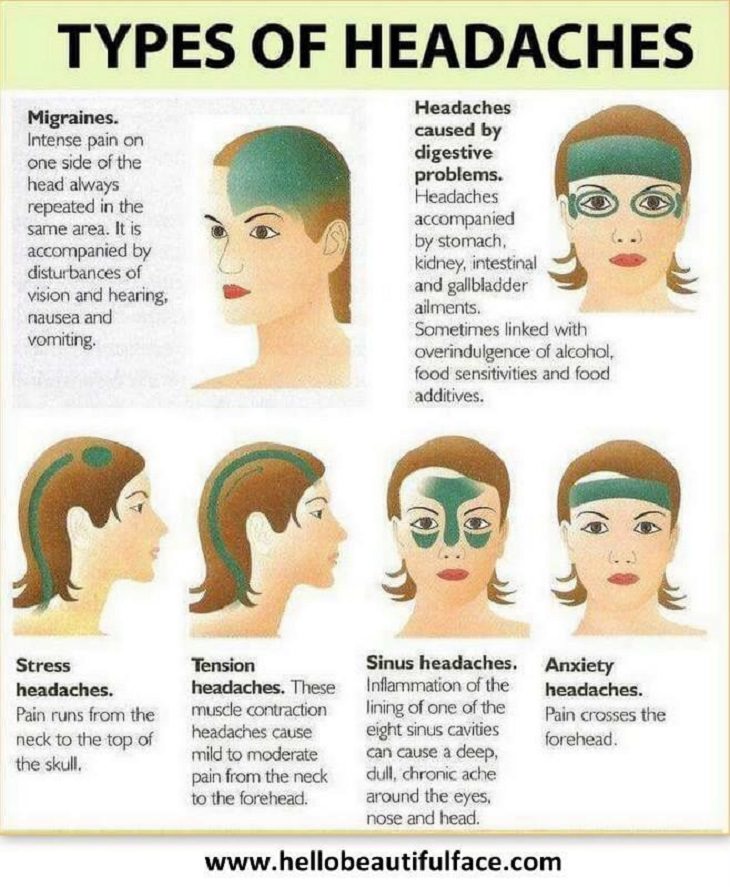
 The diagram below looks into the types of headaches sufferers may experience and what each one represents. A common headache trigger includes anxiety. In such a headache, the pain usually occurs across the forehead. While in stress headaches, pain runs from the top of the neck all the way up to the top of the skull. Which type of headache do you have? Refer to the chart below.
migraines3. What are the Triggers and the Causes of a Migraine? 

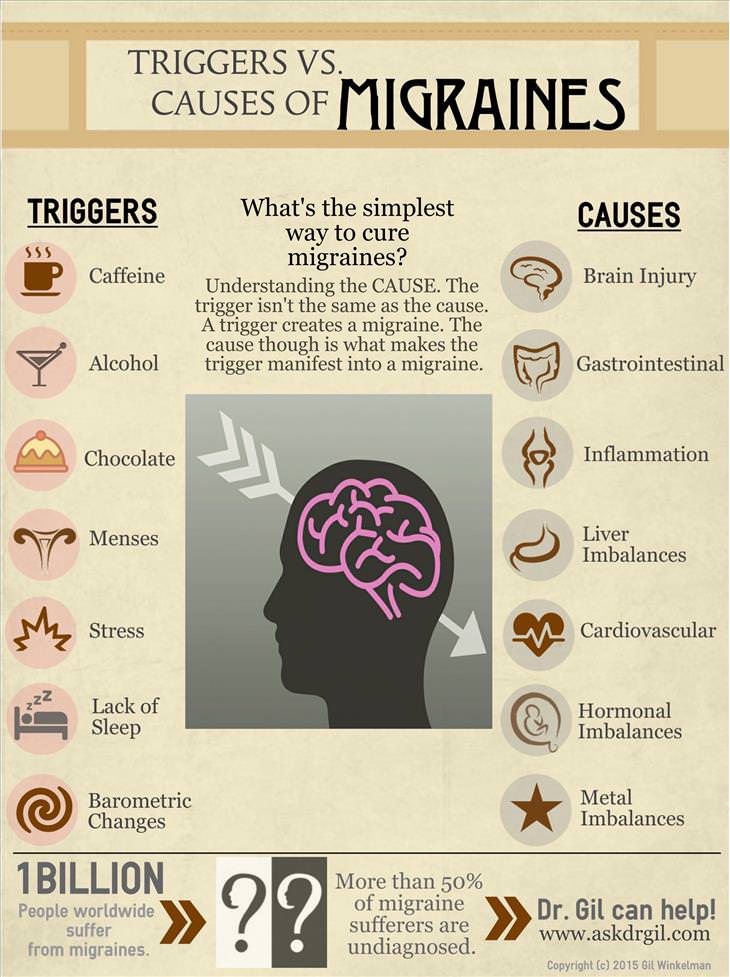
A number of factors may potentially trigger a migraine. These include factors like food, menstruation, alcohol, stress and lack of sleep. On the other hand, your migraines may be caused by an underlying issue. If you do suffer from migraines, consult with your doctor and determine whether it could be related to factors like a hormonal imbalance, cardiovascular problems, inflammation and more. Refer to the chart below for a better overview. 

migraines 

4. What are the Symptoms of a Migraine?  

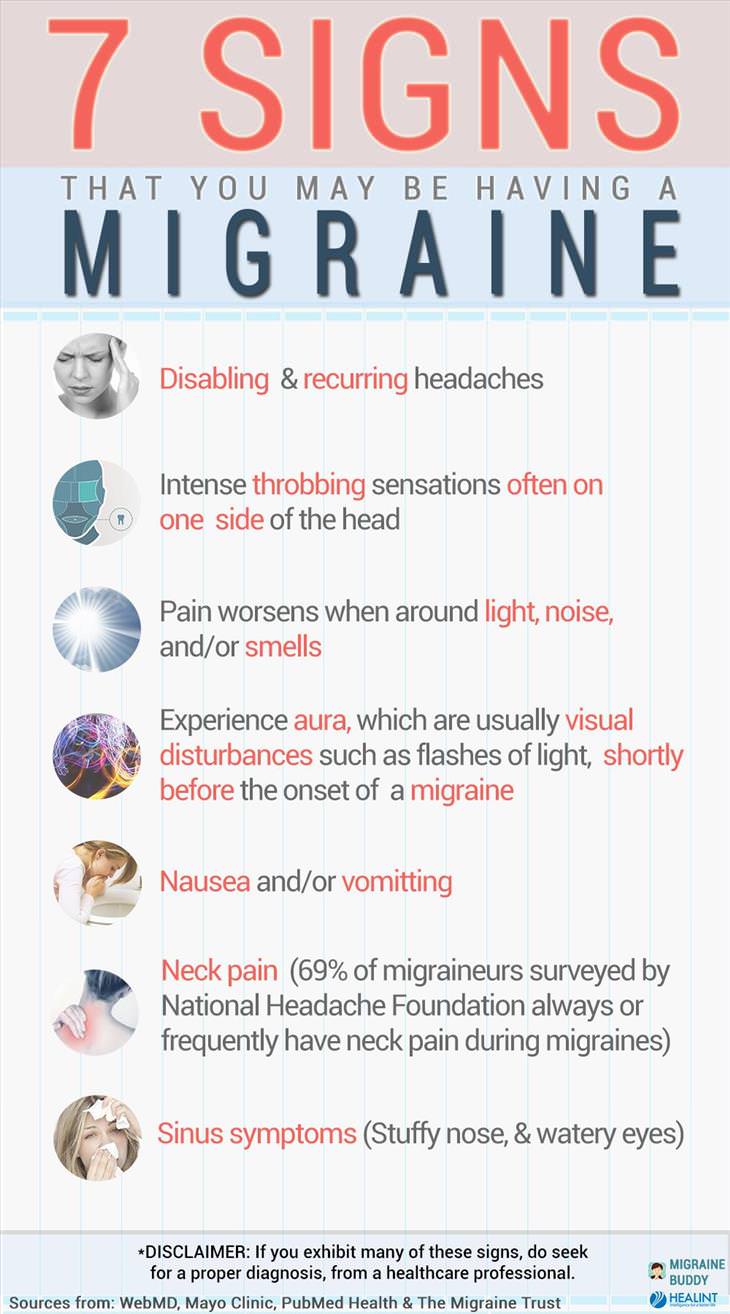
When you are about to experience a migraine, there are certain signs to be on the look out for. If you experience one of the following, take action immediately (read on to discover more), stopping your migraine in its tracks. On this note, if you exhibit many of these signs, it's important to seek a proper diagnosis from a healthcare professional.
migraines 

5. What Home Remedies May You Benefit From? 

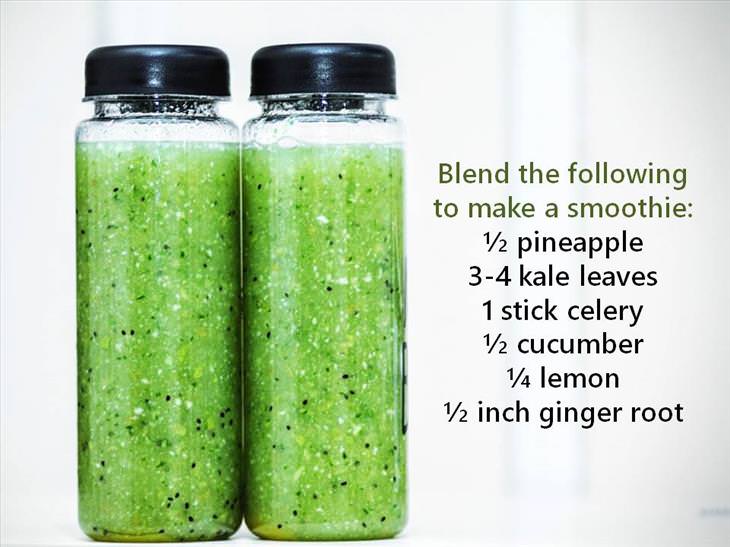
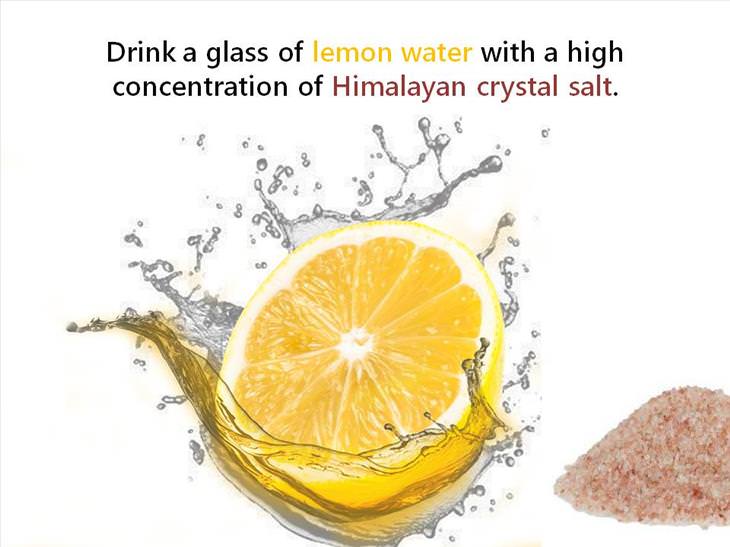
The two charts below look into two drinks that you can try to stop a migraine in its tracks. For a simple but effective remedy you could try a glass of lemon juice with Himalayan Salt. If this drink is not to your liking, try the green smoothie below, which has been hailed a "miracle migraine drink
migraines

migraines 6. What Food Should I Avoid? 

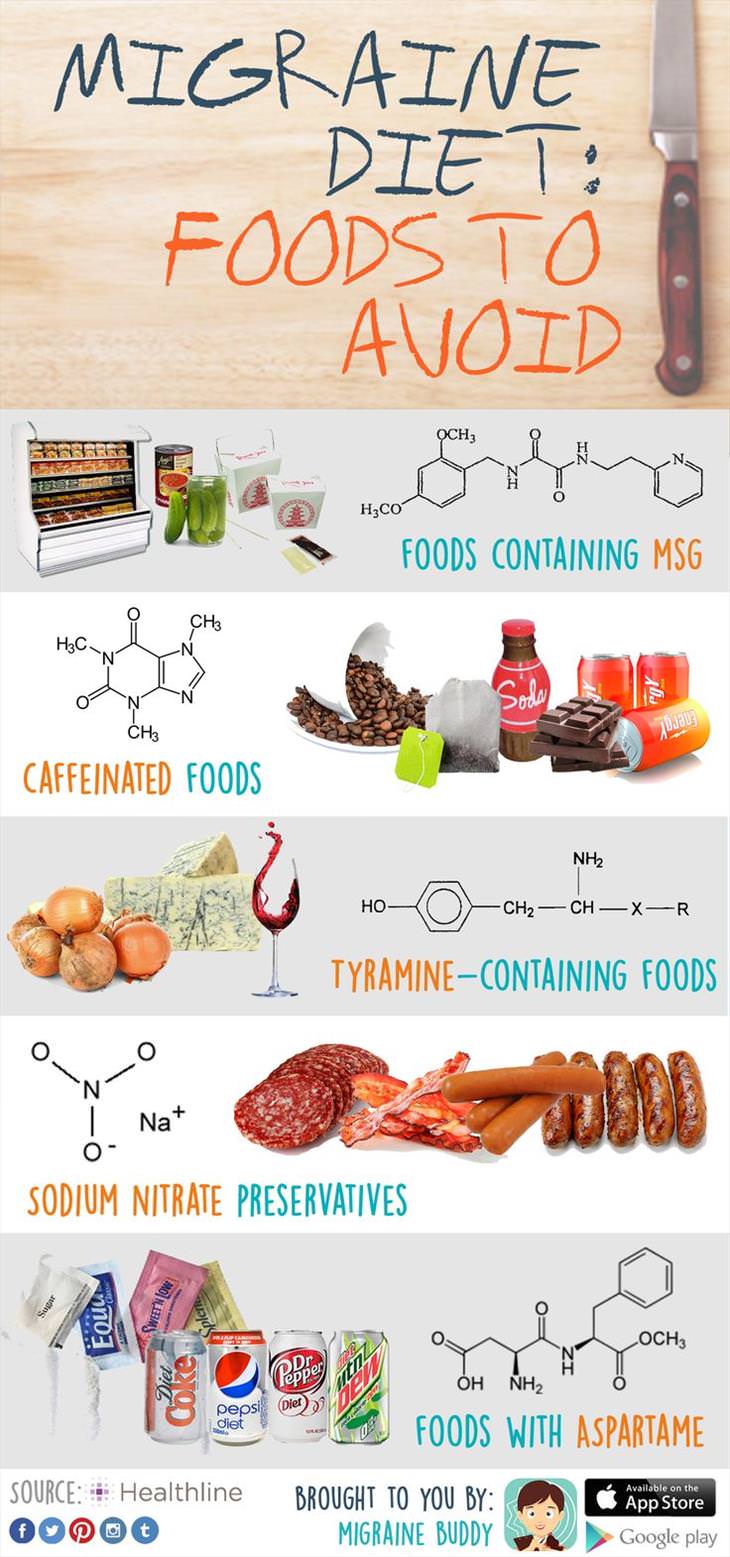
Food plays an important role, many of which may be a cause for your migraines. The chart below looks into 5 types of foods you should exclude. It's therefore important to seek out the nutritional information labels on each product in order to determine whether they contain the following:
migraines 

7. What Foods Should I Consume? 

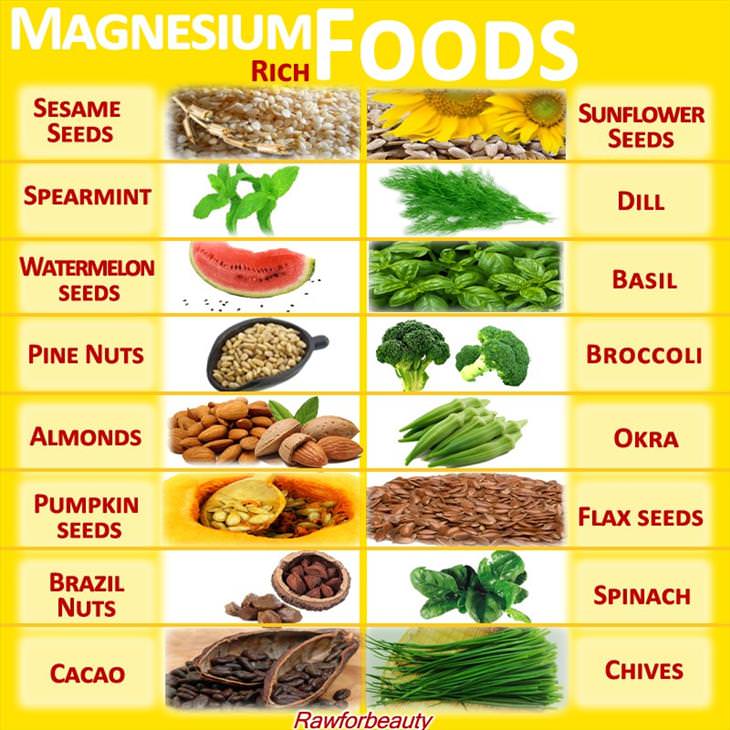
Research shows that people with migraines often have low levels of magnesium. In fact, magnesium is thought to affect changes in the blood vessels in the brain. Supplements are at times recommended, but for a more natural alternative, up your magnesium with the following list of foods:
migraines

8. What Exercise Can I Do? 

Exercise forms an important part of a healthy lifestyle. Try to dedicate at least 20 minutes of the day to yoga. If it's your first time, do consult with a trained practitioner. Yoga is a great way to help those suffering from headaches. The following poses are most beneficial for migraine sufferers:

migraines


This is only for your information, kindly take the advice of your doctor for food, medicines, exercises and so on.   


Labels: , , , , , , , , , , , , , ,

Friday, July 07, 2023

This Popular Sweetener/ Aspartame May Be a Cancer Risk

Recent reports suggest that aspartame, a commonly used artificial sweetener in a vast array of products across the globe, is set to be identified as a potential human carcinogen. The International Agency for Research on Cancer (IARC), the World Health Organization's (WHO) cancer research division, is all set to classify aspartame as "potentially cancer-causing to humans" in an upcoming report. The ingredient has been used for years in carbonated beverages and is also included in ice cream, sugar-free gum, low-fat yogurt, breakfast cereals, and cough drops. With a sweetness level around 200 times higher than sugar, only a small dose of the chemical goes a long way. 
 Aspartame
 
So why exactly is aspartame bad?
WHO has identified a potential link between aspartame and cancer. However, this doesn't necessarily mean it directly causes the disease, but that there is a small amount of evidence linking its consumption to people who have been diagnosed. 
 
The IARC classifies substances into two additional serious groups, namely "likely to cause cancer in humans" and "known to cause cancer in humans". This classification encompasses over 1,100 diverse items, ranging from food and beverage ingredients to living conditions and hazardous activities. 
 
Aspartame's association with cancer risk has already raised concerns due to the existing evidence. According to a 2022 study published in PLOS Medicine, aspartame consumption was associated with an increased risk of breast and obesity-related cancers. Additionally, a study carried out by the Ramazzini Institute in Italy during the early 2000s found a connection between aspartame and certain cancers in mice and rats. 
 
It has been reported that the IARC gathered 7,000 research citations related to aspartame, of which 1,300 studies were included in the material package reviewed by experts. 
 
The NHS states that all sweeteners must undergo extensive testing before being approved for use in the UK food market. Aspartame has already been declared unsuitable for individuals with phenylketonuria, a rare condition, due to the presence of an ingredient that cannot be metabolized by those affected. 
 
How long has aspartame been used in food and drink?artificial sweetener
In 1974, the Food and Drug Administration granted approval for aspartame to be used as a tabletop sweetener and dry base in various food products such as beverages, gelatins, dairy items, and pudding. In 1996, it was approved as a sweetener for general use. 
 
Commonly associated with diet sodas like Coke Zero, Pepsi Max, Sprite, and Fanta Zero, as well as diet squash and cordial drinks, aspartame is frequently present in food items as well. The substance can be found in sugar-free gum, frozen desserts, reduced-sugar ketchup, specific breakfast cereals, and Muller Corner yogurts and energy bars. The sweetener is also used in a variety of zero-sugar and low-sugar items, including sugar-free Jell-O, tabletop sweeteners such as Nutrasweet and Equal, and Trident's sugar-free gum and Crystal Light. 
 
Besides being used in food products, aspartame is also commonly used in medicines and supplements, including cough drops and vitamin gummies. 


What's the alternative?

If you're looking for a substitute for Diet Coke, the only viable alternative is switching to regular Coca-Cola, although the excessive sugar content in soft drinks has been a source of worry for dietitians and dentists for a long time. 
 
For a safe way to sweeten your beverages and food, consider using natural sweeteners like Stevia. 
 
The International Council of Beverages Associations' executive director, Kate Loatman, said public health authorities should be "deeply concerned" by the "leaked opinion", and also warned it "could needlessly mislead consumers into consuming more sugar rather than choosing safe no- and low-sugar options."
 
How much aspartame is safe? 
 
Although the review of aspartame reveals a potential association with cancer, it does not address the safe amount that can be consumed. 
 
JECFA (the Joint WHO and Food and Agriculture Organisation’s Expert Committee on Food Additives), is also currently examining the use of aspartame this year. Aspartame has been declared safe by the JECFA since 1981 when consumed within the approved daily limit. To put it into perspective, a person weighing 60 kg (132 pounds) would need to consume anywhere from 12 to 36 cans of diet soda per day, depending on the aspartame content, to be considered at risk. This viewpoint has been widely supported by regulatory bodies in various countries, such as the United States and Europe.
 
Sources close to the IARC say that the decision to classify aspartame as a potential carcinogen is aimed at encouraging more research. This research will help agencies, consumers, and manufacturers draw stronger conclusions

This is only for your information, kindly take the advice of your doctor for medicines, exercises and so on.   

https://gscrochetdesigns.blogspot.com. one can see my crochet creations  
https://gseasyrecipes.blogspot.com. feel free to view for easy, simple and healthy recipes    
https://kneereplacement-stickclub.blogspot.com. for info on knee replacement
https://cancersupportindia.blogspot.com  for infor on cancer and health related topics
https://GSiyers home remedies.blogspot.com   is the latest addition to my blogs. I'm going to add posts there, do give me your valuable feed back on my blogs. Thanks a lot, take care, be healthy and be happy.

Labels: ,

Sunday, March 28, 2021

5 Harmful Sugar Substitutes

We all know the harmful effect that excessive sugar consumption has on our weight and our overall health, and therefore many of us try to avoid it as much as possible. However, we still want sweet-tasting foods and drinks, and this has led to the invention and development of various artificial substitutes that mimic the effects of sugar.

However, while artificial sweeteners have attracted quite a few fans, research has shown that their effects may be very far from positive. Meet the 5 best known artificial sweeteners, some of which we add to our food ourselves and some of them we meet on labels, which can endanger your health and cause much more harm than good ...

1. Acesulfame K This ingredient, marked on food labels as E950, is especially sweet and does not break down when heated or baked. Thanks to these two characteristics, many companies use it in baked goods, soft drinks and soda, jellies, chewing gum, and various dairy desserts, as well as hygiene products such as toothpaste and mouthwash. However, this sweet substitute contains methylene chloride, which at high concentrations is considered to be carcinogenic. Long-term exposure to it can cause headaches, depression, and nausea, and in some cases can also impair thyroid function.

2. Aspartame 
This artificial sweetener is 180 times as sweet as standard sugar, made up of two amino acids and is used in the paint industry as a solvent. In recent years, this sweetener has become particularly popular, so if you consume diet drinks, cereal or sugarless chewing gum, you’ve likely come across it under the E951 label. Although this substitute is labeled safe for use by the Food and Drug Administration, it is one of the most controversial substitutes and is associated with a variety of side effects and medical problems. 
 
Several animal studies have found that aspartame can cause cancer, and other studies have linked it to an increased risk of brain tumors. Other claims examined in the studies touched on questions about the effects of Aspartame on mental state and headaches, and some found that there was an increased risk of worsening the existing situation in those who had suffered from depression and migraines in the past.

3. Saccharin  
Saccharin, approved by the US Food and Drug Administration in 1970, is used by many people as a sweetener for tea or coffee, and food companies add it to jams, candies, sauces, and pastries. However, back in 1977, a study was published in which rats who had consumed a large amount of saccharin had an increased incidence of bladder cancer - leading to a warning on products containing the supplement. 
 
Since then, many trials and studies have been conducted to examine the association between saccharin and cancer, and because the findings were inconclusive, the Food and Drug Administration ordered the warning to be removed. However, doctors are still divided on the question of the safety of the supplement to use in general, and by pregnant women in particular, as sucrose passes the placenta and may remain in the body of the fetus.

4. High-fructose corn syrup 
The source of this elusive artificial supplement, which you may not have noticed in the ingredients of the food you buy, is the sweet and sticky agave plant syrup, which is considered a natural and healthy alternative to sugar because of its low glycemic value. The reaction of the commercial companies to the popularity of agave syrup, which contains fructose, was to take the fructose (fruit sugar) and combine it with harmful corn syrup. The result is many sweet foods such as ice creams, yogurts, and various snacks, which contain excessive amounts of sugar that can be harmful to your health. 
 
When large amounts of fructose reach the liver, it's quickly converted into triglycerides, fatty components linked to a variety of problems, such as cardiovascular disease and even obesity.

5. Sucralose  
This sweetener is twice as sweet as saccharin and three times as sweet as Aspartame, and commercial companies use it mainly in pastries or products that require a long shelf life. Sucralose is often marked as E955. While this is an ingredient approved for use by the FDA, various studies suggest that it may negatively affect our body, but its long-term health effects are not clear. 
 
A small-scale study of obese people that did not consume artificial sweeteners in the past found that their blood sugar levels were increased by 14% and insulin levels increased by 20%. Another study found that adding sucralose to a mouse’s diet had negative effects on the intestinal microbial environment. 
 
Other researchers have advised against the use of sucralose in cooking and baking because they found that at high temperatures, substances that could damage intestinal health were released. Hence, although no conclusive evidence of damage to humans has been found due to the use of sucralose, it is recommended to reduce use as much as possible and to avoid cooking and baking with it altogether.

In conclusion: Many of us assume that as long as we don’t use artificial sweeteners in large quantities, there is nothing to worry about. In the case of saccharin, for example, the recommendation is to consume no more than 18 tablets per day for an adult weighing about 70 kilograms - a quantity that is, of course, far from most of our daily consumption. 
 
However, it is important to know that many drinks and foods combine a number of artificial sweeteners to eliminate their aftertaste and contribute to the shelf life of different products, so we actually consume a much greater amount of sweeteners than we might think. 
 
The most recommended solution is to reduce the amount of artificial sweeteners we consume as much as possible, carefully read the labels of processed food we buy, and to know the healthy and natural sugar substitutes found in almost every kitchen that is suitable for cooking, baking and adding flavor to our favorite foods.

This is only for your information, kindly take the advice of your doctor for medicines, exercises and so on.     

https://gscrochetdesigns.blogspot.com. one can see my crochet creations  
https://gseasyrecipes.blogspot.com. feel free to view for easy, simple and healthy recipes    
https://kneereplacement-stickclub.blogspot.com. for info on knee replacement

Labels: , , , , , , , , , ,