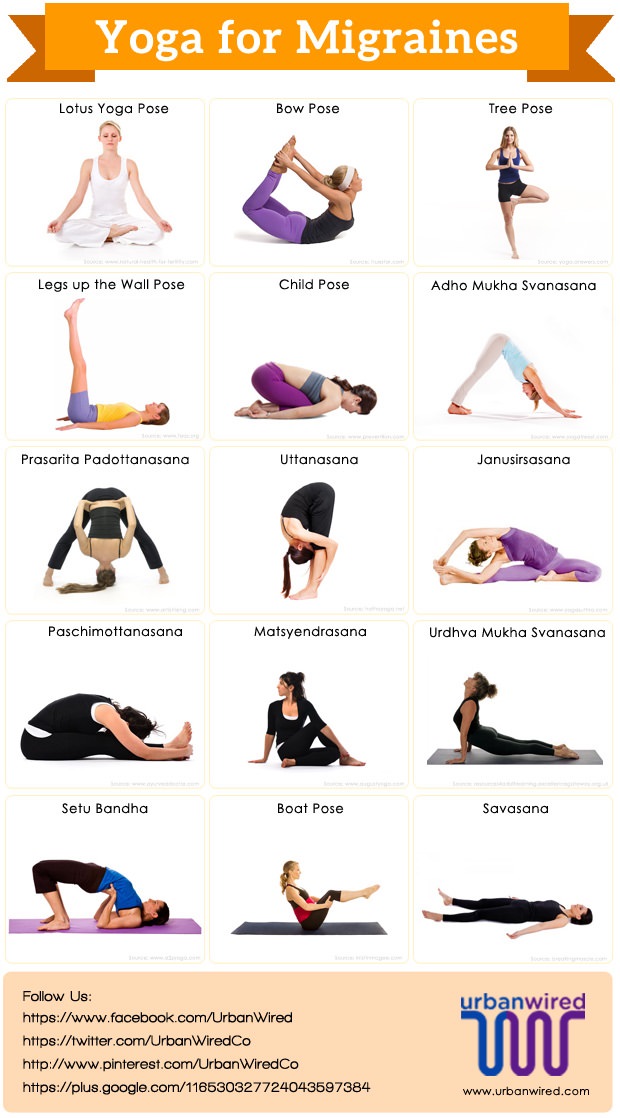
These Handy Charts Will Help Stop a Migraine in Its Tracks
A migraine can be quite unbearable. During a migraine, the blood vessels
around your brain expand and begin to irritate the tissue and nerves
around them causing the pain. So, if you, or someone you know, suffers
from migraines and headaches, be sure to check out these warning signs,
tips and remedies to help you avoid a migraine.
1. The Difference Between a Migraine and a Headache
The exact cause of a migraine is unknown. Researchers believe that it's a
neurological problem, however a number of factors can trigger pain,
some of which include tension or stress, hormonal or environmental
changes, long term exposure to the sun, a lack of sleep, the consumption
of alcohol and certain foods as well as skipped meals and poor diet.
The chart below gives a clear overview on migraines, as well as three
common types of migraines and headaches (as indicated on the right side
of the chart). The image below goes on to explain possible migraine
symptoms too. 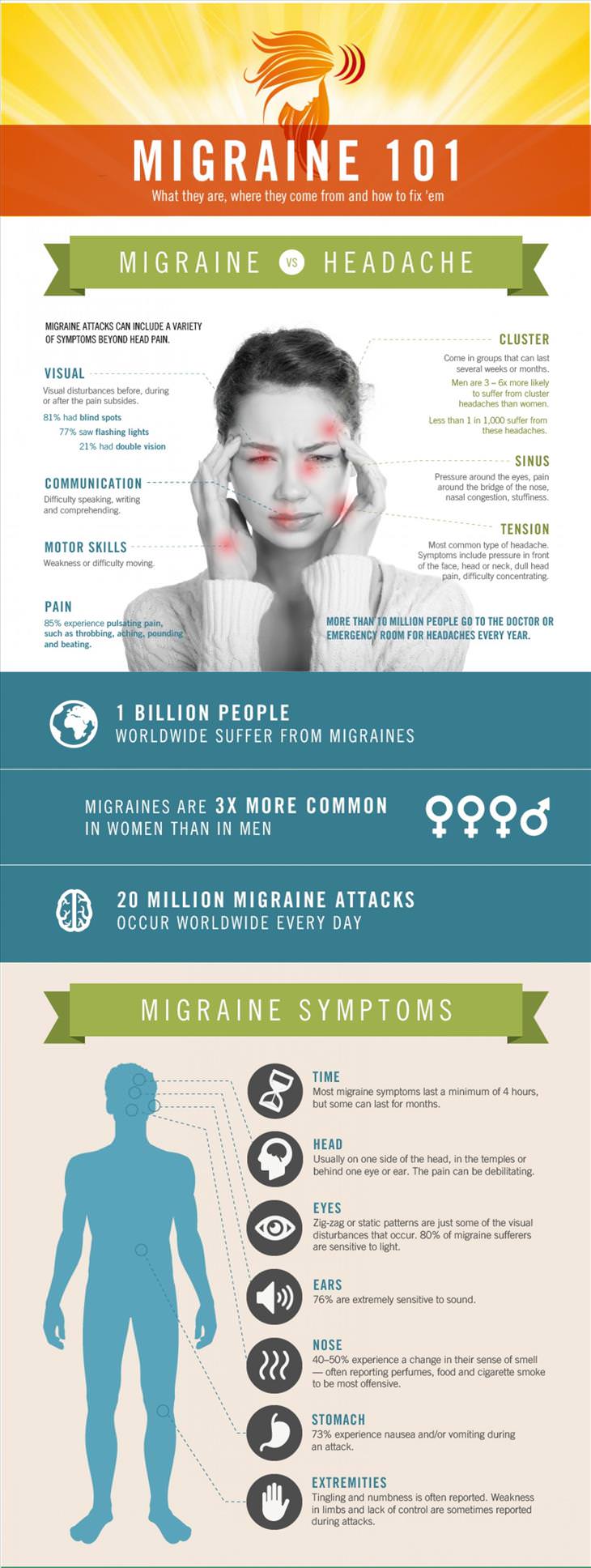
2. What Type of Headache Do You Have?
The diagram below looks into the types of headaches sufferers may
experience and what each one represents. A common headache trigger
includes anxiety. In such a headache, the pain usually occurs across the
forehead. While in stress headaches, pain runs from the top of the neck
all the way up to the top of the skull. Which type of headache do you
have? Refer to the chart below. 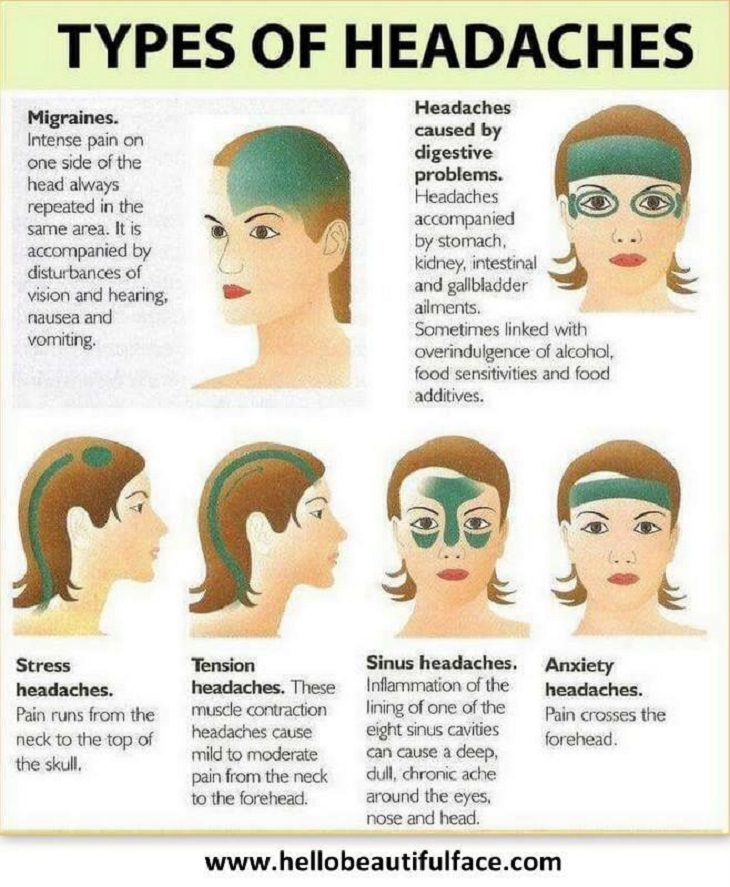 3. What are the Triggers and the Causes of a Migraine?
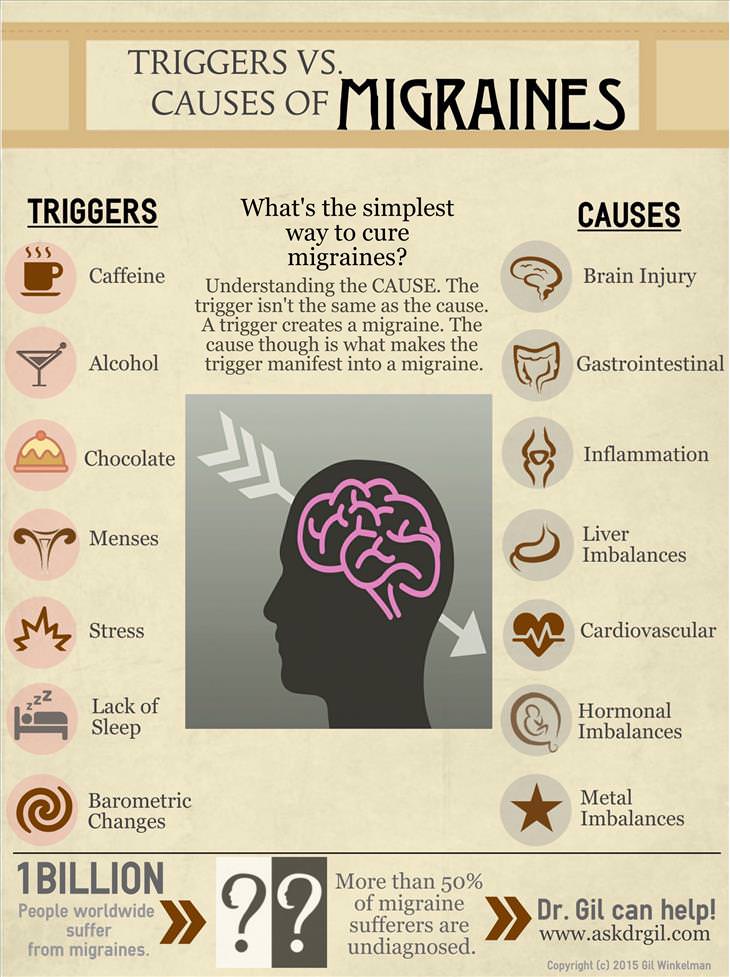
A number of factors may potentially trigger a migraine. These include factors like food, menstruation, alcohol, stress and lack of sleep. On the other hand, your migraines may be caused by an underlying issue. If you do suffer from migraines, consult with your doctor and determine whether it could be related to factors like a hormonal imbalance, cardiovascular problems, inflammation and more. Refer to the chart below for a better overview.
4. What are the Symptoms of a Migraine?
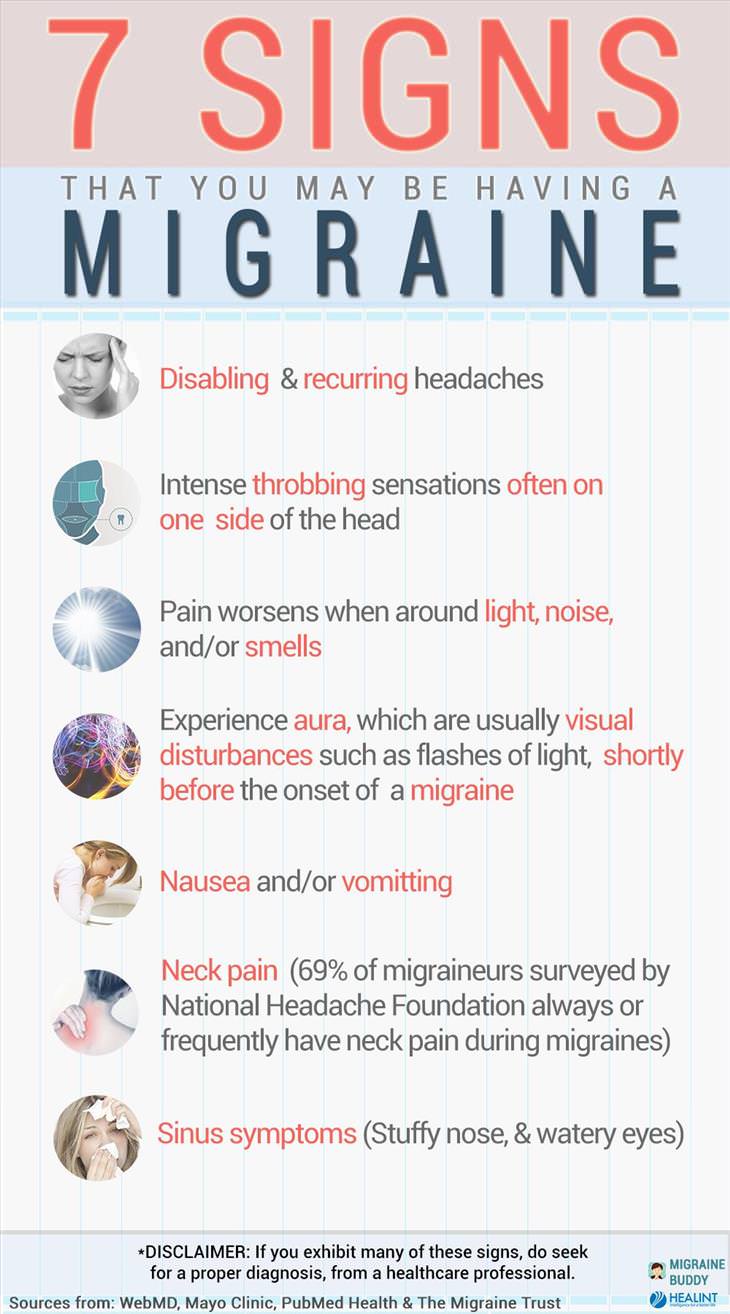
When you are about to experience a migraine, there are certain signs to
be on the look out for. If you experience one of the following, take
action immediately (read on to discover more), stopping your migraine in
its tracks. On this note, if you exhibit many of these signs, it's
important to seek a proper diagnosis from a healthcare professional.
5. What Home Remedies May You Benefit From?
The two charts below look into two drinks that you can try to stop a
migraine in its tracks. For a simple but effective remedy you could try a
glass of lemon juice with Himalayan Salt. If this drink is not to your
liking, try the green smoothie below, which has been hailed a "miracle
migraine drink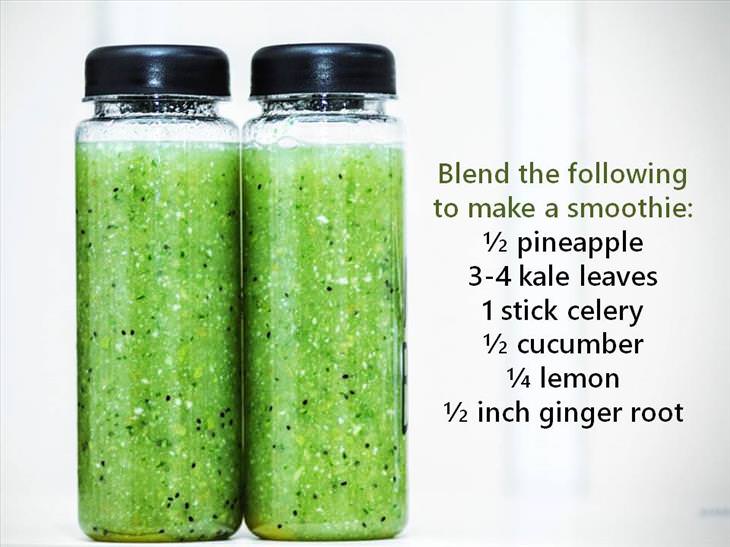
 6. What Food Should I Avoid?
Food plays an important role, many of which may be a cause for your
migraines. The chart below looks into 5 types of foods you should
exclude. It's therefore important to seek out the nutritional
information labels on each product in order to determine whether they
contain the following: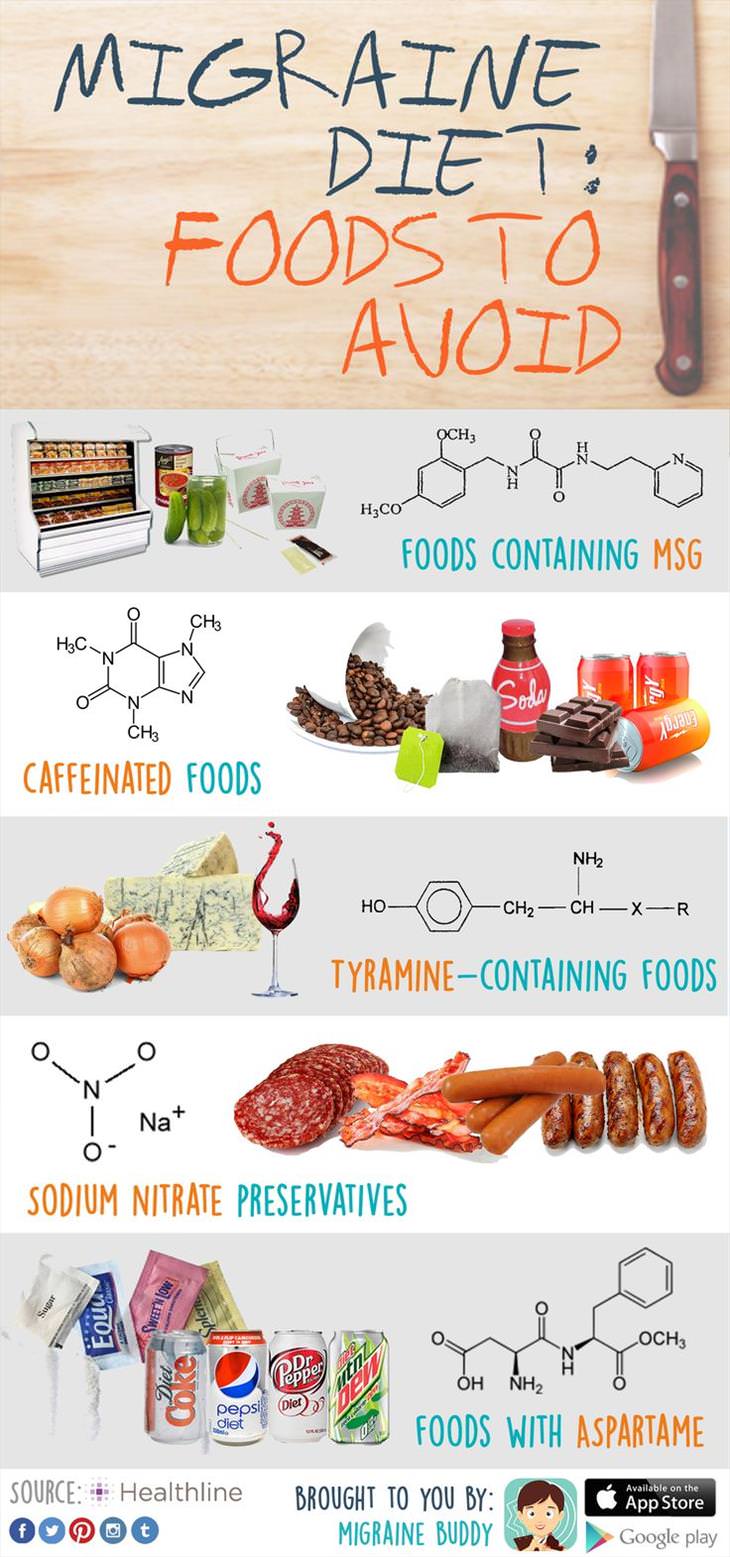
7. What Foods Should I Consume?
Research shows that people with migraines often have low levels of
magnesium. In fact, magnesium is thought to affect changes in the blood
vessels in the brain. Supplements are at times recommended, but for a
more natural alternative, up your magnesium with the following list of
foods: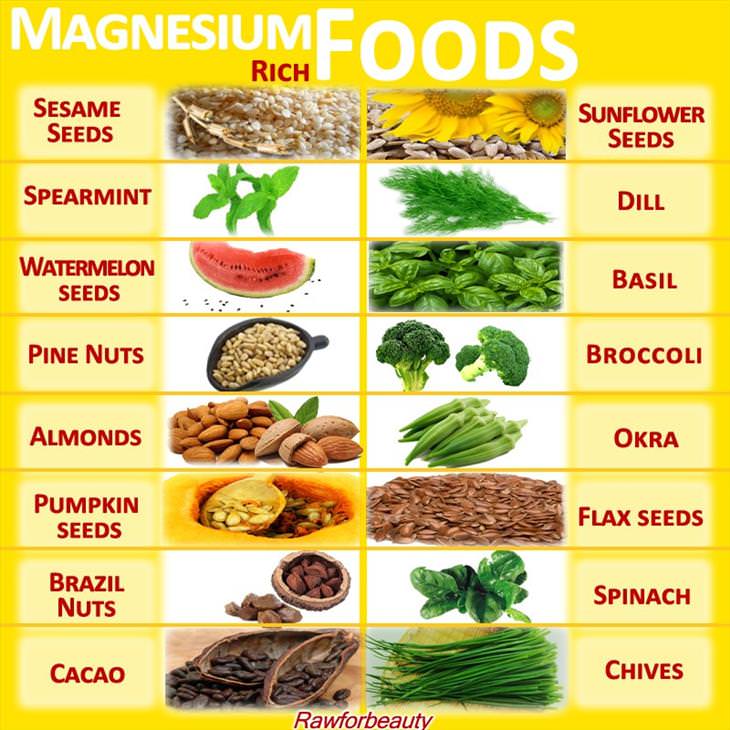
8. What Exercise Can I Do?
Exercise forms an important part of a healthy lifestyle. Try to dedicate
at least 20 minutes of the day to yoga. If it's your first time, do
consult with a trained practitioner. Yoga is a great way to help those
suffering from headaches. The following poses are most beneficial for
migraine sufferers: