Friday, July 07, 2023

This Popular Sweetener/ Aspartame May Be a Cancer Risk

Recent reports suggest that aspartame, a commonly used artificial sweetener in a vast array of products across the globe, is set to be identified as a potential human carcinogen. The International Agency for Research on Cancer (IARC), the World Health Organization's (WHO) cancer research division, is all set to classify aspartame as "potentially cancer-causing to humans" in an upcoming report. The ingredient has been used for years in carbonated beverages and is also included in ice cream, sugar-free gum, low-fat yogurt, breakfast cereals, and cough drops. With a sweetness level around 200 times higher than sugar, only a small dose of the chemical goes a long way. 
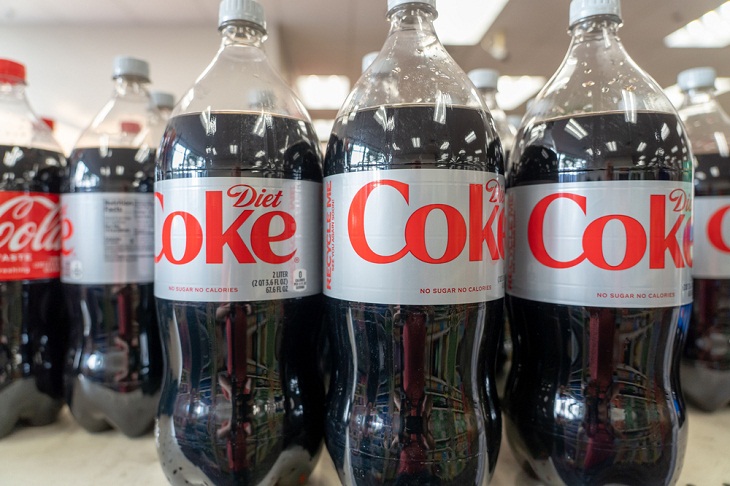
 Aspartame
 
So why exactly is aspartame bad?
WHO has identified a potential link between aspartame and cancer. However, this doesn't necessarily mean it directly causes the disease, but that there is a small amount of evidence linking its consumption to people who have been diagnosed. 
 
The IARC classifies substances into two additional serious groups, namely "likely to cause cancer in humans" and "known to cause cancer in humans". This classification encompasses over 1,100 diverse items, ranging from food and beverage ingredients to living conditions and hazardous activities. 
 
Aspartame's association with cancer risk has already raised concerns due to the existing evidence. According to a 2022 study published in PLOS Medicine, aspartame consumption was associated with an increased risk of breast and obesity-related cancers. Additionally, a study carried out by the Ramazzini Institute in Italy during the early 2000s found a connection between aspartame and certain cancers in mice and rats. 
 
It has been reported that the IARC gathered 7,000 research citations related to aspartame, of which 1,300 studies were included in the material package reviewed by experts. 
 
The NHS states that all sweeteners must undergo extensive testing before being approved for use in the UK food market. Aspartame has already been declared unsuitable for individuals with phenylketonuria, a rare condition, due to the presence of an ingredient that cannot be metabolized by those affected. 
 
How long has aspartame been used in food and drink?artificial sweetener
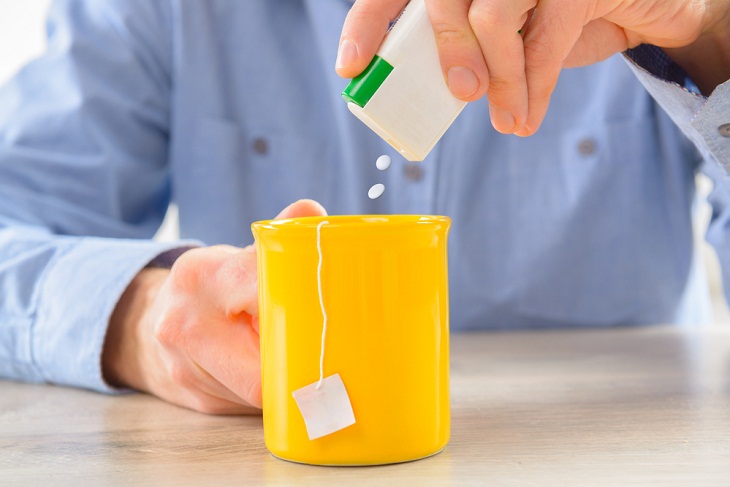
In 1974, the Food and Drug Administration granted approval for aspartame to be used as a tabletop sweetener and dry base in various food products such as beverages, gelatins, dairy items, and pudding. In 1996, it was approved as a sweetener for general use. 
 
Commonly associated with diet sodas like Coke Zero, Pepsi Max, Sprite, and Fanta Zero, as well as diet squash and cordial drinks, aspartame is frequently present in food items as well. The substance can be found in sugar-free gum, frozen desserts, reduced-sugar ketchup, specific breakfast cereals, and Muller Corner yogurts and energy bars. The sweetener is also used in a variety of zero-sugar and low-sugar items, including sugar-free Jell-O, tabletop sweeteners such as Nutrasweet and Equal, and Trident's sugar-free gum and Crystal Light. 
 
Besides being used in food products, aspartame is also commonly used in medicines and supplements, including cough drops and vitamin gummies. 


What's the alternative?

If you're looking for a substitute for Diet Coke, the only viable alternative is switching to regular Coca-Cola, although the excessive sugar content in soft drinks has been a source of worry for dietitians and dentists for a long time. 
 
For a safe way to sweeten your beverages and food, consider using natural sweeteners like Stevia. 
 
The International Council of Beverages Associations' executive director, Kate Loatman, said public health authorities should be "deeply concerned" by the "leaked opinion", and also warned it "could needlessly mislead consumers into consuming more sugar rather than choosing safe no- and low-sugar options."
 
How much aspartame is safe? 
 
Although the review of aspartame reveals a potential association with cancer, it does not address the safe amount that can be consumed. 
 
JECFA (the Joint WHO and Food and Agriculture Organisation’s Expert Committee on Food Additives), is also currently examining the use of aspartame this year. Aspartame has been declared safe by the JECFA since 1981 when consumed within the approved daily limit. To put it into perspective, a person weighing 60 kg (132 pounds) would need to consume anywhere from 12 to 36 cans of diet soda per day, depending on the aspartame content, to be considered at risk. This viewpoint has been widely supported by regulatory bodies in various countries, such as the United States and Europe.
 
Sources close to the IARC say that the decision to classify aspartame as a potential carcinogen is aimed at encouraging more research. This research will help agencies, consumers, and manufacturers draw stronger conclusions

This is only for your information, kindly take the advice of your doctor for medicines, exercises and so on.   

https://gscrochetdesigns.blogspot.com. one can see my crochet creations  
https://gseasyrecipes.blogspot.com. feel free to view for easy, simple and healthy recipes    
https://kneereplacement-stickclub.blogspot.com. for info on knee replacement
https://cancersupportindia.blogspot.com  for infor on cancer and health related topics
https://GSiyers home remedies.blogspot.com   is the latest addition to my blogs. I'm going to add posts there, do give me your valuable feed back on my blogs. Thanks a lot, take care, be healthy and be happy.

Labels: ,

Sunday, March 27, 2022

Alcohol ups risk of oral cavity cancers by 200%

A recent paper from the Tata Memorial Hospital, Mumbai, published in a reputed Indian medical journal, has concluded that alcohol consumption dramatically increases the risk of cancer.

The report points at alcohol consumption being one of the leading risk factors for multiple health issues, especially non-communicable diseases and infectious diseases (HIV, viral hepatitis, and tuberculosis). Alcohol consumption is estimated to be the third-most important modifiable risk factor for death and disability worldwide. With 1.4 lakh deaths annually, alcohol-induced liver cirrhosis makes up the biggest burden posed by alcohol use. Almost one lakh deaths that occur on Indian roads each year are indirectly related to alcohol abuse.

According to Dr Pankaj Chaturvedi, Deputy Director at Center for Cancer Epidemiology, Tata Memorial Hospital, until now, there was conflicting evidence of alcohol being a direct causative agent for cancers in Indian medical literature. For conclusive answers, they performed a systematic review and meta-analysis of 29 eligible studies, involving 2,86,986 subjects. “The findings suggest that alcohol users are 2.15 times more at risk of cancer compared to non-users. This can be attributed to its solvent property, which assists the carcinogen in permeating the cells lining the upper aero-digestive tract. The pooled analysis of all prospective studies demonstrated a 152 per cent higher risk of cancer among alcohol users, while the retrospective studies found an increased risk of 232 per cent,” he said.

Dr Hitesh Singhavi, Research Fellow and the first author of the paper, said once the alcohol is metabolised in the body, the byproduct acetaldehyde is responsible for the carcinogenic effect, which also reduces immunity, leading to the initiatiation of carcinogenesis at various sites. Malabsorption, especially of folate, in the presence of alcohol leads to initiating colon cancer. It may also manipulate hormonal levels in women to influence breast cancer.

“The pattern of alcohol consumption is diverse in India, making it a unique subset to analyse. It has also been found that Indians drink a higher concentration of alcohol by weight, especially on an empty stomach, thus making them more vulnerable to alcohol-related toxicities,” he said.

Dr Rajesh Dixit, Director at Center for Cancer Epidemiology, Tata Memorial Hospital, said they have analysed the relationship, specifically between alcohol users and oral cavity cancer, which is the one of the most common life-threatening malignancies in India. “We found that alcohol raises the risk of oral cancer by 200%. This result concluded that alcohol independently increases the risk of oral cavity cancers,” said Dr Dixit.

To conclude, there are no safe levels of alcohol consumption and its consumption increases the overall risk of cancer among Indians, particularly doubling the incidence of oral cavity cancer.


This is only for your information, kindly take the advice of your doctor for medicines, exercises and so on.   

https://gscrochetdesigns.blogspot.com. one can see my crochet creations  
https://gseasyrecipes.blogspot.com. feel free to view for easy, simple and healthy recipes    
https://kneereplacement-stickclub.blogspot.com. for info on knee replacement


Labels: , , , , , , , , ,

Thursday, June 10, 2021

Carcinogen Found in US Sunscreens - Should You Be Worried?

A private scientific investigation of hundreds of sunscreens and after-sun care products by the American virtual pharmacy called Valisure found that over a quarter of the samples they tested were contaminated by benzene, a known human carcinogen. Continue reading to find out everything you need to know about benzene and how it got into sun care products. 
 
The study finds benzene in 78 sunscreens. 
The survey tested 294 individual samples of sunscreens and after-sun products by 69 brands. Benzene, a known carcinogen, was found in 78 of the samples, with 14 products (mostly spray sunscreens) exceeding the regulated amount of the carcinogen. The researchers point out that some of the products they tested had three times the allowed FDA limit of benzene. Benzene Sunscreens cream

What is benzene and how did it get into the sun care products?  
Benzene is an organic solvent, a type of substance used in the preparation of drugs or the cleaning of equipment in the pharmaceutical industry. Some of these solvents, including benzene, have a volatile nature and pose a danger for human health in higher-than-regulated concentrations. For benzene, this concentration is >2 parts per million (ppm). Studies in factory workers show that inhalation, ingestion, and skin or eye contact with benzene could be dangerous for one’s long-term health. 
 
According to the ICH, a European medical agency that helps control pharmaceuticals, “Since there is no therapeutic benefit from residual solvents, all residual solvents should be removed to the extent possible to meet product specifications, good manufacturing practices, or other quality-based requirements.” 
 
But sometimes, these solvents are not completely removed in the manufacturing process, and they end up in products. This is exactly what we see in some of the sunscreens and after sun products, some of which are manufactured by reputable brands like Neutrogena, EltaMD, and Banana Boat. For a full list of sun care products tested by the lab, click here. Valisure, the company that initiated the study, filed a petition for the recall of the sunscreens that contained high concentrations of benzene.

Should you be concerned?  
While the FDA’s response to these findings is pending, the issue attracted a lot of public attention and speculation. Even though the allegations against these specific sun care products are concerning, it’s important to understand that benzene isn’t only present in sunscreens. In fact, the same online pharmacy found benzene in hand sanitizers.

Overall, the presence of benzene in cosmetics seems to vary from batch to batch. Besides, all the studies that involved the carcinogenic activity of benzene were based on factory workers who inhaled and worked with this dangerous chemical for long periods of time. Compared to this, the exposure one gets by using sunscreen or hand sanitizer that contains 2 ppm of benzene is nothing.

Overall, the presence of benzene in cosmetics seems to vary from batch to batch. Besides, all the studies that involved the carcinogenic activity of benzene were based on factory workers who inhaled and worked with this dangerous chemical for long periods of time. Compared to this, the exposure one gets by using sunscreen or hand sanitizer that contains 2 ppm of benzene is nothing. 
 
Even more importantly, though, these findings should not deter you from using sunscreen. As the company’s own news release pointed out, “It is important to note that not all sunscreen products contain benzene and that uncontaminated products are available, should continue to be used, and are important for protecting against potentially harmful solar radiation.” 
 
Let’s not forget that these harmful effects include skin cancer, the most common type of cancer in the United States. As Dr. Adam Friedman, a board-certified dermatologist pointed out in a statement, “It only takes one blistering sunburn during childhood or adolescence to nearly double a person’s chance of developing melanoma, the deadliest form of skin cancer, later in life.” 
 
The bottom line is, don’t let these findings discourage you from wearing any of the numerous safe sunscreens and protecting your skin from cancer-causing UV rays.

This is only for your information, kindly take the advice of your doctor for medicines, exercises and so on.   

https://gscrochetdesigns.blogspot.com. one can see my crochet creations  
https://gseasyrecipes.blogspot.com. feel free to view for easy, simple and healthy recipes    
https://kneereplacement-stickclub.blogspot.com. for info on knee replacement

Labels: , , , , ,