Saturday, December 22, 2018

7 Skin Spots - Should the Doctor Check It?

You’re examining your body in front of the mirror and suddenly you see a new red, brown or pink spot on your back. Where did it come from? Some of us may jump to worry and think that it might be skin cancer, but before you stress yourself out, you should know that there are many factors that may create signs and marks on your body, and many of them are harmless. Here are 7 signs and spots that may appear on your skin, how to get rid of some of them and whether they are dangerous or not.

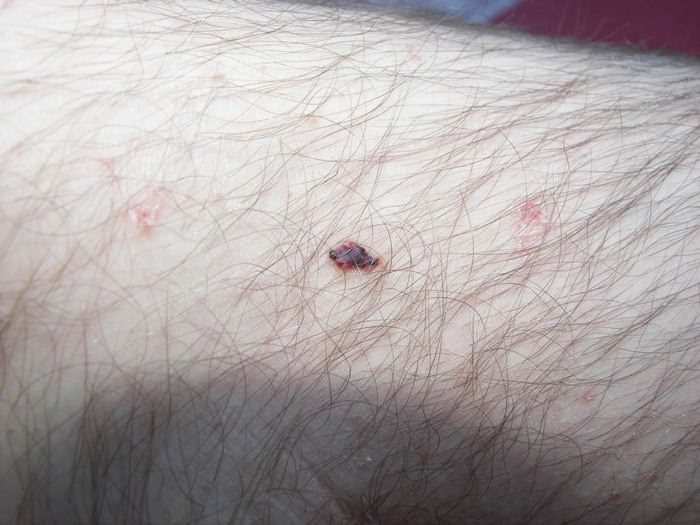
1. Red beauty mark (Cherry Angioma)

skin spots

A cherry angioma is a small red dot that can look like a bump or a smooth patch on the skin. In fact, it is just the physical appearance of a cluster of dilated blood vessels. " “Patients will come in and say they keep getting more and more,” says an assistant professor in the Department of Dermatology.  “And it’s true, you get them as you age.” These spots are also hereditary, so if your parents or siblings have these, you are more likely to notice them on your skin at one point or another, and the good news is that they are harmless. The good news is that they can be removed with IPL or intense pulse light treatments.
2. Skin tags

skin spots

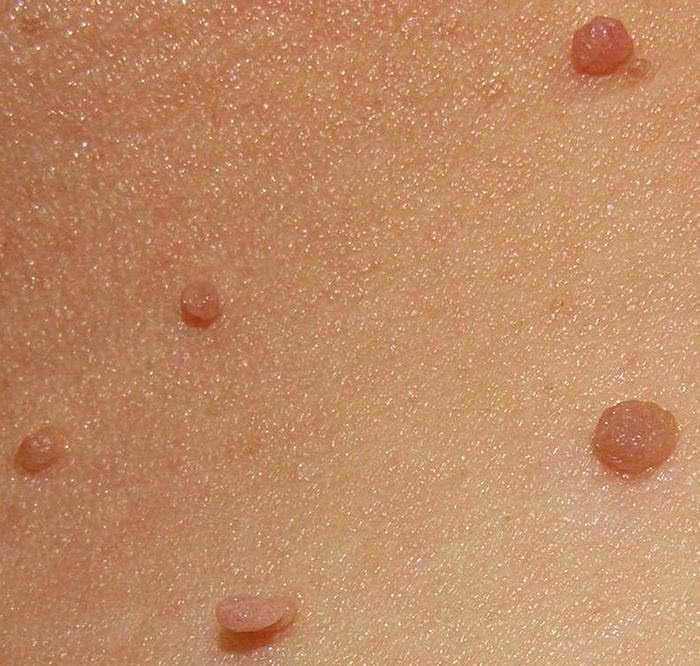
Skin tags are often found in areas where clothing tends to rub, making them quite a nuisance. The continuous rubbing can irritate them and cause inflammation, but in general, they aren’t harmful and are usually the same color as your skin, and therefore, often go unnoticed. If they don’t bother you, you do not have to think about removing them, but if they do, don’t try removing them yourself, especially not by ripping or cutting them off “People will use non-sterile tools and come in with inflamed, irritated, and infected skin,” the Dr. says. To remove them safely, consult your dermatologist.
3. Dermatofibroma

skin spots

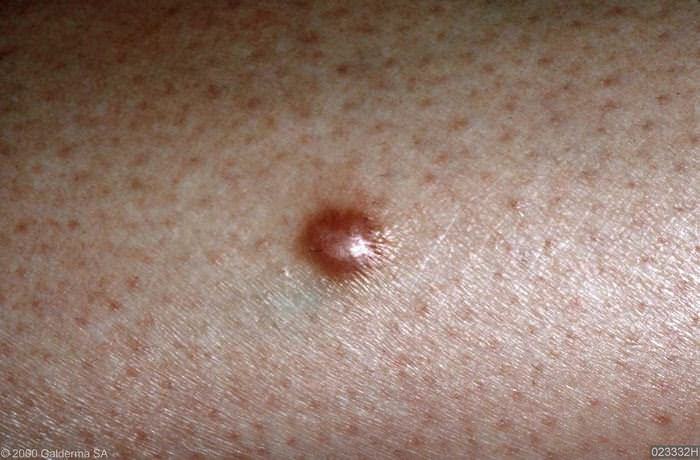
“A patient will come in and tell me that she’s had this bump that’s been on her skin for years and it never goes away,” says the Dr.  You’ll usually find them on your arms or legs, and they can be brown or pink. These protrusions consist of fibrous scar tissue that may resemble a mosquito bite or an ingrown hair. Like skin tags and red beauty marks, this spot on your skin is also harmless. However, because it can look like a mole, you should let your dermatologist check it out. “Moles can change into melanoma, but a dermatofibroma does not,” says a dermatologist.
4. Solar Lentigines (sun spots)

skin spots

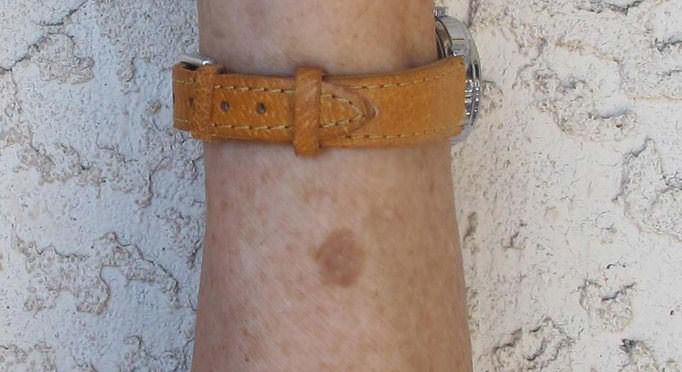
Although we all call them "age spots," these spots are more related to your skin's exposure to the sun than to your age. These spots may look like a flat spot on the skin or like moles, and they usually appear on areas that are exposed to the sun like the hands, face, neck, upper chest and legs. The good news is that while they are related to your exposure to sunlight, they are harmless and will not develop into skin cancer. The bad news is that sometimes it is difficult to tell the difference between age spots and moles that may eventually turn into skin cancer. If you have many of these on your skin, it will be difficult for you to diagnose yourself and know exactly which spots are which, and that’s why it is important that you get checked by a dermatologist to be sure.
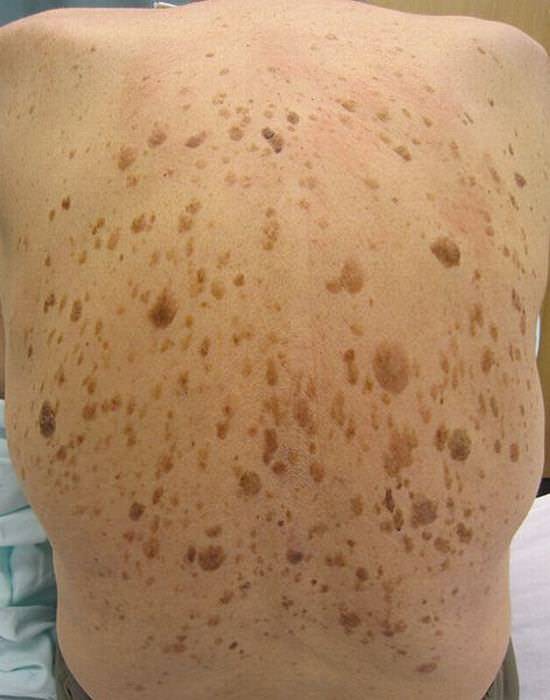
5. Seborrheic Keratosis

skin spots

These spots are brownish-black and have a scaly appearance that grows on the outer layer of the skin. They’re usually found on people who reach menopause age and beyond. Your dermatologist can remove them by cutting them off, using liquid nitrogen or a laser, but beware: because these spots are harmless, your insurance may not cover the treatment, unless they’re in an area where they are particularly irritating, such as the neck.
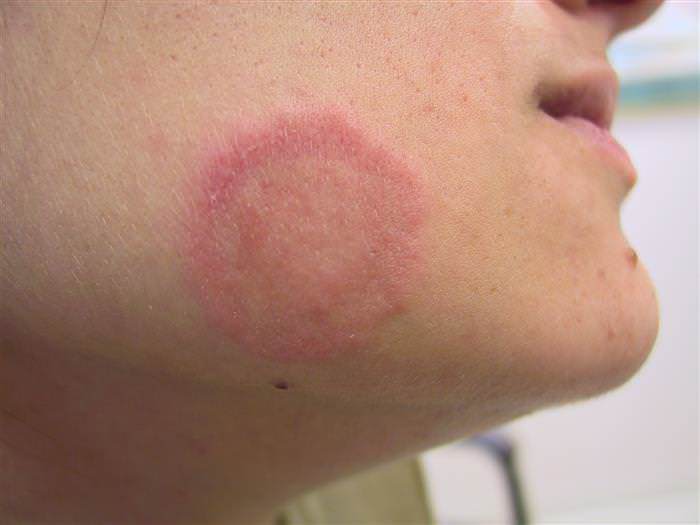
6. Tinea Infection

skin spots

Tinea Infection can look like a small birthmark that changes color, just like a stain on your skin. These stains are actually a fungal infection that can reach any size or form and can spread and become harmful if you don’t treat them. Fortunately, treatment is usually simple and involves washing the affected area with soap or shampoo that can be bought with a prescription at the pharmacy. It is recommended that you consult your dermatologist if you see this spot on your body.
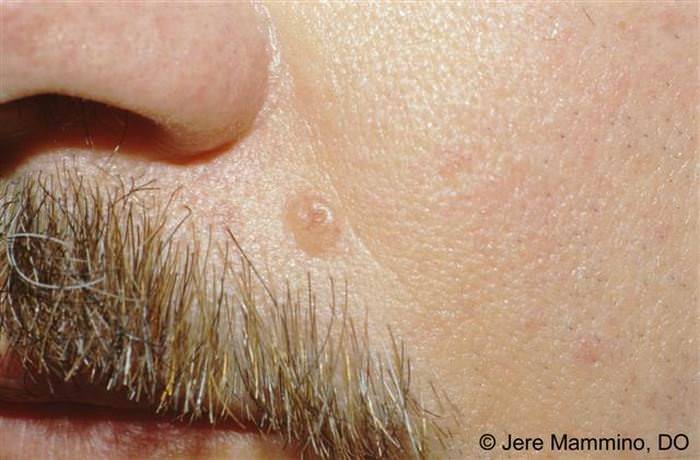
7. Squamous or Basal cell carcinoma

skin spots

This is the most dangerous point you can have on your skin. “Many people don’t realize there are multiple types of skin cancer, the Dr.  says. “I’ll ask if someone has ever had skin cancer, and they will tell me, ‘No, just a basal cell.” These are usually red or skin color and look scaly or like a pearl. Dr. recommends that you consult your dermatologist immediately if your mole looks strange or starts growing, changing, bleeding, becomes itchy, and so on. "Do not wait until your next appointment, go see your dermatologist as soon as possible."
THIS IS ONLY FOR INFORMATION, ALWAYS CONSULT YOU PHYSICIAN BEFORE HAVING ANY PARTICULAR FOOD/ MEDICATION/EXERCISE/OTHER REMEDIES.                                                                                
 PS- THOSE INTERESTED IN RECIPES ARE FREE TO  VIEW MY BLOG-                                                                                           https://gseasyrecipes.blogspot.com/                                                                                                                                                                             FOR INFO ABOUT KNEE REPLACEMENT, YOU CAN VIEW MY BLOG-                                               
     https:// kneereplacement-stickclub.blogspot.com/                                                                                     
  FOR CROCHET DESIGNS                                                                                                                                                                                                                                 https://gscrochetdesigns.blogspot.com
   

Labels: , , , , , , , ,

Friday, September 14, 2018

How to Prevent & Treat Scalp Acne

Acne is less commonly found on the scalp than on certain other areas of the body, however, it can be just as much of a nightmare. Read on to discover the causes behind scalp acne, as well as how to prevent and treat it.
 
 
The Causes of Scalp AcneScalp Acne
Scalp acne typically appears as small zits or pimples on the scalp, as well as on the back of the head, both of which can be sore and itchy. Like most kinds of pimples, the ones found on your scalp form after hair follicles or pores get clogged with sebum or dead skin cells. It is also possible for acne to appear after mites, yeast or bacteria have gotten into your pores, causing a reaction.

The most common acne-causing factors include:
• a buildup of products, such as hair gels, leave-in treatments, or hairspray
• oil or dead skin cells clogging your follicles
• not washing your hear after sweating a lot
• not taking the time to wash your hair thoroughly
• sweating while wearing hats or head coverings


The main germs that can cause severe scalp acne include:
• Cutibacterium
• Staphylococcus epidermidids
• Demodex folliculorum
• Staphylococcus aureus
• Propionibacterium acnes
• Yeasts from the Malassezia family


Types of Scalp Spots
When spots appear on your scalp, they could appear for quite a number of reasons. Here are some of the most common ones:
Scalp folliculitis - this is a condition where bacteria causes your hair follicles to become inflamed and infected, resulting in the appearance of very itchy, small, red bumps.
Seborrheic dermatitis - this is a condition which causes dandruff and can leave the scalp looking red and scaly, which can leave marks that look like pimples if you pick at them.
Pilar cysts - these are hard bumps that are full of keratin, which form beside the hair root. These bumps do not usually have a white head, unlike scalp acne.
How to Prevent Scalp Acne
Having a clean scalp goes a long way towards preventing the appearance of scalp acne. Therefore, the best way to prevent scalp acne is to wash your hair after every workout and whenever it feels oily.
Further ways to reduce the chances of scalp acne appearing are:
• getting enough vitamin A, D, and E, to keep the skin healthy
• wearing loosely-fitting headgear
• switching to natural, hypoallergenic hair care products
• avoiding using too many different hair products
• watching your diet to see what kinds of foods cause flare-ups
How to Treat Scalp Acne
Doctors usually recommend medicated or scalp treatment shampoo to treat scalp acne since they will remove any dirt or excess oil while preventing future buildups from occurring.
Many natural shampoos for scalp acne can be found online, and the most common ingredients they use include:
• tea tree oil
• glycolic acid
• salicylic acid
• ketoconazole
• ciclopirox
• benzoyl peroxide
For more severe cases of scalp acne, your doctor may need to prescribe some of the following treatments:
• steroid injections
• oral antibiotics
• topical antibiotic ointments or steroid creams
• antihistamines
• stronger acne medication, such as isotretinoin
• phototherapy sessions
 

THIS IS ONLY FOR INFORMATION, ALWAYS CONSULT YOU PHYSICIAN BEFORE HAVING ANY PARTICULAR FOOD/ MEDICATION/EXERCISE/OTHER REMEDIES.                                                                                                                                                                                   PS- THOSE INTERESTED IN RECIPES ARE FREE TO  VIEW MY BLOG-                                                                                           https://gseasyrecipes.blogspot.com/  
FOR INFO ABOUT KNEE REPLACEMENT, YOU CAN VIEW MY BLOG-                                                                                                                              https:// kneereplacement-stickclub.blogspot.com/                              

FOR CROCHET DESIGNS                                                                                                                                                                                                                                 https://gscrochetdesigns.blogspot.com


Labels: , , , , , , , , , , , , , , , , ,

Monday, July 23, 2018

Causes Of Dandruff

Dandruff isn't just a social embarrassment, but may also give you certain pointers about your general hair health as well. Let's look at some facts regarding dandruff and how it may affect the health of your hair. Causes of dandruff
The cause for dandruff is usually stated to be a dry scalp, which is not entirely true. Dandruff could be caused by a host of reasons and rather than being a problem, it could be a symptom of other problems with hair health. Let's look at some of the causes:
1. Yeast problems on your scalp: If you suffer from extreme dandruff problems during the winter months, it is likely that it is due to the buildup of yeast on your head. Yeast may build up during the winter months and it usually gets resolved when temperatures rise during the summer months.
2. Not maintaining your hair regularly: This may come as a surprising element as brushing helps in removing dandruff from your scalp. If you have short hair and don't brush your hair regularly, chances of getting dandruff increase more so. Shampooing also has a similar effect and thus if you don't keep your hair clean, it might end up causing more dandruff. 
3. Conditions such as Seborrheic dermatitis or other diseases: Dandruff may well be a manifestation of symptoms for other health problems within your body. For example, Seborrheic dermatitis is a condition which may cause your scalp to be irritated and oily and in turn, cause more dandruff. It could also mean you have a Malassezia problem. Malassezia is a fungus that naturally lives in our hair and feeds on the oil, but an overgrowth of these might result in dandruff as well.
4. Lifestyle issues such as diet and stress: If you follow a poor diet, mostly consisting of junk and fried foods, and also have a lot of stress, then it may lead to dandruff. In such cases, topical medications or treatments might not work. You will need to correct it by making changes in your lifestyle, one of them following a healthy diet
In all of these cases, it is not just a specific problem, but a symptom of a larger problem that needs to be resolved. Treating the underlying problems will ensure that dandruff goes away too.

THIS IS ONLY FOR INFORMATION, ALWAYS CONSULT YOU PHYSICIAN BEFORE HAVING ANY PARTICULAR FOOD/ MEDICATION/EXERCISE/OTHER REMEDIES.                                                                                                                                                                                                        PS- THOSE INTERESTED IN RECIPES ARE FREE TO  VIEW MY BLOG-                                                                                           https://gseasyrecipes.blogspot.com/  

FOR INFO ABOUT KNEE REPLACEMENT, YOU CAN VIEW MY BLOG-                                                                                        https:// kneereplacement-stickclub.blogspot.com/                              
FOR CROCHET DESIGNS                                                                                                                                                                                                                                 https://gscrochetdesigns.blogspot.com


Labels: , , , , , ,

Tuesday, May 12, 2015

Useful tips to beat the eczema itch

THIS IS ONLY FOR INFORMATION, ALWAYS CONSULT YOU PHYSICIAN BEFORE HAVING ANY PARTICULAR FOOD/ MEDICATION/EXERCISE/OTHER REMEDIES.


PS- THOSE INTERESTED IN RECIPES ARE FREE TO VIEW MY BLOG-
HTTP:GSEASYRECIPES.BLOGSPOT.COM


FOR INFO ABOUT KNEE REPLACEMENT, YOU CAN VIEW MY BLOG-
HTTP://KNEE REPLACEMENT-STICK CLUB.BLOGSPOT.COM/

FOR CROCHET DESIGNS


HTTP://MY CROCHET CREATIONS.BLOGSPOT.COM

Here's the plan to freeing yourself from the itch-scratch-itch cycle.

Whether you are unfortunate enough to be born with eczema or you develop it in later life, the skin condition can be painful, embarrassing and debilitating. What can be done to get your skin back on track? Here are our tips from the health experts.

Eczema is red, flaky and itchy skin, which will often crack and weep. The most common type of eczema is atopic (caused by allergies), but people may suffer from contact eczema (flare-ups after touching allergens such as nickel or rubber), discoid (which occurs in coin-shaped patches), or seborrheic (eczema of the scalp).

A topic eczema is in your genes, and often goes hand-in-hand with hay fever and asthma. You can send eczema into remission, but you'll always have it - it's a case of whether you have symptoms or not. The aim of the treatment is to keep people free from flare-ups.

Although you may be genetically predisposed to eczema, it can only be set off by a trigger, which could be anything from nuts to dog hair, wool to cigarette smoke, and establishing what it is, is key to treatment.

Breaking the itch-scratch cycle is vital for recovery. Scratching may offer temporary relief, but it actually triggers the release of a chemical called histamine which just causes more itching.

Scratching damages the skin and may allow bacteria that normally lives on the surface to get in and cause infection. Keep nails short, and whenever you get the urge to have a scratch, massage the itchy area with moisturiser using the pads of your fingertips.

Most people will need to try a few treatments before they find one that works for them. The best way to treat eczema is moisturising. You need to grease yourself up like a cross-Channel swimmer. Cover your body with moisturiser morning and night, and keep a pot in your bag to top up during the day.

Your doctor can prescribe different emollients, but not all of them will work for everyone. Apply after a shower when the skin's still damp to help trap in moisture. Do this rigorously, even when you don't have symptoms.

Don't panic if your favourite cream stops working - you may need to switch between a couple of brands.

For cases of severe eczema, your doctor may refer you to a dermatologist who can prescribe steroid cream, special bandages and wet wraps, or even ultraviolet light therapy. Although steroids may have nasty side-effects if used long term, a short course is perfectly safe. If left untreated, severe eczema can cause lichenification, which causes the skin to become thick and leathery.

There are plenty of ways you can soothe your skin naturally. Make sure your sheets are cotton, which is kinder to the skin than synthetic materials - you could even try wearing cotton gloves at night to prevent scratching.

Take a couple of handfuls of oatbran and pop it in a muslin bag or old pair of tights. Hang it from your shower head to soothe sore skin.

If a bath full of porridge doesn't appeal, try aloe vera gel - keep it in the fridge so it's cool and refreshing, or drink aloe vera juice. Coconut oil is favoured by many sufferers - choose an organic, cold pressed variety and rub onto damp skin.

There is often a link with your state of mind and your skin, so set aside time to relax. It is common for eczema to flare up during stressful periods, such as a break-up. Reduce stress through meditation, yoga or therapy. It's also important to get enough sleep.

Food allergies or sensitivities can be a common trigger for many eczema sufferers. Cow's milk is a well-known culprit, but other common problem foods include eggs, soya and wheat. Dermats suggest considering a food elimination diet, which involves cutting out trigger foods for a period of time and then gradually reintroducing them to see if they cause a flare-up.

Certain foods can promote inflammation - it's worth trying to reduce your intake of sugar, refined carbohydrates, and highly processed and deep-fried foods. Keep a symptom and food diary to see if you can establish any links between what you eat and the state of your eczema.

For happy skin, make sure you eat plenty of foods that are rich in Omega 3 fatty acids, such as oily fish, flaxseeds and walnuts. Opt for low glycemic, whole carbohydrate sources such as oats, quinoa and sweet potato, as well as low-sugar fruits such as berries, apples and pears. All types of eczema can potentially be improved by changes in diet.  
   

Labels: , , , , , , , , , , , , , , , ,