Sunday, August 20, 2023

New rapid blood test to detect 18 infectious, inflammatory diseases in kids

An international team, led by British researchers, has developed a simple blood test which may be able to rapidly diagnose, detect and distinguish between 18 infectious or inflammatory diseases -- including group B Streptococcus (GBS), respiratory syncytial virus (RSV), and tuberculosis.

Using a single sample of blood, the test could enable clinicians to diagnose the cause of fever based on the distinctive pattern of genes being "switched on or off" by the body in response to specific illnesses.

While current tests for some of the conditions can take several hours, days or even weeks, a test-based on this approach would be capable of providing a result in under 60 minutes.

Researchers from Imperial College London explained that a diagnostic test based on patients' gene expression could drastically improve the diagnosis of childhood diseases, reduce delayed and missed diagnoses, and have a significant impact on health care, especially in developing regions.

"Despite huge strides forward in medical technology, when a child is brought into hospital with a fever, our initial approach is to treat based on the doctors' 'impression' of the likely causes of the child's illness," said Professor Michael Levin, from the Imperial’s Department of Infectious Disease.

"As clinicians, we need to make rapid decisions on treatment, often just based on the child's symptoms, information from the parents, and our medical training and experience," he added, "but we may not know whether a fever is bacterial, viral, or something else until hours or days after a child has been admitted, when their test results come back."

"Such delays can stop patients getting the right treatment early on, so there is a clear and urgent need to improve diagnostics. Using this new approach, once it's translated to near point of care devices, could be transformative for health care."

In the study, researchers explored an approach focused on detecting the pattern of a patient's gene expression in blood that occurs in response to specific infections and inflammatory conditions.

Using data from thousands of patients (including more than 1,000 children with 18 infectious or inflammatory diseases) the team was first able to identify which key genes were switched "on" or "off" in response to a range of illnesses -- providing a molecular signature of disease.

Machine learning was then applied to identify which patterns of gene expression corresponded to the specific disease areas and pathogens -- focusing in on a panel of 161 genes for 18 conditions.

This panel was further validated in a cohort of 411 paediatric patients admitted to hospital with sepsis or severe infections (representing 13 of the 18 diseases), where gene expression was captured from blood analysis, and where diagnoses were made using current gold standard clinical methods.


This is only for your information, kindly take the advice of your doctor for medicines, exercises and so on.   

https://gscrochetdesigns.blogspot.com. one can see my crochet creations  
https://gseasyrecipes.blogspot.com. feel free to view for easy, simple and healthy recipes    
https://kneereplacement-stickclub.blogspot.com. for info on knee replacement
https://cancersupportindia.blogspot.com  for infor on cancer and health related topics
https://GSiyers home remedies.blogspot.com   is the latest addition to my blogs. I'm going to add posts there, do give me your valuable feed back on my blogs. Thanks a lot, take care, be healthy and be happy.

Labels: , , , , , , , , , ,

Tuesday, March 08, 2022

Coronavirus: Why some of us don't catch COVID

“No COVID” or “never COVID” people have never been infected with coronavirus

There are many among us, who have not been infected by the coronavirus despite living within the same environment and under the same condition. So what makes these people "invincible" against the contagious coronavirus despite being exposed to it? Often called the “no COVID” or “never COVID” people, these individuals not just save themselves from the viral attack, in a way they also help to cut down the transmission of the virus.

​Who are the no-COVID people?

These are those who have been lucky up to this point by not getting infected with the coronavirus which has till date infected 440,807,756 people worldwide.

COVID caused by the coronavirus was first detected in November 2019 in the Wuhan region of China. Few months later it was declared a global pandemic by the World Health Organisation (WHO). Since then the entire world has been within the tight grip of COVID infection which is coming in different waves with different symptoms and severities.

So far 5 mutated variants of the coronavirus have been categorised by the WHO as variants of concern.

To cut down the risk of COVID governments worldwide are imposing lockdowns at local levels. In these two years people have conditioned themselves to stay away from the virus by keeping themselves indoor, working from home and minimising travel.

But there is a section of people among us, who despite living in the same environment where the others have been exposed to the virus, have not contracted the infection.

​What accounts for their invincibility?

A study by the Imperial College London has said that there are several people who have higher levels of T cells, a type of memory cell in the immune system, developed from other common cold coronaviruses; and these people show immunity against the current coronavirus which is causing the COVID.

“We found that high levels of pre-existing T cells, created by the body when infected with other human coronaviruses like the common cold, can protect against Covid-19 infection,” Dr. Rhia Kundu, first author of the study, told CNBC.

There are a number of coronaviruses, many of which are linked with common colds. As per the study though all coronaviruses behave differently, there are certain characteristics where they are similar to each other. It may be because of this similarity the immune cells are able to recognise them and fight off the virus as soon as the body is exposed to it which is why the individual does not get COVID.

No COVID people vs. asymptomatic individuals

We all know that asymptomatic individuals are those who do not show any symptoms but are equally responsible for the transmission of the virus just like the infected individuals.

No-COVID people are those who do not have the infection or the virus within them. These individuals have an immunity system which is way too protective against the virus. Since they do not have the virus within them, it is likely that they do not spread the disease.

​Is it immunity or no testing?

This can spark a debate. We all know how skewed COVID testing has been. Under-testing has been a concern for health experts and scientists and is said to be hindering research studies on the infection.

Under-testing can be a serious concern because so far it has been the only way to distinguish between symptomatic and asymptomatic individuals. Many asymptomatic individuals skip testing because they do not show the disease, due to which they might be seeing themselves as “someone with strong immunity” but in fact they contribute to spreading the infection as much as the infected ones.

What do the genes say?

Genetic factors play a role in determining the susceptibility of an individual to COVID. Studies have found that the relationship between genetics and the immune system and COVID-19 infection is also crucial to understand.

Researchers have said that the behaviour of human leukocyte antigens determine one's response to COVID. “The key genes that control your immune response are called human leukocyte antigen or the HLA genes. They matter for determining your response on encounter with SARS-CoV-2. For example, people with the gene HLA-DRB1*1302 are significantly more likely to have symptomatic infection,” Danny Altmann, professor of immunology at Imperial College London told the media.

​Is it necessary for these people to get vaccinated?

What if you just have been lucky till this point. The possibility of remaining free of the virus in the future can be ruled out in view of the emerging variants and new infectious waves.

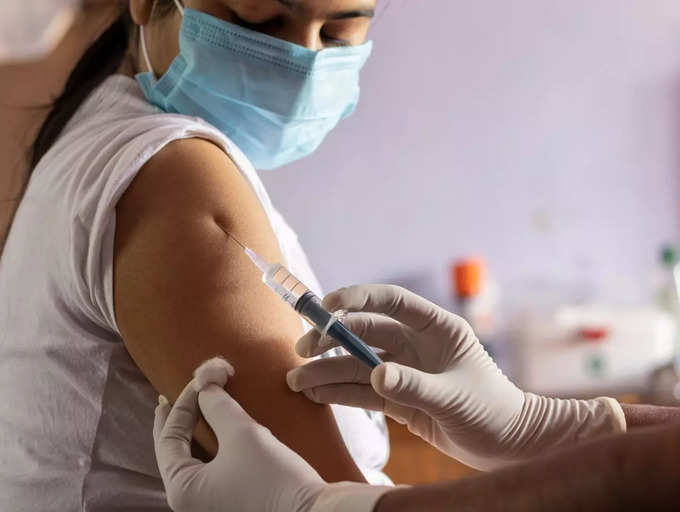
So far, vaccination is only the most effective armour against the virus. It might be because of vaccination, the Omicron variant of coronavirus could not affect human beings seriously.

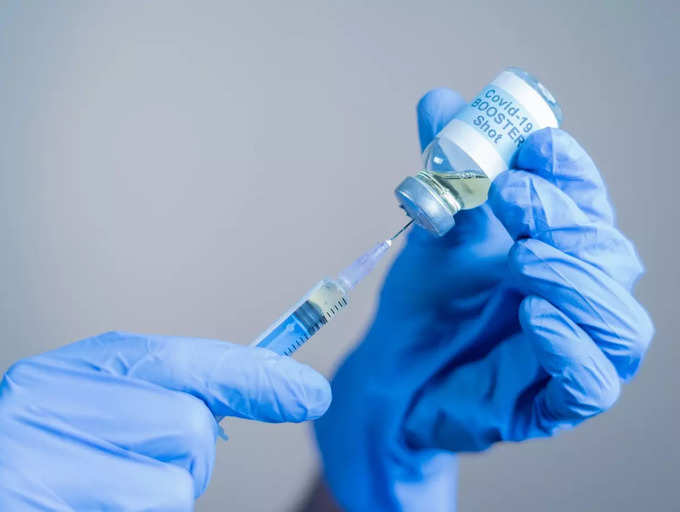
In order to safeguard against viruses, one definitely needs to be vaccinated. Not just vaccination, one should also get timely precaution dose or booster shots.

What is the role of vaccines?

Is it possible that these "no COVID" people didn't get the infection during the first wave and due to early vaccination their body developed an immunity that is hard for the virus to invade? It can be a possibility.

Scientists and health experts vouch for the effectiveness of COVID vaccine. Less severity and low hospitalisations seen during the Omicron wave were attributed to worldwide vaccination programs.

To explain the possible reason behind why many do not get COVID, experts have said that cross reactive immunity and vaccines benefit these individuals. “Certainly cross-reactive immunity from previous infections with common cold coronavirus is likely to be a major contributor, particularly as these individuals may have additional immune benefits from also having been vaccinated," Lawrence Young, a professor of molecular oncology at Warwick University told the media.


This is only for your information, kindly take the advice of your doctor for medicines, exercises and so on.   

https://gscrochetdesigns.blogspot.com. one can see my crochet creations  
https://gseasyrecipes.blogspot.com. feel free to view for easy, simple and healthy recipes    
https://kneereplacement-stickclub.blogspot.com. for info on knee replacement

Labels: , , , , ,

Sunday, April 25, 2021

Indian American Scientist Spots Genes that Fight COVID-19 Infection

chanda genes  Sumit K. Chanda, professor and director of the Immunity and Pathogenesis Program at Sanford Burnham Prebys Medical Discovery Institute, is leading research that identified a set of human genes that fight the SARS-CoV-2 infection.

Labels: , , , ,