Sunday, August 20, 2023

New rapid blood test to detect 18 infectious, inflammatory diseases in kids

An international team, led by British researchers, has developed a simple blood test which may be able to rapidly diagnose, detect and distinguish between 18 infectious or inflammatory diseases -- including group B Streptococcus (GBS), respiratory syncytial virus (RSV), and tuberculosis.

Using a single sample of blood, the test could enable clinicians to diagnose the cause of fever based on the distinctive pattern of genes being "switched on or off" by the body in response to specific illnesses.

While current tests for some of the conditions can take several hours, days or even weeks, a test-based on this approach would be capable of providing a result in under 60 minutes.

Researchers from Imperial College London explained that a diagnostic test based on patients' gene expression could drastically improve the diagnosis of childhood diseases, reduce delayed and missed diagnoses, and have a significant impact on health care, especially in developing regions.

"Despite huge strides forward in medical technology, when a child is brought into hospital with a fever, our initial approach is to treat based on the doctors' 'impression' of the likely causes of the child's illness," said Professor Michael Levin, from the Imperial’s Department of Infectious Disease.

"As clinicians, we need to make rapid decisions on treatment, often just based on the child's symptoms, information from the parents, and our medical training and experience," he added, "but we may not know whether a fever is bacterial, viral, or something else until hours or days after a child has been admitted, when their test results come back."

"Such delays can stop patients getting the right treatment early on, so there is a clear and urgent need to improve diagnostics. Using this new approach, once it's translated to near point of care devices, could be transformative for health care."

In the study, researchers explored an approach focused on detecting the pattern of a patient's gene expression in blood that occurs in response to specific infections and inflammatory conditions.

Using data from thousands of patients (including more than 1,000 children with 18 infectious or inflammatory diseases) the team was first able to identify which key genes were switched "on" or "off" in response to a range of illnesses -- providing a molecular signature of disease.

Machine learning was then applied to identify which patterns of gene expression corresponded to the specific disease areas and pathogens -- focusing in on a panel of 161 genes for 18 conditions.

This panel was further validated in a cohort of 411 paediatric patients admitted to hospital with sepsis or severe infections (representing 13 of the 18 diseases), where gene expression was captured from blood analysis, and where diagnoses were made using current gold standard clinical methods.


This is only for your information, kindly take the advice of your doctor for medicines, exercises and so on.   

https://gscrochetdesigns.blogspot.com. one can see my crochet creations  
https://gseasyrecipes.blogspot.com. feel free to view for easy, simple and healthy recipes    
https://kneereplacement-stickclub.blogspot.com. for info on knee replacement
https://cancersupportindia.blogspot.com  for infor on cancer and health related topics
https://GSiyers home remedies.blogspot.com   is the latest addition to my blogs. I'm going to add posts there, do give me your valuable feed back on my blogs. Thanks a lot, take care, be healthy and be happy.

Labels: , , , , , , , , , ,

Tuesday, January 11, 2022

Prion Disease - the Infectious Disease Few People Know

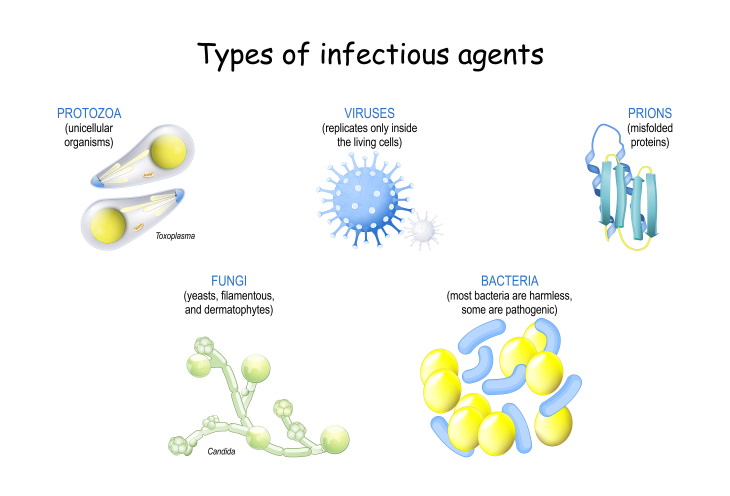
We’ve all heard of bacteria, fungi, and viruses. These microscopic organisms can be beneficial to humans, or they can get into human cells and cause an infection. But there’s one less-known infectious agent that doesn’t fit in any of these three categories - prions. These poorly understood disease-causing agents trigger neurodegenerative brain diseases, and everyone should learn what they are. 
 
What are prion diseases? 
If you’re wondering why you haven’t heard of prions before, that’s probably because they’re a relatively recent discovery. Major research into prions and how they work only began in the late 1990s. 
 
Simply put, prions (pronounced as pry-ons in British English and pree-ons in the US) are misshapen, or misfolded, proteins. Unlike any other known infectious agent, prions don’t have DNA or RNA of their own. But they can trigger the healthy proteins that make up the human body to change their shape, which leads to a cascade of degenerative protein changes known as prion disease.

Prion Disease infectious diseases
Although not very common, prion diseases occur every year, with around 300 cases being recorded annually in the US alone. Most prion diseases affect the brain, which leads to a gradual cognitive and general neurological decline that resembles dementia, and eventually death (sometimes as quickly as a few months). 
 
Another difference between prion disease and other infectious agents lies in the way one can get the disease. On one hand, you could acquire prion disease much like the stomach flu: through food contamination or dirty medical equipment. But prion disease can also be hereditary or absolutely spontaneous. The sporadic form of prion disease is the most common one, and it is more widespread in older adults. 
 
And as if that wasn’t enough, it gets even scarier because, when prion disease develops, it can infect others - whatever the initial cause. Medical researchers are not sure why prions occur and don’t have an effective treatment for prion disease.

Types of prion disease  
Medicine currently recognizes 5 major prion diseases in humans: 
 
Fatal familial insomnia (FFI) - a rare genetic brain disease that damages the brain region called the thalamus and causes severe insomnia. As a result, significant physical and mental damage occurs. A parent has a 50% chance of passing FFI down to their children. 
 
Creutzfeldt-Jakob disease (CJD) - usually sporadic but can also be genetic or acquired. This neurodegenerative prion disease is characterized by rapid progression. 
 
Variant Creutzfeldt-Jakob disease (vCJD) - also known as mad cow disease, it’s an infectious disease that spreads from animals to humans through consuming the meat of infected animals. 
 
Kuru - infectious prion disease observed among participants in cannibalistic rituals in New Guinea. 
 
Gerstmann-Straussler-Scheinker syndrome (GSS) - an extremely rare type of early-onset dementia that usually runs in families and affects the cerebellum. Prion Disease woman with headache
Prion Disease woman with headache

Symptoms of prion diseases 
One more scary fact about prion disease is that it can linger in the body for a long time before causing any symptoms. This incubation period can last for 5 to 20 years. Once detected, symptoms usually get progressively and often rapidly worse. 
 
Unlike other infectious agents like bacteria or viruses, all currently-known prions seem to target the nervous system exclusively. The majority of prion diseases create holes in brain tissue, causing a condition called spongiform encephalopathy. Dementia-like symptoms are very common in patients with prion diseases, namely: 
 
 - problems with memory and thinking
 
- abnormal involuntary movements 
 
- loss of coordination (ataxia) 
 
- insomnia 
 
- slurred speech 
 
- vision problems 
 
- personality changes 
 
- disorientation and confusion. 
 
However, since different prion diseases affect various parts of the brain, symptoms can be quite different. A diagnosis is usually made by conducting brain imaging, bloodwork, and cerebrospinal fluid testing. 
 
Currently, no treatments of prion diseases exist. Doctors can prescribe patients who suffer from a prion disease pain relief drugs, muscle spasm medication, antidepressants, or sedatives. Researchers continue studying prion diseases and searching for potential cures and treatments.


This is only for your information, kindly take the advice of your doctor for medicines, exercises and so on.   

https://gscrochetdesigns.blogspot.com. one can see my crochet creations  
https://gseasyrecipes.blogspot.com. feel free to view for easy, simple and healthy recipes    
https://kneereplacement-stickclub.blogspot.com. for info on knee replacement


Labels: , , , , , , , , , ,

Saturday, November 27, 2021

New Vaccine May Help Combat Several Tick-Borne Illnesses

Lyme disease has recently become one of the most common infectious diseases in America. According to estimates, more than 40,000 cases of Lyme disease are reported annually, but experts say that the actual number of infections could be 10 times greater. The bacterial infection, which jumps from ticks to humans, could spread faster in the coming years because of climate change - public health officials fear.

Vaccine for Lyme Disease, bacterium Borrelia burgdorferi

 Caused primarily by the bacterium Borrelia burgdorferi, the most recognizable sign of the disease is a bull's eye-shaped rash that develops around the bite after a few days. Other symptoms include fever, headache, joint pain, and fatigue. If not treated soon enough, the infection can spread to the joints, heart, and nervous system and cause severe complications. While Lyme disease can be treated with antibiotics, there’s no vaccine to give you extra protection against the most common vector-borne disease in America.

Thankfully, there appears to be some good news on that end. Yale University researchers have recently developed a novel vaccine that has shown promise in preventing the spread of Lyme disease. What’s more, the vaccine may also combat other tick-borne diseases.

How does the vaccine work? 
The researchers explain that the saliva of the black-legged tick Ixodes scapularis, which transmits the Lyme disease pathogen Borrelia burgdorferi, contains several proteins. The team focused their research on 19 different varieties. While searching for the basis of the vaccine, Yale researchers and a team from the University of Pennsylvania have analyzed pieces of mRNA that produce all 19 of the saliva proteins. Incidentally, this is a similar approach to that used by the scientists who created the COVID-19 vaccine. 
 
In a series of experiments, they tested the vaccine on guinea pigs bitten by a Lyme disease-carrying tick. All human vaccines directly target pathogens. However, instead of triggering an immune response against a particular pathogen, the new vaccine attacks the tick’s saliva. The study’s authors say that this prompts an immediate skin response to the bite and therefore limits the amount of time the tick has to feed and infect the host.
Vaccine for Lyme Disease, vial of vaccine
Lyme disease is not the only illness these insects can carry. There are multiple other tick-borne diseases, and the researchers believe that this approach provides broader protection than a vaccine that targets a specific pathogen. They also feel that this approach can be used together with other traditional, pathogen-based vaccines to increase their effectiveness. 
 
For the trial, the team attached Lyme-ridden ticks on two sets of guinea pigs: one that received the vaccine and the unvaccinated control group. The ticks were removed after the animals began developing inflammation or a rash. They discovered that, unlike the non-immunized group, the vaccinated animals developed an immune reaction - redness at the tick bite area. As long as they removed the ticks right after the redness started, none of the immunized pigs developed Lyme disease. On the other hand, almost half of the control group was found to be infected with B. burgdorferi after the ticks were taken out.

Interestingly, when the investigators placed a single tick to immunized guinea pigs and didn’t remove it, not a single animal was infected. Conversely, 60% of the unvaccinated animals did become infected. Furthermore, the vaccine also prevented the ticks from feeding aggressively on the immunized animals and caused them to dislodge from their skin quicker. 
 
The vaccine does have its limits, however. The researchers found that protection against Lyme disease waned even in immunized animals when three ticks remained attached to the guinea pigs. 
 
In their report published in the journal Science Translational Medicine, the scientists note that this vaccine enhances the ability to recognize a tick bite and partially turns a tick bite into a mosquito bite. “When you feel a mosquito bite, you swat it. With the vaccine, there is redness and likely an itch so you can recognize that you have been bitten and can pull the tick off quickly before it has the ability to transmit B. burgdorferi,” they add.

Will the new vaccine work on humans?
Now, the most important question is – will this novel vaccine provide protection against Lyme disease to humans? The team accepts that this is still an unfinished product, and they need to conduct a few more comprehensive tests before the vaccine can be deemed fit for human trials. 
 
In similar experiments using mice, they discovered that the vaccine was unable to protect against tick-borne infections. According to the study authors, ticks may have found new ways to feed off of mice. Another possibility may be that guinea pig skin, like human skin, has more layers than the skin of mice.

Thus, for now, the vaccine will be going through further animal trials and possible modifications. If the results continue to show promise, human trials can then be started. The signs are positive, and if the vaccine proves to be successful, it will come as a huge relief for countries that regularly suffer from Lyme disease and other tick-borne diseases.

This is only for your information, kindly take the advice of your doctor for medicines, exercises and so on.   

https://gscrochetdesigns.blogspot.com. one can see my crochet creations  
https://gseasyrecipes.blogspot.com. feel free to view for easy, simple and healthy recipes    
https://kneereplacement-stickclub.blogspot.com. for info on knee replacement

Labels: , , , , ,