Tuesday, April 23, 2024

Link Found Between Cats and Alzheimer's?

Recent research has brought into focus a potentially unsettling link for cat lovers: owning a feline may increase the risk of developing schizophrenia-related disorders. This connection is not new to science but continues to be contentious, with various studies drawing different conclusions over the years.

Australian researchers, including psychiatrist John McGrath from the Queensland Centre for Mental Health Research, took on the task of analyzing 17 studies spanning 44 years and 11 countries, including the US and the UK. Their findings, published in the December issue of Schizophrenia Bulletin, suggest that individuals who own cats might be at twice the risk of developing schizophrenia or similar disorders compared to those without cats. 
 
But why cats? The answer might lie in a seemingly harmless parasite known as Toxoplasma gondii (T. gondii), often carried by cats and transmitted through their feces. This parasite can also find its way into the human body through undercooked meat or contaminated water, but the feline connection has garnered particular interest due to the intimate nature of pet ownership.

T. gondii’s intrusion into the human body is not usually marked by physical symptoms, but the parasite is capable of reaching the central nervous system, where it may wreak havoc on neurotransmitters. Indeed, it’s linked to personality changes and even psychotic symptoms. Does this mean our furry friends are to blame for serious mental health issues? Not exactly, but the relationship between T. gondii infection and schizophrenia has sparked significant debate and research. 
 
The McGrath team’s meta-analysis indicates a significant association between cat ownership and increased odds of developing schizophrenia-related disorders. However, it's crucial to recognize the limitations of the studies involved. Most of the analyzed research comprises case-control studies, which, while useful for identifying associations, do not prove causation. Furthermore, many of these studies did not account for other factors that could influence both cat ownership and the development of mental health issues, such as household income or urban versus rural living environments. 
 
The research world has seen its share of contradictory findings on this topic. Some studies point to specific childhood years, like ages 9 to 12, as critical periods during which cat exposure might influence mental health later in life. Other studies, however, have found no significant links at all, suggesting that the timing and context of exposure are key. 
 
One particularly interesting aspect of the research involves the concept of "schizotypy"—a cluster of personality traits that may T.gopredispose individuals to psychosis. A U.S. study involving 354 psychology students found no significant correlation between cat ownership and schizotypy scores, but a twist in the tale emerged with the examination of cat bites: students who had been bitten by cats scored higher on schizotypy scales. This finding opens the door to the possibility that it is not merely the presence of a cat but specific interactions, like bites, that might be critical.

Moreover, another study highlighted a different pathogen, Pasteurella multocida, found in cat bites, suggesting that other factors related to cats might also influence psychological health. This points to a complex interplay of variables, each adding layers to the understanding of cat ownership and mental health. 
 
Despite these fascinating insights, the research community agrees that more robust, high-quality studies are needed. Large, representative samples and longitudinal studies could provide clearer answers and help untangle the complex web of cat ownership, T. gondii exposure, and mental health outcomes. 
 
For cat owners and lovers, these findings might sound alarming, but it's important to balance this knowledge with practical measures. Good hygiene practices, such as washing hands after handling cats or cleaning litter boxes, can reduce the risk of T. gondii infection. Also, cooking meat thoroughly and ensuring that drinking water is clean can help prevent the parasite's transmission.

In conclusion, while there is an intriguing association between cat ownership and an increased risk of schizophrenia-related disorders, cat lovers need not panic. It’s essential to approach this information with a critical mind and consider personal circumstances and health practices. Future research will hopefully provide more definitive answers, helping cat owners understand and manage any potential risks without compromising the joy their pets bring into their lives.


This is only for your information, kindly take the advice of your doctor for medicines, exercises and so on.   

https://gscrochetdesigns.blogspot.com. one can see my crochet creations  
https://gseasyrecipes.blogspot.com. feel free to view for easy, simple and healthy recipes    
https://kneereplacement-stickclub.blogspot.com. for info on knee replacement
https://cancersupportindia.blogspot.com  for infor on cancer and health related topics
https://GSiyers home remedies.blogspot.com   is the latest addition to my blogs. I'm going to add posts there, do give me your valuable feed back on my blogs. Thanks a lot, take care, be healthy and be happy.

Labels: , , , ,

Tuesday, January 11, 2022

Prion Disease - the Infectious Disease Few People Know

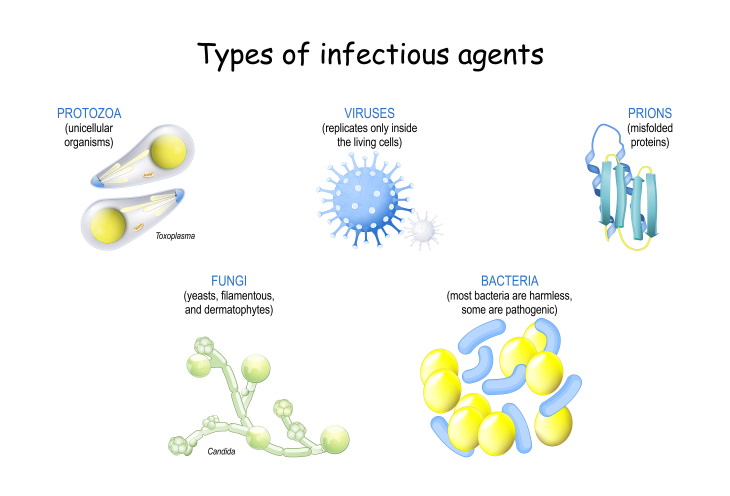
We’ve all heard of bacteria, fungi, and viruses. These microscopic organisms can be beneficial to humans, or they can get into human cells and cause an infection. But there’s one less-known infectious agent that doesn’t fit in any of these three categories - prions. These poorly understood disease-causing agents trigger neurodegenerative brain diseases, and everyone should learn what they are. 
 
What are prion diseases? 
If you’re wondering why you haven’t heard of prions before, that’s probably because they’re a relatively recent discovery. Major research into prions and how they work only began in the late 1990s. 
 
Simply put, prions (pronounced as pry-ons in British English and pree-ons in the US) are misshapen, or misfolded, proteins. Unlike any other known infectious agent, prions don’t have DNA or RNA of their own. But they can trigger the healthy proteins that make up the human body to change their shape, which leads to a cascade of degenerative protein changes known as prion disease.

Prion Disease infectious diseases
Although not very common, prion diseases occur every year, with around 300 cases being recorded annually in the US alone. Most prion diseases affect the brain, which leads to a gradual cognitive and general neurological decline that resembles dementia, and eventually death (sometimes as quickly as a few months). 
 
Another difference between prion disease and other infectious agents lies in the way one can get the disease. On one hand, you could acquire prion disease much like the stomach flu: through food contamination or dirty medical equipment. But prion disease can also be hereditary or absolutely spontaneous. The sporadic form of prion disease is the most common one, and it is more widespread in older adults. 
 
And as if that wasn’t enough, it gets even scarier because, when prion disease develops, it can infect others - whatever the initial cause. Medical researchers are not sure why prions occur and don’t have an effective treatment for prion disease.

Types of prion disease  
Medicine currently recognizes 5 major prion diseases in humans: 
 
Fatal familial insomnia (FFI) - a rare genetic brain disease that damages the brain region called the thalamus and causes severe insomnia. As a result, significant physical and mental damage occurs. A parent has a 50% chance of passing FFI down to their children. 
 
Creutzfeldt-Jakob disease (CJD) - usually sporadic but can also be genetic or acquired. This neurodegenerative prion disease is characterized by rapid progression. 
 
Variant Creutzfeldt-Jakob disease (vCJD) - also known as mad cow disease, it’s an infectious disease that spreads from animals to humans through consuming the meat of infected animals. 
 
Kuru - infectious prion disease observed among participants in cannibalistic rituals in New Guinea. 
 
Gerstmann-Straussler-Scheinker syndrome (GSS) - an extremely rare type of early-onset dementia that usually runs in families and affects the cerebellum. Prion Disease woman with headache
Prion Disease woman with headache

Symptoms of prion diseases 
One more scary fact about prion disease is that it can linger in the body for a long time before causing any symptoms. This incubation period can last for 5 to 20 years. Once detected, symptoms usually get progressively and often rapidly worse. 
 
Unlike other infectious agents like bacteria or viruses, all currently-known prions seem to target the nervous system exclusively. The majority of prion diseases create holes in brain tissue, causing a condition called spongiform encephalopathy. Dementia-like symptoms are very common in patients with prion diseases, namely: 
 
 - problems with memory and thinking
 
- abnormal involuntary movements 
 
- loss of coordination (ataxia) 
 
- insomnia 
 
- slurred speech 
 
- vision problems 
 
- personality changes 
 
- disorientation and confusion. 
 
However, since different prion diseases affect various parts of the brain, symptoms can be quite different. A diagnosis is usually made by conducting brain imaging, bloodwork, and cerebrospinal fluid testing. 
 
Currently, no treatments of prion diseases exist. Doctors can prescribe patients who suffer from a prion disease pain relief drugs, muscle spasm medication, antidepressants, or sedatives. Researchers continue studying prion diseases and searching for potential cures and treatments.


This is only for your information, kindly take the advice of your doctor for medicines, exercises and so on.   

https://gscrochetdesigns.blogspot.com. one can see my crochet creations  
https://gseasyrecipes.blogspot.com. feel free to view for easy, simple and healthy recipes    
https://kneereplacement-stickclub.blogspot.com. for info on knee replacement


Labels: , , , , , , , , , ,

Sunday, February 23, 2020

12 signs you need more magnesium


Magnesium is a mineral found in many types of foods; it plays an essential role in human DNA production and repair, and in maintaining healthy bones, nerves and muscles. Though it is readily available, most Americans do not meet their need for magnesium through their diet. 
 
The National Institutes of Health reports that teenage girls and men over the age of 70 are the most likely to suffer from a magnesium deficiency; if you're not in either of those categories, you still should consider getting your magnesium level checked if you suffer the following 12 symptoms.
 
 1. Low energy. "Magnesium is involved in at least 300 different chemical reactions in our body, and a lot have to do with energy production," functional medicine nutritionist Alison Boden told Reader's Digest. "A sign of low magnesium can be low energy." 
 
2. Twitching or cramping. Because magnesium plays an important role in muscle relaxation, insufficient intake can result in unintended muscle movement. "Without magnesium, our muscles would be in a constant state of contraction," says Ancient Minerals.
 
3. Frequent headaches. Magnesium deficiency lowers serotonin levels, causes blood vessels to constrict and affects neurotransmitter function, all related to headaches -- especially migraines. MigraineAgain estimates that 50% of migraine sufferers have a magnesium deficiency. 
 
4. Insomnia. If you're having a hard time falling or staying asleep, it may be due to low levels of magnesium, particularly if you are experiencing a lot of stress. Stress hormones increase blood pressure and heart rate; this is partly accomplished by depleting the body of its magnesium, explains Dr. Ronald Hoffman. If there isn't enough magnesium available for the body to replenish itself, sleeping becomes a problem.

5. Irregular heartbeat. With low magnesium levels, the heart can have trouble staying in its regular rhythm. Doctors often prescribe magnesium supplements for patients who complain of an irregular heartbeat.
 
6. Increased sensitivity to noise. Not having enough magnesium curtails its role in stabilizing the nervous system, Hoffman says. This often results in hyperflexia, an enhanced startle reflex.
 
7. Seizures. Seizures can result when the nervous system is severely compromised due to lack of magnesium, reports the National Institutes of Health (NIH).
 
8. Low bone density. Magnesium plays a major role in bone formation, and the majority of the body's magnesium is stored in the bones. "People with higher intakes of magnesium have a higher bone mineral density," says the NIH.

9. Constipation. Bowel movements often slow down without enough magnesium in the body. Magnesium is the main ingredient in many over-the-counter laxatives. 
 
10. High blood pressure. Magnesium is very important in maintaining a healthy blood pressure; a deficiency can definitely cause pressure to be too high. "Eating foods high in magnesium and other minerals can help prevent high blood pressure in people with prehypertension," says WebMD.  

11. Type 2 diabetes. Breaking down blood sugars is another of magnesium's jobs in the human body. "People with higher amounts of magnesium in their diets tend to have a lower risk of developing diabetes," says the NIH. Research is ongoing to determine whether magnesium therapy can be used in diabetes treatment. 
 
12. Depression, anxiety, confusion or personality changes. Low levels of magnesium in the brain can affect neurological functions that result in all sorts of problems. Studies have shown that some phobias -- such as agoraphobia -- have developed as a result of low magnesium levels, Dr. Hoffman says. Magnesium has long been used as an effective home remedy for these symptoms, says Psychology Today in an article titled "Magnesium and the Brain: The Original Chill Pill."
 
If you suspect that you may be suffering from a magnesium deficiency, it is advisable to confirm your suspicion by consulting your doctor. If you are not sure how to bring the topic up, next time you are at the doctor, here are 12+ questions about magnesium you'll want answers to. read the next post.
 
The safest way to increase magnesium intake is to simply adjust your diet through eating magnesium-rich foods. In the unlikely event of ingesting excess magnesium in food, it is safely eliminated by healthy kidneys. Excess magnesium from supplements cannot be eliminated in this way and can result in enough toxicity to cause cardiac arrest.
 
This is only for your information, kindly take the advice of your doctor for medicines, exercises and so on.     

https://gscrochetdesigns.blogspot.com. one can see my crochet creations  
https://gseasyrecipes.blogspot.com. feel free to view for easy, simple and healthy recipes    
https://kneereplacement-stickclub.blogspot.com. for info on knee replacement


Labels: , , , , , , , , , , , , ,