The Best Natural Remedies for Polycystic Ovary Syndrome (PCOS)
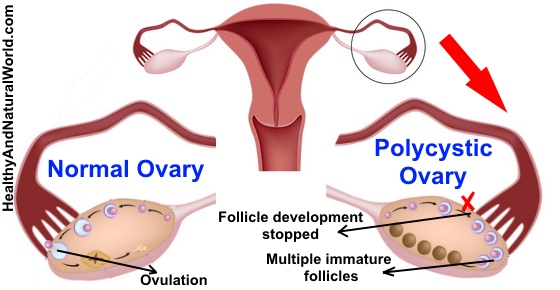
According to the U.S. Health Department’s Office on Women Health, between 1 in 10 and 1 in 20 women, who are of childbearing age, suffer from Polycystic Ovary Syndrome (PCOS). PCOS currently affects an estimated five million Americans and although the majority of these cases are in mature women, girls as young as 11 can suffer from the disorder.
Polycystic ovary syndrome is a problem in which a woman’s hormones are out of balance and it manifests itself through a spectrum of symptoms such as:
- Infertility
- Irregular menstruation (either very heavy or very light watery period)
- Lack of menstruation
- Lack of ovulation
- Multiple cysts on the ovaries
- Acne
- Excessive facial hair
- Obesity
- Insulin resistance
By focusing on hormone regulation as well as treating the symptoms of PCOS, you can find valuable relief in some of the natural herbs, supplements, and alternative therapies. Please remember to discuss any herbal extracts or supplements you decide to take with your physician.
Polycystic Ovary Syndrome – Herbal Remedies
If you are looking for herbal extracts that can help you with the symptoms of PCOS, then the following herbal extracts may be worth investigating:
Chaste Tree
Also known as Vitex Agnus or Chaste Berry, Chaste Tree extract may be beneficial for regulating hormone levels. Hormone regulation plays a vital role in treating some of the symptoms of PCOS. An imbalance of hormones in those who suffer from PCOS often results in breast tenderness, failure to ovulate, and irregular menstrual cycles.
Hormones that are affected by PCOS include estrogen, progesterone, and prolactin. In a study published in the Journal of Complementary and Alternative Medicine, researchers found evidence that Chaste Berry helped to lower prolactin levels. There was also evidence that Vitex was useful for treating infertility and for improving menstrual regularity.
If you are considering adding Vitex to your therapies for PCOS, then you need to consider the fact that it may take up to four cycles to see the results of the supplement, and you need to consult your herbalist or physician to discuss the best dosage for your circumstances and always opt for an organic
Chinese Licorice
Chinese Licorice (Glycyrrhiza uralensis) shows benefits for the regulation of hormonal levels in studies focused on PCOS. In a study published in the Medical Journal called Steroids, researchers showed that 3.5 g of Licorice extract reduced testosterone levels while leaving other hormonal levels unchanged, therefore helping to balance hormonal levels in trial subjects.
Licorice may also benefit individuals struggling with PCOS, since Licorice helps to reduce insulin resistance and it regulates glucose levels, according to the Indian Journal of Experimental Biology. Since insulin resistance is a factor in most cases of PCOS, licorice may be beneficial in both areas for those women struggling with PCOS.
As with Vitex, Licorice may need to be taken for a few cycles before you may begin to see results. You should also consult with your physician or herbalist before adding Licorice extract to your daily diet.
A traditional Japanese formulation of licorice and white peony — called Shakuyaku-Kanzo-To — has been shown in trials on women with and without PCOS to decrease testosterone levels, stimulate ovulation, and help with conception.
Black Cohosh
In a trial published in the European Journal of Obstetrics and Gynecology, individuals were given 20 mg of Black Cohosh for 10 days or given 100 mg clomiphene citrate for 5 days. The study found that Black Cohosh can be used as an alternative to clomiphene citrate to induce ovulation. Ovulation, fertility, and hormonal balance are important issues for PCOS sufferers, and Black Cohosh therefore offers you a natural alternative to some of the drugs used to promote fertility.
- According to the Journal of Pharmacology, Black Cohosh regulates the compounds that help you to deal with stress..
- In another study from the Journal of Ehtnopharmacology, Black Cohosh was found to reduce depression and it helped to combat the effects of stress
Black Cohosh therefore offers benefits in terms of hormone balance and stress management for those suffering from PCOS.
Cinnamon
Cinnamon can used as natural medicine for great health and it can also offer multiple benefits for women struggling with the effects of PCOS.
The regularity of menstrual cycles and ovulation play a large role in PCOS. Herbal extracts that can balance hormonal levels, restore regular menstrual cycles, and promote ovulation can help alleviate many of the symptoms associated with PCOS. In a trial published in the American Journal of Gynecology, women taking 1.5 g of cinnamon per day showed improved menstrual regularity.
Cinnamon may also help to regulate insulin levels in certain individuals. In a trial published in Nutrition New York, researchers found that patients given 750 mg of cinnamon for 12 weeks experienced improved insulin sensitivity.
Make Sure to Get the Right Type of Cinnamon
There are two major types of cinnamon for culinary use:
- Ceylon cinnamon (Cinnamomum verum or Cinnamomum zeylanicum, also known as “true cinnamon”)
- Cassia cinnamon (Cinnamomum aromaticaum and Cinnamomum burmannii, also known as “Saigon cinnamon”)
Ceylon cinnamon is native to Sri Lanka, whereas cassia cinnamon is native to Burma and also grown in China and Vietnam.
You are more likely to find cassia cinnamon in the United states and Canada which is less expensive. While both cassia and Ceylon cinnamon are derived from the inner bark of Cinnamomum trees, Ceylon cinnamon is preferable due to much lower amounts of coumarin, a naturally occurring organic compound that can cause liver damage if consumed in excess.
Other Natural Remedies for PCOS
Additional menstruation/hormonal balancing herbs recommended by naturopathic doctors and herbalists based on their clinical experience and traditional history include:
- Red raspberry (Rubus idaeus) leaf-
- Ginger (Zingiber officinale)
- Rrosemary (Rosmarinus officinalis)
- Feverfew (Tanacetum parthenium)
- Partridge berry (Mitchella repens)
- Mugwort (Artemisia vulgaris)
- False unicorn (Chamaelirium luteum) root
Supplements Vital for Supporting Your Body
Other than the herbal extracts mentioned above, if you are struggling with PCOS, then you may want to ensure your intake of certain essential vitamins and minerals is sufficient to support your body’s needs.
Vitamin deficiencies can exacerbate the symptoms of PCOS like hormonal imbalance, stress, and insulin resistance. There are also vitamins and minerals that are well known for their ability to help reduce these symptoms.
Vitamin D and Calcium
Many of the women who suffer from PCOS also seem to have deficiencies of vitamin D and calcium. Calcium, magnesium, and vitamin D are all classified as essential minerals and it is vital for most women to supplement these vitamins and minerals to ensure overall health. Make sure you are aware of the warning signs of vitamin D deficiency and magnesium deficiency.
Vitamin D metabolism relies on the availability of magnesium, and to ensure healthy calcium absorption you need optimal levels of vitamin D. This is why vitamin D, calcium, and magnesium almost always appear together in supplements .
Calcium and vitamin D play a vital role in regulating stress and reducing inflammation according to a study published in the Clinical Endocrinology Journal.[10] Since stress invariably accompanies PCOS, vitamin D and calcium supplementation may help to alleviate some of the effects of stress. Vitamin D may also play a role in reducing the risks of depression and anxiety. Other option can include certain essential oils for anxiety and depression or turmeric.
Vitamin B12
Vitamin B12 plays a key role in your body’s ability to create energy via the metabolic processes. Vitamin B12 is therefore crucial in supporting factors like insulin function and healthy glucose metabolism.
Vitamin B12 is also one of the 5 essential nutrients that may be missing from your diet so you should be aware of the symptoms of vitamin B12 deficiency.
In a study published in Reproductive BioMedicine online, women with PCOS were found to have lower levels of vitamin B12. Supplementation in these cases would therefore improve insulin resistance and the other symptoms of metabolic syndrome.
Inositol
Inositol, although not a vitamin, is a vitamin-like compound that is classified as a carbohydrate. Researchers speculate that inositol may help to balance certain compounds in the body and may therefore have favorable effects on things like insulin resistance.
Supplementation with inositol significantly improved menstrual cycles and insulin resistance in women with PCOS.
Inositol was also effective at improving ovarian function.
Inositol in combination with Glucomannan improved insulin resistance in patients with PCOS.[13]
Alternative Therapies for PCOS
A number of alternative and complementary therapies may help you to deal with the symptoms of PCOS.
Acupuncture
The efficacy of acupuncture on the symptoms associated with PCOS is covered in numerous studies. In some studies, acupuncture improved insulin resistance. Other studies indicated that acupuncture and electro-acupuncture improved hormonal and endocrine balance.
According to the review of the studies, published in the American Journal of Physiology, acupuncture could be a complementary or alternative help to improve reproductive and endocrine functions in women with PCOS.[14]
Acupuncture is widely practiced throughout the world, so if you are interested in acupuncture, then find out about a local Acupuncturist near you.
Qi Gong and Tai Chi
Exercise is an essential component of any healthy lifestyle. With the amount of stress, anxiety, and depression that is often associated with PCOS, healthy exercise may help to reduce some of the symptoms you experience.
Tai Chi and Qi Gong are Chinese exercise modalities that are taught all over the world and are often used for individuals who may be suffering from certain complaints.
Both Tai Chi and Qi Gong contain elements of meditation as well as exercise and they have therefore been particularly beneficial for patients suffering from anxiety and stress.
In a study published in the American Journal of Physiology, researchers mentioned that Tai Chi and Qi Gong helped to regulate glucose levels, helped to improve insulin sensitivity, and helped to reduce anxiety in patients suffering from diabetes.
Although this study was not on PCOS, the researchers felt that these types of exercise regimens would have similar effects for individuals suffering from PCOS.
How to Choose your Therapy
The above list of herbal extracts, supplements, and alternative therapies does not cover all of the alternatives that can be beneficial for the symptoms of PCOS. The most important factor to bear in mind when choosing your approach to PCOS, is that many of the therapies mentioned above are not mutually exclusive but in fact complementary.
You need to discuss any herbal extracts or supplements you decide to take with your physician or herbalist and be sure to mention the vitamins and supplements you take, but for the most part, you often do not have to choose one or the other.
There are acupuncturists all over the world and Tai Chi and Qi Gong classes can be found in most towns. Joining a Tai Chi class, going for acupuncture sessions, ensuring your diet contains the right nutrients to support health, and adding herbal extracts that benefit your particular situation will all go a long way to supporting your overall health and well-being, both now and in the long term.