Monday, June 01, 2020

5 Tips to Keep Your Toothbrush Truly Clean

Disinfecting and maintaining cleanliness are some of the most talked-about topics these days, in light of the Covid-19 pandemic. One of the items that should always be kept in pristine condition, no matter what time of the year it is, is the toothbrush. Appropriate cleaning, storage, and replacement of toothbrushes are extremely important to prevent the spread of diseases and maintain oral hygiene. The following tips detail the best ways to do so. 
 

How Toothbrushes Get Contaminated

  • Mouth - Out mouths are home to millions of germs, including those that live in the plaque or on our teeth, such as those responsible for the development of dental caries (cavities) called M. Sutans. Moreover, they come in contact with saliva, blood, oral debris, and toothpaste. It’s no surprise that some of these germs can collect on your toothbrush and be transferred or re-introduced into your mouth during brushing. Even visibly clean toothbrushes can retain some leftover potentially harmful germs.
     
  • Environment - Many people keep their toothbrush in the same space the toilet is found. When the toilet is flushed, the swirling water that removes waste from the bowl may mix up with small particles of the waste, containing bacteria called fecal coliform. According to studies, this bacteria can spread as far as 1.5 feet, and it’s perfectly possible for it to travel to your toothbrush. The same is true about the sink - bacteria and viruses could potentially be spread while you're washing your hands or other items in the sink.
Below we list several toothbrush storage and cleaning tips that can help you prevent the spread of germs.

1. Wash Your Hands Before and After Use

Wash Your Hands is probably something you've heard quite a lot recently. And it isn’t just a piece of empty advice, the fight against coronavirus has really put an emphasis on how effectively a simple hand wash annihilates bacteria. Your hands are the main source of transmission of germs, bacteria, and viruses because they come in contact with the biggest variety of surfaces and objects.
Washing your hands thoroughly for 20 seconds at least, before and after brushing your teeth is the simplest way to prevent unwanted microorganisms from ending up on your toothbrush. “People are vulnerable to the germs that end up on their hands and under their fingernail beds.”

2. Use Warm Water For Rinsing

Don’t underestimate the importance of rinsing your toothbrush well after use to remove any remaining food particles, toothpaste, and plaque debris. Warm water will loosen up the bristles and remove debris more effectively. Additionally, wipe down the handle. because bacteria can build up there as saliva and water run down the brush.
 3. Proper Storage is Essential
5 Tips to Keep Your Toothbrush Truly Clean storage
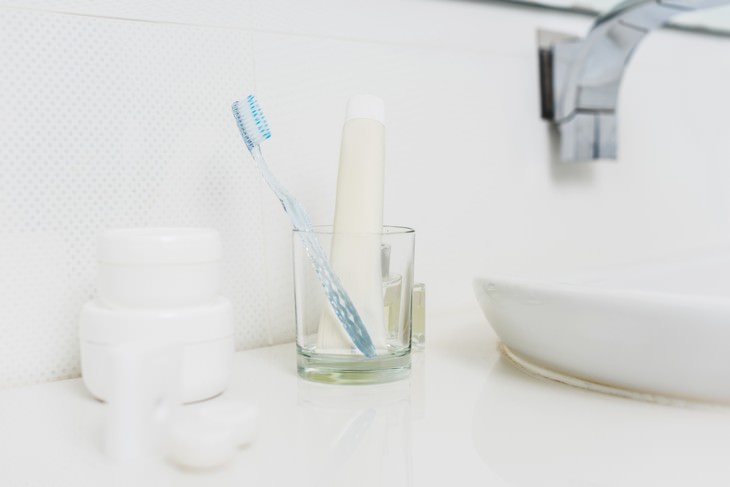
Correct storage is key when it comes to toothbrush hygiene. Always opt for air drying it after rinsing, as the bacteria that live on toothbrushes are anaerobic, which means they die in the presence of oxygen. It may seem like a good idea to use a cover for the bristles, to prevent contact with contaminated air particles but that is wrong!
Exposure to oxygen will kill most of the germs, while closed containers will make them flourish. Instead of covering the toothbrush, keep it as far away from the toilet as possible, and close the toilet lid before and after flushing. Another common mistake is to keep all of the household members’ toothbrushes in the same holder. This is a popular habit, but it is actually recommended to keep them separate and at a distance from each other, as germs also spread from brush to brush. 

Labels: , , , , , , , ,

Saturday, December 28, 2019

Proton therapy for cancer significantly reduces risk of severe side effects as against traditional radiation

Proton therapy, as it turns out, has fewer side effects on cancer patients when compared to the traditional radiation treatment. While the cure rates of both the treatment methods are almost similar, radiation leads to much more frequent unplanned hospitalisations, says a recent study.

This study, conducted by the Perelman School of Medicine at the University of Pennsylvania, analysed if the cancer patients going through radiation therapy alongside chemo faced severe side effects in a span of 90 days.

In its findings, proton therapy, when used as a replacement to radiation, proved to be effective in slashing cancer treatment-related side effects by almost two-thirds. The study is an expanded analysis of the largest review of its kind that got published in JAMA Oncology.

"This is exciting because it shows that proton therapy offers a way for us to reduce the serious side effects of chemo-radiation and improve patient health and wellbeing without sacrificing the effectiveness of the therapy," said the study's lead author Brian Baumann, MD, an adjunct assistant professor of Radiation Oncology at Penn and an assistant professor of Radiation Oncology at Washington University School of Medicine in St Louis.


Proton therapy has a few key differences from traditional photon radiation. Photon radiation typically uses multiple X-ray beams to deliver radiation to the tumor target but unavoidably deposits radiation in the normal tissues beyond the target, potentially damaging those tissues as the beam exits the body.

Proton therapy is an FDA-approved alternative radiation treatment that directs positively charged protons at the tumor. They deposit the bulk of the radiation dose to the target with almost no residual radiation delivered beyond the target, reducing damage to surrounding healthy tissue and potentially reducing side effects.

For this study, researchers evaluated side effects including pain or difficulty swallowing, difficulty breathing, nausea, or diarrhea, among others. Researchers focused on grade-three effects or higher, defined as side effects severe enough for patients to be hospitalised.

They evaluated data on 1,483 cancer patients receiving radiation and chemotherapy at the same time. Of these, 391 patients received proton therapy, while 1,092 underwent photon treatment.

All patients had non-metastatic cancer and were undergoing treatment intended to be curative. Patients with brain cancer, head and neck cancer, lung cancer, gastrointestinal cancer, and gynecologic cancer treated with concurrent chemo-radiation were included.

The primary outcome was whether or not patients experienced adverse side effects that were grade-three or higher within 90 days of treatment. In the proton group, only 11.5 per cent of patients (45) did, compared to 27.6 per cent of patients (301) in the photon group.

Weighted analysis of both patient groups, which controlled for other factors that may have led to differences between the patient groups, found that the relative risk of severe toxicity was two-thirds lower for proton patients compared to photon patients.

"We know from our clinical experience that proton therapy can have this benefit, but even we did not expect the effect to be this sizeable," said senior author James Metz, MD, chair of Radiation Oncology, leader of the Roberts Proton Therapy Center at Penn, and a member of Penn's Abramson Cancer Center.

Importantly, overall survival and disease-free survival were similar between the two groups, suggesting that the reduction in toxicity seen with proton therapy did not come at the cost of reduced effectiveness.

Researchers say these results hint at the promise of proton therapy as a way to deliver intensified systemic therapy and/or higher dose radiation therapy more safely, which could improve survival outcomes. In fact, data showed that while older patients with more comorbidities were more likely to receive proton therapy, they experienced fewer side effects.

"This tells us proton therapy may allow older patients to receive the most effective combined treatments, and that older, sicker patients can more safely be included in clinical trials that use proton therapy," Baumann said.

While researchers say further research is needed, they point out that this study is the best information we have so far as randomised controlled trials continue to prove difficult to complete. 


this is only for your information, kindly take the advice of your doctor for medicines, exercises and so on.     
https://gscrochetdesigns.blogspot.com. one can see my crochet creations  
https://gseasyrecipes.blogspot.com. feel free to view for easy, simple and healthy recipes    
https://kneereplacement-stickclub.blogspot.com. for info on knee replacement


Labels: , , , , , , , , , ,

Sunday, September 08, 2019

10 Personal Care Items that Need to Be Replaced Regularly

Many household items, such as pillows, chopping boards and others must be replaced from time to time, but in this article, we’d like to bring your attention to personal care items, as our bodies come in close contact with these things on a daily basis, and if these harbor bacteria or toxic substances, our body will regret it immediately. The following 10 personal hygiene products all expire sooner than you’d think and you must replace them regularly:

1. Sunscreen

Replace every 3 years maximum.
If you store your sunscreens properly, a bottle should last you about 2-3 years since you bought it. After that, the sunscreen loses its potency and can no longer protect you from the sun as it used to. Make sure you store your sunscreens in a dry place out of direct sunlight and rapid temperature changes. Heat, and not only sunlight, can affect the potency of the sun cream, so don't store it in your car or a part of your home that isn't air-conditioned.

2. Bath Sponges

Replace every month.
Bath sponges are constantly in a humid and hot environment, the perfect breeding ground for fungi and bacteria, so it's a must to replace them every month. If you notice that your sponge has changed color or smells differently, toss it immediately, even if you've had it for less than a month.

3. Toothbrush

Replace every 3-4 months.
You probably know this one, but it doesn't hurt to repeat it: toothbrushes must be replaced every 3-4 months. Like sponges, they can harbor harmful microorganisms, but they also lose their firmness and shape and become less effective at cleaning your teeth with time.

4. Shaving Razor

Replace every 5-7 shaves.
These guidelines pertain to every type of disposable shaving razor. These have to be replaced after 5-7 uses because they become dull and can cause cuts over time. Also, we recommend you don't store your shaving razor in the shower, as the humidity may cause the metal to rust.

5. Hairbrush

Replace every 6 months to a year.
Replacing hairbrushes regularly is very important both for your scalp's health and a good hairdo. Styling products, dust, and your skin tend to accumulate on the brush and mix into a waxy substance that can make your hair look oily and flat over time. Apart from that, an old, dirty brush can scratch and irritate your scalp, causing redness and a dry, flaky scalp. Needless to say, you should clean your brush regularly in addition to replacing it from time to time.

6. Mascara and Liquid Eyeliner

Replace every 3 months.
As we will discuss in the next section, makeup shelf life varies from product to product, but the two makeup items that must be replaced diligently every 3 months is mascara and liquid eyeliner, as we use these directly on our eyelashes and they make contact with our eyes all the time, but unlike eyeliners, you cannot remove the possible bacteria or mold growing on these as you do when sharpening a pencil.

7. Other Makeup and Skincare Products

You will find an open can symbol with a number in it on the back of most makeup and skincare products. This number will show you how many months you have to use up a product, so, a 6 will mean you have to use it up in 6 months. Most cream and liquid skincare and makeup items, e.g. lipsticks and foundations, are usually good for about a year, whereas most powder products, such as eyeshadows and blushes typically last for 2-3 years until they expire.
As for beauty tools, a high-quality makeup brush can last you years and can be used until it becomes too bent and sparse, but makeup sponges must be replaced a lot more often - every 3 months.

8. Underwear

Replace every 6 months to a year.
We know this is a touchy subject, but it doesn't make it any less important, as underwear, too, has to go into the trashcan after a year of use. Why? Well, hygiene has to do with it, but also the fact that underwear tends to stretch out with time and can make your clothes fit differently, not to mention that it doesn't stay on like it used to and starts feeling uncomfortable. This is especially true when it comes to bras, as a stretched out bra can really make even the cutest top fit weird on you.

9. Toothpaste

Replace every year to a year an a half.
Replacing toothbrushes regularly is a must, but don't think you can stock up on toothpaste in bulk, as this product, too, has its expiration date. When toothpaste is expired, it becomes grainy, starts to separate and stops smelling like it used to. This is because the fluoride in the paste is no longer active and the essential oils the paste contains to give that refreshing smell go rancid.

10. Bar Soap

Replace every year and a half to 2 years.
Even if you take care of your bar soap really well and keep it dry and not moist and mushy, you should replace it after 2 years. If not, however, you should probably throw it out after a month of use, as a moist bar of soap just standing there on the edge of your bathtub unprotected is essentially a delicious and accessible treat for harmful bacteria.
this is only for your information, kindly take the advice of your doctor for medicines, exercises and so on.   
https://gscrochetdesigns.blogspot.com. one can see my crochet creations 
https://gseasyrecipes.blogspot.com. feel free to view for easy, simple and healthy recipes    
https://kneereplacement-stickclub.blogspot.com. for info on knee replacement


Labels: , , , , , , , , , , , , , ,

Wednesday, August 28, 2019

10 Alternative Uses for Yogurt

A cup of yogurt each morning is a great way to start the day and reap its health benefits. But this versatile dairy product has a number of other uses too, some of which extend beyond eating and drinking it. In fact, yogurt can be used as an excellent skin and hair care product, primarily due to its mild astringent qualities and its high quantities of zinc and lactic acid - making it a great, natural, hydration treatment. Best of all, it's cheap!

Let's take a look at 10 surprising uses for yogurt, you most likely never considered:
 1. Use yogurt to lower your cholesterol​
People with borderline to moderate-high cholesterol levels, may benefit from eating yogurt with probiotic Lactobacillus Acidophilus, alongside a combination of the bacterium Enterococcus Faecium and Streptococcus Thermophilus. This type of yogurt is thought to lower LDL (bad) cholesterol. However, it does not raise HDL (good) cholesterol.

2. Use yogurt to enhance your immune system
Yogurt contains active cultures that enhance the body's immune system. It increases the production of gamma interferons, which play a key role in fighting allergies and viral infections. Studies conducted on yogurt also found that it can help prevent gastrointestinal infections.

3. Use yogurt to naturally whiten your teeth
Teeth whitening treatments are rather expensive, but why spend money when you can prepare a natural remedy with yogurt at home? Just rub some yogurt onto your teeth daily for a couple of weeks for sparkly white teeth. Yogurt is believed to work because of the phosphorus and calcium it contains.

4. Use yogurt to relieve sunburn
Yogurt is a fantastic source of zinc, which helps sooth the burning and itchiness of sunburn. To relieve the symptoms, apply a thick layer of plain, cool yogurt directly to your burn and rinse off with cold water after 20 minutes.

5. Use yogurt to relieve symptoms associated with diarrhea
Yogurt helps restore bacteria in the intestine, and can be used after taking antibiotics or to treat antibiotic-related diarrhea and acute diarrhea in children. In fact, a yogurt formula may be given as a replacement for milk formula in infants and young children to relieve persistent diarrhea.


6. Use yogurt as a replacement for cheese
The consistency of yogurt cheese is similar to cream cheese, but is lower in fat and contains healthy bacteria. Yogurt cheese can be used as a spread on bagels, toast and crackers and may be used as an alternative to cream cheese in cheesecake recipes.

Preparing yogurt cheese is pretty simple. Empty a pint of yogurt into a large, fine-meshed strainer to catch the liquid that drains from the yogurt. The texture will vary depending on how long it drains. Then cover and refrigerate for eight to 24 hours. This will make about one cup of yogurt cheese.

7. Use yogurt as a natural body scrub
Yogurt can be used as a scrub for your hands, feet or the whole body. Simply mix with oats or dried citrus peel. Massage the blend into your skin gently in a circular motion and rinse off with lukewarm water. Your skin should feel smooth and hydrated.

8. Use yogurt as a hair conditioner
The properties found in yogurt make it an ideal remedy for smoothing the skin, but it's also great for your scalp and hair. Yogurt helps bring out your hair's natural shine making it soft and silky. It can be used as a hair mask instead of your conditioner. Just take some plain yogurt and rub it all over your hair, then rinse with lukewarm water. Yogurt will also help soothe an inflamed scalp, reduce hair loss and will help banish split ends.

9. Use yogurt to relieve canker sores
Canker sores, white and yellow sores which usually form on your gums, inside your mouth and on your lips can be very painful to bear. Using yogurt will help reduce the pain and heal the sores. You may choose to include it in your diet or apply it directly to the affected area.

10. Use yogurt to fight acne and prevent premature aging
The natural antibacterial and anti-fungal properties found in yogurt can be used to get rid of pimples. Apply the yogurt to acne prone areas and let it sit for 30 minutes, then wash off with lukewarm water. The lactic acid found in yogurt helps dissolve dead skin and can be used to prevent wrinkles and fine lines as we age.


THIS IS ONLY FOR INFORMATION, ALWAYS CONSULT YOU PHYSICIAN BEFORE HAVING ANY PARTICULAR FOOD/ MEDICATION/EXERCISE/OTHER REMEDIES.                                    PS- THOSE INTERESTED IN RECIPES ARE FREE TO  VIEW MY BLOG-                                                                                           https://gseasyrecipes.blogspot.com/                                                                                                                                                FOR INFO ABOUT KNEE REPLACEMENT, YOU CAN VIEW MY BLOG-                                                                       https:// kneereplacement-stickclub.blogspot.com/                                                                                                                     FOR CROCHET DESIGNS                                                                                                   
                                https://gscrochetdesigns.blogspot.com

Labels: , , , , , , , , , , , , ,

Wednesday, July 10, 2019

Trying to Cut Meat from Your Life? Try These Substitutes!

Little by little, people are starting to internalize what has been common knowledge for a long time now: processed and red meats are bad for us. Eating a lot of deli meat and steaks can increase your odds of developing heart disease, diverticulitis, Alzheimer's and bowel cancer. But, as in all things, old habits die hard, and many of us have gotten accustomed to juicy red meat and hot dogs.
Luckily, we are living in an era of unparalleled food technology and innovation, and plant-based meat substitutes that appeal to the palates of meat addicts have never been as readily-available. And just in case you’re thinking of a bland vegetable patty, we’re talking protein rich, juicy and savory products that taste just like the real thing.
1. Mock meat
One of the fastest-rising food industries is mock meat, manufactured by companies like Beyond Meat and Impossible Foods. Their popular burgers are based on plant-protein and are lab-engineered to have many of the same qualities of real beef patties, including texture, succulence and taste. Imitation burgers are cholesterol free, are rich in protein and vitamins and are 100% meat free. Numerous restaurant chains now offer mock meat options, and various retail stores either already have these products or will have them in the near future. Soya granules or chunks are good options to replace meat.
2. Tofu
Tofu is probably the most famous meat substitute and one that has the longest history, as it was invented for that purpose around 2,000 years ago in China. Extra-firm tofu, if treated with rub or marinade can make for a great replacement for chicken or even steak, and can be a delicious centerpiece for a healthy version of a hoagie.
3. Legumes
Meat substitutes: bean burger
Legumes are savory, chock-full of proteins and vitamins and are actually really good for your heart. As such, they’re a great candidate for meat replacement and can easily be ground up into delicious hamburger patties. All you need are some cooked grains, bread crumbs and eggs, and you’ve got a wonderful burger. For a vegan patty, replace the egg with flax meal or chia seeds.
4. Carrots
Meat substitutes: roasted carrots
Carrot dogs are different to other meat replacements in that they don’t try to be something they aren’t. Carrots aren’t anything like highly-processed hot dogs, but that doesn’t mean they aren’t preferable. A roasted and seasoned carrot is great in a bun with mustard and sauerkraut, and has none of the health downsides of a real frankfurter.
5. Jackfruit Meat substitutes:
This relatively obscure fruit is about the size of a very large watermelon and is native to South Asia. Its flesh is soft and sweet when ripe, but when unripe, it is meaty, with a milder taste and is often locally used in curry. As such, young jackfruit is great as a replacement for pulled pork recipes or gyros/shawarma.
THIS IS ONLY FOR INFORMATION, ALWAYS CONSULT YOU PHYSICIAN BEFORE HAVING ANY PARTICULAR FOOD/ MEDICATION/EXERCISE/OTHER REMEDIES.                                    PS- THOSE INTERESTED IN RECIPES ARE FREE TO  VIEW MY BLOG-                                                                                           https://gseasyrecipes.blogspot.com/                                                                                                                                                FOR INFO ABOUT KNEE REPLACEMENT, YOU CAN VIEW MY BLOG-                                                  https:// kneereplacement-stickclub.blogspot.com/                                                                      FOR CROCHET DESIGNS                                                                                                                                                                                     https://gscrochetdesigns.blogspot.com
 

Labels: , , , , , , , , , ,