Monday, June 01, 2026

Can age-related fraility be reversed?

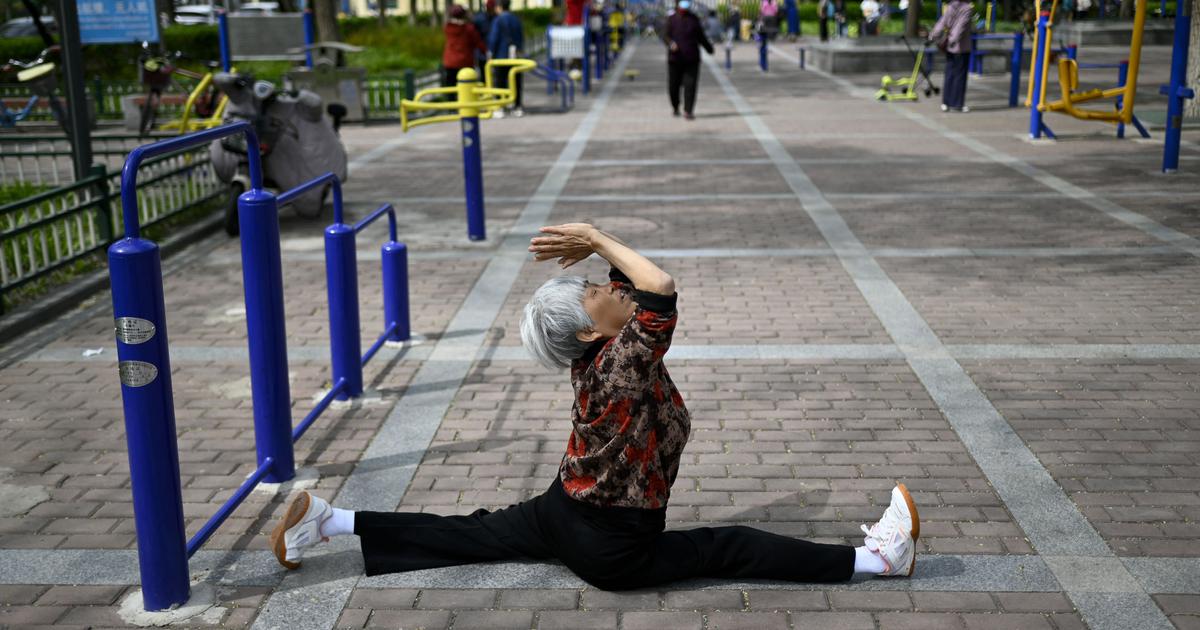
Early signs such as slowing down, fatigue or unintentional weight loss are now recognised as an opportunity for intervention through lifestyle changes.
 Can age-related fraility be reversed?

Some of the most powerful interventions to slow or improve frailty are also the most ordinary: regular movement, adequate nutrition and meaningful social connection.

It almost sounds too simple for a condition now recognised as one of the strongest predictors of hospitalisation, disability, poor recovery from illness or surgery, nursing home admission and death in later life.

Older adults living with frailty have less physiological reserve: the body’s spare capacity to cope with illness, injury or stress. A relatively small event, such as a chest infection, a medication change or even a few days in bed, can trigger a sudden loss of independence. Meanwhile, a more robust older adult may recover quickly from a more serious illness.

How we age can vary greatly, even between people of the same age. One 82-year-old may stay active and independent, while another struggles to rise from a chair and becomes increasingly dependent after a short hospital stay.

The growing recognition that frailty, rather than age alone, shapes how people age is changing the way clinicians and researchers think about later life. While living longer is one of society’s greatest achievements, frailty and its evidence-based management have become increasingly important public health and clinical concerns.

Checking for frailty is now routine in many healthcare settings for adults aged over 65. Assessment increasingly focuses on how robust or frail a person is physically, cognitively and socially.

Frailty assessment

There are two main ways frailty is assessed. The first sees frailty as a physical syndrome marked by weakness, exhaustion, slow walking speed, unintentional weight loss and low physical activity. People with one or two of these features may be considered “pre-frail”, while those with several are considered frail.

The second approach views frailty as the accumulation of health problems over time. In this model, chronic illnesses, mobility problems, memory difficulties, hearing or vision loss, poor nutrition and social isolation all contribute to a reduced ability to cope with a stressful event for the body, such as a fall, infection or hospital stay.

Frailty is often spoken about as though it is permanent, something a person simply becomes. You are either robust or frail, independent or dependent, strong or declining. But research suggests the reality is far more fluid.

Frailty exists on a spectrum from robustness to pre-frailty, mild frailty, moderate frailty and severe frailty, and people may move in either direction over time. Although frailty often progresses, it can sometimes be delayed or improved, depending on the underlying cause and the support available.

Frailty isn’t always permanent

A large review involving more than 42,000 older adults found that, over an average follow-up period of almost four years, around 14% of people improved their frailty status, nearly 30% became more frail, and just over half remained stable. The findings suggest frailty is dynamic and, for some people, potentially reversible.

Rather than simply asking whether someone is frail or not, clinicians are increasingly looking at where a person sits on the frailty spectrum and what supports might help build resilience. Early signs such as slowing down, fatigue or unintentional weight loss are now recognised as an important opportunity for intervention through relatively simple lifestyle changes.

Regular physical activity that includes resistance-based exercise, such as using weights, elastic bands or body weight to build strength at least twice per week, can help improve frailty or slow its progression. The benefits can be even greater when exercise is combined with nutrition or cognitive interventions, such as memory, attention and problem-solving activities.

An Irish trial of a home-based frailty programme delivered through primary care targeted older adults living with mild frailty or less. The programme combined strengthening exercises, regular walking and dietary protein guidance. Frailty rates in the intervention group fell from 17.7% to 6.3% after three months, while they slightly increased in those receiving usual care.

Recovery also appears to depend on more than physical health alone. In a study of more than 5,000 adults aged 75 and older, nearly one-third of those who were frail at the start of the study recovered to a less frail state within two years. Recovery was more likely among those who took part in exercise-based social activities, rated their own health more positively, trusted their community and regularly interacted with neighbours.

Activities that challenge memory, attention and problem-solving can support cognitive health and may help reverse frailty. Psychological resilience, the ability to adapt to stress or difficult life events and recover from them over time, has also been linked to better frailty outcomes.

Frailty is now recognised as more than an inevitable part of ageing. While it remains a powerful predictor of hospitalisation, disability and death in later life, growing evidence shows it can often be prevented, slowed or improved. Everyday choices, including how much we move, who we spend time with and the activities that give us purpose and connection, can help support healthier ageing.


This is only for your information, kindly take the advice of your doctor for food, medicines, exercises and so on.   

Labels: , , , ,

Thursday, March 05, 2020

Is your relationship hurting your mental health? 5 signs to watch out for

Relationships can impact us in very different ways, depending on the relationship. Some relationships can uplift our spirits, give comfort during stress, fill our day with fun and playfulness, or instill a profound sense of purpose in our life. But there are also some relationships, which can pull us downward, drain our energy, take a toll on your mental health and erode our happiness. The symptoms of dealing with such relationships may not be obvious, as they can come out in the form of some obsessive behaviour, such as obsessive hair-picking.

For example, if you are dealing with an emotionally abusive partner, the stress and anger may spill over into other areas of your life. From having trouble concentrating on work to beige watching and losing temper with friends, you are likely to burst out anger in many ways. Here are some signs that can tell your relationship is hurting your mental health.

You’re feeling depressed

Studies have found association between lower-quality relationships and symptoms of depression. Researchers say people in toxic or abusive relationships are more likely to feel depressed. At worst, it can also lead to suicidal thoughts.

You’re not doing well physically

You mental and physical health are connected. Researchers also say relationships have direct influences on cardiovascular, endocrine, immune, neurosensory, and other physiological mechanisms.  An unhealthy relationship can cause anxiety or depression, as well headaches, insomnia, or muscle pain.

You’re indulging in unhealthy habits

While trying to distract yourself from thinking about your relationship, you may end up doing many unhealthy habits like obsessive hair-picking, binge-watching, oversleeping, etc.

You’re feeling low about yourself

If you have started feeling low about yourself and less interesting, your partner may be blamed for lowering your self-esteem. When a close person makes you feel inferior, you may start to believe you are.

You feel relieved when he leaves

You eagerly wait for your partner to leave your place, and just the thought of it excites you.  This feeling of relief shows that your partner is causing you stress.

This is only for your information, kindly take the advice of your doctor for medicines, exercises and so on.     

https://gscrochetdesigns.blogspot.com. one can see my crochet creations  
https://gseasyrecipes.blogspot.com. feel free to view for easy, simple and healthy recipes    
https://kneereplacement-stickclub.blogspot.com. for info on knee replacement


Labels: , , , , , , , , , , , , ,

Saturday, September 28, 2019

A positive outlook may be good for your heart, suggests new study


Having an optimistic mind-set may reduce the risk for cardiovascular disease and early death, a review of studies has found.

In previous studies, optimism has been shown to be associated with a range of favourable physical health outcomes and with greater success in work, school and relationships.


This new meta-analysis,  included 15 studies that measured optimism and pessimism by asking the level of agreement with such statements as “In uncertain times, I usually expect the best,” or “I rarely expect good things to happen to me.”

Analysis of the 10 studies that looked at heart disease, which pooled data on 209,436 people, found that compared with pessimists, people with the most optimistic outlook had a 35 per cent lower risk for cardiovascular events.

Nine studies with data on all-cause mortality included 188,599 participants and found that optimists had a 14 per cent lower risk of premature death than the most pessimistic people.

The studies had an average 14-year follow-up and controlled for various health and behavioural characteristics, including a wide range of cardiovascular disease risk factors.

“It seems optimists have better health behaviours,” said the lead author “They’re more likely to exercise and to have better diet. And there is evidence of direct biological effects — they have less inflammation and fewer metabolic abnormalities.” 


this is only for your information, kindly take the advice of your doctor for medicines, exercises and so on.   
https://gscrochetdesigns.blogspot.com. one can see my crochet creations 
 

https://gseasyrecipes.blogspot.com. feel free to view for easy, simple and healthy recipes    
https://kneereplacement-stickclub.blogspot.com. for info on knee replacement


Labels: , , , , , , , , ,

Monday, May 27, 2019

Suffering from Anxiety? Learn to Sit Properly!

Mental health is a sensitive thing… When it comes to physical health, unless you have some kind of infection that comes from outside, the rest of the ailments are all coming from within us. What is coming from within you, is it your responsibility? If your body is creating an ailment from within, is it your responsibility to fix it? 

Is it not true that any number of people who lie in bed like a potato till noon time are suffering from many ailments? They thought others are idiots who get up at 5 o' clock in the morning and run, swim, play, or do something else. They thought they were really enjoying life, just eating and sleeping. But after some time, it takes a toll on the system. Then they think it is someone’s fortune to have good health, while they have ill health. No! Health is created from within. If an invasion happens from outside in the form of an infection, that is a different matter. 

When it comes to mental health, it is far more sensitive to say this, but still – if what happens to your body is your responsibility, is what happens to your mind not your responsibility? There may be many contributing factors. Even physical ill health may be caused due to many factors. The same may be true with mental health too. But we need to separate sadness from psychological illnesses. You cannot go to your doctor and fix your sadness; he may also be sad.

If you are medically ill, they can fix you to some extent with medication, which is a continuous manipulation of chemistry. But the most sophisticated chemical factory is right here [in the human body]. Suppose your chemistry was in your hands, would you cause anxiety or ecstasy? Definitely, your choice would be ecstasy, the highest level of pleasantness.

The problem is just this – your chemistry is out of control, for whatever reason. There may be genetic patterns, there may be pathological reasons, there may be outside stimuli, many things. But still, is it not your fundamental responsibility to take charge of your physical and mental health? The moment you think it is not yours, stalemate – it is completely out of your hands. If you see that it is your responsibility, everything may not be fixed tomorrow morning, but you can start moving towards well-being. 

This is very important – the responsibility of who you are, what you are, what you are not, must move to you. This is my fundamental mission: from religion to responsibility. Religion means responsibility is up there in heaven for everything that goes wrong in your life. The problem is you are on a round planet and the damn thing is spinning. Nowhere in the cosmos is it marked “This side up.” If you don’t even know which way is up, inevitably, you are looking up in the wrong direction.

How come something “up there” is responsible for what you are? It is time we take this responsibility – then we can do the best we can do. Will everyone on the planet be of the same level of physical and mental health? No, that will never happen. But are we doing the best we can about ourselves? That is most important. What we can do, must happen. If we do not do what we cannot do, there is no problem. But if we do not do what we can do, we are a disaster.

There are simple ways to bring balance to the system. There is chemistry; there are various glandular functions happening in the body. The simplest thing is you just learn to sit properly. Sit in such a way that the body does not need your muscular support, that it is so well balanced that if it sits, it simply sits. Just do this for a few hours a day, and you will see – you will feel much better. There are other more complex processes that you can do to come out of this problem. But at least try this much – geometrically, keep yourself in such a way that there is no stress in the system.

Initially, it looks like there is an effort, but once you sit like this, you see that without effort, without stressing any particular part, the body just stays there. Geometry is most important. This is true of anything physical in the universe – how efficiently something functions depends on how well-structured it is, geometrically. Let’s say an engine, for example. If you call something a really good engine, it means it is geometrically well-aligned; there is no friction. If you call a building well-designed, it means it is well-structured, geometrically.

It is similar with this body and with the entire cosmos. Right now, the planets are going around the Sun. Are they handled with steel cables or something? It is just the geometry. If the solar system goes off its geometric alignment, it is finished. Only because of perfection of geometry, it is working. Similarly with your body: On one level, the whole system of yoga is about getting your physical, geometry aligned with the cosmic geometry, so that being here becomes absolutely effortless. 

Whether you name it stress, anxiety, or whatever else – essentially, there is friction in the system. So it is important that first, the system is geometrically well-aligned, and next, it must be properly lubricated. There are ways to do this. Where there is geometrical perfection, there is no effort; there is no friction. That is what you have to bring into your system. Do not allow these small things to take over your life. One little anxiety bothering you all the time can limit and destroy the process of your life. This must be fixed as early as possible.

Yogasanas are a way of aligning the inner system and adjusting to the celestial geometry, thereby becoming in sync with the existence and naturally achieving a chemistry of health, joy and above all, balance. Find a yogasanas class closer to you, to enjoy its benefits.

THIS IS ONLY FOR INFORMATION, ALWAYS CONSULT YOU PHYSICIAN BEFORE HAVING ANY PARTICULAR FOOD/ MEDICATION/EXERCISE/OTHER REMEDIES.                                    PS- THOSE INTERESTED IN RECIPES ARE FREE TO  VIEW MY BLOG-                                                                                           https://gseasyrecipes.blogspot.com/    
                                                                                                                                                     FOR INFO ABOUT KNEE REPLACEMENT, YOU CAN VIEW MY BLOG-                                                  https:// kneereplacement-stickclub.blogspot.com/  

                            FOR CROCHET DESIGNS                                                                                                                                                                                                  https://gscrochetdesigns.blogspot.com

Labels: , , , , , , , , , , , , , , , , ,