Monday, June 01, 2026

Can age-related fraility be reversed?

Early signs such as slowing down, fatigue or unintentional weight loss are now recognised as an opportunity for intervention through lifestyle changes.
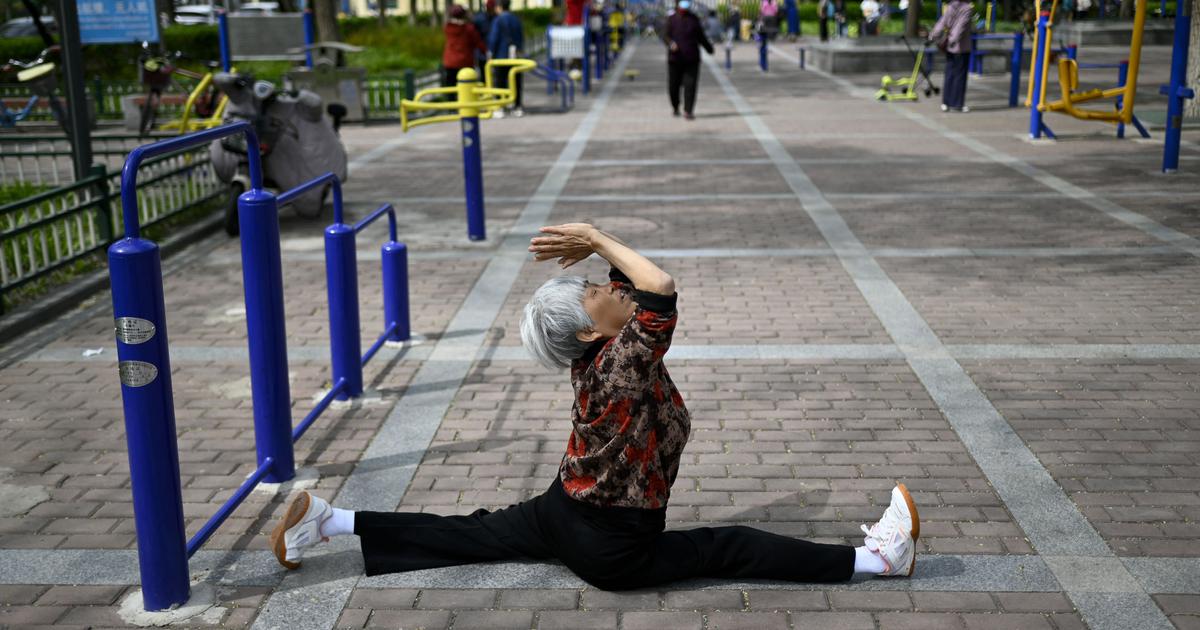
 Can age-related fraility be reversed?

Some of the most powerful interventions to slow or improve frailty are also the most ordinary: regular movement, adequate nutrition and meaningful social connection.

It almost sounds too simple for a condition now recognised as one of the strongest predictors of hospitalisation, disability, poor recovery from illness or surgery, nursing home admission and death in later life.

Older adults living with frailty have less physiological reserve: the body’s spare capacity to cope with illness, injury or stress. A relatively small event, such as a chest infection, a medication change or even a few days in bed, can trigger a sudden loss of independence. Meanwhile, a more robust older adult may recover quickly from a more serious illness.

How we age can vary greatly, even between people of the same age. One 82-year-old may stay active and independent, while another struggles to rise from a chair and becomes increasingly dependent after a short hospital stay.

The growing recognition that frailty, rather than age alone, shapes how people age is changing the way clinicians and researchers think about later life. While living longer is one of society’s greatest achievements, frailty and its evidence-based management have become increasingly important public health and clinical concerns.

Checking for frailty is now routine in many healthcare settings for adults aged over 65. Assessment increasingly focuses on how robust or frail a person is physically, cognitively and socially.

Frailty assessment

There are two main ways frailty is assessed. The first sees frailty as a physical syndrome marked by weakness, exhaustion, slow walking speed, unintentional weight loss and low physical activity. People with one or two of these features may be considered “pre-frail”, while those with several are considered frail.

The second approach views frailty as the accumulation of health problems over time. In this model, chronic illnesses, mobility problems, memory difficulties, hearing or vision loss, poor nutrition and social isolation all contribute to a reduced ability to cope with a stressful event for the body, such as a fall, infection or hospital stay.

Frailty is often spoken about as though it is permanent, something a person simply becomes. You are either robust or frail, independent or dependent, strong or declining. But research suggests the reality is far more fluid.

Frailty exists on a spectrum from robustness to pre-frailty, mild frailty, moderate frailty and severe frailty, and people may move in either direction over time. Although frailty often progresses, it can sometimes be delayed or improved, depending on the underlying cause and the support available.

Frailty isn’t always permanent

A large review involving more than 42,000 older adults found that, over an average follow-up period of almost four years, around 14% of people improved their frailty status, nearly 30% became more frail, and just over half remained stable. The findings suggest frailty is dynamic and, for some people, potentially reversible.

Rather than simply asking whether someone is frail or not, clinicians are increasingly looking at where a person sits on the frailty spectrum and what supports might help build resilience. Early signs such as slowing down, fatigue or unintentional weight loss are now recognised as an important opportunity for intervention through relatively simple lifestyle changes.

Regular physical activity that includes resistance-based exercise, such as using weights, elastic bands or body weight to build strength at least twice per week, can help improve frailty or slow its progression. The benefits can be even greater when exercise is combined with nutrition or cognitive interventions, such as memory, attention and problem-solving activities.

An Irish trial of a home-based frailty programme delivered through primary care targeted older adults living with mild frailty or less. The programme combined strengthening exercises, regular walking and dietary protein guidance. Frailty rates in the intervention group fell from 17.7% to 6.3% after three months, while they slightly increased in those receiving usual care.

Recovery also appears to depend on more than physical health alone. In a study of more than 5,000 adults aged 75 and older, nearly one-third of those who were frail at the start of the study recovered to a less frail state within two years. Recovery was more likely among those who took part in exercise-based social activities, rated their own health more positively, trusted their community and regularly interacted with neighbours.

Activities that challenge memory, attention and problem-solving can support cognitive health and may help reverse frailty. Psychological resilience, the ability to adapt to stress or difficult life events and recover from them over time, has also been linked to better frailty outcomes.

Frailty is now recognised as more than an inevitable part of ageing. While it remains a powerful predictor of hospitalisation, disability and death in later life, growing evidence shows it can often be prevented, slowed or improved. Everyday choices, including how much we move, who we spend time with and the activities that give us purpose and connection, can help support healthier ageing.


This is only for your information, kindly take the advice of your doctor for food, medicines, exercises and so on.   

Labels: , , , ,

Friday, January 24, 2020

What all we know about the new coronavirus

The novel coronavirus, which is a respiratory virus, is causing worldwide panic. While we are still not sure about the true lethality of this virus, it is claiming lives and health officials are trying to contain the virus with travel restrictions and lockdowns.

The outbreak is being traced back to a market selling live poultry, seafood and animals in Wuhan, China. But the virus is now spreading in Japan, South Korea, Thailand, Singapore, Taiwan, Vietnam and the United States. Certain other countries are still evaluating probable cases. 


While the information available on this newly identified virus is not yet enough, here is a quick rundown of what we have figured...


What is coronavirus?

Coronaviruses can infect both animals and people, leading to respiratory tract illness with symptoms ranging from common cold to severe conditions like SARS (Severe Acute Respiratory Syndrome). Not many are aware that this is not the first time its outbreak has been reported. During a 2003 attack, it had killed nearly 800 people. Over a period of time, the virus particle in this category continued to change its antigenic structure, leading to the new virus.

The biggest concern is that within a short period of time many people have been affected and hospitalized. In the last 10 days, from 17, the number of affected cases have gone up to around 200+ in China followed by 5 countries including the United States. The outbreak has been observed in places like Japan, Korea, China and Thailand.

Symptoms of novel coronavirus

Coronaviruses cause upper respiratory infections like runny nose, coughing, sore throat, and may be accompanied by fever sometimes. Most people can confuse its symptoms with that of regular cold or flu virus.

In some people, the symptoms may appear mild like dry cough, fever, heavy breathing but other cases may develop viral pneumonia (and severe acute respiratory syndrome), putting their life at risk. The incubation period of the virus is not known yet and is assumed to be anywhere in the range of 10 to 14 days.

A study of the people who succumbed to the virus revealed that they were already suffering from some underlying conditions. They were either frail, had heart disease or cancer already, which basically means their immune system was compromised and their bodies could not fight the virus. However, the information coming in on the virus is rapidly changing so we cannot be completely sure.

Do we have a treatment in place?

As all coronaviruses do, this one has also come from animals but it looks like it transfers from one person to another. However, there is no treatment available at the moment. Antibiotics won't work on this one because it is a virus and antibiotics work only on bacterial infections. This needs antiviral treatment but we do not have any such treatment available that will surely work on it.

Should we Indians be worried?

According to an official  report, with the Wuhan coronavirus outbreak spreading, five persons were put under surveillance in Maharashtra soon after they returned from China to the city airport in the last 48 hours. Two of them, exhibiting mild cough and cold symptoms, were admitted to Kasturba Hospital in Chinchpokli, the city’s main isolation facility, late on Thursday as a precaution, said officials.

However, state epidemiologist Dr Pradeep Awate has said they exhibited no specific coronavirus symptoms. Two of the five passengers had been to Wuhan, the epicentre of the novel coronavirus outbreak, which has spread to several countries, including US, Thailand, Japan, South Korea and Saudi Arabia. “Those two passengers are also currently asymptomatic like the other three, who had been to other parts of China,” said Awate.

Authorities at All India Institute of Medical Sciences (AIIMS) are ready to utilise the isolation ward for the treatment of suspected cases of novel coronavirus if detected in India.

According to Dr Om Srivastava, Director Department of Infectious Diseases at Jaslok Hospital and Research Centre, “People in India along with those who are travelling across the world should be concerned about this virus as it is contagious, and it spreads rapidly. There is a need to be aware and informed without being alarmed. spreading awareness is necessary and individuals should be more careful about their day-to-day activities. If an individual experiences its symptoms, he should be immediately auctioned and consulted to the doctor without any delay as ignoring the symptoms can lead to complications. However, as of now there are no cases of Coronavirus found in India but indeed the virus has the potential to be deadly hence people need to be aware. There isn’t any need to panic as there are protocols that have been placed where airports have already started thermal screening and multi specialty hospitals have isolation units that will help one diagnose and treat the infection.”

What should you do?

To stay protected, it is important that people stay safe from any kind of pneumonia virus. Maintaining good hand hygiene is also important - wash your hands regularly and do not touch your face or mouth much. Some experts are also recommending the use of masks, however, international agencies feel that it cannot curtail the virus from traveling. 


This is only for your information, kindly take the advice of your doctor for medicines, exercises and so on.     
https://gscrochetdesigns.blogspot.com. one can see my crochet creations  
https://gseasyrecipes.blogspot.com. feel free to view for easy, simple and healthy recipes    
https://kneereplacement-stickclub.blogspot.com. for info on knee replacement
 

Labels: , , , , , , , , , , ,