Sunday, April 19, 2026

7 Exercises That Are Effective for Controlling Diabetes

Living with diabetes is a challenge. Altering your diet and taking the right medication will help in controlling the condition, what can really make a difference in managing it better is adopting an exercise plan. Unfortunately, only about 40 percent of people with type 2 diabetes indulge in regular physical activity according to a study published in the World Journal of Diabetes. That is unfortunate as even 150 minutes of aerobic exercise each week can be really advantageous for people with diabetes according to the National Institutes of Health. 

Exercise helps you lose weight and improve balance. Weight management is particularly important because people with obesity are at a higher risk of developing diabetes too. Moreover, regular exercise also lowers your blood sugar level and may even reduce your insulin requirements. 

When you plan your exercise schedule, keep in mind that you should never go for more than two days without any activity. Following this routine properly can help keep diabetes under control and in some cases, even get over the disease. Before you go ahead with your schedule, however, it's best to consult your doctor to make sure there are no restrictions or special precautions you need to take based on your glucose or blood sugar levels. 

Now, let’s take a look at some useful workouts that were proved to be effective for people fighting diabetes.

1. Brisk walking Exercises to Manage Diabetes, Walking
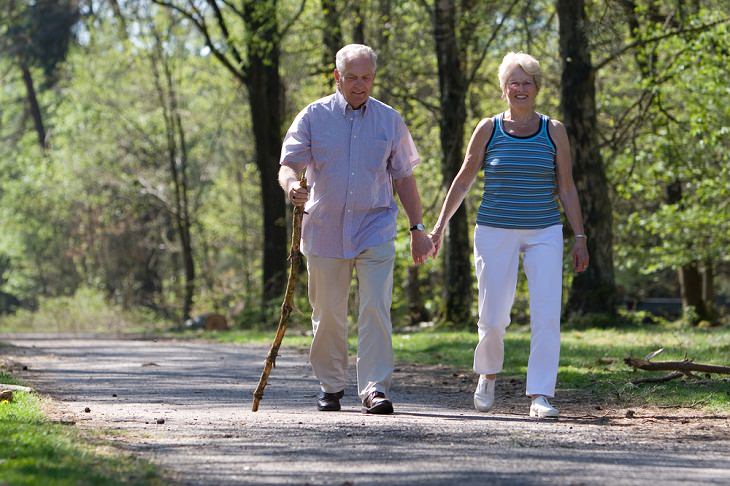
Walking is one of the most popular and easiest exercises that you can include in your daily routine. While it is beneficial to everyone, brisk walking is highly recommended for people dealing with diabetes. Studies have shown that walking regularly can help diabetics lower their blood sugar levels and lose weight.

The best thing about walking is that it’s free and easy. All you need is a good pair of shoes and somewhere to go. Moreover, you can choose the pace and how far you go. A brisk stroll of 30 minutes to an hour 3 or 4 times a week will help people with diabetes reach their recommended target of 150 minutes of moderate-intensity exercise.

2. Tai Chi

Have you ever heard of Tai Chi? It’s an amazing ancient Chinese form of exercise that uses a series of gentle and smooth body movements to relax the mind and body. Tai chi is ideal for people with diabetes as it offers fitness and stress reduction through one form of exercise. Studies have shown that those who practice tai chi daily have seen a considerable improvement in blood sugar control. This gentle exercise can also help with mobility, balance, and flexibility, and can even help prevent nerve damage in your feet.

Tai chi’s ability to lower your stress levels and encourage mental relaxation is seen as its most vital benefit for diabetics as excessive stress can come in the way of controlling the disease.

3. Yoga

Yoga has got plenty of attention in the last decade for all the right reasons. People have realized the countless benefits that this ancient practice offers for both the body and the mind. In fact, even doing about 30 minutes of yoga a day can help you fight against anxiety and depression while making you feel more centered. This wonderful practice is also beneficial for people with chronic conditions like diabetes as it can help lower stress and improve nerve function which ultimately results in an overall improvement in mental health and wellness. Remember, that when your stress levels increase, so do your blood sugar levels. Hence, yoga would be really helpful in keeping that under control.

Furthermore, according to the American Diabetes Association (ADA), yoga may keep your blood glucose levels stable as practicing it daily can lead to improved muscle mass.

4. Weight training

Weightlifting and other strengthening activities are important for people with diabetes as they help build muscle mass. If you end up losing muscle mass, you’ll have a much harder time maintaining your blood sugar. Moreover, trained muscles have an increased capacity to store blood glucose in the form of glycogen, thus helping in lowering blood glucose. This basically results in lowered blood sugar levels and better glucose management.

You can use weight machines or free weights to incorporate weightlifting into your weekly exercise routine. However, learning how to lift weights safely is essential. It would be better if you take a couple of classes at first, or take the guidance of a professional trainer.

5. Swimming

Swimming is another great low-impact exercise that’s perfect for diabetics, particularly for people with type 2 diabetes. This is because it stretches and relaxes your muscles and doesn’t strain your joints. This can be really helpful as diabetes can cause joint pain in various ways. Studies have also shown that swimming can be great for those with diabetes or at risk for developing diabetes as it can improve cholesterol levels, burn calories, and lower stress levels. Swimming also helps lower glucose levels while strengthening your heart, muscles, and lungs too.

Type 2 diabetes can often lead to foot complications such as neuropathy, or nerve damage. According to NYU Langone Health, swimming will be beneficial for anyone with diabetes who’s managing neuropathy because of its gentle nature. To get the most benefit from swimming, try and swim at least three times a week for at least ten minutes.

6. Stationary bicycling

Exercises to Manage Diabetes,  Bicycling 

One great and effective way to burn calories, make your heart stronger, and your lungs function better, is to start bicycling. According to a study published in the American Journal of Health Promotion, spending just a few times per week on a bicycle can reduce the risk of obesity, high blood pressure, and triglyceride levels. For people with diabetes, this form of exercise will be extra helpful as it can keep their heart rate up, burn blood sugar, and help them lose weight without hurting their knees or other joints.

If you are not comfortable going out with a bicycle currently due to the pandemic, you can opt for a stationary bike which will be just as useful. Moreover, you can use it inside at any time of the day, regardless of the weather. Spending 30 minutes a day 3 to 5 times a week on the bicycle should be ideal.

7. Climbing stairs

In case you skip your swimming, weight training, or bicycling routine, climbing stairs is a very easy and healthy alternative to burn calories and get your heart and lungs working faster.

For people with diabetes, going up and down the stairs for 3 minutes, a couple of hours after a meal will be helpful in burning off blood sugar. Did you know that you burn about 0.17 calories for every step you climb? The activity also reduces cholesterol levels and improves stamina and energy. It’s also a convenient workout as stairs are generally readily available everywhere and you can climb them whenever you take a little break in your daily routine.


This is only for your information, kindly take the advice of your doctor for medicines, exercises and so on.   


Labels: , , , , , , , ,

Friday, December 19, 2025

When Fatigue is an Indication of Something Worse

A feeling of mild fatigue that passes after a while is quite common – but it turns out that if it strikes you too frequently or persists for a long time, it may predict some significant dangers lurking for you, and it’s worth being aware of them. A new, long-term study from a researcher in the Department of Epidemiology at the University of Pittsburgh found that severe and persistent fatigue can have very negative consequences. While the results here are not encouraging, it’s worth knowing them to understand what to watch out for.

A New Model for Assessing Fatigue 
 
Dr. Nancy W. Glynn, an associate professor at the University of Pittsburgh’s School of Public Health, has been researching fatigue for many years. Early in her career, she identified that researchers and professionals in the field lacked a reliable tool to measure fatigue levels. Therefore, at that time, she defined the phenomenon with the vague definition: "whole-body fatigue anchored in quantifiable activities." During that period, to assess a person’s level of fatigue, researchers would ask general questions like, "How tired are you?" or "How weak do you feel?" 
 
Dr. Glynn was not satisfied with this situation at all: "We really wanted to measure fatigue more accurately in our research projects," she says. Therefore, over time and as she progressed in her work on this topic, Dr. Glynn succeeded in developing a more qualitative method for assessing fatigue levels. In 2014, she even compiled everything she had learned to create a new tool called the "Pittsburgh Fatigability Scale" - Pittsburgh Fatigability Scale – which is currently available in 12 languages (Hebrew is still not one of them). This scale consists of a 10-question questionnaire designed for adults aged 60 and older. It is self-administered by the participants and examines their physical and mental fatigue in the context of activities with defined intensity and duration. In the test, participants are asked to respond and rate their answers to questions like: "How fatigued did you feel after a brisk one-hour walk?" or "How fatigued did you feel after watching TV for two hours?"

In recent years, Dr. Glynn and her colleagues have used the scale she developed to conduct several studies. In the most recent one, which was particularly extensive, Dr. Glynn served as the lead researcher, and it included no fewer than 3,000 participants. This study was published in December 2021 in the Journal of Gerontology (the study of aging) – and its results are very interesting, albeit somewhat concerning. We will now tell you how it was conducted and what the data revealed. 
 
How the Study Was Conducted That Determined: 
 
Excessive Fatigue Can Indicate Premature Mortality 
 
Dr. Glynn and her colleagues examined thousands of participants aged 60 to 108, with an average age of 73.5. The participants answered questions taken from the "Pittsburgh Fatigability Scale," rating their level of fatigue from 0 (not fatigued at all) to 5 (extremely fatigued) in relation to their feelings about specific activities. Thus, the higher a participant’s score on the scale, the greater their level of fatigue. 
 
All data collection on mortality among the participants was completed by the end of 2019 to avoid results being influenced by the effects of the COVID-19 pandemic. Additionally, the study took into account other variables that could affect mortality rates, such as depression and other medical conditions. And what were the results? The researchers found that those who scored 25 points or higher on the fatigue scale were at a 2.3 times higher risk of mortality in the 2.7 years following the study’s conclusion compared to those who scored 25 or lower.

This may sound frightening, as the results point to premature mortality among those who suffered the most from fatigue, but Dr. Glynn offers some reassurance, stating that she still cannot definitively determine the extent of the connection between fatigue and death. "It’s very tricky to understand whether this is the chicken or the egg. Does physical activity affect fatigue, and then people become functionally unfit? Or is it the other way around? Are you fatigued, or is there something that makes you fatigued and leads to a decline in physical activity?"

Is the Answer to Fatigue Physical Activity? The Study Says Absolutely Yes! 
 
Dr. Glynn and her fellow researchers tried to address this "chicken and egg" question in other research projects – for example, in an article published earlier in 2021 which suggests that increased levels of physical activity lead to a reduction in physical fatigue. "These are definitely points in favor of the fact that physical activity may be a practical model for reducing fatigue," says Dr. Glynn. 
 
According to Dr. Scott Kaiser, director of the Geriatric Cognitive Health Unit at the Pacific Neuroscience Institute at Providence Saint John’s Medical Center in Santa Monica, California, the good news from these studies is that there is hope for older adults and seniors experiencing frequent fatigue. "It’s something you can adopt, right?" he says regarding sports training and physical activity. "If you’re not fit, you can start getting fit."

Dr. Glynn, for her part, now hopes to create, based on the research program, activities for people seeking to improve their resilience and perseverance. "My ultimate goal is to design a physical activity intervention aimed at reducing fatigue so that we can truly quantify and identify the type, dose, and frequency needed to lower fatigue among older adults." 
 
Another thing Dr. Glynn hopes for is that her research will lead medical professionals to talk more about the phenomenon of fatigue: "This is something that usually doesn’t get addressed by treating physicians during physical exams," she says. "People shouldn’t just have to live with it." Dr. Kaiser adds that fatigue is also something people should consider when undergoing periodic health checkups to assess their health status: "A state of fatigue that develops easily can be added to the list of potential warning signs," he says. "Then you’ll know it’s time to act." 
 
So, if you want to start getting rid of your fatigue and muster renewed energy to get moving, we recommend starting with the yoga exercises mentioned in the following article that will help you combat fatigue, as well as applying the following tips that will contribute to your fight against mental fatigue. 


This is only for your information, kindly take the advice of your doctor for medicines, exercises and so on.   


Labels: , , , ,