Thursday, January 14, 2021

Cold Feet: 6 Medical Causes and Home Remedies

Feeling cold in your feet from time to time is usually normal, especially when the weather is getting cold and you’re not wearing warm enough footwear. After all, our feet are the farthest point from the heart in our body and coincidentally, they’re also the body part that always touches the cold ground, so it’s expected that the feet are the first body part to be affected by the cold.

That said, in certain cases, people suffer from persistently cold feet and even at the peak of the summer heat, they feel like their feet are always cold. If your feet seem to be cold all the time, be aware that it can be a symptom of several underlying health conditions or even a sign of chronic stress. Learn about the medical causes of cold feet, as well as several useful tips that should help warm up your feet in this useful guide. 
 
1. Blood Circulation Issues
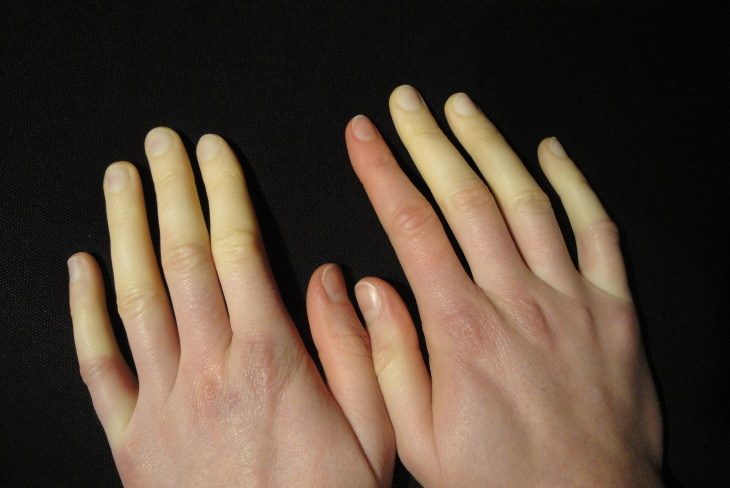
Cold Feet Causes and Remedies Raynaud Syndrome

Patient with Reynaud Syndrome
One of the most common causes of cold feet is poor blood circulation, as people with circulation issues may not get enough warm blood in their feet. There are many reasons why someone may have poor circulation, here are the most common ones associated with cold extremities: 
 
Lack of physical activity, working at a desk for long periods of time, and a sedentary lifestyle, in general, are capable of reducing blood circulation in the legs. 
 
High cholesterol and atherosclerosis cause plaques in the blood vessels, which become barriers that can make it more difficult for the blood to reach the extremities. As Danielle DesPres, DPM, a Foot & Ankle Surgeon & Podiatrist in NYC stated in an interview, "The arteries in your feet are the smallest which means they are most likely to be affected first. When these arteries are blocked, you could experience cold and sometimes painful feet." 
 
Smoking can affect circulation as well, as nicotine has been shown in studies to cause premature atherosclerosis in various blood vessels, including those in the feet. 
 
Certain heart conditions, as well as rarer conditions like Buerger's Disease, which leads to blood clots inside the blood vessels, as well as Raynaud's disease, a rare condition where blood supply is temporarily cut off to the hands and feet in response to cold or stress, can likewise cause cold feet. 
 
2. Nerve Disorders
Another type of disorder that can manifest itself through cold feet are certain nerve disorders generally termed as peripheral neuropathy. This type of nerve damage in the feet can be caused by trauma, frostbite, injury, or a number of medical conditions like infections, hereditary diseases, as well as kidney and liver damage. 
 
When the nerve tissue becomes inflamed or damaged, it malfunctions and stops transmitting the right feelings to our brain. As a result, patients feel cold in their feet even when the temperature of the surroundings is fine. Patients suffering from this condition may also experience other out-of-place sensations, such as burning, numbness, tingling, and prickling in the feet.

3. Anemia
Anemia is a condition that occurs when not enough oxygen-carrying red blood cells are being delivered to your body's cells and organs. Our muscles and other tissues require oxygen to produce energy and stay warm, and since the amount of oxygen in the blood of people with anemia is lower than it should be, patients often feel that their feet and hands are chronically cold. 
 
Other symptoms of anemia include fatigue, shortness of breath, headaches, and pale skin, but only a blood test can definitively say if you're anemic, so make sure to talk to your health provider if you experience similar concerns.

4. Diabetes
Diabetics often experience persistently cold hands and feet, too, and there are two ways in which the condition can bring about this symptom. Firstly, diabetes patients may have issues with blood circulation. High blood sugar can result in the narrowing of the blood vessels which, in turn, affects the blood supply to the extremities. 
 
Secondly, diabetic patients can develop a condition called diabetic peripheral neuropathy, a type of nerve damage most common in the feet. Diabetic neuropathy is more widespread among type 2 diabetes patients, and about half of them develop the condition compared to around 20% in type 1 diabetes patients. 
 
Nerve damage due to diabetes occurs when blood sugar levels are high for long periods of time, especially in untreated patients that don't even realize that they have the condition. Since diabetic nerve damage cannot be cured, it's crucial to diagnose the condition early and prevent the nerve damage altogether. This is especially important in high-risk groups, such as the elderly, people with cardiovascular issues, and overweight individuals, to name a few.

5. Thyroid Issues
Our thyroid gland controls several key functions in the human body, and an underactive thyroid, a condition called hypothyroidism, is known to manifest itself through cold feet and hands. This is because thyroid hormones play an important role in regulating metabolism, and an underactive thyroid, in turn, worsens blood circulation, decreases the heartbeat, and lowers the body temperature. 
 
Any of the above-mentioned functions can potentially lead to cold feet, and because hypothyroid patients are more sensitive to temperature changes, the symptom is considered to be a common sign of the condition.
 
6. Anxiety and high stress
Unfortunately, we've all experienced a great deal of stress due to the ongoing Covid-19 pandemic and other global and local events this year. As a result, anxiety and depression rates worldwide have skyrocketed. And while we're all aware of the emotional and mental toll these conditions may cause, the physical effects of anxiety and stress often go unnoticed. 
 
One of such effects can be cold feet, experts say. When we're stressed, our body produces adrenaline into the bloodstream as part of the fight or flight response. Adrenaline makes the peripheral blood vessels constrict in order to make the body save energy, and this naturally decreases one's circulation and may cause cold hands and feet. Relaxation and plenty of healthy sleep are necessary for our body to switch gears and return to normal.

Tips to Warm Up Your Feet
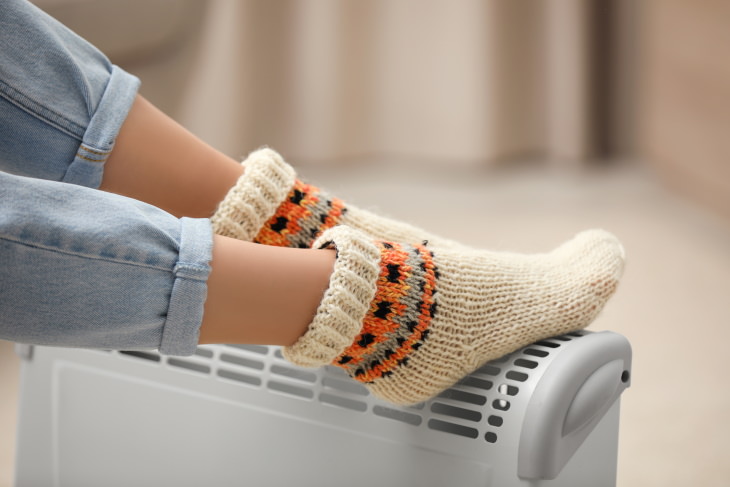
Cold Feet Causes and Remedies woman wearing warm socks and warming up feet near the radiator
As you can see, there is a wide range of health conditions that can cause chronically cold feet, and if this is a persistent symptom for you or someone you know, it's best advised to see a doctor and get diagnosed properly. If, however, cold feet are only an occasional issue or you need a quick fix for your problem, we have listed a few practical tips that will help you improve blood circulation in the feet and warm them up, here they are:
 
Massage your feet to improve blood circulation. 
 
The quickest way to warm up and relax your feet is by taking a warm foot bath. We have several tips on how to do a foot bath and recipes to address different concerns in the article DIY Foot Soaks. 
 
Make sure your footwear isn't too tight and switch to looser footwear like slippers or thick wool socks at home to maintain healthy circulation. 
 
Exercise really helps improve the blood flow to the hands and feet, too. Take a walk, jog, or do a few jumping jacks throughout the day if you have a sedentary lifestyle, for example, to improve the circulation. Any exercise will be beneficial. 
 
If you have trouble sleeping because your feet get too cold, try placing a hot water bottle or a heating pad at the foot of the bed before bedtime. 
 
Lastly, always keep those feet warm by wearing warm socks and slippers, and cover them with a blanket if you're sitting for a long time.

This is only for your information, kindly take the advice of your doctor for medicines, exercises and so on.     

https://gscrochetdesigns.blogspot.com. one can see my crochet creations  
https://gseasyrecipes.blogspot.com. feel free to view for easy, simple and healthy recipes    
https://kneereplacement-stickclub.blogspot.com. for info on knee replacement


Labels: , , , , , , ,

Sunday, December 03, 2017

Cold Weather Affects Diabetic Patients

Diabetes is a metabolic disorder characterized by Hyperglycemia (elevated blood glucose level) due to either reduced production of insulin or the inability of the body to utilize the insulin produced. Today management of diabetes has become a prime concern. Over the winter months, diabetic patients are likely to suffer from higher blood glucose levels than during the warmer months. As the temperature drops and the sugar levels rises, thus, diabetic patients should be extra careful about the temperature fluctuations or seasonal changes.The cold weather makes diabetics experience many health problems, besides creating a major change in their sugar levels.

Following are the most harmful effects that diabetic patients may suffer from during the cold weather
  1. Change in hemoglobin level: There is a great change in their glycated hemoglobin levels. Whatever the type of diabetes an individual has, the freezing temperature can increase the level of HbA1c or glycated hemoglobin. This is most likely because of decreased physical activity. Cold weather makes it difficult for some people to go out. A little activity each day can help with insulin sensitivity (in all types of diabetes) which can help the body to regulate sugar level in a better way.
  2. Prone to diseases: Since the immune system is also not at its best strength in winters, there are increased incidences of microbial infections like cold and flu or in some cases pneumonia. As a result, the body produces counter-regulatory hormones (Cortisol, Adrenaline, and Glucagon) to counteract the situation. These hormones affect the utilization of insulin by the body thereby elevating the blood glucose level. Also, conditions like flu and cold tend to make them feel lethargic and stress and can prevent them from taking the diet which is required, which eventually can lead to an increase in the blood sugar level.
  3. Winter blues: It is often seen that people feel low during winters, as they tend to go out less and prefer to stay indoors. Less outdoor activity during winters can sometimes trigger mood swings or in some cases depression, which in turn can shoot up the level of blood sugar in their body. Thus it is advisable that one should spend more time with friends and family, in order to keep these blues at bay. 
  4. Other problems: Most diabetic people are unaware of their nerve functions, and are unable to feel the difference between the cold and hot water, which can lead to burn injury. Also, during the winter season, most diabetic patients tend to lose feeling in their toes and feet due to vascular changes. Therefore, it is advisable that people should check their feet frequently, so as to ensure that there is no open wound or pressure area in their feet. One must take very good care of their feet, keep them moisturized, inner fingers clean and dry, prevent any type of fungal growth in toes, etc. By taking required preventive measures before the onset of winters diabetic patients can control their blood sugar level, which enables them to stay away from associated problems.         

    THIS IS ONLY FOR INFORMATION, ALWAYS CONSULT YOU PHYSICIAN BEFORE HAVING ANY PARTICULAR FOOD/ MEDICATION/EXERCISE/OTHER REMEDIES.   

    PS- THOSE INTERESTED IN RECIPES ARE FREE TO VIEW MY BLOG-                      

    HTTP:GSEASYRECIPES.BLOGSPOT.COM/
    FOR INFO ABOUT KNEE REPLACEMENT, YOU CAN VIEW MY BLOG-                                                                       

    HTTP://KNEE REPLACEMENT-STICK CLUB.BLOGSPOT.COM/
    FOR CROCHET DESIGNS

    HTTP://MY CROCHET CREATIONS.BLOGSPOT.COM

Labels: , , , , , ,

Wednesday, June 26, 2013

Arthritis and Lyme Disease

Picture of Lyme Disease
Lyme disease is a bacterial infection transmitted by a tick. Lyme disease was first recognized in 1975, after researchers investigated why unusually large numbers of children were being diagnosed with juvenile rheumatoid arthritis in Lyme, Conn., and two neighbouring towns.

The investigators discovered that most of the affected children lived near wooded areas likely to harbor ticks. They also found that the children's first symptoms typically started in the summer months coinciding with the height of the tick season.


Several of the patients reported having a peculiar skin rash just before developing arthritis symptoms, and many also recalled being bitten by a tick at the rash site.
Further investigations resulted in the discovery that tiny deer ticks infected with a spiral-shaped bacterium or spirochete (which was later named Borrelia burgdorferi) were responsible for the outbreak of arthritis in Lyme. Ordinary "wood ticks" and "dog ticks" do not carry the infection.
In addition to causing arthritis, Lyme disease can also cause heartbrain, and nerve problems.

How Is Lyme Disease Transmitted?

Lyme disease is transmitted through a bite from a specific type of tick. The animals that most often carry these insects are white-footed field mice, deer, raccoons, opossums, skunks, weasels, foxes, shrews, moles, chipmunks, squirrels, and horses. 

 the Symptoms of Lyme Disease

In the early stages of Lyme disease, one may experience flu-like symptoms that can include a stiff neck, chills, feverswollen lymph nodesheadachesfatigue,muscle aches, and joint pain. You also may experience a large, expanding skin rash around the area of the tick bite. In more advanced disease, nerve problems and arthritis, especially in the knees, may occur.
Here are some more details:
  • Erythma migrans. Erythema migrans is the telltale rash which occurs in about 70% to 80% of cases and starts as a small red spot that expands over a period of days or weeks, forming a circular, triangular, or oval-shaped rash. Sometimes the rash resembles a bull's-eye because it appears as a red ring surrounding a central clear area. The rash, which can range in size from that of a dime to the entire width of a person's back, appears between three days and a few weeks of a tick bite, usually occurring at the site of a bite. As infection spreads, several rashes can appear at different sites on the body.
    Erythema migrans is often accompanied by symptoms such as fever, headache, stiff neck, body aches, and fatigue. These flu-like symptoms may resemble those of common viral infections and usually resolve within days or a few weeks.
  • Arthritis. After several weeks of being infected with Lyme disease, approximately 60% of those people not treated with antibiotics develop recurrent attacks of painful and swollen joints that last a few days to a few months. The arthritis can shift from one joint to another; the knee is most commonly affected and usually one or a few joints are affected at any given time. About 10% to 20% of untreated patients will go on to develop lasting arthritis. The knuckle joints of the hands are only very rarely affected.
  • Neurological symptoms. Lyme disease can also affect the nervous system, causing symptoms such as stiff neck and severe headache (meningitis), temporary paralysis of facial muscles (Bell's palsy), numbness, pain or weakness in the limbs, or poor coordination. More subtle changes such as memory loss, difficulty with concentration, and a change in mood or sleeping habits have also been associated with Lyme disease. People with these latter symptoms alone usually don't have Lyme disease as their cause.
    Nervous system abnormalities usually develop several weeks, months, or even years following an untreated infection. These symptoms often last for weeks or months and may recur. These features of Lyme disease usually start to resolve even before antibiotics are started. Patients with neurologic disease usually have a total return to normal function.
  • Heart problems. Fewer than one out of 10 Lyme disease patients develops heart problems, such as an irregular, slow heartbeat, which can be signaled bydizziness or shortness of breath. These symptoms rarely last more than a few days or weeks. Such heart abnormalities generally appear several weeks after infection, and usually begin to resolve even before treatment.
  • Other symptoms. Less commonly, Lyme disease can result in eye inflammation and severe fatigue, although none of these problems is likely to appear without other Lyme disease symptoms being present.
.

Diagnosis of Lyme Disease 

Lyme disease may be difficult to diagnose because many of its symptoms mimic those of other disorders. Although a tick bite is an important clue for diagnosis, many patients cannot recall having been bitten by a tick. This is not surprising because the tick is tiny, and a tick bite is usually painless.
The easiest way for a doctor to diagnose Lyme disease is to see the unique bull's-eye rash. If there is no visible rash (as is the case in about one-fourth of those infected), the doctor might order a blood test three to four weeks after the onset of the suspected infection to look for antibodies against the bacteria. Unfortunately, the Lyme disease bacterium itself is difficult to isolate or culture from body tissues or fluids. 
Other tests. Some patients experiencing nervous system symptoms may also undergo a spinal tap. A spinal tap is a procedure in which spinal fluid is removed from the spinal canal for the purpose of diagnosis in a laboratory. Through this procedure, doctors can detect brain and spinal cord inflammation and can look for antibodies against the Lyme disease bacterium in the spinal fluid.

Treatment

In its early stages, Lyme disease can be effectively treated with antibiotics. In general, the sooner such therapy is begun following infection, the quicker and more complete the recovery. Antibiotics, such as doxycycline or amoxicillin taken orally for two to four weeks, can speed the healing of the rash and can usually prevent subsequent symptoms such as arthritis or neurological problems. There is no compelling evidence that prolonged antibiotic therapy is more effective than two weeks of therapy. Prolonged antibiotic use may have serious side effects.
Intravenous (IV) antibiotics may be used for more serious cases and for someone whose nervous system has been affected. Lyme disease with arthritis also can be treated with antibiotics. Most patients experience full recovery.
Patients younger than 9 years or pregnant or lactating women with Lyme disease are treated with amoxicillin or penicillin because doxycycline can stain the permanent teeth developing in young children or unborn babies. Patients allergic to penicillin are given erythromycin or related antibiotics.
Doctors prefer to treat Lyme disease patients experiencing heart symptoms with antibiotics such as Rocephin, Claforan, or penicillin given intravenously for about two weeks. If these symptoms persist or are severe enough, patients may also be treated with corticosteroids or given a temporary internal cardiac pacemaker. People with Lyme disease rarely experience long-term heart damage.
Following treatment for Lyme disease, some people still have persistent fatigue and achiness. This general malaise can take months to slowly disappear, although it generally does so spontaneously without the use of additional antibiotic therapy. There is no evidence that the Borrelia infection causes chronic fatigue syndrome or fibromyalgia. Although some patients with Lyme disease may develop these problems, as with other patients who get chronic fatigue or fibromyalgia, long-term antibiotics will not hasten recovery.

Prevention-

Try these tips to prevent tick bites:
  • Wear long sleeves and tightly woven clothing that is light in color when walking in wooded areas so the ticks can be seen more easily.
  • Wear your shirt tucked into your pants, and your pants tucked into your socks or boots.
  • Walk in the center of trails through the woods to avoid picking up ticks from overhanging grass and brush.
  • Keep grass trimmed as short as possible.
  • Apply tick repellents with DEET to your clothing, shoes and socks before going out. Another tick repellent called permethrin, designed to be placed on the clothing can be used alone or in combination with DEET. (Although highly effective, these repellents can cause some serious side effects, particularly when high concentrations are used repeatedly on the skin. Infants and children may be especially at risk for adverse reactions.)
  • Check yourself, your family, and your pets routinely for ticks, especially after a trip outdoors.
  • Shower and shampoo your hair if you think you may have been exposed to ticks.
  • Check your clothes for ticks and wash them immediately in order to remove any ticks.

If an infected tick bites, it will not transmit the infection until it has had the opportunity to have its blood meal. This takes time, thus there is value in inspecting your body after outdoor activities in areas where Lyme disease is known to occur. Newly attached ticks can be easily removed before they transmit the infection.
Pregnant women should be especially careful to avoid ticks in Lyme disease areas because the infection can be transferred to the unborn child. Such a prenatal infection can make the woman more likely to miscarry.
Preventative antibiotics are not generally used following all tick bites, but may be used in some special circumstances; a recent study showed that such preventive use of antibiotics is very effective.
If you are bitten by a tick, the best way to remove it is by taking the following steps:
  • Tug gently but firmly with blunt tweezers near the "head" of the tick until it releases its hold on the skin
  • To lessen the chance of contact with the bacterium, try not to crush the tick's body or handle the tick with bare fingers
  • Swab the bite area thoroughly with an antiseptic to prevent infection
  • DO NOT use kerosene, Vaseline, fingernail polish, or a cigarette butt
  • DO NOT squeeze the tick's body with your fingers or tweezers.

Care for People With Lyme Disease

Most people with Lyme disease respond well to antibiotic therapy and recover fully. Some people may have persistent symptoms or symptoms that recur, making further antibiotic treatment necessary. If left untreated, Lyme disease can cause permanent damage to the heart, nervous system, and joints.
A bout with Lyme disease and successful treatment are no guarantee that the illness will be prevented in the future. The disease can strike more than once in the same individual if he or she is bitten by another tick and re-infected with the Lyme disease bacterium. The antibody test usually remains positive for months to many years after an infection. The presence of antibodies in the blood is not sufficient reason for continued or re-treatment with antibiotics.


ps- this is only for information, always consult you physician before having any particular food/ medication/exercise/other remedies.

ps- those interested in recipes are free to view my blog-

http://gseasyrecipes.blogspot.com/

for info about knee replacement, you can view my blog-

http://Knee replacement-stick club.blogspot.com/

for crochet designs

http://My Crochet Creations.blogspot.com/

I've not given details about designs, but those interested are free to mail me for the same.

Labels: , , , , , , , , , , ,

Thursday, August 02, 2012

Toes Clawed ?

illustration of claw toe


This foot deformity can be caused by shoes that are tight and pinch your toes or by a disease that damages nerves, such as diabetes, alcoholism, or other neurological disorder. Your toes will be bent upward as they extend from the ball of the foot, then downward from the middle joint, resembling a claw. They may respond to stretching and exercises of the toes or you may need special shoes or even surgery.

Labels: , , , ,

Why people drag their feet

Sometimes the first sign of a problem is a change in the way you walk -- a wider gait or slight foot dragging. The cause may be the slow loss of normal sensation in your feet, brought on by peripheral nerve damage. About 30% of these cases are linked to diabetes. Nerve damage also can be due to infection, vitamin deficiency, and alcoholism. In many cases, no one knows what caused the nerve damage.

Labels: , , , , ,

Tuesday, January 31, 2012

Why One Should Give Up SODA?


 Fact #1: Soda fattens up your organs

A recent Danish study revealed that drinking non-diet soda leads to dramatic increases in dangerous hard-to-detect fats. Researchers asked participants to drink either regular soda, milk containing the same amount of calories as regular soda, diet cola, or water every day for six months. The results? Total fat mass remained the same across all beverage-consuming groups, but regular-soda drinkers experienced dramatic increases in harmful hidden fats, including liver fat and skeletal fat. The regular-soda group also experienced an 11 percent increase in cholesterol compared to the other groups! And don’t think switching to diet varieties will save you from harm: Artificial sweeteners and food dyes have been linked to brain cell damage and hyperactivity, and research has shown that people who drink diet soda have a higher risk of developing diabetes.

Fact #2: Soda contains flame retardants

Some popular soda brands, including Mountain Dew, use brominated vegetable oil—a toxic flame retardant—to keep the artificial flavoring from separating from the rest of the liquid. This hazardous ingredient—sometimes listed as BVO on soda and sports drinks—can cause bromide poisoning symptoms like skin lesions and memory loss, as well as nerve disorders. If that’s not a good enough reason not to “Do the Dew,” I don’t know what is.


Fact #3: Drinking soda makes you a lab rat

Many American soda brands are sweetened with high-fructose corn syrup, a heart-harming man-made compound derived mainly from genetically engineered corn. The problem? Genetically engineered ingredients have only been in our food chain since the 1990s, and we don't know their long-term health impacts because the corporations that developed the crops never had to test them for long-term safety. Case in point: Some recent findings suggest that genetically engineered crops are linked to digestive tract damage, accelerated aging, and even infertility!


Labels: , , , , , , , , ,