Tuesday, December 24, 2019

Improve Your Learning Skills With These 25 Easy Tips

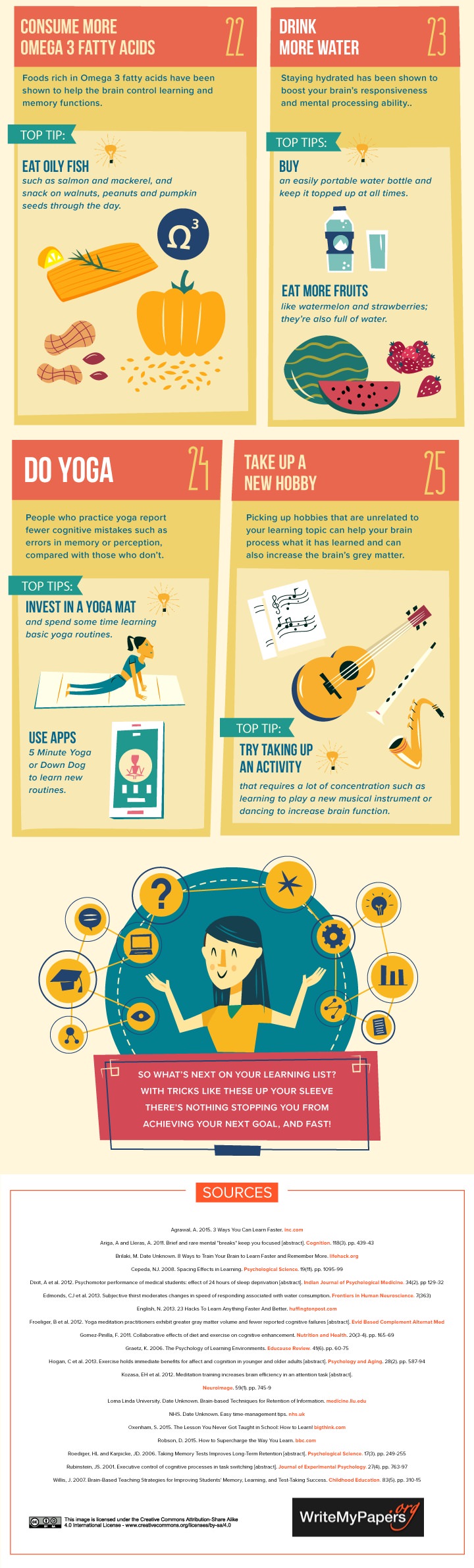
Have you ever had problems absorbing new information? Does learning new things often turn into a tedious task? If any of this sounds familiar, these 25 fun and easy learning tips will come in handy. I, for one, had no idea that multitasking can hinder the learning process.
 
Also, I was very pleased to read that learning is a good excuse to have that extra serving of chocolate. These and more valuable learning tips are contained in this beautiful infographic, so go ahead and read on. And remember, learning productively and effectively is an important skill that you will benefit from at all ages.

 
infographic learning

image.png
Head Title
infographic learning

this is only for your information, kindly take the advice of your doctor for medicines, exercises and so on.     
https://gscrochetdesigns.blogspot.com. one can see my crochet creations  
https://gseasyrecipes.blogspot.com. feel free to view for easy, simple and healthy recipes    
https://kneereplacement-stickclub.blogspot.com. for info on knee replacement


Labels: , , , , , , , , , , ,

Thursday, March 10, 2016

Home remedies for Headache

 THIS IS ONLY FOR INFORMATION, ALWAYS CONSULT YOUR PHYSICIAN BEFORE HAVING ANY PARTICULAR FOOD/ MEDICATION/EXERCISE/OTHER REMEDIES.


FOR INFO ABOUT KNEE REPLACEMENT, YOU CAN VIEW MY BLOG
HTTP://KNEE REPLACEMENT-STICK CLUB.BLOGSPOT.COM/

FOR CROCHET DESIGNS- http://My Crochet Creations.blogspot.com/


1. Crush it with cayenne
Utilizing something spicy may not sound headache helpful, but cayenne is somewhat revered in the kingdom of natural remedies to treat pain and inflammation. The secret behind its success lies in an ingredient called capsaicin, which inhibits something in our body that is one of the main elements in pain perception called Substance P. In short, Substance P is part of what makes us feel pain, and the capsaicin depletes it. Numerous studies, the first in 1998 in The Clinical Journal of Pain, support that when applied topically to the nasal passages; people experience a significant decrease in the severity of their headaches, all thanks to capsaicin.
You will need…
-1/4 teaspoon cayenne powder
-4 ounces of warm water
-cotton swabs

Dilute a ½ teaspoon of cayenne powder in 4 ounces of warm water. Soak a cotton swab in the solution and stir it around to make sure it’s covered-the powder can sometimes sink to the bottom. Apply the moist swab gently to the inside of each nostril until you can feel the heat. It may be a bit unpleasant at first, but take the burning sensation as a sign that it’s working. When it subsides, your headache will hopefully be wiped out, or at the very least better than before.
2. Go nuts
Instead of popping a pill when you get a headache, toss back some almonds. For everyday tension-type headaches, almonds can be a natural remedy and a healthier alternative to other medicine. It acts as a pain reliever because it contains something called salicin, which is also an agent in popular over the counter killers. Try eating a handful or two of these wholesome nuts when you feel the ache start to set in.
Note: People who suffer from migraines may find that almonds are a trigger food.

3.Apply an apple cider vinegar compress Apple cider vinegar (ACV) has a long history in realm of natural remedies. It’s been used to relieve everything from scurvy to hay fever, and just about any other ailment that falls in between. Some modern day studies have proven its effectiveness in treating certain illnesses, but most of its clout lies in the reports of people throughout the centuries who have benefited from it. If you find yourself coming down with a throbbing headache, try getting some quality ACV time into your day in the form of a steam-style treatment.
You will need…
-1/4 cup of ACV
-Roughly 3 cups of boiling water
-1 cup of fresh cool water

Directions…
Pour ¼ cup of apple cider vinegar into a large bowl, and then fill the bowl halfway with boiling water. Place a towel over your head so that it drapes over the bowl, trapping the steam, and hold your face over it. Make sure your face isn’t so close that it gets burned by the steam. Do this for 5-10 minutes, or when the water starts to cool down, breathing in and out deeply the whole time. When you’re done, use the towel to pat your face dry, and go drink a glass of cool water.


4.Stretch, relax, and breathe Our lives are fast paced, busy, and filled with more than a little stress. Our overworked minds and bodies react to this by tensing and knotting up muscles, usually in the upper back, neck, and shoulders. Thanks to a little something called referred pain-pain felt in an area other than where the actual painful stimulus is-we end up with tension-type headaches. To help head these buggers off, try some of the following tips.
Do yoga: Yoga will get your mind focused, stretch out your muscles, and get you moving in ways that can help you drop the tension-and if you drop the tension, you can drop the tension-headache. Just doing a few moves when the pain starts up can help, but the best thing to do is a set aside a few minutes each day to practice regularly and prevent headaches before they happen.
Breathe: You may think your breathing alright, but if your head is pounding you’re likely not getting the most out of the oxygen you take in. In general we take breaths that are too shallow, and when we are experiencing pain or stress, we definitely breathe to shallow. Make a conscious effort to take deep, full, breaths that start in your diaphragm and fill up your lungs. This will get your plenty of fresh oxygen circulating through your blood and will also help relax your mind and body.
Drop your shoulders: This is one I remind myself to do about 5 times a day. Make yourself aware of how you carry your shoulders. When you think of it, tell yourself to drop them down. You’d be surprised at how often we carry them hunched up too high, resulting in soreness and, of course, headaches.
Directions…
Pour ¼ cup of apple cider vinegar into a large bowl, and then fill the bowl halfway with boiling water. Place a towel over your head so that it drapes over the bowl, trapping the steam, and hold your face over it. Make sure your face isn’t so close that it gets burned by the steam. Do this for 5-10 minutes, or when the water starts to cool down, breathing in and out deeply the whole time. When you’re done, use the towel to pat your face dry, and go drink a glass of cool water.

 5. Get moving
An aching head does not inspire one to get active, but getting up and moving-outside in fresh air if possible- can help loosen up tight muscles causing a headache. It also gives you something to focus on to take your mind off the pain. Good exercise also releases endorphins, which can dull the uncomfortable sensation caused by a headache. To get the most out of your activity, keep in mind the following tips.
Stay regular: Exercising only when you feel like it is less likely to prevent headaches then exercising on a regular basis. Routine also gives your body just that-routine. Routine helps us function, at least physically, better than we might if we didn’t have any.
Warm up and cool down: Take your time getting yourself warmed up and properly cooled down. Jumping into strenuous activities and then abruptly stopping is more likely to cause a headache then stop it.
Enjoy the outdoors: If possible, exercise outside. The invigorating fresh air and change in scenery does something that just makes our bodies and minds feel good.

6. Avoid MSG Monosodium glutamate (MSG) is added to food to enhance its flavor. It is derived from an amino acid, called glutamic acid, which occurs naturally in various foods. Many people who suffer headaches find that foods containing MSG triggers migraines or other types of headaches, possibly due to the fact that it excites our neurons. Make sure you read food labels to check if the product has MSG, the FDA is requires companies to list it, however it can also be hidden as a component of other ingredients. Watch for some of these words, which can give away “hidden” MSG, and be extra cautious around Chinese food, processed meats, canned vegies, gravy/soup/dip mixes, and soy-based items.
-Gelatin
-Yeast extract
-Anything “hydrolyzed”
-Textured protein


 7. Improve your posture
Improving your posture can make all the difference in the world when it comes to tension-type headaches. Many of us spend our days working in an office or sitting down at a computer with little to no movement, and many of us are guilty of poor posture. We slouch, slump, and hunch forward, which strains our muscles and creates nasty headaches. Try using an ergonomic chair if you’re sitting down a lot, and make a conscious effort to sit up tall but relaxed, with your shoulders back, your chest open, and your neck not sticking too far forward. Working on strengthening core muscles helps a lot with posture, since balance and the strength to support ourselves properly comes from mostly from our center.

8. Use your imagination
Mental imagery has been shown to reduce headaches, whether mild or severe, by helping people relax and loosen up the knots that may be causing the pain. There are guided imagery coaches, but you can also do this on your own. Imagery exercises create a “mental scape” that is calm, peaceful, and pain free-your happy place, if you will. To work on your ‘scape, try the following.
The following…
Find a quiet place to close your eyes and use your mind to fill your head with something other than pain. Picture rolling hills or waves lapping over sand, even just creating a landscape of soothing colors can be helpful. Try adding a quiet soundtrack to this exercise; be it sounds of nature or just a soft song that calms you down. Breathe and be patient. Also, be patient. And then be a little more patient. Don’t get worked up because your headache isn’t gone after you spent 30 seconds impatiently picturing a tree, this stuff takes practice and some dedication (and patience) but it’s worth it.


 9. Munch on gingerroot
Prostaglandin synthesis is a process that takes place in some animals (including humans) that makes lipid (fat) compounds within their cells. Those fatty substances are like little chemical messengers that mediate biological processes, like inflammation, and alerting neurons to pain. Certain enzymes spark off the prostaglandin synthesis, while some drugs, such as aspirin, inhibit the synthesis. Gingerroot, a natural alternative, is thought to inhibit the synthesis as well. On top of that, if you’re getting knocked with a migraine, it can help quell your nausea. Simply sip a nice steaming cup of gingerroot tea and relax while you wait for your headache to ease up.
You will need…
-3 quarter size slices of gingerroot
-2 cups of water
Slice 3 slices off of a piece of raw gingerroot, with each being roughly the size of a quarter. Gently simmer the pieces of ginger in 2 cups of water, covered, for 30 minutes. Use something to remove the pieces of ginger and transfer to a mug, or if you prefer, leave them in. Sip slowly and breathe in the steam if you want. Relax!


10. Grab a pencil
Holding a pencil between your teeth (holding, not biting or clenching your jaw) can help a tension headache dissipate. The actual physical action of holding the pencil between your teeth activates your “smile” muscles, relaxing your jaw. We often times clench our teeth when stressed and this in turn strains the muscle connecting the jaw to the temples and causes a tension headache. Again, make sure your jaw is relaxed and the pencil is held lightly between your teeth.

11. Stay hydrated, as very often, due to dehydration, some do get headaches.

Labels: , , , , , , , , , , , , , , , ,

Friday, May 22, 2015

Infections can also affect your INTELLIGENCE

THIS IS ONLY FOR INFORMATION, ALWAYS CONSULT YOU PHYSICIAN BEFORE HAVING ANY PARTICULAR FOOD/ MEDICATION/EXERCISE/OTHER REMEDIES.


PS- THOSE INTERESTED IN RECIPES ARE FREE TO VIEW MY BLOG-
HTTP:GSEASYRECIPES.BLOGSPOT.COM


FOR INFO ABOUT KNEE REPLACEMENT, YOU CAN VIEW MY BLOG-
HTTP://KNEE REPLACEMENT-STICK CLUB.BLOGSPOT.COM/

FOR CROCHET DESIGNS


HTTP://MY CROCHET CREATIONS.BLOGSPOT.COM
In addition to harming your physical heath, severe infections of any type can affect your mental capacity as measured on an intelligence quotient (IQ) scale, a new research has found.

The researchers found that infections in the brain affected the cognitive ability the most, but many other types of infections severe enough to require hospitalisation can also impair a patient's cognitive ability.

"Our research shows a correlation between hospitalisation due to infection and impaired cognition corresponding to an IQ score of 1.76 lower than the average," said senior researcher Michael Eriksen Benros from the University of Copenhagen, Denmark.

Anyone can suffer from an infection, for example in their stomach, urinary tract or skin and the results of this study suggests that a patient's distress does not necessarily end once the infection has been treated.

"It seems that the immune system itself can affect the brain to such an extent that the person's cognitive ability measured by an IQ test will also be impaired many years after the infection has been cured," Benros explained.

In the largest study of its type, 190,000 people in Denmark, born between 1974 and 1994, participated. They had their IQ assessed between 2006 and 2012. Thirty five percent of these individuals had a hospital contact with infections before the IQ testing was conducted.

People with five or more hospital contacts with infections had an IQ score of 9.44 lower than the average.

"Infections can affect the brain directly, but also through peripheral inflammation, which affects the brain and our mental capacity," Benros pointed out.

The study was published in the journal PLOS ONE. 
  

Labels: , , , ,

Tuesday, May 27, 2014

Golden rules to fight Alzheimer’s revealed

Specialists have revealed few simple guidelines that can help prevent deadly dementia.

The steps to healthy life include cutting down the intake of saturated fats and the trans fats found in pastries and fried foods; eat lots of vegetables, legumes, fruits and whole grains; nuts to boost vitamin E; meat, salmon, cod, milk cheese or eggs to get the dose of vitamin B12, the Daily Express reported. It was also established that it is important to choose multi-vitamins which do not have iron or copper and avoid using cookware, antacids, baking powder or other products that could contribute to dietary aluminium.

Dr Neal Barnard, a leading researcher on nutrition and its impact on human health said that Alzheimer's disease isn't a natural part of ageing and by staying active and eating healthy could help in rewriting our genetic code for this heart-wrenching disease. He further suggests that brisk walking for 40 minutes three times a week, getting seven hours sleep each night and doing 30 to 40 minutes of mental activities such as crosswords is good for brain health. The research states that a perfect combination of healthy diet and regular physical exercise may reduce the risk of developing Alzheimer's disease. 
  The findings are published in the journal Neurobiology of Aging.   
 THIS IS ONLY FOR INFORMATION, ALWAYS CONSULT YOU PHYSICIAN BEFORE HAVING ANY PARTICULAR FOOD/ MEDICATION/EXERCISE/OTHER REMEDIES.


PS- THOSE INTERESTED IN RECIPES ARE FREE TO VIEW MY BLOG-
HTTP:GSEASYRECIPES.BLOGSPOT.COM/
FOR INFO ABOUT KNEE REPLACEMENT, YOU CAN VIEW MY BLOG-
HTTP://KNEE REPLACEMENT-STICK CLUB.BLOGSPOT.COM/

FOR CROCHET DESIGNS


HTTP://MY CROCHET CREATIONS.BLOGSPOT.COM

Labels: , , , , , , , , , , , , , , , , , ,