Sunday, April 06, 2025

Body Language: The Complete Guide

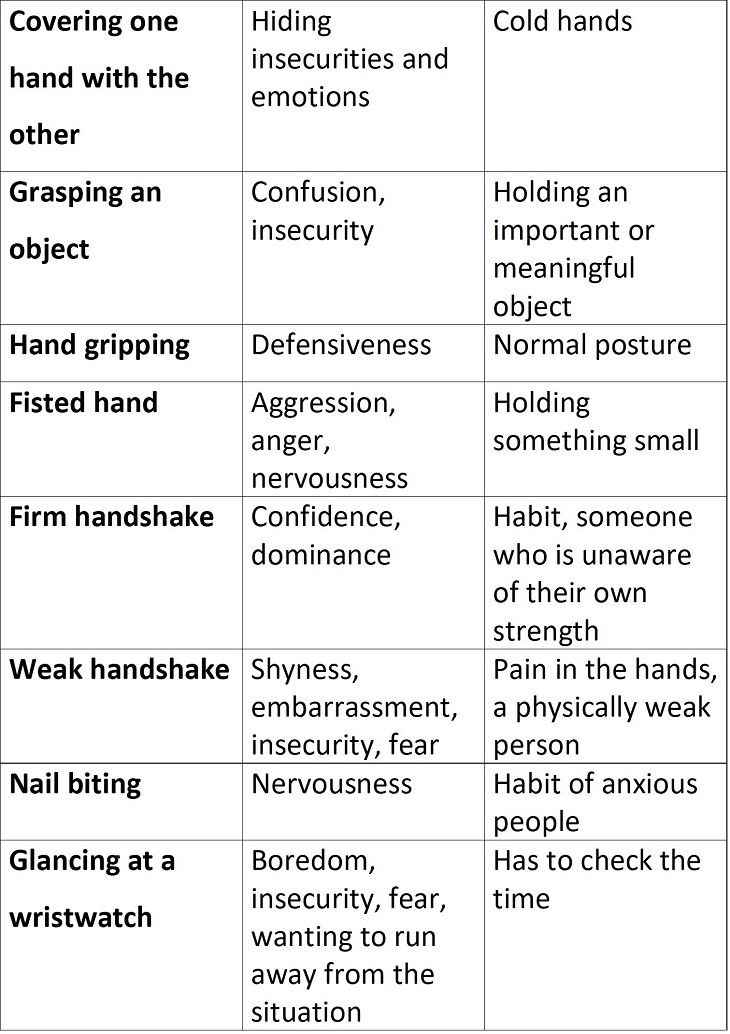
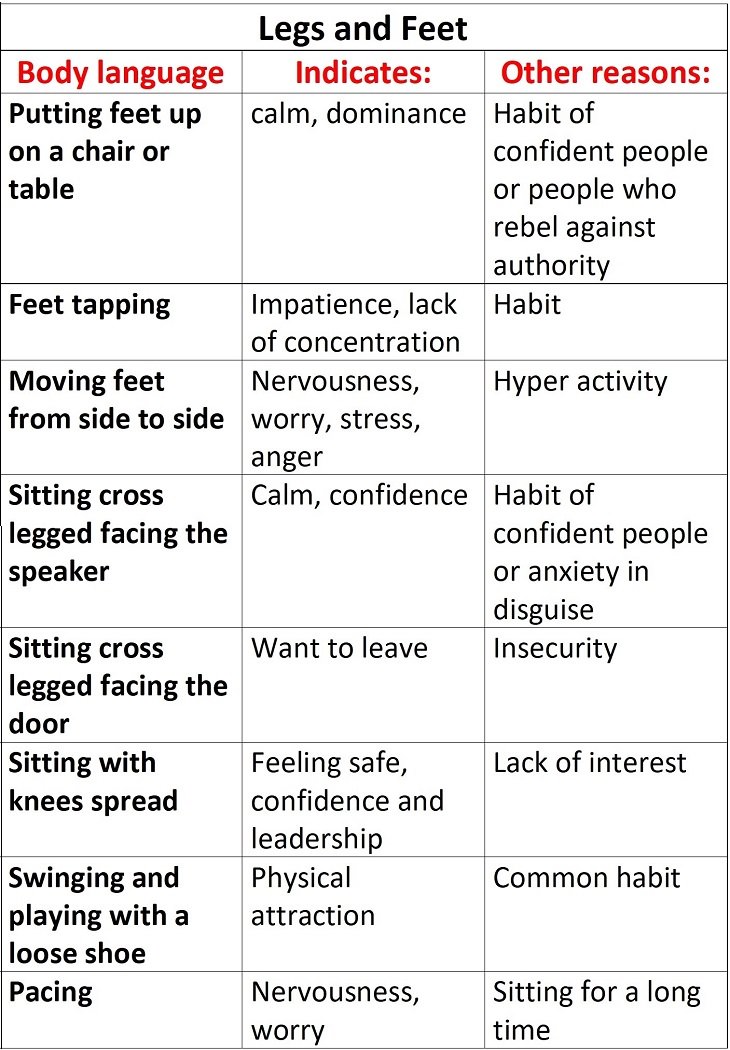
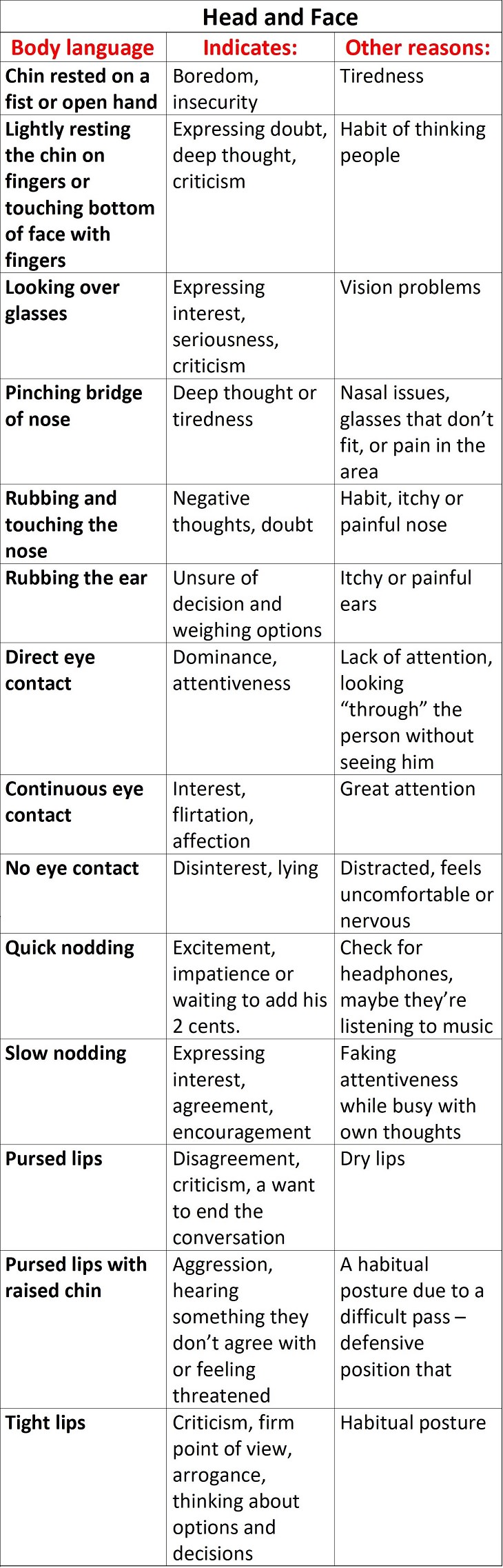
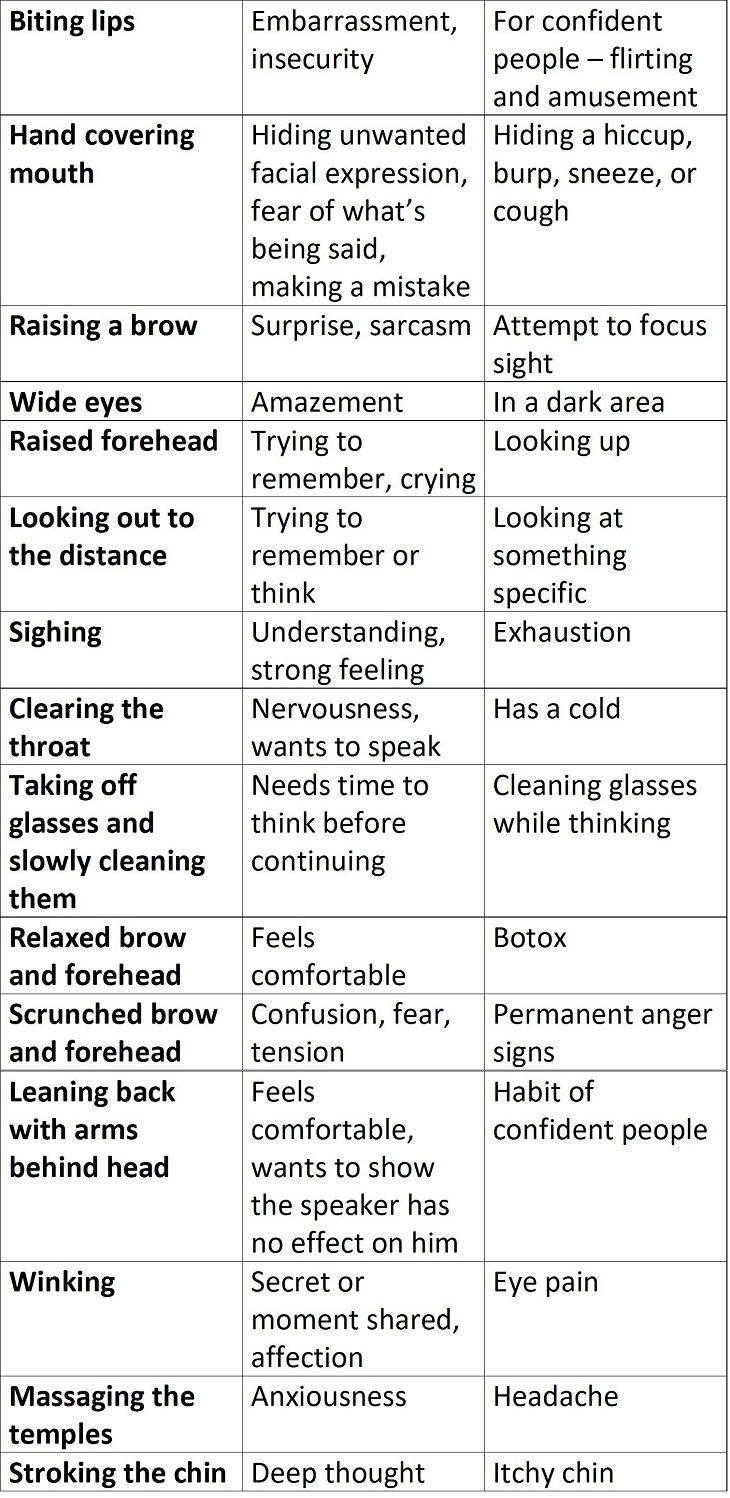
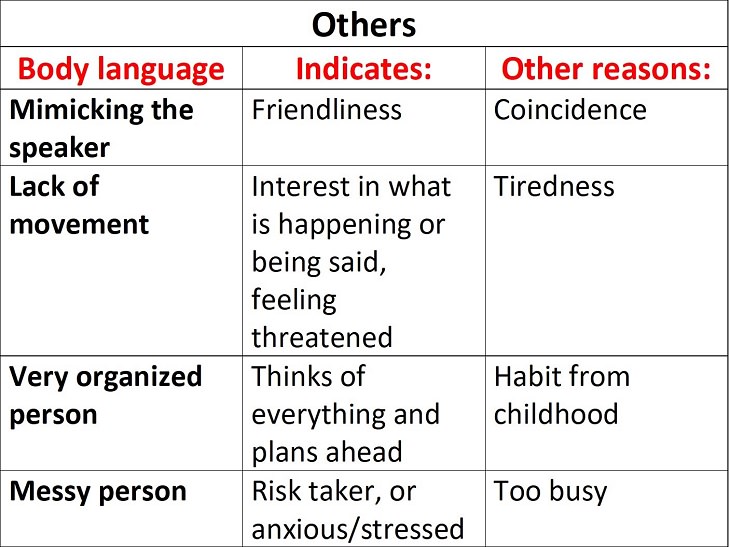
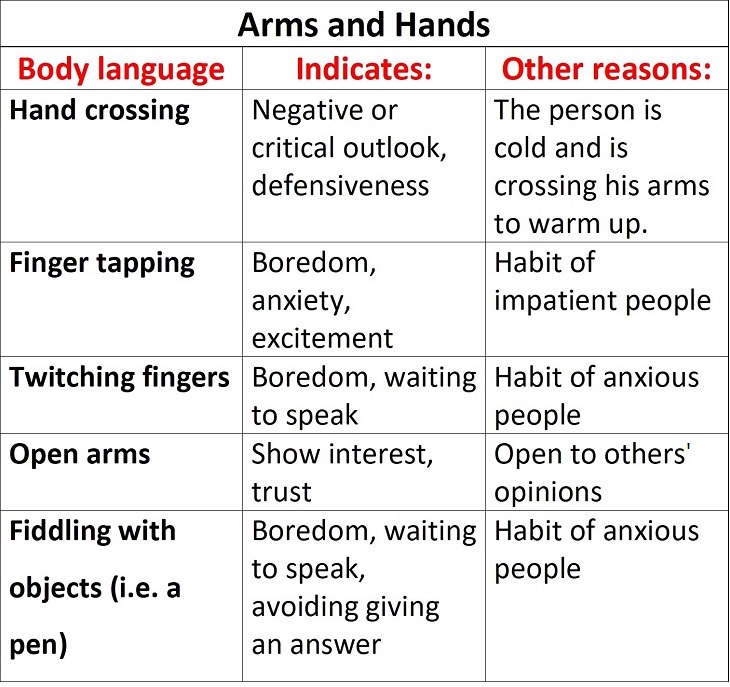
It's sometimes difficult to judge a person's body language, which is a pity because you can usually learn a lot about a person’s situation by reading their body language. However, sometimes, what we believe to be body language is actually just a habit.

The guide below will enable you to reach an informed judgment regarding the body movement a person is showing. Is the person in pain? Is it a habit? Has something just happened to justify said body language?
body language

body language
body language
body language
body language
body language


This is only for your information, kindly take the advice of your doctor for medicines, exercises and so on.   


Labels: , , , , ,

Tuesday, April 02, 2019

Autism spectrum disorder and diet

Every year, April 2 is observed as World Autism Awareness Day (WAAD), an event to raise public awareness about autism as well as highlight the needs to help and improve the lives of those affected by the developmental disorder. This year’s WAAD is focusing on leveraging the use of assistive technologies for persons with autism.

First discovered in the 1940s, autism is a serious disorder wherein a child has difficulty in communicating and his social skills are impaired. It is called Autism Spectrum Disorder (ASD) as the signs can be varied based on the severity of the condition. Indicators may appear by age of 2-3 years.
Experts say that early intervention can help improve communication skills and help in brain development so that the child can have a near-normal life later as an adult. Perhaps, there is convincing empirical evidence that dietary intervention can help many with autism.

Symptoms and causes of autism spectrum disorder

Few signs that a child might be autistic are - lack of eye contact, poor facial expressions, resists cuddling or holding, shows repetitive behaviour, doesn’t respond when his name is called out, is not able to express his feelings or understand other persons feeling, etc.

The exact cause of autism is not very clear as it may be associated with environmental and genetic factors - ranging from exposure to few drugs during pregnancy to genetic mutation.

Diet and Autism: What parents need to know

Children with autism may have a sensitive gut, inflammation, poor digestion, malabsorption, etc. It has been observed that children with autism have high peptide levels in the blood as compared to children without the disorder.

Generally, a gluten- and casein-free diet (GFCF) is highly recommended for people with autism, said a Nutritionist- Lifestyle and Weight Management Expert. Gluten-free means avoiding grains like wheat, oats, barley and their products in the diet. Instead, parents can give quinoa, rye, potato flour, rice, tapioca, etc. One can also make paratha, chelas, pancakes, porridge, pulav, dosa, etc out of these flours. You may also use them as a binding agent to make a patty out of vegetables.

A casein-free diet is a diet free of dairy products like milk, curd, cheese, drinks which are milk-based or supplements which have milk powder in them. The advice here is to read the label before giving anything to the child or better still cook and prepare food from scratch at home.

Another option is to substitute milk with almond milk, coconut milk, rice milk, etc. Packed milk contains carrageenans which can lead to inflammation, hence, one should try to prepare at home. There is clear advice of not using soya milk or products as soya is genetically modified and commonly have cross contamination. Also, parents need to avoid saturated fats and sugars as well apart from gluten and casein. Here are a few important diet tips for parents to follow.
  1. Be careful about cross contamination - e.g. using the same knife or spoon between GFCF and normal diet.
  2. Do not stock your kitchen with gluten-free products as most of them will be high in sugar. Honey can be a good substitute but that too in limited quantities.
  3. Let the child have as much as he wants to eat as long as it is within the allowed category.
  4. If possible, the whole family should turn to the same diet as it is easier to follow and avoid contamination.
  5. Avoid additives, colour, preservatives, hormones, etc in food.
  6. Food should be nutrient-dense as the child’s nutritive needs are higher than the counterpart.
It has been seen that if we eliminate grains and milk, there will be obvious nutritional deficiencies in children who are already poor eaters. So here the task is to give enough options and variety to the child with the main focus on fresh fruits and vegetables.

THIS IS ONLY FOR INFORMATION, ALWAYS CONSULT YOU PHYSICIAN BEFORE HAVING ANY PARTICULAR FOOD/ MEDICATION/EXERCISE/OTHER REMEDIES.                                    PS- THOSE INTERESTED IN RECIPES ARE FREE TO  VIEW MY BLOG-                                                                                           https://gseasyrecipes.blogspot.com/                                                                                                                                                         FOR INFO ABOUT KNEE REPLACEMENT, YOU CAN VIEW MY BLOG-                                                  https:// kneereplacement-stickclub.blogspot.com/           

                   FOR CROCHET DESIGNS                                                                                                                                                                                                  https://gscrochetdesigns.blogspot.com

Labels: , , , , , , , , , , , , , , ,

Saturday, November 24, 2018

Music linked with improving mood of people with dementia

The positive impact of music on human psyche has been known for a long time. Now, according to a new study, music may even help in improving the mood of people with dementia. 

The study of 51 individuals living with dementia, who attended community-based adult day health centres, behavioural observations of a music intervention, showed a positive change in mood and a decrease in agitation. Participants demonstrated significant increases in joy, eye contact, eye movement, being engaged, and talkativeness, and a decrease in sleeping and moving or dancing.

For the study, each participant listened to personalised music using headphones, which prompted social interaction with one another and/or the researchers while listening. After 20 minutes, participants were brought back to the centre's usual activities and were observed for 20 more minutes.

"The promising results of this affordable and meaningful intervention have propelled our team to develop an online training for direct care workers in long-term care communities," said the lead author. 

THIS IS ONLY FOR INFORMATION, ALWAYS CONSULT YOU PHYSICIAN BEFORE HAVING ANY PARTICULAR FOOD/ MEDICATION/EXERCISE/OTHER REMEDIES.                                                                                                                                                                                                                                                                                        PS- THOSE INTERESTED IN RECIPES ARE FREE TO  VIEW MY BLOG-                                                                                           https://gseasyrecipes.blogspot.com/                                                                                                                                                                             FOR INFO ABOUT KNEE REPLACEMENT, YOU CAN VIEW MY BLOG-                                                                                                                             https:// kneereplacement-stickclub.blogspot.com/                                                                                       FOR CROCHET DESIGNS                                                                                                                                                                                                                                 https://gscrochetdesigns.blogspot.com

Labels: , , , , , , , , , ,

Saturday, September 08, 2018

This Is Why Touching Is So Important

 The benefits of human touch for a relationship are often underestimated. A recent study, which was conducted online with participants aged 20 to 40, asked: “Where do you prefer to be touched by your partner?”
Participants were also asked to name one or several body parts where they like to be touched. The results showed major differences between men and women in this regard, however, both men and women ranked the back and the neck as the top two places they like to be touched. Here’s why human touch is vital to cultivating a thriving relationship:
Why Touch Is Important
Touching and being touched are fundamental ways in which humans interact, and are actually instrumental to our health and well-being. This is especially true during childhood, with children needing touch almost as much as they need food and water. The benefits of human touch include stress relief, an improved mood, and even pain reduction.
Human beings actually have two touch systems, namely the factual (discriminative) and emotional. The latter system is mediated by a different set of sensors and nerve fibers to the former and conveys information much slower. The emotional touch system could include a hug from a friend, a mother’s touch or intimate contact between romantic partners. All of these kinds of emotional touching activate parts of the brain that are crucial for social bonding.
Survey Results
The aforementioned online survey allowed participants to submit their answers anonymously. It found that the participants, which consisted of 53% women and 47% men aged 20 to 40 years old, like to be touched in the following places:
1. The Back
Some 64% of women and 50% of men prefer to be touched and caressed on their backs. The good news about this is that the back can be touched almost anywhere, and at any time. The truth is that most of us are even okay with colleagues and friends touching our back occasionally.
Touching the back leads to the release of oxytocin, which is commonly referred to as the love hormone. Oxytocin levels increase during hugging and lovemaking, and it is found in greater amounts in people who are in relationships in contrast with those who are single.
2. The Neck
Being a part of the body that’s always on show, as well as being a very intimate area, the neck is a rather unusual spot. A study consisting of 1,368 European participants showed that people are more reluctant to strangers, acquaintances or even distant relatives touching their necks.
With that being said, people feel differently about having their necks touched by their intimate partners. The survey showed that some 55% of female respondents and 39% of male respondents admitted to enjoying having their neck caressed by their partner. These findings are perhaps no surprise – the neck has a high concentration of light-touch receptors that go wild for gentle kisses and soft caresses.
3. The Runners-up
The next most preferred areas for women were legs and thighs (25%), followed by the shoulders (23%). Some 20% of male respondents said they enjoyed having their heads and hair touched, and a further 15% of them said they enjoyed having their arms and legs touched.
Intimate vs. Non-intimate Touching
The survey indicates that touching that represents companionship and support is far more significant than touching intimate areas that have the greatest potential to bring pleasure. With that being said, intimacy is still crucial for cultivating a strong and lasting relationship. The essential thing to take from this is that touching should not be limited to intimate times only.
Affectionate physical behavior, such as hugging, has been shown in studies to reduce stress levels and blood pressure. Such behavior has an even more profound impact when people are in relationships. This is especially true during the early months of a romantic relationship – we’ve all felt how eye contact in combination with touch stirs butterflies in the stomach.
The importance of touching grows and diversifies as a relationship matures. For example, a daily cuddle can strengthen a relationship and enhance feelings of love, which are very important. In addition, less fighting occurs when physical affection is prioritized. Showing signs of physical affection during a conflict can often lead to it being resolved much more quickly.
The Benefits of Human Touch for a Relationship
Life can sometimes seem like a never-ending rush, so a hug or a touch can go a long way toward strengthening a relationship. For some couples, this comes naturally, however it might require a little more effort for others. Whichever end of the spectrum that you’re on, keep in mind that the simple act of human touch is a great way of bringing the spark back if and when you run into trouble in your relationship.

THIS IS ONLY FOR INFORMATION, ALWAYS CONSULT YOU PHYSICIAN BEFORE HAVING ANY PARTICULAR FOOD/ MEDICATION/EXERCISE/OTHER REMEDIES.                                                                                                                                                                                                        PS- THOSE INTERESTED IN RECIPES ARE FREE TO  VIEW MY BLOG-                                                                                           https://gseasyrecipes.blogspot.com/  
FOR INFO ABOUT KNEE REPLACEMENT, YOU CAN VIEW MY BLOG-                                                                                        https:// kneereplacement-stickclub.blogspot.com/                              

FOR CROCHET DESIGNS                                                                                                                                                                                                                                 https://gscrochetdesigns.blogspot.com


Labels: , , , , ,

Wednesday, September 07, 2016

SOME TRICKS TO IMPROVE YOUR SOCIAL RELATIONS AND ALSO FEEL HAPPY AND WANTED

1. How to know who likes who
 Notice that when a group of people start laughing at something, they each make eye contact with the person they either feel closest to, or wish to be closest to. Look out for this.
2. How to calm your nerves
 Your brain is wired to associate eating with safety. Therefore, if you are doing something that makes you nervous, chew gum. This will make your brain feel as if you are eating, and will soothe your nerves.
3. How to destroy someone’s anger
 People justify their anger if they also stir your anger in response to theirs. Instead, if you behave calmly in the face of their anger, they will later feel guilty and ashamed. They may even apologize the next day.
4. How to make people speak more clearly to you
If someone has just said something to you, but you don’t understand what they mean or want more from them, keep eye-contact and keep silent. They will instinctively understand that they need to say more.
5. How to alter your own mood
 If you think should feel happy, or you’d like to feel happy, just make the biggest smile you can. Your emotions will follow your expressions’ lead.
 6. How to avoid sounding under confident
 Whenever you say or write ‘I think’, ‘I believe’ or phrases of this kind, it will sound to other people like you are unsure of yourself. These phrases are already understood from the fact that you are talking, so get used to not using them anymore.
7. How to control a job interview
 If you behave with your interviewer as if you are old friends, you’ll naturally exude this sentiment and the interviewer will infectiously start to feel the same way about you.
8. How to make people excited to see you
Greet people excitedly, and you’ll start to notice that they become happy to see you too in future. Charismatic people always do this.
9. How to change stress into exhilaration
Trick your body into believe that a situation is not stressful by seeing it as a challenge. Because stress and exhilaration have the same bodily symptoms, such as a fast heart rate and heavy breathing, the ruse will work and you’ll feel full of energy.
10. How to inspire people’s respect
 People always seek a leader to follow, and they do this by seeing who looks like they know what they are doing. You don’t have to be brilliant, just do what you are doing with certainty and they will follow your lead.
 11. How to deter someone’s personal attack
 If you believe that someone is about to single you out among a group, try and sit close to them. They will lack the security of the pack, and they will not be as likely to make their attack upon you.
12. How to make people like you more
 Make it a habit to notice someone’s eye color when you meet them for the first time. The other person will enjoy the greater eye contact you are giving them and will like you more.
 
this is only for your information, kindly take the advice of your doctor for medicines, exercises and so on.
https://gscrochetdesigns.blogspot.com. one can see my crochet creations
https://gseasyrecipes.blogspot.com. feel free to view for easy, simple and healthy recipes

https://kneereplacement-stickclub.blogspot.com. for info on knee replacement

Labels: , , , , , , , , ,

Saturday, July 26, 2014

Toddler's eye contact may signal autism risk

Low levels of joint attention - the act of making eye contact with another person to share an experience - without a positive affective component (a smile) in the first year is linked to high risk of autism disorder, says a study.

Early joint attention initiation without smiling - matter-of-fact looking at a person to communicate interest in a toy - was negatively associated with Autism Spectrum Disorder (ASD) symptoms, the findings showed.

"The ability to coordinate attention with another person without a smile, without an emotional component, seems to be particularly important for high-risk siblings in the development of ASD symptoms," said Devon Gangi from University of Miami, US.

"The detection of markers associated with autism early in life, before a child can be diagnosed with autism, is important to help identify children at the greatest need for early interventions," Gangi said.
Some babies are at risk for autism because they have an older sibling that has the disorder.

According to the study, the less joint attention without smiling at 8 months in a high-risk sibling, the more likely they were to have elevated ASD symptoms by 30 months.

Less early initiating of joint attention without smiling is a particularly important skill for high-risk siblings, the study added.

The researchers primarily predicted the children's symptom level. Symptoms vary in at-risk siblings, some of whom have an ASD outcome and some of whom do not. They did not look at whether the younger sibling eventually received an ASD diagnosis.

The study appeared in the Journal of Autism and Developmental Disorders.

 THIS IS ONLY FOR INFORMATION, ALWAYS CONSULT YOU PHYSICIAN BEFORE HAVING ANY PARTICULAR FOOD/ MEDICATION/EXERCISE/OTHER REMEDIES.


PS- THOSE INTERESTED IN RECIPES ARE FREE TO VIEW MY BLOG-
HTTP:GSEASYRECIPES.BLOGSPOT.COM/
FOR INFO ABOUT KNEE REPLACEMENT, YOU CAN VIEW MY BLOG-
HTTP://KNEE REPLACEMENT-STICK CLUB.BLOGSPOT.COM/

FOR CROCHET DESIGNS


HTTP://MY CROCHET CREATIONS.BLOGSPOT.COM

Labels: , , , ,