8 Pressure Points For Kidneys
The kidneys are a vital part of the human
body. Most people know that their main function is to remove waste
products and excess fluid through urine, but they also produce and
secrete a number of hormones. Therefore, when something is wrong with
the kidneys, the problem will exhibit itself in more ways than just
through the urine. Of course - if you feel there is a problem in even
just one of the kidneys, it is extremely important to seek medical help.
Until you do so, it’s handy to know that there are several ways to ease
kidney-related pain by applying pressure on certain points in the body.
This list contains 8 anatomical points of
pressure, which you can massage depending on the ailment you suffer
from. It is recommended to repeat the exercise twice a day.
Please note, this is NOT to be done instead of a doctor’s appointment
but only to ease symptoms in the meantime. Pregnant women should AVOID
massaging pressure points altogether.
To Treat Difficulty Passing Urine
Urinary retention can occur for a number of causes, such as nerve
problems, certain medications, or a blockage resulting from benign
prostatic hyperplasia in men. To ease the symptoms while waiting to
receive medical treatment, you may massage these 2 pressure points:
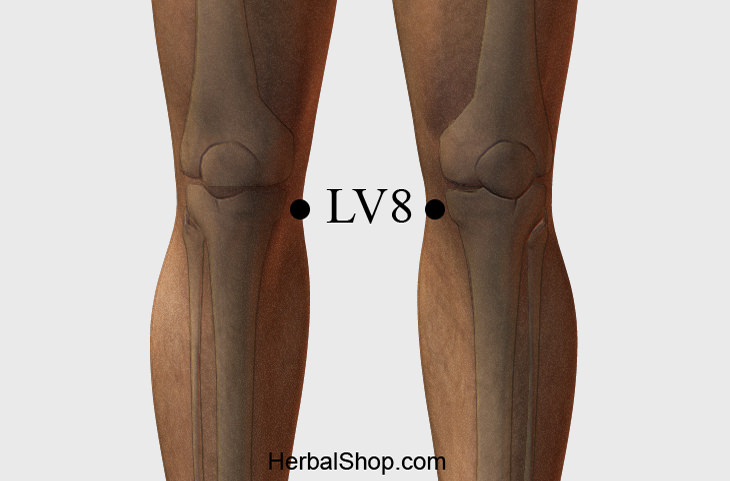
1. LV8
This pressure point is located on the inner part of your knee joint.
Massaging it may also ease pain in the lower abdomen, excessive
sweating, insomnia, depression, and skin conditions, such as psoriasis.
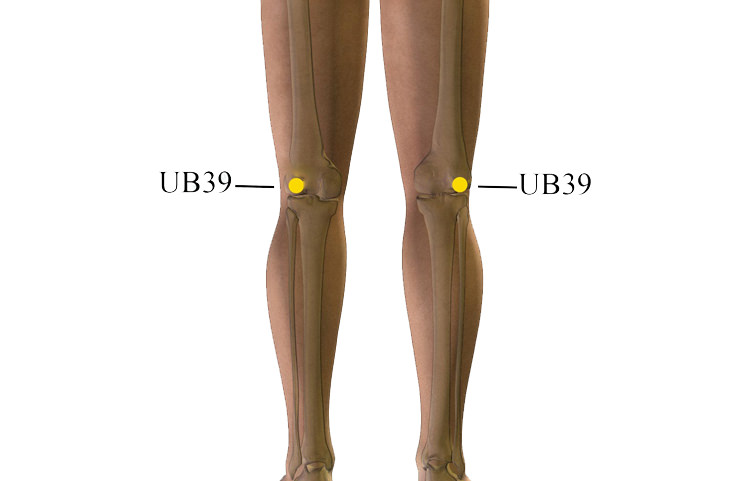
2. UB39
This pressure point is found on the outer frontal part of the knee.
Massaging it not only reduces difficulty in passing urine but also
reduces stiffness in the lower back and frequent muscle spasms in the
legs and palms.
To Treat Frequency in Passing Urine
If you have to excuse yourself between 4-10 times a day in order to
visit the bathroom - that is completely normal. If it happens more
frequently than that, however, it might be best to consult your GP.
Frequent urination could point to a UTI, kidney stones, or ovarian
cysts. Another likely culprit could be prescription drugs you take on a
daily basis. While waiting to receive medical treatment, you may massage
these 2 pressure points:
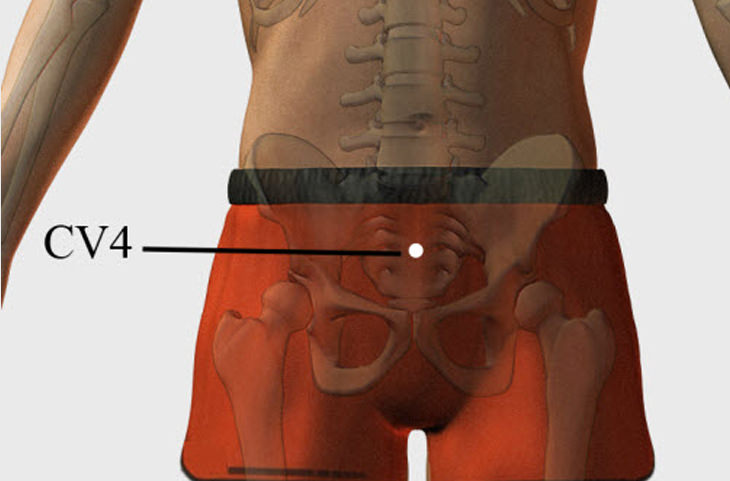
3. CV4
This point is located in the center of your pelvis, about 7 cm (3
inches) underneath your belly button. Massaging it may reduce the
frequency of your body feeling the need to urinate, as well as help with
irregular periods and diarrhea.
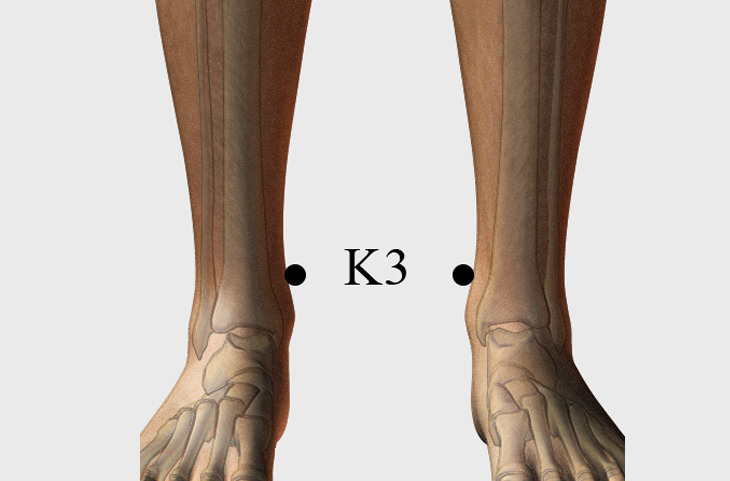
4. K3
This point can be found in the dent that’s right above the inner ankle
bone. Massaging it can balance the bladder’s need to empty itself as
well as ease toothaches, asthma attacks, prevent vomiting and even
prevent frostbite.
To Treat Kidney Infections
Pyelonephritis is an inflammation of the kidneys caused by a bacterial
infection (typically Escherichia coli). Symptoms include high fever,
pain in passing urine, and high resting heart rate. If you suffer from
these combined symptoms, it is strongly recommended to seek medical
treatment. In the meantime, you may massage these 2 pressure points:
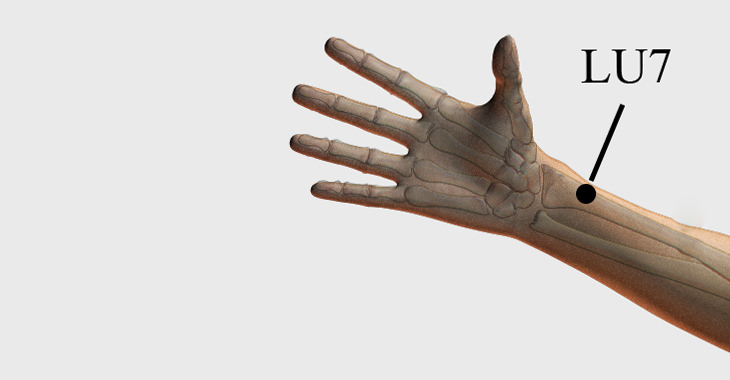
5. LU7
 To find this point, bend your knees and place your palm on the inner
part of your knee. You should feel a bump - the pressure point is
located three horizontal fingers above the end of the bump, towards the
inner thigh. Massaging it helps ease kidney inflammation symptoms,
period pain, acne breakouts and it may prevent problems with the thyroid
gland.
To find this point, bend your knees and place your palm on the inner
part of your knee. You should feel a bump - the pressure point is
located three horizontal fingers above the end of the bump, towards the
inner thigh. Massaging it helps ease kidney inflammation symptoms,
period pain, acne breakouts and it may prevent problems with the thyroid
gland. 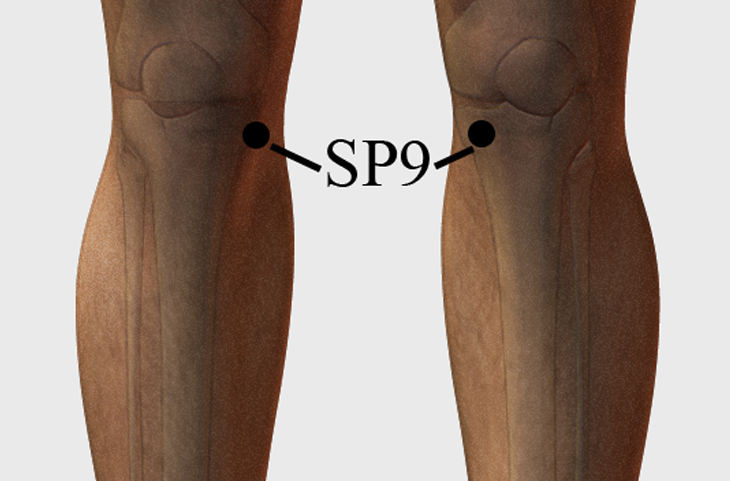
This point is underneath your wrist. You
can measure the exact distance using your thumb. Massaging it may ease
kidney inflammation symptoms, migraines, a sore throat and wrist pains.
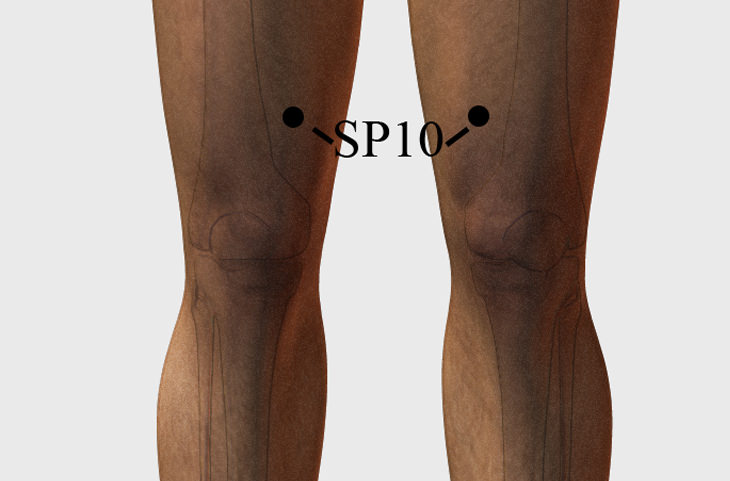
6. SP10
To find this point, bend your knees and place your palm on the inner
part of your knee. You should feel a bump - the pressure point is
located three horizontal fingers above the end of the bump, towards the
inner thigh. Massaging it helps ease kidney inflammation symptoms,
period pain, acne breakouts and it may prevent problems with the thyroid
gland. To Ease Kidney Failure
Kidney failure is a condition in which the kidneys function at less than
15% of normal, and the blood going through them is not filtered
properly. The symptoms may include fatigue, loss of appetite and
vomiting. Those suffering from complications of severe cases may also
experience high blood pressure and high heart rates. Not all symptoms
always appear at once, but if you notice any of them, seek medical help
immediately. In the meantime, you can massage these 2 pressure points:
7. SP9
This point is located on the inner part of your leg, right below the
knee - you can bend the knee to help you find, it but massage it with
your leg straight. Massaging SP9 may improve the kidney’s ability to
filter and remove waste, and get rid of excess fluid. Another function
of this pressure point is to improve libido.
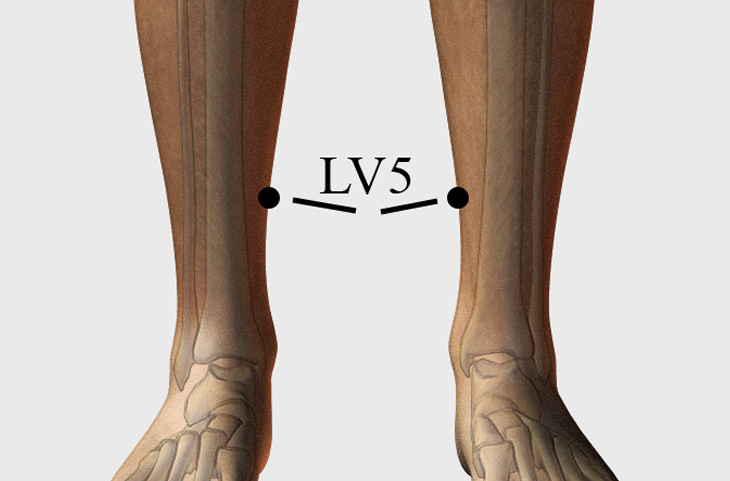
8. LV5
To find this pressure point, place 7 horizontal fingers over the inner
ankle bone (tibia). Other than improving the kidney's ability to filter
blood, massaging it may also help with chronic fatigue, strengthen the
immune system, and ease the side effects of chemotherapy for cancer
patients.