Everything You Wish To Know About Dental Sealant
What are dental sealants?
Dental sealants are plastic coatings that are usually placed on the chewing (occlusal) surface of the permanent back teeth — the molars and premolars — to help protect them from decay.
Why are dental sealants placed on teeth?
The chewing surfaces of the molar and premolar teeth have grooves — "fissures" — that make them vulnerable to decay. These fissures can be deep, are difficult to clean, and can be narrower than even a single bristle of a toothbrush. Plaqueaccumulates in these areas, and the acid from bacteria in the plaque attacks the enamel and cavities can develop. Fluoride helps prevent decay and helps protect all the surfaces of the teeth, dental sealants provide extra protection for the grooved and pitted areas by providing a smooth surface covering over the fissured area.
When are dental sealants placed?
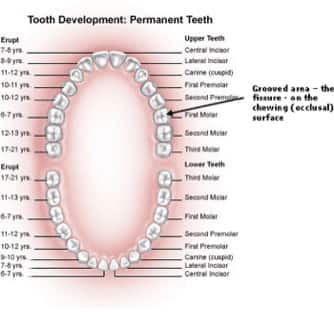
The first dental sealant to be placed is usually on the fissure of the first permanent molar tooth, once the chewing surface of the tooth has erupted completely beyond the gum. This tooth grows in behind the baby teeth. If the chewing (occlusal) surfaces of these teeth are sealed, the dental sealant will help protect the tooth. Except for the wisdom teeth, which come through much later, the molars and premolars continue to erupt until eleven-thirteen years of age and the chewing surfaces of these teeth can be sealed after they have erupted beyond the gum.
 Are dental sealants only placed on the chewing surface of molar and premolar permanent teeth?
Dental sealants are usually placed on the chewing surfaces of these teeth because these are the areas and teeth that typically have deep fissures. Dental sealants are sometimes also used on other permanent teeth if they have grooves or pits, to help protect these surfaces. In some children, the molars in the primary dentition (baby teeth) also have grooves that could benefit from dental sealants and in this situation your dentist or hygienist may recommend dental sealants on the chewing surfaces of these primary teeth.
Can dental sealants be place on the teeth of adults?
Yes — while less common, dental sealants are sometimes placed in adults at risk for caries, on deep grooves and fissures that do not already have fillings or dental sealants.
What do dental sealants look like?
Dental sealants can be clear, white or have a slight tint depending upon the dental sealant used.
How are dental sealants placed?
Firstly the tooth surface is thoroughly cleaned with a paste and rotating brush by your dentist or hygienist. Next the tooth is washed with water and dried. Then a solution that is acidic is placed on the fissured area of the tooth’s chewing surface for a number of seconds before being rinsed off. This creates small microscopic areas and a fine rougher surface than the surrounding tooth enamel, that can be seen with a microscope. The rough surface and microscopic areas enable the dental sealant to attach to the tooth. After the tooth is dried again, the liquid dental sealant is placed on the tooth and hardened. Dental sealants are hardened by using a light that hardens the dental sealant, or sometimes by using a two-component dental sealant that sets without using a light. Once the dental sealant has hardened it becomes a hard plastic varnish coating, and you can chew on the tooth again.
How long does a dental sealant last?
Dental sealants have been used and have been proven to be effective since the 1970s. Many studies have shown that they are effective in helping to prevent decay on chewing (occlusal) surfaces. Dental sealants can last many years. If necessary, it is also possible to place a new dental sealant on the tooth.
Do I still need to use fluoride if I have dental sealants?
Yes. Dental sealants only protect the surface area that they are placed on. Fluoride helps protect all the surfaces of the tooth from decay and cavities.
Dental sealants are plastic coatings that are usually placed on the chewing (occlusal) surface of the permanent back teeth — the molars and premolars — to help protect them from decay.
Why are dental sealants placed on teeth?
The chewing surfaces of the molar and premolar teeth have grooves — "fissures" — that make them vulnerable to decay. These fissures can be deep, are difficult to clean, and can be narrower than even a single bristle of a toothbrush. Plaqueaccumulates in these areas, and the acid from bacteria in the plaque attacks the enamel and cavities can develop. Fluoride helps prevent decay and helps protect all the surfaces of the teeth, dental sealants provide extra protection for the grooved and pitted areas by providing a smooth surface covering over the fissured area.
When are dental sealants placed?
The first dental sealant to be placed is usually on the fissure of the first permanent molar tooth, once the chewing surface of the tooth has erupted completely beyond the gum. This tooth grows in behind the baby teeth. If the chewing (occlusal) surfaces of these teeth are sealed, the dental sealant will help protect the tooth. Except for the wisdom teeth, which come through much later, the molars and premolars continue to erupt until eleven-thirteen years of age and the chewing surfaces of these teeth can be sealed after they have erupted beyond the gum.
Dental sealants are usually placed on the chewing surfaces of these teeth because these are the areas and teeth that typically have deep fissures. Dental sealants are sometimes also used on other permanent teeth if they have grooves or pits, to help protect these surfaces. In some children, the molars in the primary dentition (baby teeth) also have grooves that could benefit from dental sealants and in this situation your dentist or hygienist may recommend dental sealants on the chewing surfaces of these primary teeth.
Can dental sealants be place on the teeth of adults?
Yes — while less common, dental sealants are sometimes placed in adults at risk for caries, on deep grooves and fissures that do not already have fillings or dental sealants.
What do dental sealants look like?
Dental sealants can be clear, white or have a slight tint depending upon the dental sealant used.
How are dental sealants placed?
Firstly the tooth surface is thoroughly cleaned with a paste and rotating brush by your dentist or hygienist. Next the tooth is washed with water and dried. Then a solution that is acidic is placed on the fissured area of the tooth’s chewing surface for a number of seconds before being rinsed off. This creates small microscopic areas and a fine rougher surface than the surrounding tooth enamel, that can be seen with a microscope. The rough surface and microscopic areas enable the dental sealant to attach to the tooth. After the tooth is dried again, the liquid dental sealant is placed on the tooth and hardened. Dental sealants are hardened by using a light that hardens the dental sealant, or sometimes by using a two-component dental sealant that sets without using a light. Once the dental sealant has hardened it becomes a hard plastic varnish coating, and you can chew on the tooth again.
How long does a dental sealant last?
Dental sealants have been used and have been proven to be effective since the 1970s. Many studies have shown that they are effective in helping to prevent decay on chewing (occlusal) surfaces. Dental sealants can last many years. If necessary, it is also possible to place a new dental sealant on the tooth.
Do I still need to use fluoride if I have dental sealants?
Yes. Dental sealants only protect the surface area that they are placed on. Fluoride helps protect all the surfaces of the tooth from decay and cavities.