Friday, October 03, 2025

Foods Children Are More Likely to Choke On

Warnings are forever being issued to parents about which household items and toys are choking hazards to small children. We carefully read the labels, listen to news reports, and do our best to be vigilant about what the little ones are sticking in their mouths.
This should also include food. Since their airways are still small, young children are at greater risk of swallowing bits of food that are too large, which can lead to choking. Whether you’re feeding them, or they’re eating by themselves, accidents can easily happen. 
 
According to the American Academy of Pediatrics, food accounts for half of choking incidents in small children. To help prevent this, they’ve highlighted which foods pose the biggest risk to children under the age of 4: 
 
1. Nuts Foods Children Are More Likely to Choke On
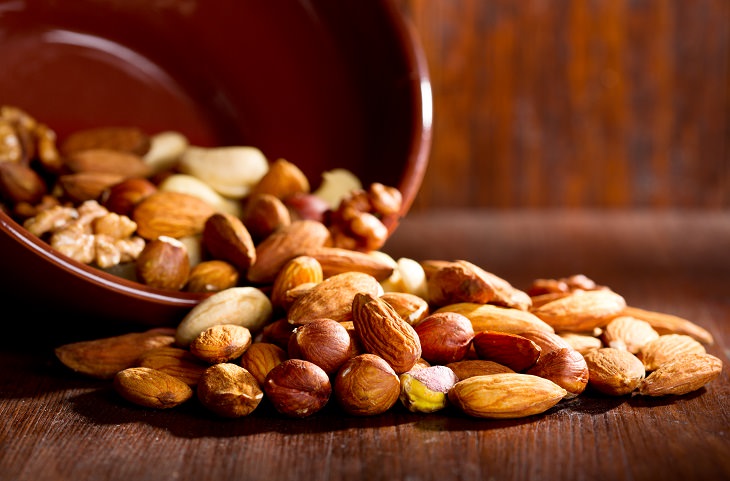
 
Nuts can easily get caught in a child’s airway due to their size. To add to this, tiny teeth might not be able to handle chewing whole nuts, so avoid giving them nuts altogether. Sometimes, the shells from the nuts can restrict airways too. Before giving your child nuts, you should wait until they’re well over the age of 4, can sit while eating, and have learned how to chew their food completely.

2. Candy 
Besides leading to cavities, hard candy such as lollipops send thousands of kids to the ER every year. Even a small piece can get stuck in a child’s throat. Avoid giving hard candy and marshmallows to your child until they’re over the age of 5 and can chew thoroughly. 
 
3. Grapes 
Due to their size and slippery texture, grapes are a major choking hazard. Doctors suggest a no-grape policy for kids under 4 or cutting them into quarters before serving them to children. Similarly shaped foods like cherries should also be avoided at this age. 
 
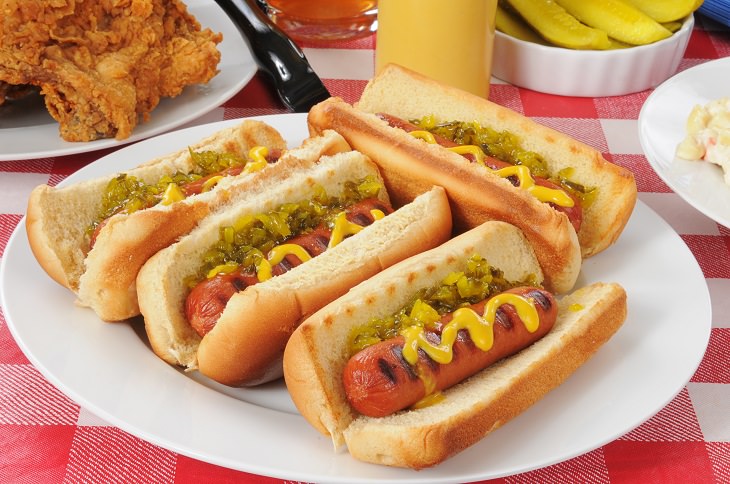
4. Hot Dogs
Foods Children Are More Likely to Choke On
According to John Hopkins, one of the biggest threats to kids under the age of 3 is hot dogs - even if you cut them up. Choking on a small piece of hot dog can lead to hospitalization if you’re not careful. If you still want to give a small child hot dogs, make sure to cut them into thin strips. 
 
5. Meat and Cheese 
Chunks Like hot dogs, chunks of cheese and meat are difficult for growing toddlers to chew. Food should be diced so that it’s no larger than ½ inch, and your child should be supervised at all times while eating these foods. 
 
6. Peanut Butter 
  Nut butters can get stuck to the roof of the mouth and the throat. For kids under 2, skip the globs of peanut butter and other nut butters. When serving to toddlers, spread a thin layer of it onto bread or crackers. 
 
7. Gum 
Chewing gum can cause dangerously sticky situations for small children. They’re prone to trying to swallow it or accidentally inhaling it while chewing. Don’t give gum to small children at all. 
 
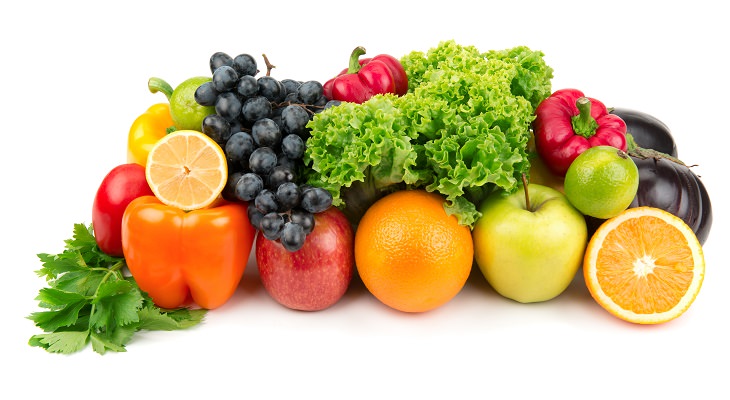
8. Veggies and Fruits
Foods Children Are More Likely to Choke On
Vegetables should be cooked until soft, and cut into small pieces that are no larger than ½ inch in size. It’s suggested to avoid stringy veggies such as celery or string beans altogether. Chunks of raw vegetables or fruits, such as carrots or apples, should be avoided until the children have learned to chew. 
 
9. Popcorn 
Popcorn shouldn’t be given to children until they’re at least 4. Many toddlers and infants have to visit the ER each year due to kernels getting lodged in their airways.


This is only for your information, kindly take the advice of your doctor for medicines, exercises and so on.   


Labels: , , , , , , ,

Wednesday, March 13, 2024

Manage Your Post-Lunch Sleepiness With These 7 Useful Tips

You’ve just finished your lunch. You are about to resume your work, but you just can’t concentrate. Your eyes droop and you feel lazy and sleepy. All you can imagine is a bed where you can lie down peacefully and doze off. Does this scenario sound far too familiar? Don't worry, you are not alone. Feeling drowsy after you eat, especially after lunch, is a common experience. Daytime sleepiness can be frustrating as it makes us feel lethargic and affects our productiveness during the middle of the day. 
 
But what is the reason that we get sleepy after lunch?
Tips to Stop Daytime Sleepiness, sleepy after lunch
Well, our pancreas produces insulin to regulate blood sugar levels. A heavy meal leads to a higher production of insulin which spikes our blood sugar levels. An increase in insulin results in more sleep hormones being produced by our body, which eventually get converted into serotonin (the key hormone that stabilizes our mood) and melatonin (a hormone that is produced in response to darkness) in our brain. This can ultimately induce sleepiness. 
 
Furthermore, the number of carbohydrates we eat at lunch can also affect how sluggish we feel afterward. For instance, carbohydrate-containing foods like bread, pasta, rice, and potatoes stimulate the production of serotonin, which can also cause us to feel sleepy. 
 
Other factors that might contribute to your daytime sleepiness are irregular sleeping patterns at night or reduced amounts of physical activity. However, you can certainly manage your post-lunch sluggishness by changing a few day-to-day habits. Here are some effective tips that will help you control your drowsiness during the day. 
 
 
1. Don’t sit. Take a walk.
Tips to Stop Daytime Sleepiness, Take a walk.
If you tend to feel drowsy after lunch, then don’t sit back down and try to resume your work right after your meal. Take a short break of 10-15 minutes and go for a brisk walk on your premises. If that’s not an ideal option during the daytime, you can even climb up and down the steps for a few minutes. 
 
This short exercise will help increase the oxygen levels in your bloodstream and give you a much-needed boost of energy. Furthermore, a 10-minute walk also helps promote blood circulation around the body and the brain and thus reduces the risk of your post-meal slump.


2. Eat smaller meals throughout the day
Tips to Stop Daytime Sleepiness, smaller meals
Eating smaller, more frequent meals across the day is another great way to fight off sleepiness after lunch. Firstly, it slows down digestion and can help keep your blood sugar levels steady as you will be hungry more often. Moreover, a large meal requires more energy to digest and can easily lead to sluggishness by slowing down digestion. Having a small lunch with mid-morning and mid-afternoon snacks in between will not only prevent you from feeling tired, but also from feeling bloated and uncomfortable, which can often happen after you have a heavy meal.

 
3. Keep drinking water
Tips to Stop Daytime Sleepiness, drinking water
Are you drinking sufficient water throughout the day? During the winters, especially, we don’t feel that thirsty and our water intake goes down considerably. This can lead to dehydration which, in turn, can cause fatigue, low mood, and low energy levels, as well as affect your ability to think. This is why you must keep yourself hydrated throughout the day.
 
Drinking 8-10 glasses of water daily should help you remain fresh and recharged. It will also ensure that your post-lunch slump remains in check because drinking enough water has been proven to help perk you up if you're feeling sluggish.


4. Say no to junk food

Tips to Stop Daytime Sleepiness, junk food
Avoid having foods that are rich in bad fats or high in sugar as they can increase sleepiness. That’s because they cause a short-lived but sharp spike in your blood glucose levels which drop sharply later, resulting in drowsiness. 
 
You should try and have a lunch that’s rich in green vegetables as that can keep you more energized throughout the day. Natural foods that are high in fiber and protein like whole grains, legumes, and nuts, would also be helpful. Ideally, half your lunch plate should be full of non-starchy vegetables (broccoli, tomatoes, cauliflower, mushroom, etc.) and the remaining half should have whole grains (brown rice, millet, mushroom, etc.) or lean meat (beef, lamb, veal, pork, etc.). These can provide you with sufficient energizing irons, lean proteins, and complex carbohydrates to make you remain alert and active throughout the day. 
 
 
5. Pop some chewing gum
Tips to Stop Daytime Sleepiness, chewing gum
Chewing may help reduce tiredness and ensure increased alertness, according to a study published in the journal Physiology and Behaviour. So, popping a couple of chewing gums after lunch might not be a bad idea to keep yourself sharp. When you are chewing gum, your body feels like you are constantly in action. This helps you maintain energy levels and also makes you regain them if you lose them after having a daytime meal. 
 
Of course, you need to have chewing gums in moderation as going overboard with them may reverse the effects. Chewing on a mint-flavored gum will be the best, primarily because of its refreshing taste. 
 
 
6.Don't skip breakfast
 Tips to Stop Daytime Sleepiness, breakfast
You’ve probably heard many times that breakfast is the most important meal of the day. That is not a myth. A healthy breakfast kick-starts your metabolism and helps you burn harmful calories all day long. Also, having a filling breakfast can provide you with enough energy to remain active and focused for long periods of time. Health experts also say that eating a proper breakfast can also help reduce tiredness later in the day. 
 
When we wake up, the blood sugar level our body needs to function properly usually remains low. If our body doesn’t get the required fuel at the start of the day, we are more than likely to feel drained of energy by lunchtime. Hence, you must never skip breakfast as it sets the energy standard for the rest of the day. Moreover, skipping breakfast would make you hungrier by lunchtime and you are likely to end up overeating which, as we mentioned, contributes to the sluggish feeling. 
 
 
7. Spend some time in natural light
Tips to Stop Daytime Sleepiness, natural light
Are you surrounded by dim lighting during the day time? That might be one of the factors making you feel sleepy after lunch. When the light is dim, the body starts producing the sleep hormone melatonin which causes you to feel more tired. Spending some time in bright natural light during the daytime could make you feel more alert. Natural light is also known to stimulate brain regions that regulate mood. Thus, try and get some natural light during the first half of the day whenever you can to keep yourself awake post-lunch.


This is only for your information, kindly take the advice of your doctor for medicines, exercises and so on.   

https://gscrochetdesigns.blogspot.com. one can see my crochet creations  
https://gseasyrecipes.blogspot.com. feel free to view for easy, simple and healthy recipes    
https://kneereplacement-stickclub.blogspot.com. for info on knee replacement
https://cancersupportindia.blogspot.com  for infor on cancer and health related topics
https://GSiyers home remedies.blogspot.com   is the latest addition to my blogs. I'm going to add posts there, do give me your valuable feed back on my blogs. Thanks a lot, take care, be healthy and be happy.

Labels: , , , , , , ,

Monday, November 21, 2022

11 Myths You Need to Stop Believing

You've likely heard of the below 'facts', the truth of which we never doubted. However, the truth behind these statements is quite the opposite. Here are 11 common misconceptions, you've likely thought were facts: 

1. Soap kills bacteria 
Soap washes bacteria off, but it doesn't kill it. Does this mean you shouldn't wash your hands? Soap actually rids them of grease, which is a breeding ground for bacteria, so washing your hands is still a good idea.  
 
2. If you swallow a piece of gum, it will stay in your stomach for 7 years
Swallowing chewing gum is not ideal. It's viscous base is not susceptible to gastric juice and does not dissolve in it. Nevertheless, chewing gum is excreted from the body naturally through muscular contractions of the stomach.   
 
3. Shaving hair makes it thicker  
Once the outer part of a hair has been cut, what remains is a blunt, non-conical end, which is what feels hard.  
 
4. Touching toads gives you warts
Warts are actually benign growths caused by the human papillomavirus. You can pick it up in public places or through contact with a sick person.  
 
5. Hair and nails grow after death
When a person dies, their skin becomes dehydrated and contracts, this creates the illusion of the growth of nails and hair. 
 
6. The Great Wall of China is visible from space
While the length of the Great Wall is more than 4,300 miles, it is difficult to see from space as its color merges with nature. The wall can only be seen under certain light and weather conditions and only from a low orbit. Highways are distinguishable more often. 
 
7. Bats are blind  
Bats do use echolocation to orient in space, however, they also use night vision under certain light.  
 
8. Water conducts electricity 
Water molecules do not contain positively and negatively charged particles, which is what conducts electricity. 
 
9. Antibiotics kill viruses
Antibiotics deals with bacteria, killing them or stopping their reproduction.  
 
10. Sitting close to the TV worsens your eyesight
No evidence suggests that sitting close to and watching too much TV can cause eyestrain.  
 
11. Coke dissolves teeth
You have likely heard of the myth of a tooth placed in a glass of Coke which dissolved overnight. This occurs due to the presence of three acids - phosphoric, citric and carbonic. However, these can be found in many beverages, not just coke. 


This is only for your information, kindly take the advice of your doctor for medicines, exercises and so on.   

https://gscrochetdesigns.blogspot.com. one can see my crochet creations  
https://gseasyrecipes.blogspot.com. feel free to view for easy, simple and healthy recipes    
https://kneereplacement-stickclub.blogspot.com. for info on knee replacement

https://GSiyers home remedies.blogspot.com     is my latest addition to my blogs. I'm going to add posts there, do give me your valuable feed back on my blogs. Thanks a lot, take care, be healthy and be happy.

Labels: , , , , , , , ,