Thursday, July 29, 2021

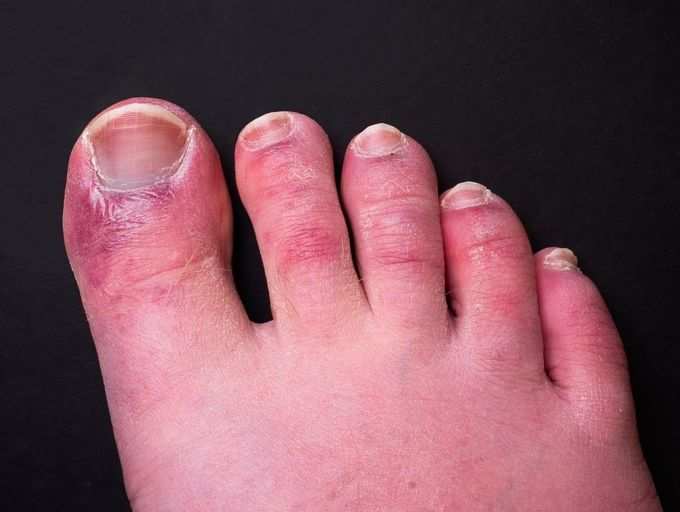
Coronavirus: What is COVID toes? Causes, symptoms and all you need to know

All you need to know about COVID toes
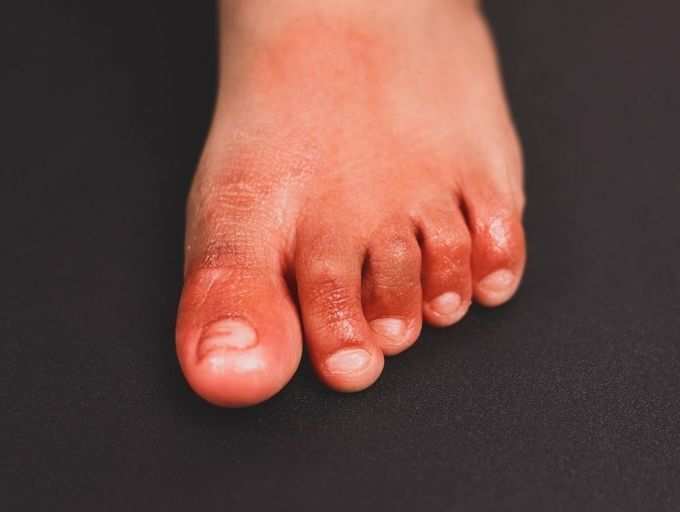
The novel coronavirus has impacted people in various ways. From taking a toll on respiratory health and other vital organs, the SARs-COV-2 virus has also affected people's fingers and toes. While it may not seem very dangerous, it can lead to discomfort and pain. Currently termed as 'COVID toes', while rare, it is said to be more prone in younger patients. A 13-year-old teenager recently reported suffering from the ailment, which prevented her from walking and also made it difficult for her to wear shoes. That said, for those of you, unaware of this unusual COVID effect, here's what it is and everything else you need to know.

What is COVID toes?
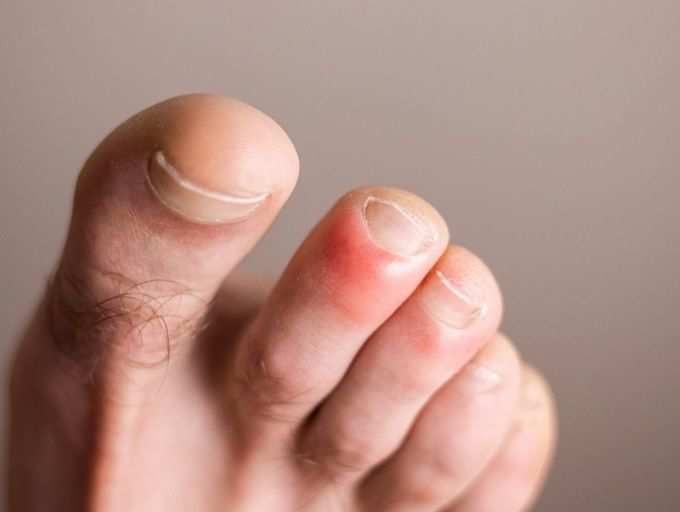
As per the College of Podiatry, Covid toes is the name given to chilblain-like lesions which appear on the toes of some people after having contracted COVID-19. According to research, it can occur both on fingers and the toes. However, it is more common. Besides causing lesions, it can lead to bright red colouration on the fingers or toes, which eventually turns purple. The most dangerous aspect of this ailment is that it can go from impacting one toe to all the other toes.

readmore

Are there any specific causes?

Up until now, there have been no specific causes behind COVID toes, however, research is still ongoing.

Experts believe that COVID toes is an outcome of the immune system reacting to an active coronavirus infection. That means it could be an antiviral immune response triggered by the immune system of younger patients, which in turn results in changes in microangiopathic - small blood vessel disease.

Another theory suggests that COVID toes could be a direct result of the SARs-COV-2 virus. Walking barefoot in homes, lack of physical movements and a sedentary lifestyle is said to be some of the causes.

readmore

Associated symptoms

For many people, COVID toes only lead to discoloration and swelling of the feet or hands. However, it can be painless and people usually don't feel anything.

In other cases, in addition to the swelling and the discolouration, COVID toes can cause blisters, itchy rashes, painful bumps and areas of rough skin. In severe cases, a small amount of pus may also develop under the skin.

Treatment

In most cases, COVID toes heals on its own. However, if the ailment lingers on for longer periods of time, contact a dermatologist, who can prescribe you the right medications or ointments to apply on the affected area.

This is only for your information, kindly take the advice of your doctor for medicines, exercises and so on.   

https://gscrochetdesigns.blogspot.com. one can see my crochet creations  
https://gseasyrecipes.blogspot.com. feel free to view for easy, simple and healthy recipes    
https://kneereplacement-stickclub.blogspot.com. for info on knee replacement


Labels: , , , , , , , , , , , , ,

Sunday, January 19, 2020

An In-Depth Guide on Treating Hidradenitis Suppurativa

Hidradenitis Suppurativa (HS) also more commonly known as Acne Inversa, is a chronic skin condition that can manifest itself in both men and women all across the world. HS presents itself in a variety of symptoms, the most common being the formation of painful lumps under the skin that greatly resemble boils, and these lumps may often secrete pus or blood. While HS is not curable, it is very much treatable and relatively rarely fatal if dealt with properly.

This disease is believed to be rare, but due to its resemblance to acne, as well as the varying nature of symptoms, this condition is often misdiagnosed, resulting in the reported number of persons suffering from this condition being far less than the actual number. A 2017 study showed that Acne Inversa is far more common than previously believed to be.

This condition is also often associated with severe anxiety, self-consciousness, depression and social isolation noted in the people suffering from it. For these reasons and many others, it’s important to be aware of HS, the various symptoms, and most importantly, the treatment options.

What is Hidradenitis Suppurativa?
As stated above, Hidradenitis Suppurativa is a skin condition that results in chronic pain and deep abscesses that are similar to boils on various parts of the body, particularly those high in sweat glands and hair follicles. Approximately 200,000 people have been diagnosed with this ailment, though it is believed that a whopping 1-4% of the population may be suffering from this condition, despite the condition remaining undiagnosed in many cases. 


Including milder cases of this ailment, as many as 1 in 100 people may possibly suffer from this disease. However, significantly more epidemiological data is needed to support the above-said claim. Regardless, this condition presents itself with numerous symptoms, and if you notice any of these symptoms, it is important to consult a doctor or dermatologist as soon as possible to seek treatment. 


The Symptoms of HS
Acne Inversa largely affects the sweat glands of the body, more specifically, areas of the body that tend to rub together, like under the breasts, armpits, buttocks, and groin. The condition may start with singular abscesses or pits in the skin, near hair follicles on the skin. These pits may also contain blackheads and thus may be hard to identify.

As the condition progresses, these bumps and lesions begin to secrete pus and blood, which may emit an unpleasant odor. One of the biggest difficulties faced by people suffering from HS is the slow pace at which these wounds heal, during the process of which they often enlarge and reopen, or flare up and secrete pus and blood. When they heal, they often result in scarring and tracts in the skin, also known as sinus tracts. 


There are only 3 known fatal cases for patients with HS, and in all said cases, the patients also suffered from squamous cell carcinoma - a type of cancer, and the combination of the two being the likely cause of death. Most cases of death relating to HS patients are due to suicide or substance abuse, often caused by the resulting depression and anxiety.  


How does HS develop?
HS begins to develop mostly only after puberty has struck, and is therefore often confused with acne (hence the name Acne Inversa). Despite there being no known cure, this ailment can last for anywhere between a few years to a lifetime and may manifest itself in the form of a single or few lesions in certain specified areas of the skin.

There are two systems that have been used to track the development of HS over the years. The Hurley staging system notes the first stage as the development of lesions that heal without scarring, following by more severe lesions, as well as the presence of sinus tracts, and finally, a broader presence of lesions along with scarring and subcutaneous tracts in the skin. 


The Sartorius staging system is more complex and marks each stage using determinants such as the areas of the skin on which the lesions have occurred (with earlier stages having more localized lesions), volume and type of lesions (which can also include tracts, nodules, abscesses, and fistulas), distance between lesions, and finally, the presence of unaffected skin in -between lesions. 


Depending on the stage the disease presents itself at, both the individual lesions, as well as the ailment itself, can be treated. However, there is a limited number of medical treatments and treatment guidelines available​ due to a lack of scientific studies into the disease itself. It has also been hypothesized that diagnostic delays have caused this disease to continue and go untreated in numerous cases due to a lack of unawareness in both patients and physicians.   


What causes HS?
The lesions related to HS tend to arise when there are certain abnormal blockages around the hair follicles, which causes the immune system to react, with the latter believing these blockages to be external bacteria attacking the body. This response by the immune system leads to the formation of abscesses and lesions and causes further itchiness, redness, swelling - all common symptoms of inflammation. Most cases of this disease are reported to be mild to moderate, particularly with respect to the inflamed bumps. 


While the cause of the inflammation has been identified, the difficulty in preventing, diagnosing and treating this illness arises when attempting to discover the underlying cause. A number of factors could potentially be involved in the initial development of the disease, including auto-inflammatory issues, hormonal discrepancies, genetic predisposition or specified environmental interactions.

Studies have suggested there could be a pattern related to dominant genes passing down the illness, but research into the same has not been studied enough to confirm the same. It is important to note, however, that unlike certain other skin conditions, the cause and development of HS are not linked to poor hygiene or any infection, contagious or otherwise.    


How to Treat HS
Dealing with this ailment can be overwhelming given that it results in chronic pain, often caused by inflammation and itchy, sore lesions that develop under the arms, the breasts, and other areas where skin folds. While this disease is not curable, it is treatable, both medically and with lifestyle changes, and the symptoms tend to peak as one ages, particularly once the person suffering has crossed 30-40 years of age.

Medical treatments include the use of Dapsone therapy, as well as Humira therapy, either of which may be prescribed by your doctor along with regular dosages of antibiotics, anti-inflammatory drugs, and corticosteroids. When oral, topical and similar medicinal treatments have been applied and the condition continues to worsen, the concerned doctor may recommend surgery to cover the lesions and abscesses. 


While medicinal options are a must-have for treating HS, especially in the later stages, there are also numerous things that patients can do to reduce the flaring up of lesions, and attempt to stop them from spreading or worsening. These include:

1. Avoiding Heat
Under ordinary circumstances, sweating might be good for your skin, but in the case of HS, the goal should be to stay cool and dry, which can be a difficult task given the presence of lesions in areas that are rich in sweat glands. Excessive heat can trigger painful flare-ups, as can excessive sweating. For added safety, it may be good to discuss the brands of antiperspirants to best use with your doctor to make sure they're not too harsh on the skin. 


2. Not Smoking
If you’re a cigarette smoker with HS, there are high chances you suffer from flare-ups more than non-smokers. To reduce the number of leaky lesions, it’s best to quit cigarettes, as this can also improve your overall stamina and health. 


3. Staying Healthy
Now that you’ve quit smoking, you can work on shedding those extra pounds. This is yet another lifestyle change that can help you cope with the stress and pain of HS. Maintaining a good diet and regular exercise can go a long way in helping your body fight the triggers of inflammation. Reduction in weight can often mean a reduction in the number of lesions that flare-up.  


4. Not Stressing Out
This is a tricky one, especially given that HS can cause anxiety and depression, and it can be even trickier if you’ve just quit smoking cigarettes and are finally starting to diet. Nonetheless, it is important to know that stress can be a major trigger of flare-ups, so whether it is deep breathing or meditation, it is vital to find methods of keeping calm and staying centered. 


5. Keeping Away From Razors
Let us not forget that many abscesses related to HS begin at the base of hair follicles. While it may be a matter of simple personal hygiene, it is advisable to use alternative methods of hair removal, as most lesions caused by Acne Inversa occur in regions of the body where hair growth is prevalent. Even minor outbreaks of HS on the skin can cause irritation, and razors can result in further inflammation and even the spread of lesions.  


6. Loose Clothes Are the Best
It can often be tempting, or even habitual to wear a nice tight sweater on a cold day or a well-fitted t-shirt when exercising. However, it's best to avoid these clothes if you're suffering from HS. Acne Inversa tends to break out in areas of the body where skin rubs together. A similar effect occurs when synthetic fibers rub against the skin, causing friction, which can result in additional painful lesions, as well as trigger flare-ups.
 

This is only for your information, kindly take the advice of your doctor for medicines, exercises and so on.     
https://gscrochetdesigns.blogspot.com. one can see my crochet creations  
https://gseasyrecipes.blogspot.com. feel free to view for easy, simple and healthy recipes    
https://kneereplacement-stickclub.blogspot.com. for info on knee replacement


Labels: , , , , , , , , , , ,

Saturday, January 27, 2018

What Can Trigger Kidney Infections

The main task of the kidneys is to balance the electrolytes in the blood and maintain the pH homeostasis. The kidneys also remove waste products from the blood. They’re part of your urinary tract, which makes pee (urine) and removes it from your body.
The urinary tract is made up of your: 
kidneys (to clean waste from your blood and make pee) 
Ureters (thin tubes, one for each kidney, that carry pee to your bladder) 
Bladder (stores pee) 
Urethra: (carries pee from the bladder to outside your body)

If any of these parts get bacteria in them, you can get a urinary tract infection (UTI). Most often, it’s the bladder that gets infected. It can be painful, but not usually too serious. But if those bacteria travel up the ureters, you can have a much more serious problem: a kidney infection. Doctors sometimes call this “pyelonephritis.” 
Kidney infections are of two types:
  • Uncomplicated kidney infection: The infections in this condition are minor and can be cured with minimal medication.
  • Complicated kidney infection: These infections are more complex and serious as compared to the uncomplicated ones.
If not treated on time, kidney infection can prove to become a serious condition and lead to various complications including kidney damage and blood poisoning (sepsis).
The most common causes of kidney infections are:
  1. Weak immune system: If you have a weak immune system, you are prone to getting a bacterial or fungal infection on the surface of your skin which eventually enters the bloodstream. The infection might right reach the kidneys and cause an infection there.
  2. Bacteria entering from the urethra: The pathogen which causes an infection can enter the body through the urethra and multiply in the bladder. The infection spreads to the kidneys and causes renal infection.
  3. Kidney stones: People diagnosed with kidney stones are at a very high risk of developing kidney infections. Kidney stones are caused because of a build-up of dissolved minerals in the inner lining of the kidneys.
  4. Enlarged prostate: Men with an excessively enlarged prostate are prone to developing kidney infections as compared to men with a normal-sized prostate.
  5. Intercourse: Engaging in sexual (anal or vaginal) intercourse with an infected person can be a major reason for kidney infection as the bacteria can enter the body through the anus or the vagina and affect the kidneys.
It is not difficult to detect infection in the kidneys as they have very visible symptoms. A few symptoms of kidney infection are: 
Excessive back pain
Sudden chills or fever
Nausea and vomiting
Blood in the urine
Pain while urinating


THIS IS ONLY FOR INFORMATION, ALWAYS CONSULT YOU PHYSICIAN BEFORE HAVING ANY PARTICULAR FOOD/ MEDICATION/EXERCISE/OTHER REMEDIES.    
PS- THOSE INTERESTED IN RECIPES ARE FREE TO VIEW MY BLOG-                      
HTTP:GSEASYRECIPES.BLOGSPOT.COM/
FOR INFO ABOUT KNEE REPLACEMENT, YOU CAN VIEW MY BLOG-                                                        
HTTP://KNEE REPLACEMENT-STICK CLUB.BLOGSPOT.COM/
FOR CROCHET DESIGNS

HTTP://MY CROCHET CREATIONS.BLOGSPOT.COM

Labels: , , , , , , ,

Friday, January 17, 2014

TURMERIC- its various health benefits

Turmeric is often regarded as the yoga herb because it can improve flexibility and help heal joint inflammation.
There has been some drama around this root, when it was sought to be patented by a US firm, but the issue has since been resolved.
In the south, even today, raw haldi paste is rubbed on the skin to remove suntan, prevent sunburn and reduce UV damage.
Raw turmeric tubers are rubbed on a grating stone to create a paste that is used as poultice over wounds because of its anti-bacterial properties.
This paste is also used as fomentation over inflamed or swollen joints, as it is believed to relieve pain and swelling.
It stops bleeding when applied over wounds. This is why it is used over fresh body piercings, to initiate faster healing and avoid the formation of pus.
It is seen as a beauty accessory -- to remove hair, prevent and control skin eruptions, deal with skin infections and reduce scars.
It is used to relieve most respiratory system ailments, including asthma, sore throat and common cough.
It is used to relieve tooth pain and dental problems and control digestive tract issues (including flatulence). It can destroy worms and relieve uro-genital problems, including performance issues.
It is an ENT specialist; it can deal with problems dealing with the eyes, nose and throat.
Several books have been written about the magical properties of haldi (turmeric).
Does it make you wonder if it is time to visit your kitchen cabinet instead of the doctor's clinic?


ps- this is only for information, always consult you physician before having any particular food/ medication/exercise/other remedies.
ps- those interested in recipes are free to view my blog-

http://gseasyrecipes.blogspot.com/


for info about knee replacement, you can view my blog-


http://Knee replacement-stick club.blogspot.com/


for crochet designs


http://My Crochet Creations.blogspot.com

Labels: , , , , , , , , , , , , , , ,