Thursday, January 20, 2022

How the colour of your nails can reveal cancer

The link between your nails and cancer

Nails are an integral part of our body. It helps protect our fingers and toes and lets us do activities that would not be possible without them, like scratching or picking things up. Given that it receives blood and nutrition from the body, it can signal any deficiency or hidden ailments you may be suffering from.

Changes in the colour of the nails may not seem alarming in most cases.

However, at times it can be a tell-tale sign of chronic illnesses, especially cancer. That said, let us look at what your nails can reveal about your health.

Your nails can say a lot about your health

Nail changes can occur in anyone, depending on the kind of illnesses, deficiencies a person is experiencing.

While yellowing or thickening of nails can suggest a fungal infection, brittle nails may be a signifier of a thyroid disease or anemia. If you see pitting i.e. small cracks in your nails, it may indicate psoriasis or alopecia areata. Additionally, white lines underneath your nails can mean that you're suffering with a kidney or a liver disease.

The best way is to get yourself tested by a medical professional. Early diagnosis can protect you from as deadly a disease as cancer.

Change in nail colour can be a marker of cancer

A change in the nail colour should never be neglected, for it may indicate cancer.

Subungual melanoma, a type of skin cancer can be detected through the changes in the colour of the fingernails. It can appear in the form of a dark line under your nails, leading to nail discoloration. It can create dark areas near the cuticle of the nail, also known as subungual lesions.

Besides being a mark of cancer, such changes in nail colour can also be an outcome of cancer treatments, side effects that usually occur due to cancer medications.

Subungual melanoma can show other symptoms
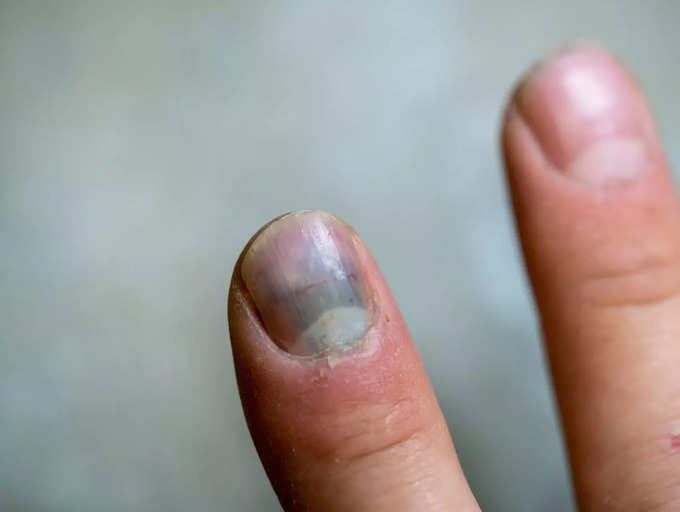
Apart from the formation of black lines on your finger or toe nails, there are other signs of subungual melanoma that can appear on your nails.

- Weak, brittle nails

- A bruise on your nail, which is difficult to heal

- Bleeding around nails

- Thinning, cracking of the nail plate

- Blackish-brownish streaks that continue to grow

Treatment is key

Considering melanoma is life-threatening, if left untreated, it can be fatal.

A physical exam and a biopsy may help with the diagnosis. That said, treatment would involve surgery, chemotherapy, radiation therapy, immunotherapy, and targeted therapies, depending on how far the cancer has progressed. 

This is only for your information, kindly take the advice of your doctor for medicines, exercises and so on.   

https://gscrochetdesigns.blogspot.com. one can see my crochet creations  
https://gseasyrecipes.blogspot.com. feel free to view for easy, simple and healthy recipes    
https://kneereplacement-stickclub.blogspot.com. for info on knee replacement


Labels: , , , , , , , , , , ,

Tuesday, February 25, 2020

Take These Health Tests When You Reach 50

It's a midlife fact: once we've hit our fifties, we are more likely to need certain medical tests and exams to maintain our health. While this can be unsettling, knowing what tests are available to us can help us make better-informed health decisions. Here is a list of tests you should consider doing once you've reached your fifties:

Routine Yearly Physical Exam
Whether you are seeing a gynecologist or a family doctor for your routine checkup, it's important to know exactly what tests you need and what to expect. Routine physical checkups take time, so book your appointment in advance, making it clear that you are coming for a complete physical. If seeing your family doctor, it's best to stick with a general physical exam, screening for chronic conditions such as heart disease and cancer. On the other hand, see your gynecologist for gynecological exams.

The following tests and exams get the best snapshot of your overall health:

1. General Physical Exam
A general physical includes your doctor taking a detailed history to learn all about you and your family history. A head-to-toe physical exam includes your skin, eyes, ears, nose, throat, lymph nodes, chest, breast area, abdomen, rectum, and extremities (hands and feet).


2. Waist Circumference
A larger waist circumference could put you at an increased risk of metabolic syndrome, which in turn can cause a cluster of medical conditions including high blood pressure, high blood sugar, abnormal cholesterol or triglyceride levels, which can increase your chances of heart disease, stroke, and diabetes. Among women, an increased waist circumference can also put you at risk of breast and uterus cancer.


3. BMI (Body Mass Index)
Your BMI is another indicator of possible future health risks. However, your waist circumference and body shape make for a more reliable estimate.

4. Blood Pressure
Once you've reached 50, your blood pressure should be tested at each visit to the doctor. According to treatment guidelines, if you have diabetes, your blood pressure target should be around 120/80.


5. Pelvic Exam
Your yearly visit to the gynecologist usually entails a pelvic exam. If you rely on your family doctor, you will most likely have to ask for this to be performed. A pelvic exam can determine the condition of your uterus, cervix, ovaries, and rectum. You should also ask for a rectal exam, as well as for a stool sample to be taken to test for the presence of blood. A regular pap smear will also examine your cervical cells, determining any changes or the possibility of cervical cancer.
Along with your pap smear, you should also ask for the HPV (Human Papilloma Virus) test. Testing positive for HPV could mean that you are a chronic carrier of the virus, which is believed to be the sole cause of cervical cancer. Consequently, additional tests for any abnormal cells caused by the virus can then be carried out.

6. Blood Work
Your blood record contains a great deal of information about your health. By the time you hit your forties, it's important to run a complete series of blood tests. Doing so will allow you to find out about the state of your liver, thyroid, blood cholesterol, blood sugar and more. An overnight fast or fasting sample is critical. The following is an overview of what your doctor will test:
• Complete Blood Count: CBC measures the number, size, and shape of the different types of cells in your blood. It may be ordered as part of a complete physical examination, before surgery or if you have unexplained symptoms.
• C-reactive Protein: Women with a waist circumference of 35 inches or over should ask for this important test to determine blood inflammation and risk of heart disease.


7. Blood Chemistry
The state of your blood chemistry can be determined by a series of tests that can be conducted quickly and inexpensively. Here's what your doctor will test:

• Glucose: This test will determine whether you have diabetes. A fasting glucose of less than 100 is normal, while a level of 100 to 125 is abnormal and called impaired glucose tolerance. Meanwhile, a level of 126 or greater indicates diabetes.
• Blood Urea Nitrogen and Chloride: This tests your kidney function.
• Sodium, Potassium, and Chloride: These are your blood salts or electrolytes. This test is especially important if you are taking diuretics (water pills) for hypertension or heart disease.
• Uric Acid: Determines the waste product of all cells. If elevated, it may indicate kidney disease or gout.
• Albumin: A blood protein produced by the liver. If low, it can indicate liver or kidney disease.
• Globulin: A blood protein produced by your immune system. A high count can indicate chronic inflammation, infection or blood disorders such as multiple myeloma.
• Calcium: A component of your blood that helps all the cells in your body function normally. A high count in your blood can point to hyperparathyroidism, which predisposes you to kidney stones and low bone density.
• Serum Glutamine Pyruvic Transaminase (SGPT) and Serum Glutamate Oxaloacetate Transaminase (SGOT): Determines the enzymes (proteins) produced by the liver and red blood cells.
• Lactate Dehydrogenase: This enzyme is produced by many cells in the body. If high, your doctor will likely do additional tests to rule out malignancy.
• Bilirubin: A chemical in bile that gives it its yellow color. If high, the bile passages from the liver to the intestine are blocked, indicating gallstones or liver disease.
• Gamma Glutamyl Transpeptidase (GGT): An enzyme produced by the liver. Obesity and excessive alcohol use are the most common factors for a GGT increase. It may also be elevated due to liver disease.
• Alkaline Phosphatase: An enzyme produced by the liver and bones. If elevated, determining the levels of GGT may help understand why - in which case, if both GGT and Alkaline Phosphate are high, the liver is likely to be the reason.


8. Blood fats and lipids
The levels of your blood fats and lipids determine whether heart disease is present. This is generally what your doctor should test for:
• Total Cholesterol: This determines the sum of your LDL and HDL (more on this below). High total cholesterol levels are linked to heart disease. Your total cholesterol level should be below 200.
• High-Density Lipoprotein (HDL): HDL indicated your good cholesterol levels. Your HDL should be at least 30 percent of your total amount. In men, an HDL greater than 40 is normal, while in women, an HDL greater than 50 is normal.
• Low-Density Lipoprotein (LDL): LDL determines your bad cholesterol levels. If your LDL is high, it puts you at risk for heart disease. Your doctor will likely recommend a change in diet and medication to get your LDL cholesterol below 130. If you suffer from diabetes or heart disease, your treatment goal for LDL should be below 100.
• Triglycerides: This determines the form of fat in your blood. Your triglyceride levels are much more likely to be higher after a meal. Elevated levels indicate an increased risk of heart disease and could also be a sign of early diabetes. Your triglyceride levels should ideally be under 150.


9. Thyroid Function
Women over the age of 50 should be tested for an under-active thyroid. A thyroid function test measures the level of the two hormones produced by the thyroid glands: thyroxine 3 (T3) and thyroxine 4 (T4), both of which regulate your metabolism. If your thyroid hormone levels are low, the TSH (Thyroid Stimulating Hormone) level will be high, whereas if the thyroid hormone levels are too high, then the TSH will be low or immeasurable.


10. Bone Density
An x-ray, known as the DXA scan, measures your bone density. The lower your bone density, the greater your risk for bone fractures. The most important score detected by a DXA scan is your T-score, which indicates how well your bones compare to that of a healthy 35-year-old-woman. If it falls between -1 and -2.5, you likely have mild protein and mineral loss in your bones, called osteopenia. If your T-score is -2.5 or lower, then you have osteoporosis and thus are exposed to a significantly increased risk of fractures.


11. Mammogram
This X-ray can detect breast cancer early, often before a lump can be felt. It is ideally scheduled a week after your period, a time when your breasts are least tender and glandular. Women over 50 should take this test yearly, while women at high risk of breast cancer should ask about a digital mammogram and an MRI.


12. Colon Cancer Screening
Once you've hit 50, talk to your doctor about a colon cancer screening. If colon cancer, colon polyps, inflammatory bowel disease or other cancers such as breast, ovarian, endometrial or prostate cancer run in your family, it is important to get screened. Have an annual rectal exam and check the stool for hidden blood once a year. Get a colonoscopy done once at age 50, then depending on your family history, once every 5 to 10 years.


13. Dental
Every six months, get your teeth and gums checked for decay or plaque buildup as well as signs of inflammation and infection, particularly if you are at risk for heart disease, metabolic syndrome or diabetes, or if you have a waist circumference over 35 inches.  


14. Vision
Getting your eyes checked on a regular basis can determine your vision, cataracts, and even glaucoma. If you suffer from metabolic syndrome or diabetes, you should have an annual ophthalmology exam done by an ophthalmologist, to check the retina too.


15. Skin Examination
Ask your doctor for a head to toe check of your skin on an annual basis. Melanoma is one of the most serious forms of skin cancer, that arises due to excessive sun exposure.


16. ECG (Electrocardiogram)
A baseline ECG assesses your heart's electrical activity. Be sure to get this test done by age 50, particularly if you are at increased risk for heart disease. For an accurate picture of your heart ask for a CT scan, a stress test which uses a heart ultrasound or special dye to get more accurate pictures of your heart. It may be a good idea to ask your doctor for a printout on a copy machine, which you carry with you along with your emergency health card.
In case an emergency crops up in the future, your doctors will be able to compare a new ECG with your old one, enabling them to determine how best to treat you.


17. Prostate Cancer Screening

Once you've hit your 50s, it is important to discuss screening for prostate cancer with your doctor. If you have a family history of prostate cancer among first degree relatives, you should discuss screening at age 45.

In Summary
You know you are healthy at 50-60 if you have:
• Waist circumference under 35 inches
• Blood pressure <120 br="">• Blood lipids: LDL cholesterol <100 hdl=""> 50, TG (triglycerides) <150 br="">• Fasting blood glucose <100 br="">• ECG: baseline and CRP blood test if WC over 35 inches
• Sleep 7-8 hours at night
• Eat fruits, veggies, grains and healthy fats
• Don’t smoke
• Reduce stress in your life
• <1 br="" daily="" glass="" wine="">• Exercise/walk 30 minutes or more daily.


Labels: , , , , , , , , , , , , , ,

Sunday, April 22, 2018

Prostate cancer breakthrough -a new accurate non-invasive test

Some scientists have made a breakthrough in prostate cancer research with a new test that could make spotting the killer disease much easier.

Prostate cancer is the most common among men with one in eight developing the condition at some point in their lives.

Current methods of detecting the illness can prove problematic, but researchers have found a new ultrasound that is less invasive, more accurate and far cheaper.

Cancerous tissue feels harder than normal so an ultrasound is far better equipped to pick it up.

So far 200 people have taken part in the study, but experts want to roll it out further to help save more lives across various places every year.

The team leader for the project, told : 'We have been able to show a stark difference in results between our technology and existing techniques such as MRI.

'The technique has picked up cancers which MRI did not reveal. 

We can now see with much greater accuracy what tissue is cancerous, where it is and what level of treatment it needs. This is a significant step forward.' 

At the moment there is no single test to detect prostate cancer. A combination of MRI scans, biopsies and physical examinations are carried out to help determine if there are higher levels of prostate-specific antigen (PSA) in the blood.

But there is currently no prostate cancer screening programme as PSA tests are often found to be unreliable. This makes the discovery could be a real game changer.

There are 47,000 new cases of the disease in every year and one man dies every 45 minutes as a result of it. 

The new technology used, known as shear wave elastrography (SWE), could help reduce prostate cancer-related fatality rates across the world. 

THIS IS ONLY FOR INFORMATION, ALWAYS CONSULT YOU PHYSICIAN BEFORE HAVING ANY PARTICULAR FOOD/ MEDICATION/EXERCISE/OTHER REMEDIES.                                                                                                                                                                                                        PS- THOSE INTERESTED IN RECIPES ARE FREE TO  VIEW MY BLOG-                                                                                           https://gseasyrecipes.blogspot.com/  

FOR INFO ABOUT KNEE REPLACEMENT, YOU CAN VIEW MY BLOG-                                                                                                                              https:// kneereplacement-stickclub.blogspot.com/                              
FOR CROCHET DESIGNS                                                                                                                                                                                                                                 https://my crochet creations.blogspot.com


Labels: , , , , , , , , ,

Wednesday, April 18, 2018

8 Health Tests That Every Man Should Perform

There are many things that can happen between visits to the doctor, and the fact that more than a few men tend to skip the recommended annual physical examinations reinforces the need to raise their awareness of their bodies. There is a possibility that you actually feel fine while your body undergoes dangerous changes, so it is important that you familiarize yourself with 8 simple tests you can do independently that will help you identify and prevent the development of various diseases.

1. Test the testicles

According to the cancer specialists, testicular cancer is most common among men aged 20-35, with about 120 new cases occurring each year. Because this is an uncommon disease, many men tend to ignore the various symptoms, while pre-screening can lead to preventive treatment that can cure 90% of the cases. Common symptoms of testicular cancer are lower back pain for no apparent reason or coughing up blood. 

2. Check for hair loss

Although the hairline sometimes retracts when age starts to work its magic, if your hair falls in patches and clumps when showering or brushing it, stress is probably the culprit. A male health expert, explains that stress hormones can cause white blood cells to attack hair follicles, leading to hair loss, and beyond the fact that massive hair loss is frustrating, chronic stress can increase the risk of heart disease and even reduce memory, which is why it is important not to ignore abnormal hair loss, and to take advantage of the different methods of relieving stress.
3. Check urine flow
If you experience difficulty when urinating, don’t just assume it’s a shy bladder, as this may be a sign of prostate cancer. This is because the prostate surrounds the upper part of the male urethra, so if it swells or grows, it may cut off the flow of urine, which disrupts the current and may make it difficult for you to urinate. Therefore, if you’ve noticed some difficulty when relieving yourself, you should see your doctor and get the necessary tests. 

4. Check the oral cavity and gums

Examination of the oral cavity

If you experience a bulge or sore growing on your gums, tongue or lips, which doesn’t disappear for a while, don’t assume that it’s just a canker sore, since there is a possibility that this is a symptom of oral cancer. Other symptoms that may occur with cancer are pain or bleeding in the affected area, pain that radiates to the ears and obstruction of speech or difficulty swallowing. Various studies have shown that oral cancer is twice as common in men as in women, so it is important to be alert, and if you notice an abnormal bulge, don’t hesitate to make a doctor’s appointment. Also, your dentist is also able to check for tumors and such during a routine dental exam.

Examination of the gums

Whenever you clean your teeth with dental floss, you should be vigilant and notice whether your gums are swollen, sore or bleeding, or if the gums have receded and reveal the root of the tooth. Don’t overlook these various signs, since gum disease is a serious risk to the health of men and can even serve as a warning of more serious health problems. Therefore, if your oral self-examination suggests gum disease, consult your dentist as soon as possible.

5. Chest examination

If you think that this type of examination is for women only, think again. Men’s chests also contain breast tissue which means they are also at risk for breast cancer. Dr. also points out the importance of self-examination of the male breast, also because breast cancer is more dangerous and fatal in men than in women, and also because early detection may increase the effectiveness of the treatment needed later.
The Dr. claims that the test is so simple, there is no justified reason to skip it; Once a month while showering, feel your chest and look for lumps or breast size changes. If you’ve identified anything suspicious, make an appointment and see your GP so that they’ll be able to refer you for further necessary tests. It is also important to note the importance of family medical history since one in five men with breast cancer has a relative who has had the disease in the past.

6. Check waist circumference

Fat belly works like a factory, and 24 hours a day it produces inflammatory juices that may increase the risk of diabetes and heart disease. Dr. adds that measuring the fat around the abdomen can be the most important test for men, and it can be done very easily. All you have to do is take a tape measure and measure the size of your lower abdomen - if the result is more than 37.5 inches, or 95 centimeters, you are at risk of developing serious health problems. You should repeat the test once a month and, if necessary, approach a nutritionist to help you build a nutrition plan that is best suited for you while incorporating physical activity as well.

7. Check your heart rate

Heart disease is the leading cause of death in both men and women, with men at a higher risk than women. A study has shown that 89% of sudden cardiac events, such as heart attacks, occur in men.
It turns out that a quick and simple self-examination can measure your heart health; you can take a pulse test at rest by placing your index and middle finger on the opposite wrist and measuring your pulse by counting for 10 seconds. After counting the number of beats, multiply the number obtained by 6. A healthy person should have a normal pulse rate of between 60 and 100, and any deviation beyond this range may indicate cardiovascular problems. You should also pay attention to the interval between beats, since irregular heart rate may indicate atrial fibrillation or other serious heart problems. Repeat this test at least once a month.

8. Take a count of your moles

Skin cancer is common in both men and women, with men at twice as much risk as women. Therefore, once a month be sure to perform a self-examination to look for new or older moles, which will allow you to detect early symptoms of possible cancer and receive the necessary treatment. If any mole has changed size, color, or has become irregularly shaped make sure you see a dermatologist as soon as possible.
Remember: these tests are designed to work hand in hand with professional treatment and not replace it! Check with your doctor and keep them informed of any unusual findings or significant changes in your body.  

THIS IS ONLY FOR INFORMATION, ALWAYS CONSULT YOU PHYSICIAN BEFORE HAVING ANY PARTICULAR FOOD/ MEDICATION/EXERCISE/OTHER REMEDIES.                                                                                                                                                                                                      PS- THOSE INTERESTED IN RECIPES ARE FREE TO VIEW MY BLOG-                                                                                           https://gseasyrecipes.blogspot.com/   

FOR INFO ABOUT KNEE REPLACEMENT, YOU CAN VIEW MY BLOG-                                                           https:// kneereplacement-stickclub.blogspot.com/                              
FOR CROCHET DESIGNS                                                                                                                                                                                                                                       https://my crochet creations.blogspot.com


Labels: , , , , , , , , , , , , , , ,