Thursday, August 20, 2026

These 6 Signs Will Determine Whether You Have Acid Reflux

Acid reflux, also known as GERD (Gastroesophageal Reflux Disease) is a common medical problem. Millions of people are affected by GERD and sometimes they don't even realize that they have it. In addition, acid reflux can cause other diseases. 

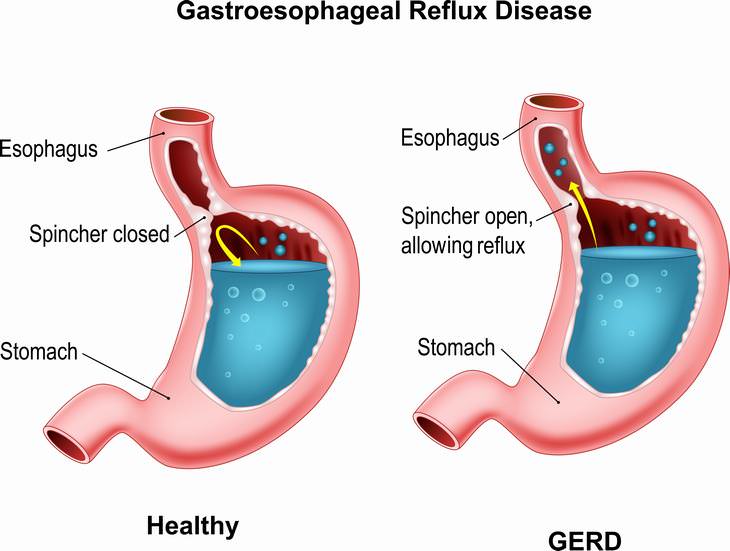
According to researchers, it may aggravate asthma, proven by the fact that the majority of asthmatics have GERD. Acid-reflux is a long-term condition in which whatever you eat, comes back up into the esophagus and causes unpleasant symptoms or complications. People with excessive weight, pregnant women, smokers and those who take certain medicines are at risk of developing it. So what signs indicate that you may have GERD?
 acid reflux 


1. Acidic taste in the mouth  

This condition is caused by the muscle or sphincter at the top of the stomach. When it becomes weak, acid rises up into the food pipe and the sour acidic taste can stay for weeks and be very irritating, affecting your quality of life. This is an especially common problem among pregnant women because there is more pressure on the stomach. 

2. Regurgitation 

This is the backing up of acid into your throat or mouth. You may experience a bitter taste, burp or even vomit. It can occur at any time but it gets especially worse at night. You may also wake up with bitter liquid in your throat and a feeling of panic.

3. Heartburn  

Many people have experienced heartburn, but few think they have had acid reflux. Heartburn is a common symptom of GERD. Usually, symptoms of heartburn include burning or discomfort in the middle of the lower chest that can be felt after eating. The discomfort may increase when bending over or lying flat on your back. 

4. Dyspepsia 

When experiencing acid reflux you may feel stomach discomfort. This includes nausea after eating, upper abdominal pain, burping, and stomach fullness. There are times when you don't feel hungry and you don't have an appetite because of the feeling of fullness in your stomach.

5. Dysphagia This means that you can feel the sensation of stacked food in your throat and happens because of a narrowing of your esophagus. When this happens it can become a challenge because you are unable to swallow so you may not eat enough calories, leading to additional medical problems.

 6. Coughing 

While coughing is not a typical symptom of acid reflux, 25-40% of cases are registered with a chronic cough. How to avoid acid reflux: 

1. Eat smaller portions. It's better to eat often than to have a big meal once or twice per day. 

2. Avoid alcohol, acid, spice and fatty foods. 

3. Lose weight if needed. 

4. Don't wear tight clothing. 

5. Don't eat before sleeping.


This is only for your information, kindly take the advice of your doctor for food, medicines, exercises and so on.   


Labels: , , , , ,

Sunday, April 28, 2024

As a millennial, here’s what you need to know about pelvic health

A new survey conducted by Origin, a provider of women's pelvic floor and whole-body physical therapy focused on millennial women, aged 18 to 59, exposing a generational divide in pelvic health. "Contrary to popular belief, pelvic floor issues aren't just affecting women in later stages of life. The rates among millennials were either higher or equal to those of Gen X," explains Carine Carmy, co-founder and CEO of Origin, discussing the study's findings.

Released yesterday, the company’s study conducted in partnership with market research giant Ipsos, found that 8 in 10 women, many of them millennials, are dealing with pelvic health problems. The study fills a gaping research gap.“The data around women’s health, and especially pelvic health, is lacking,” adds Carmy. There have also been issues with how research has been done historically. The scope of what’s studied has been limited and it’s looked at pelvic health over a lifetime, versus a moment in time, which makes our understanding of how it affects women at different stages insufficient.

What did the study reveal?

Origin's new survey reveals that millennials experience higher rates of bladder issues compared to their Gen X counterparts, such as the sensation of needing to urinate again immediately and difficulty fully emptying their bladder. Additionally, more than half of millennials report urinary leakage when coughing, laughing, or exercising, while a greater proportion of millennials than Gen Xers face challenges such as pain during intercourse and difficulty achieving orgasm.

The most common cause for repetitive leakage (or stress urinary incontinence) among millennial women is childbirth (both vaginal and C-section deliveries), says Michele McGurk, PT, a Brooklyn-based certified pelvic rehabilitation practitioner and clinical specialist in women’s health. “Scar tissue from muscle and fascia tearing or cutting will change the integrity of the abdominal pelvic canister resulting in abnormal pressure distribution, and an inability to contract the deeper core and pelvic floor muscles to prevent leaking,” says McGurk.

Due to muscle laxity, activities like exercise, jumping, coughing, or sneezing can result in leakage. According to New York-based board-certified OB/GYN Heather Irobunda, MD, a prior fall onto the pelvis may also contribute to this issue. Although research on this topic is limited, there could be a genetic predisposition, as Dr. Irobunda suggests: “If your mother, sister, or aunt experienced leakage issues, you are more likely to as well.” While strengthening exercises like kegels can be beneficial, McGurk emphasizes the necessity of manual treatment conducted by a pelvic floor PT to restore muscle tone, function, and symmetry beforehand.

A new survey conducted by Origin, a provider of women's pelvic floor and whole-body physical therapy focused on millennial women, aged 18 to 59, exposing a generational divide in pelvic health. "Contrary to popular belief, pelvic floor issues aren't just affecting women in later stages of life. The rates among millennials were either higher or equal to those of Gen X," explains Carine Carmy, co-founder and CEO of Origin, discussing the study's findings.

Released yesterday, the company’s study conducted in partnership with market research giant Ipsos, found that 8 in 10 women, many of them millennials, are dealing with pelvic health problems. The study fills a gaping research gap.“The data around women’s health, and especially pelvic health, is lacking,” adds Carmy. There have also been issues with how research has been done historically. The scope of what’s studied has been limited and it’s looked at pelvic health over a lifetime, versus a moment in time, which makes our understanding of how it affects women at different stages insufficient.

What did the study reveal?

Origin's new survey reveals that millennials experience higher rates of bladder issues compared to their Gen X counterparts, such as the sensation of needing to urinate again immediately and difficulty fully emptying their bladder. Additionally, more than half of millennials report urinary leakage when coughing, laughing, or exercising, while a greater proportion of millennials than Gen Xers face challenges such as pain during intercourse and difficulty achieving orgasm.

The most common cause for repetitive leakage (or stress urinary incontinence) among millennial women is childbirth (both vaginal and C-section deliveries), says Michele McGurk, PT, a Brooklyn-based certified pelvic rehabilitation practitioner and clinical specialist in women’s health. “Scar tissue from muscle and fascia tearing or cutting will change the integrity of the abdominal pelvic canister resulting in abnormal pressure distribution, and an inability to contract the deeper core and pelvic floor muscles to prevent leaking,” says McGurk.


Due to muscle laxity, activities like exercise, jumping, coughing, or sneezing can result in leakage. According to New York-based board-certified OB/GYN Heather Irobunda, MD, a prior fall onto the pelvis may also contribute to this issue. Although research on this topic is limited, there could be a genetic predisposition, as Dr. Irobunda suggests: “If your mother, sister, or aunt experienced leakage issues, you are more likely to as well.” While strengthening exercises like kegels can be beneficial, McGurk emphasizes the necessity of manual treatment conducted by a pelvic floor PT to restore muscle tone, function, and symmetry beforehand.

The bladder urgency and frequency that millennial women are experiencing can be caused, in part, by irritants like caffeine, alcohol, seltzer water, and chocolate, says McGurk, and also poor water intake and prolonged sitting. “Removing the irritants along with bladder retraining techniques such as diaphragmatic breathing in the moment of an abnormal urge can make a big difference,” says McGurk. He said that the goal is to retrain the bladder to tolerate longer stretches of storing urine. One reason more millennial women are having problems fully emptying their bladder could be a history of UTIs, says McGurk, which can cause scarring. A temporary fix to help fully empty the bladder, she says, is to move the pelvis forward and back 5-10 times while sitting on the toilet.

Frequent UTIs can also contribute to the higher number of millennial women experiencing pain during sex, as explained by McGurk. She also points to other factors such as irritation caused by chemicals in soaps, endometriosis, hormonal reactions, and conditions like vulvar vestibulitis, which can develop in younger women taking the pill, leading to painful penetration. McGurk adds that similar issues can arise during postpartum and menopause, as well as prudendal neuralgia, a painful genital condition often misdiagnosed as a yeast infection due to constant itching, caused by prolonged sitting, bike riding, and pelvic trauma.

Moreover, there's a significant mental component involved. "We know that sexual arousal and sometimes chronic pelvic pain can be associated with emotional stress and mental health," says Irobunda. "It's important to remember that general health issues also affect pelvic health. Unfortunately, sometimes we tend to view pelvic issues in isolation."

Why are millennials experiencing this?

There is a deep connection between mind and body, and specifically the pelvis. Increased fear, stress, and anxiety can all manifest as a tight pelvic floor. “We know that millennials today, particularly post-Covid are experiencing incredibly high rates of depression and anxiety,” adds Carmy. Stress and anxiety have a strong association with bladder urgency and frequency, says McGurk and studies have confirmed this. The adverse effects are also true–experiencing pelvic health issues like incontinence can cause women to develop anxiety, something Irobunda sees frequently among her patients. “Urinary continence is something we teach children and it becomes unnerving when you feel like you’re regressing in that way and you’re unable to hold it,” she adds.

What Irobunda does see most frequently among millennial women patients, more than other generations, is a willingness to discuss pelvic health issues and a concerted seeking of solutions. Many of these pelvic health problems aren’t new; what is new is the openness about them and the desire to address them. “These issues have been known among women for generations but were either normalised or dismissed by the medical community and society, but we’re at a turning point now where things that have been the subject of whisper networks are now entering the mainstream,” says Carmy. Search trends back that up–Origin has seen a 300 per cent increase in search interest around pelvic floor health over the past year and the number of people visiting their free educational blog is in the hundreds of thousands every month.


This is only for your information, kindly take the advice of your doctor for medicines, exercises and so on.   

https://gscrochetdesigns.blogspot.com. one can see my crochet creations  
https://gseasyrecipes.blogspot.com. feel free to view for easy, simple and healthy recipes    
https://kneereplacement-stickclub.blogspot.com. for info on knee replacement
https://cancersupportindia.blogspot.com  for infor on cancer and health related topics
https://GSiyers home remedies.blogspot.com   is the latest addition to my blogs. I'm going to add posts there, do give me your valuable feed back on my blogs. Thanks a lot, take care, be healthy and be happy.


Labels: , , , , , , , , ,

Saturday, September 17, 2022

Suffer from Dust Allergies? Try 8 Natural Treatments!

Whether it’s the pollen in spring or the dust around your home in the winter, each season brings along its set of allergy triggers. With every change of season, you’re greeted by bouts of uncontrollable coughing and sneezing. So, what exactly can you do to tackle this annoying problem? Below you’ll find some amazing remedies that can help you treat your dust allergies naturally.
 
What Causes Dust Allergies?
Dust mites are the main culprits behind dust allergies. Below are some other causes: 
 
• Cockroaches – There are small components present on cockroaches that can cause dust allergies in some individuals when inhaled. 
 
• Mold – This is a kind of fungus that has spores that are capable of floating in the air. These spores can cause dust allergies. 
 
• Pollen – The different types of pollen that comes from trees, grasses, and flowers can trigger allergic reactions in some people. 
 
• Animal fur and feathers – Pets are another causes of dust allergies. Their skin flakes, urine, and saliva are potential allergens, especially when combined with dust.  
 
What Are the Signs and Symptoms of Dust Allergies? 
 
The most common symptoms are: 
 
• A runny nose 
 
• Itchy and red eyes 
 
• Sneezing and sniffing 
 
• Coughing and wheezing 
 
• Shortness of breath 
 
• Tightness in the chest  
 
How to Cure Dust Allergies Naturally  
 
1. Eucalyptus Essential Oil
Allergies

You Will - Need 3-4 drops of eucalyptus essential oil. 
 
 What You Have to Do -Add a couple of drops of eucalyptus essential oil to a diffuser and inhale the vapors. 
 
How Often Should You Do This? Do this 1-2 times per day.  
 
Why This Works 
The soothing and anti-inflammatory properties of eucalyptus oil make it effective in treating congestion and allergies. These therapeutic properties are mainly due to the presence of eucalyptol in the oil. 
 
2. Honey
Allergies
You Will Need 2 teaspoons of raw honey. 
 
What You Have to Do - Consume two teaspoons of raw honey. 
 
How Often Should You Do This? - Do this twice a day. 
 
Why This Works-- Local and raw honey often contains small amounts of pollen, which is believed to help with dust allergies. This is useful for those suffering from season allergies as regular consumption of small amounts of pollen via raw honey may make an individual less sensitive to it over time.  
 
3. Apple Cider Vinegar

You Will Need  
• 2 teaspoons of apple cider vinegar 
• 1 glass of warm water 
• Honey (optional) 
 
What You Have to Do 
1. Add two teaspoons of apple cider vinegar to a glass of warm water and mix well.
 
2. You can also add a little bit of honey for flavor. 
 
3. Consume this solution.  
 
Why This Works 
The anti-inflammatory properties of apple cider vinegar, along with its expectorant nature, are quite helpful when it comes to treating dust allergies and the accompanying cold-like symptoms. It also has antimicrobial properties that can prevent the aggravation of allergies. It’s a great natural substitute for the store-bought antihistamines used for treating dust allergies.  
 
4. Turmeric
Allergies
You Will Need  
 
• ½ teaspoon of turmeric
 
• 1 cup of milk 
 
• A pinch of pepper
 
• Honey (optional)  
 
What You Have to Do 
 
1. Add half a teaspoon of turmeric to a cup of milk. 
 
2. Bring to the boil in a saucepan. 
 
3. Allow the milk to cool a little before adding the honey. 
 
4. Drink this mixture. 
 
 How Often Should You Do This? 
Do this at least twice a day. 
 
 Why This Works  
This golden spice is one of the best natural remedies for treating dust allergies. Turmeric contains an active constituent call curcumin that acts as a natural decongestant. It also acts as a natural antihistamine. Furthermore, turmeric also has anti-inflammatory and antibacterial properties that can prevent allergies from turning into an infection. 
 
5. Aloe Vera
Allergies
You Will Need-- ¼ cup of aloe vera juice.  
 
What You Have to Do-- Drink one-fourth cup of aloe vera juice. 
 
 How Often Should You Do This? Do this at least twice a day. 
 
Why This Works-- Aloe vera has natural anti-inflammatory and analgesic properties that can help treat the swelling and pain caused by dust allergies. 
 
6. Peppermint Tea
 Allergies
You Will Need 
 
• 1 teaspoon of dried peppermint leaves 
 
• 1 cup hot water 
 
• Honey  
 
What You Have to Do 
Add a teaspoon of dried peppermint leaves to a cup of hot water and allow it to steep for 10 minutes. Strain the tea and allow it to cool a bit. Add honey. Drink up. 
 
How Often Should You Do This?-- You can drink peppermint tea thrice daily. 
 
Why This Works- Peppermint is quite effective in treating dust allergies due to its anti-inflammatory and decongestant properties. It contains a volatile oil called menthol, which acts as a natural decongestant and provides immediate relief from sneezing, a runny nose, and wheezing.
 
7. Wasabi

You Will Need -- ¼ teaspoon of grated wasabi. 
 
What You Have to Do --  Consume grated wasabi whenever you’re experiencing allergy symptoms. 
 
How Often Should You Do This? You must do this whenever you experience an allergy attack.
 
Why This Works-- Wasabi contains a compound called allyl isothiocyanate, which acts as a decongestant and stimulates mucus flow, thereby helping to ease the symptoms of dust allergies. 
 
8. Ghee
Allergies
You Will Need • ¼ teaspoon of ghee • Jaggery 
 
What You Have to Do --If you’re sneezing uncontrollably due to allergies, suck on one-fourth teaspoon of ghee for immediate relief. Add a little jaggery for better results. 
 
How Often Should You Do This? You can consume this whenever you get a sudden allergy attack. 
 
Why This Works--Pure ghee can help to warm your nasal passage and relieve constant sneezing. Therefore, it’s widely recommended for treating dust allergies and its symptoms. This is due to its anti-inflammatory properties.

This is only for your information, kindly take the advice of your doctor for medicines, exercises and so on.   

https://gscrochetdesigns.blogspot.com. one can see my crochet creations  
https://gseasyrecipes.blogspot.com. feel free to view for easy, simple and healthy recipes    
https://kneereplacement-stickclub.blogspot.com. for info on knee replacement


Labels: , , , , , , , , , , , , , , ,