Friday, December 27, 2024

A Guide to Laparoscopy Surgery

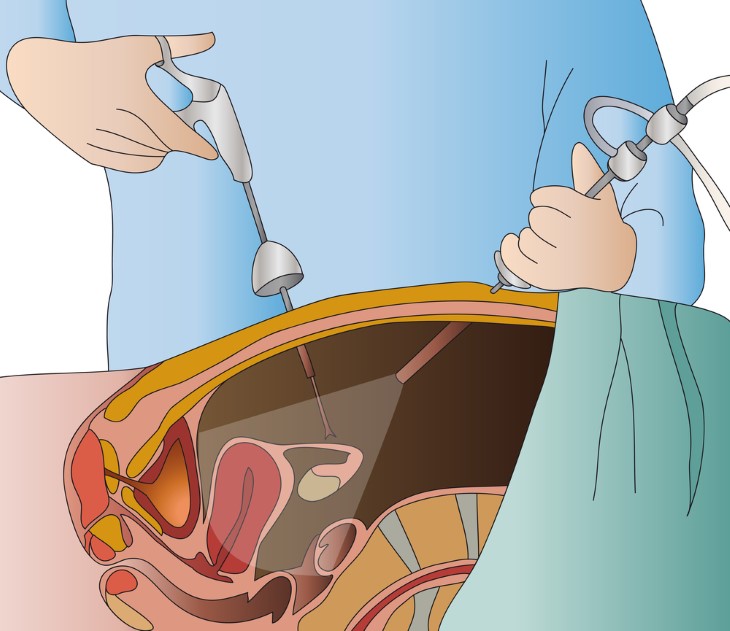
 Laparoscopy, derived from the Greek words "lapara" (flank or abdomen) and "skopein" (to examine), is a minimally invasive surgical technique that allows physicians to inspect and operate on abdominal and pelvic organs without the need for large incisions. This approach offers patients reduced recovery times, less postoperative pain, and minimal scarring compared to traditional open surgeries.

Historical Background 
The evolution of laparoscopy dates back to 1806 when Philip Bozzini developed a device using a simple tube and candlelight to view the interior of the urethra. In 1869, gynecologist Pantaleoni utilized an endoscope to examine the uterine cavity, marking the early use of endoscopy in gynecology. By 1901, George Kelling employed a cystoscope to explore the abdominal cavity in dogs, introducing the concept of insuffiating the abdomen with filtered air to control internal bleeding. The term "laparoscopy" was coined in 1911 by Swedish internist Hans Christian Jacobaeus, who used a cystoscope to examine the abdominal and thoracic cavities. Significant advancements continued, notably by Raoul Palmer in 1944, who performed gynecological laparoscopies with patients in a head-down position and used gas insufflation to enhance visibility. The development of cold light sources in 1952 further enhanced the safety and efficacy of laparoscopic procedures.
laparoscopy surgery illustration

Applications of Laparoscopy 
Today, laparoscopy is integral to various surgical specialties, including general surgery, gynecology, and urology. In gynecology, it addresses conditions such as ovarian cysts, ectopic pregnancies, endometriosis, and fibroids. General surgeons utilize laparoscopy for procedures like cholecystectomy (gallbladder removal), appendectomy, hernia repairs, and colorectal surgeries. The technique's minimally invasive nature results in shorter hospital stays, quicker recoveries, and fewer complications.

A few stories that highlight what this surgery is for: 
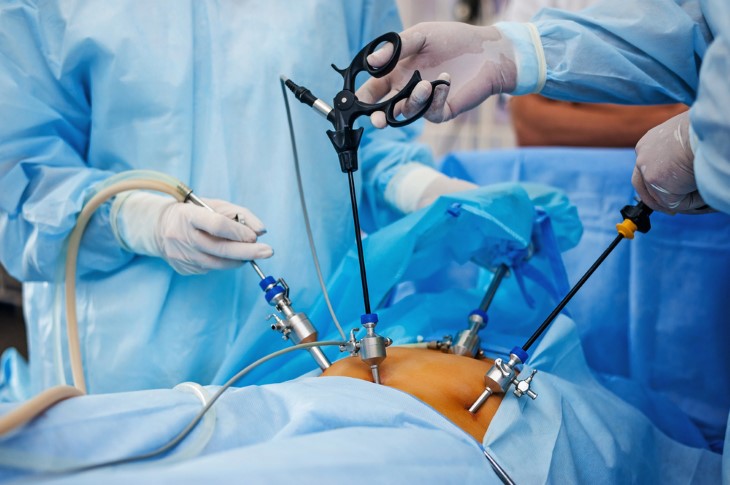
 laparoscopy surgery
At 86, John had always been active, enjoying daily walks and time with his grandchildren. When sudden abdominal pain led to a diagnosis of acute cholecystitis, he feared a prolonged recovery. Fortunately, doctors recommended a laparoscopic cholecystectomy. Through small incisions, the surgeons removed his inflamed gallbladder. Everything went without a hitch, and John was home just days later. He was soon back to his routines, grateful for the swift intervention and shocked at how fast his recovery was for a man of his age.

Take Emily, a much younger, 37-year-old teacher, who was in the middle of her school year when she experienced sharp abdominal pain. Diagnosed with acute appendicitis, she worried about missing work and her students. Her medical team suggested a laparoscopic appendectomy. The minimally invasive procedure meant Emily was back on her feet within a week. This kind of surgery used to take weeks and months of hard-earned recovery and pain. 
 
We'll finish with the case of Michael, a 17-year-old athlete, faced a life-threatening situation after a chest injury during a game. Doctors used diagnostic laparoscopy to assess internal damage. The clear visualization allowed them to address his injuries promptly. Thanks to this approach, Michael's recovery was swift and complete enough to put him back on the field. 
 
Preparation and Procedure  
Preparation for laparoscopy involves a comprehensive medical evaluation, including a review of medical history, physical examination, and necessary laboratory tests. Patients are advised to fast for approximately eight hours before the procedure and may need to discontinue certain medications, especially blood thinners. The surgical process includes general anesthesia, followed by small abdominal incisions through which a laparoscope and specialized instruments are inserted. Carbon dioxide gas is introduced to inflate the abdominal cavity, providing better visualization of internal organs. The procedure's duration varies based on its complexity, and patients typically experience shorter recovery periods compared to open surgeries. laparoscopy surgery

Risks and Considerations  
While laparoscopy offers numerous benefits, it is not without risks. Potential complications include bleeding, infection, and injury to internal organs. Certain conditions, such as advanced abdominal cancers, chronic tuberculosis, bleeding disorders, or extensive abdominal adhesions, may contraindicate the use of laparoscopy. It is crucial for you to discuss their medical history and any concerns with their healthcare provider to determine the appropriateness of this surgical approach. 
 
Postoperative Care and Recovery 
After laparoscopy, you may experience mild abdominal discomfort, bloating, or referred shoulder pain due to residual carbon dioxide gas. These symptoms typically resolve within a few days. Adhering to postoperative care instructions, such as wound care, activity restrictions, and follow-up appointments, is essential for optimal recovery. Most individuals can resume normal activities within a week, although this may vary depending on the specific procedure performed. 
 
In summary, laparoscopy represents a significant advancement in surgical practice, offering a less invasive option for diagnosing and treating various abdominal and pelvic conditions.


This is only for your information, kindly take the advice of your doctor for medicines, exercises and so on.   

https://gscrochetdesigns.blogspot.com. one can see my crochet creations  
https://gseasyrecipes.blogspot.com. feel free to view for easy, simple and healthy recipes    
https://kneereplacement-stickclub.blogspot.com. for info on knee replacement
https://cancersupportindia.blogspot.com  for infor on cancer and health related topics
https://GSiyers home remedies.blogspot.com   is the latest addition to my blogs. I'm going to add posts there, do give me your valuable feed back on my blogs. Thanks a lot, take care, be healthy and be happy.

Labels: , , , , , ,

Tuesday, February 18, 2020

Hyperacidity: Not hyped enough

Have you ever felt a burning sensation that runs up from your chest area and into your throat? It starts off feeling like an annoyance but in some cases, it becomes persistent, turning into a disease.

Jim Palmer, one of the greatest pitchers in the history of baseball, had chronicled about his battle with heartburn. “I had frequent and persistent heartburn for many years during my baseball career. I thought it was normal. I tried changing my eating habits in an effort to allow three hours between eating and going to bed. None of these efforts solved the problem. I have found that more and more people are identifying their own experiences with frequent and persistent heartburn as reflux disease,” he had chronicled. Today, at 74 he is considered one of the famous spokespersons, in addition to former US presidents Bill Clinton and George Bush, who’s been helping in increasing awareness about gastroesophageal reflux disease (GERD) — which in layman term means ‘acidity’.
Hyperacidity is a common symptom that is synonymous with burning pain in the upper abdomen and or chest, usually secondary to bacterial infection, intake of certain drugs, lifestyle habits such as alcohol consumption and smoking. And it doesn’t only affect older people — even active, healthy teens can suffer from acidity, explain experts.

Dr G.V. Rao, Director, Chief of Surgical Gastroenterology, Transplantation Services and Minimally Invasive Surgery, Asian Institute of Gastroenterology, explains it further. “Eating large amounts of food and inadequate chewing of food causes upper abdominal fullness, bloating, nausea, and vomiting. When one has acidity, one experiences a burning sensation under the breastbone, accompanied by reflux of bitter contents. It usually worsens on bending forward or lying down,” says Dr Rao.


What causes acidity?
According to Dr Nitesh Pratap, Consultant Gastroenterologist, KIMS Hospitals, there are multiple causes of acidity, including consuming spicy food, eating a heavy meal and eating citric foods. “In fact, chocolates can also cause acidity. And smoking and alcohol intake can worsen the symptoms. Stomach infections with H. pylori, pain medications such as ibuprofen and aspirin and high levels of stress/anxiety can also trigger acidity,” adds Dr Pratap.

Another commonly ignored aspect that induces acidity in most people is improper timing and spacing between meals during the day. According to Dr Rao, eating large quantities of food late in the night and immediately retiring to bed can also aggravate symptoms.

How can you treat the disease?

The treatment of acidity includes lifestyle modification as well as medication. “Lifestyle modification includes eating small frequent meals, avoiding spicy food, excess tea and coffee,” advises Dr Pratap.

The doctor also adds that antacids, proton pump inhibitors and antibiotics for H. pylori, as per medical advice are some of the medications used to treat acidity.


In some cases, people take antacids but still do not respond to it. In such cases, the treating doctor will evaluate for diseases causing acidity. “These tests include blood test and, if required, an upper gastrointestinal endoscopy in which a flexible scope is passed into the stomach to look for the cause of acidity. If a person with acidity has significant loss of weight, loss of appetite, vomiting or black-coloured stool, he should consult the specialist at the earliest,” the doctor adds.
This is only for your information, kindly take the advice of your doctor for medicines, exercises and so on.     
https://gscrochetdesigns.blogspot.com. one can see my crochet creations  
https://gseasyrecipes.blogspot.com. feel free to view for easy, simple and healthy recipes    
https://kneereplacement-stickclub.blogspot.com. for info on knee replacement
 

Labels: , , , , , , , , , ,

Tuesday, October 18, 2016

Delay in surgeries for Osteoarthritis affects spine

Delay in knee surgeries during severe osteoarthritis adversely affects the spine, said health experts on Monday.
"It is commonly observed that people delay their knee surgery till the last stage without knowing that it is actually deteriorating their spine further. Walking with deformed painful knee joints may damage the spine to irreparable stage," said L. Tomar, orthopedic surgeon at Max super specialty Hospital.

According to Tomar, osteoarthritis patients do not opt for high-end medical techniques like Knee replacement surgery because of their apprehensions or fear. The delay degenerates the bones further during osteoarthritis causing several other types of diseases such as diabetes, hypertension and obesity.


Medical surveys have stated that 40-50 per cent of the patients in the rural India do not opt for surgeries even if they suffer from sever osteoarthritis. In the extreme cases, they opt for some temporary medical procedures which curtails their mobility.

Tomar said that with several minimally invasive technologies, the knee replacement has become far more effective as compared to conventional methods.

"In fact, with minimally invasive technologies even old people like those of eighty years or even more could safely undergo knee replacement, that too with assurance of almost absolute normal locomotive recovery," said  Dr.Deepak Pradhan, associated with All India Institute of Medical Sciences (AIIMS).

Pradhan said: "Minimally invasive knee replacement surgeries also reduce blood loss, hospital stay and recovery time. It also increases longevity of the implanted joints and enhances knee movements and brings added safety and accuracy to the entire surgical procedure. It is just the patient who has to understand that the surgery during severe osteoarthritis should not be delayed."

 
this is only for your information, kindly take the advice of your doctor for medicines, exercises and so on.
https://gscrochetdesigns.blogspot.com. one can see my crochet creations
https://gseasyrecipes.blogspot.com. feel free to view for easy, simple and healthy recipes

https://kneereplacement-stickclub.blogspot.com. for info on knee replacement

Labels: , , , , , , , ,

Saturday, April 18, 2015

New clot-removal attack better than drugs alone for stroke patients

A new study has found that the removal of the clot causing a severe stroke plus standard medication yields better long term outcomes in stroke patients than drug alone.

Co-author Demetrius Lopes from Rush University Medical Centre said that these findings are a game-changer for how they should treat certain types of stroke adding that these outcomes are the difference between patients being able to care for themselves after stroke and being dependent.

During a minimally invasive procedure called thrombectomy to remove the clot, a neurovascular surgeon threads a catheter through an incision in the patient's groin, snaking it through the blood vessels and into the brain. The doctor then uses a device attached to the catheter to grab and dislodge the clot and pull it all the way out through the incision, a bit like an angler reeling in a fish. The study found that the patients who received intravenous tissue plasminogen activator (IV tPA) plus thrombectomy exhibited reduced disability across the entire range of the measurement, with a functional independence rate of 60% compared to 35.5% for those patients who received only IVtPA.

For every 2.6 patients treated, one additional patient had an improved disability outcome; for every four patients treated, one additional patient was independent at 90 day follow-up, the article declared. The study also found that patients who received thrombectomy had better cerebral blood flow rates: At 27 hours after treatment, 82.8% of those patients had blood flow that was 90% of normal or better, versus 40.4% of patients who only received IV tPA.

The study appears online in the New England Journal of Medicine.

 THIS IS ONLY FOR INFORMATION, ALWAYS CONSULT YOU PHYSICIAN BEFORE HAVING ANY PARTICULAR FOOD/ MEDICATION/EXERCISE/OTHER REMEDIES.


PS- THOSE INTERESTED IN RECIPES ARE FREE TO VIEW MY BLOG-
HTTP:GSEASYRECIPES.BLOGSPOT.COM


FOR INFO ABOUT KNEE REPLACEMENT, YOU CAN VIEW MY BLOG-
HTTP://KNEE REPLACEMENT-STICK CLUB.BLOGSPOT.COM/

FOR CROCHET DESIGNS


HTTP://MY CROCHET CREATIONS.BLOGSPOT.COM

Labels: , , , , ,

Thursday, November 29, 2012

10 QUESTIONS TO ASK BEFORE KNEE OR HIP REPLACEMENT


If you have arthritis of the hip or knee and are considering joint 
replacement, start by talking with your doctor. Here are 10 key 
questions to ask about joint replacement.
  1. Is full joint replacement the best choice for me? Talk about other options. Could simpler and more conservative treatments work instead? Ask about alternatives to full joint replacement, such as partial joint replacement or other procedures.
  2. If I don't get surgery, what's the risk? Is there any harm in waiting?
  3. What are the downsides of joint replacement? Learn ore about the risks and complications – for right after the surgery and further down the road.
  4. What type of replacement joint would you recommend? Many different companies make replacement joints. Get the specifics on what your doctor recommends. Ask if you can see a sample joint to understand how it works.
  5. How many of these surgeries have you done? You want someone with a lot of experience in the specific surgery -- with the specific artificial joint -- that you need.
  6. Would minimally invasive surgery be possible for me? Although minimally invasive surgery sounds good, it's often not the best choice for joint replacement. Some studies show that the short-term benefits of a smaller incision may be offset by a higher risk of complications.
  7. How long would recovery take? Get specifics. When will you be able to be back on your feet? When will you be able to exercise or go back to work again? When will you be able to be drive?
  8. What kind of anaesthesia would I need? Some people getting a joint replacement need general anaesthesia  Others only get spinal anaesthesia  in which they're awake but the legs are numb.
  9. What kind of physical therapy would I need? Physical therapy is essential for maximum recovery. Find out where you would get physical therapy, how often, and with whom.
  10. What should I expect from life with a joint replacement? Get realistic expectations about what you'll be able to do after you recover. Find out if your doctor would recommend avoiding high-impact activity, such as jogging. Most replacement joints will last 10 years or longer, but it depends on how much overuse they get. Ask about ways you can try to minimize wear and tear.

Labels: , , , , , , ,