Tuesday, February 16, 2021

8 Common Thyroid Dysfunctions and What Causes Them

The thyroid is a gland inside of our necks, just below the Adam’s apple (in men), which is an incredibly important part of our endocrine (hormonal) system that helps regulate our metabolism, manages protein synthesis, growth and more. Of course, just because it affects mainly physiological processes in the body doesn’t mean it ends there, as energy production through metabolism has a profound effect on our brains.
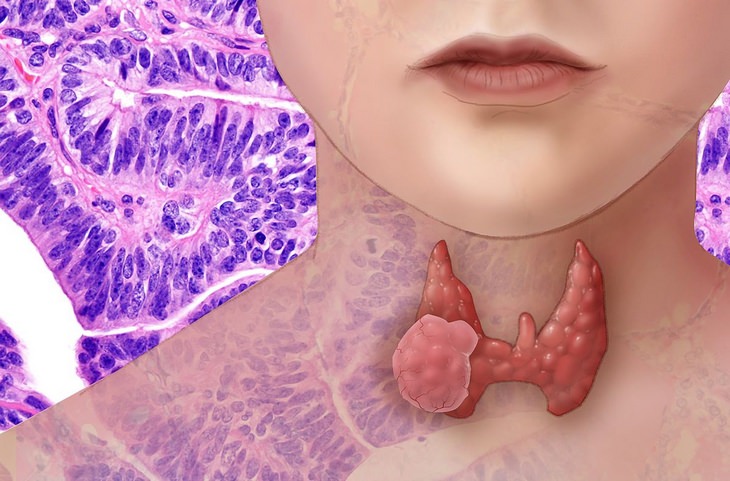
Around one in eight people have a thyroid disorder. Of these, a majority are unaware they have it, and a huge majority are women. Why are women more susceptible? Because most thyroid disorders are caused by autoimmune diseases, which disproportionately affect women. Because thyroid problems often have numerous nonspecific symptoms, they are very easily misdiagnosed. 
 
1. Hypothyroidism
Hypothyroidism is a disorder that manifests in reduced activity in the thyroid gland. Because one of the main functions of the thyroid is regulating metabolism, an underactive gland causes slower metabolism. This, in turn, may cause inexplicable weight-gain, loss of appetite, constipation, dry and flaky skin, hair thinning, sensitivity to cold and depression. 
 
In developing countries, the leading cause for hypothyroidism is a lack of dietary iodine, while in developed countries, hypothyroidism is typically associated with an autoimmune disease. 
 
2. Hyperthyroidism 
As you can probably tell by the name, this condition is the opposite of hypothyroidism and describes an overactive thyroid gland. Unsurprisingly, the symptoms of hyperthyroidism are nearly an exact mirror image of hypothyroidism: weight loss that is not tied to diet or activity and paired with an increased appetite, frequent diarrhea, irritability, confusion, an increased heartbeat, hand tremors, heat intolerance, sleep disorders, and mood swings. 
 
Like hypothyroidism, the chief culprit behind hyperthyroidism are autoimmune diseases, and so it affects females to a much greater extent than men, but it also appears to be hereditary and can be caused by too much iodine in the diet. 
 
3. Goiter   Thyroid disorders: goiter
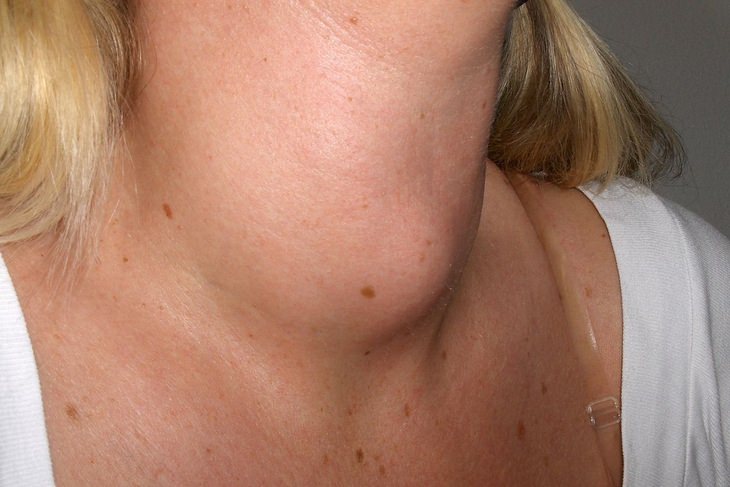
Rather than a thyroid disorder in and of itself, goiter is a symptom of other thyroid diseases. Goiter is a swelling of the neck due to an enlarged thyroid gland which can be caused by any thyroid disorder, but not having goiter doesn’t rule out a thyroid disorder. 
 
It can present itself as a slight swelling of the neck, as a grapefruit-size globular swelling, or as several smaller balls in the neck. Goiter is typically painless, but a large goiter can make eating and breathing difficult. 
 
4. Thyroid storm 
Thyroid storm is a rare and life-threatening complication of an overactive thyroid (hyperthyroidism), which causes high fever, vomiting, and hypertension in early stages, followed by dramatically low blood pressure and circulatory shock in later stages. Thyroid storm could result in heart failure or heart attack. 
 
Thyroid storm could be triggered by any number of conditions that aren’t related to the thyroid, such as blood poisoning, fever, dehydration and more. People are at larger risk of a thyroid storm if they leave their hyperthyroidism untreated or if they discontinue their hyperthyroidism treatment.
 
5. Hashimoto’s disease  Thyroid disorders: Hashimoto's disease thyroiditis
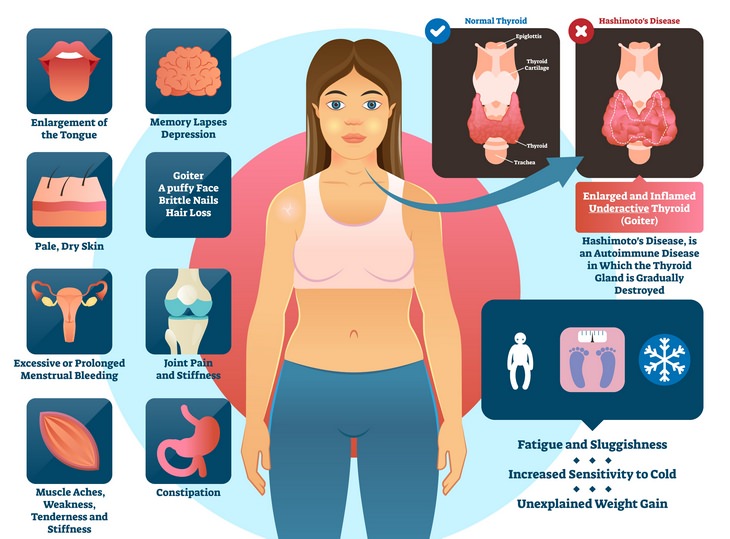
Perhaps the leading cause of hypothyroidism in the west is Hashimoto’s disease, an autoimmune disease that causes the immune system to actively attack the thyroid gland. Though this may cause swelling in the thyroid (and goiter as a result), the overall effect is a gradual shrinking of the thyroid until its destruction. 
 
As an autoimmune disease, Hashimoto’s disease is more common among people who suffer from other autoimmune diseases, specifically type 1 diabetes, celiac disease, vitiligo, and alopecia, but it is also genetic and could be inherited. 
 
6. Graves’ Disease  Thyroid disorders: Grave's disease bulging eyes
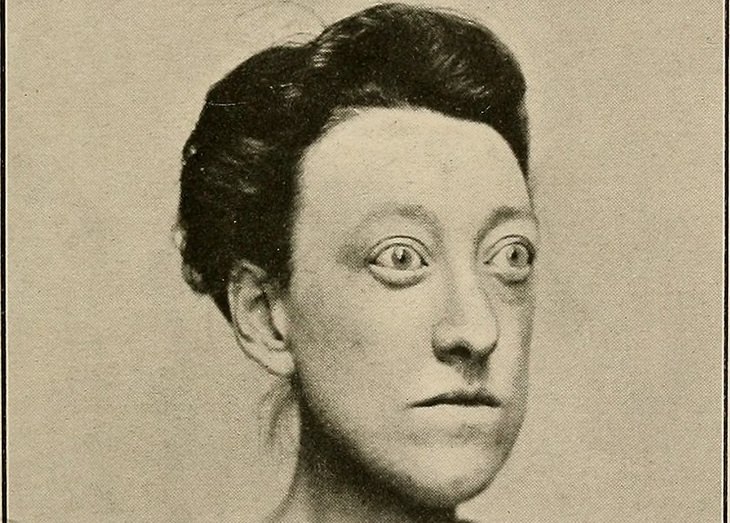
Another autoimmune disease, Graves’ is the most common cause behind hyperthyroidism and can be initially triggered by stress, infection or childbirth. Additional symptoms of Graves’ are discolored, swollen shins with lesions or nodules, as well as eyes that bulge out. 
 
Much like Hashimoto’s, people suffering from a preexisting autoimmune disease are more likely to develop Graves’ disease, and conversely, those with Graves’ are more likely to develop unrelated autoimmune conditions. There also appears to be a genetic factor. 
 
7. Thyroid nodules  Thyroid disorders: thyroid nodules

The most common thyroid problem and the cause of the least concern are nodules in the thyroid gland. These can be asymptomatic and imperceptibly small or present as lumps in the throat. In the case of goiter, one or more lumps are indicative of nodules. Only 5% of thyroid nodules are malign. 
 
Problems swallowing or speaking and a hard, immobile lump are more indicative of malignancy, while a family history of autoimmune diseases and thyroid conditions accompanied by a nodule that is soft and painful are all signs of the nodule being benign. 
 
Thyroid nodules are extremely common, with about 50% of people having a nodule at some point in their life. Other thyroid conditions, such as Hashimoto’s and Graves’ will often cause nodules as well. 
 
8. Thyroid cancer 
 Thyroid disorders: thyroid cancer                                 Source: National Human Genome Research Institute (NHGR

Most types of thyroid cancer have an excellent prognosis and are very manageable, as they do not tend to metastasize. Though not overly common, diagnosed cases are on the rise, but that may very well be due to better detection, rather than the cancer being on the rise. 
 
The lack of detection in the past may be due to a lack of complaints from patients, who did not realize something was wrong to begin with. There are four types of thyroid cancer: 
 
Papillary 
Follicular 
Medullary 
Anaplastic. 
 
Of those, only anaplastic thyroid cancer, which is an extremely rare, fast-acting and metastasizing type of cancer, is of great concern. For the other three types of cancer, the survival rate over five years is 90% and 84% over ten years.

This is only for your information, kindly take the advice of your doctor for medicines, exercises and so on.     

https://gscrochetdesigns.blogspot.com. one can see my crochet creations  
https://gseasyrecipes.blogspot.com. feel free to view for easy, simple and healthy recipes    
https://kneereplacement-stickclub.blogspot.com. for info on knee replacement


Labels: , , , , , , , , , , , ,

Thursday, January 16, 2020

Cardiovascular diseases associated with increased risk of developing kidney failure

New research indicates that cardiovascular diseases- including heart failure, atrial fibrillation, coronary heart disease, and stroke- are each linked with a higher risk of developing kidney failure. The findings, which appear in an upcoming issue of JASN, highlight the importance of protecting the kidney health of individuals diagnosed with cardiovascular disease.

The heart and the kidneys have a bi-directional relationship, whereby dysfunction in either may compromise the function of the other. Many studies have investigated the risks of kidney disease on heart health, but few have examined the reciprocal relationship.


To investigate, a team led by Kunihiro Matsushita, MD, PhD and Junichi Ishigami, MD, PhD (Johns Hopkins Bloomberg School of Public Health) examined information on 9,047 US adults who did not have signs of heart disease when they enrolled in a community-based study.

"Many physicians probably recognize that patients with cardiovascular disease are at risk of kidney disease progression, but to my knowledge, this is the first study quantifying the contribution of different cardiovascular diseases to the development of kidney failure," said Dr. Matsushita.

During a median follow-up of 17.5 years, 2,598 participants were hospitalized with cardiovascular disease-;1,269 with heart failure, 1,337 with atrial fibrillation, 696 with coronary heart disease, and 559 with stroke-;and 210 patients developed kidney failure.

The incidence of major cardiovascular disease was associated with a higher risk of kidney failure, with the highest risk for heart failure. Participants hospitalized with heart failure had an 11.4-times higher risk of developing kidney failure than participants without cardiovascular disease.

 Individuals with a history of cardiovascular disease should be recognized as a high risk population for kidney failure. In this context, physicians should be aware of cardiovascular disease as an important risk condition, and thereby minimize treatments that are toxic to the kidneys in such individuals. Additionally, our findings may have implications for monitoring kidney function, although current cardiovascular disease guidelines do not necessarily specify the frequency of evaluating kidney function following the incidence of cardiovascular disease."     Dr. Junichi Ishigami, Johns Hopkins Bloomberg School of Public Health


This is only for your information, kindly take the advice of your doctor for medicines, exercises and so on.     
https://gscrochetdesigns.blogspot.com. one can see my crochet creations  
https://gseasyrecipes.blogspot.com. feel free to view for easy, simple and healthy recipes    
https://kneereplacement-stickclub.blogspot.com. for info on knee replacement


Labels: , , , , , , ,

Wednesday, February 13, 2019

Instant Noodles bad for health

Instant noodles are linked to obesity, inflammation, Alzheimer's and Parkinson's diseases.
In addition to the high amount of TBHQ, it contains mono-sodium glutamate which causes obesity, various degrees of brain damage and dysfunction and potentially trigger Parkinson's, Alzhimer's and chronic inflammation.

THIS IS ONLY FOR INFORMATION, ALWAYS CONSULT YOU PHYSICIAN BEFORE HAVING ANY PARTICULAR FOOD/ MEDICATION/EXERCISE/OTHER REMEDIES.                                    PS- THOSE INTERESTED IN RECIPES ARE FREE TO  VIEW MY BLOG-                                                                                           https://gseasyrecipes.blogspot.com/       

                                                                                                                                                                    FOR INFO ABOUT KNEE REPLACEMENT, YOU CAN VIEW MY BLOG-                                                  https:// kneereplacement-stickclub.blogspot.com/           
                                                                           FOR CROCHET DESIGNS                                                                                                                                                                                                  https://gscrochetdesigns.blogspot.com

Labels: , , , , , , , ,

Friday, January 04, 2019

High dose of Vitamin C protects against deadly Metabolic Syndrome

According to researchers, Vitamin Chas tremendous benefits as it protects against deadly metabolic syndrome.  higher intake of Vitamin V halts a potentially deadly cycle of antioxidant disruption and health-related problems in metabolic syndrome patients.

Vitamin C is found in fresh vegetables and fruits, source of Vitamin E include wheat germ, almonds, and various seeds and oils. As per dietary guidelines 65-90 mgm daily of Vitamin C and 15 mgm of Vitamin E.


About 35 % of the U.S. adult population suffers from metabolic syndrome. A patient is considered to have metabolic syndrome if he/ she has at least 3 of the following conditions- abdominal obesity, high blood pressure, high blood sugar, low levels of good cholesterol and high levels of triglycerides.


What these findings are really saying to people as we move out of the tich-food holiday season and into January is eat fruits and vegetables, said a Prof. Eat 5-10 servings a day and then you'll get the fiber, you'll get Vitamin C and you'll really protect your gut with all of those good things.


A diet high in saturated fat results in chronic low-grade inflammation in the body that in turn leads to the development of metabolic syndrome, a serious condition associated with cognitive dysfunction and dementia as well as being a major risk factor for cardiovascular disease, fatty live disease and type 2 diabetes.


Findings of study suggest the type of eating that leads to metabolic syndromwe can prompt imbalances in the gut microbiome, with impaired gut function contributing to toxins in the bloodstream, resulting in Vitamin c depletion, which subsequently impairs the trafficking of Vitamin E.


It's a treadmill of antioxidant disruption that serves to make a bad situation worse, antioxidants such as Vitamins C and E, offer defense against the oxidative stress brought on by inflammation and the associated free radicals, unstable molecules that can damage the body's cells.


Vitamins C actually protects Vitamin E, so when you've lipid peroxidation, Vitamin E is used up and Vitamin C can regenerate it, said a researcher. If you don't have the Vitamin C, the Vitamin E gets lost and then you lose both of those antioxidants and end up in this vicious cycle of depleting your antioxidant protection.


Lipid peroxidation is the oxidative degradation of polyunsaturated fatty acids that are a major component of living cells, it's the process by which free radicals try to stabilize themselves by stealing elelctrons from cell membranes, causing damage to the cell.


If there's too much fat in the diet, it causes injury to the gut, Prof. said. Bacterial cell wallks can then leak from the gut and slip into circulation in the body, and they're chased down by neutrophils.


Neutrophils are the most abundant type of white blood cells, a key part of the immune system. 


Neutrophils attack bacteria with hypochlorous acid- bleach.

The white blood cells are scrubbing with bleach and that destroys Vitamin C, Prof. said. The body is destroying its own protection because it got tricked by the gut dysbiosis into thinking there was a bacterial invasion.


And without intervention, the process keeps repeating.


People with metabolic syndrome can eat the same amount of Vitamin C as people without metabolic syndrome but have lower plasma concentrations of Vitamin C, Prof. said. We're suggesting that's because this slippage of bacterial cell walls causes the while body to mount that anti-inflammatory response.


THIS IS ONLY FOR INFORMATION, ALWAYS CONSULT YOU PHYSICIAN BEFORE HAVING ANY PARTICULAR FOOD/ MEDICATION/EXERCISE/OTHER REMEDIES.                                                                                
 PS- THOSE INTERESTED IN RECIPES ARE FREE TO  VIEW MY BLOG-                                                                                           https://gseasyrecipes.blogspot.com/                                                                                                                                                                             FOR INFO ABOUT KNEE REPLACEMENT, YOU CAN VIEW MY BLOG-                                               
     https:// kneereplacement-stickclub.blogspot.com/                                                                                     
  FOR CROCHET DESIGNS                                                                                                                                                                                                              https://gscrochetdesigns.blogspot.com


Read more at Speciality Medical Dialogues: High dose of Vitamin C protects against deadly Metabolic Syndrome https://speciality.medicaldialogues.in/high-dose-of-vitamin-c-protects-against-deadly-metabolic-syndrome/

Labels: , , , , , , , , , , , ,

Saturday, December 22, 2018

Rise in breast cancer leading to more ovarian cancer

Breast cancer, the leading cause of mortality among women in India, is being seen as an augmenting factor in the rise in ovarian cancer cases as well, according to medical experts.

A surgical oncologist , says women who have been diagnosed with breast cancer remain at a higher risk of contracting ovarian cancer due to the presence of the same gene that triggers both cancers.

“Genes are responsible for cancer. Owing to the rise in the incidence of breast cancer, we have observed that there is a considerable increase in cases of ovarian cancer as well in the past few years. Even at that hospital, there have been many cases where a female patient has been diagnosed with both,” the Dr. says.

BRCA1 and BRCA2 are human genes that produce tumor suppressor proteins. However, when either of these genes is mutated — meaning it doesn’t function correctly — the damage to the DNA may not be repaired properly. As a result, cells are more likely to develop additional genetic alterations that can lead to cancer.

“There are two types of genes — BRCA1 and BRCA2 — which are responsible for both breast and ovarian cancer. Dysfunction of these two genes increases the chances of getting diagnosed with both the cancers. An individual with breast cancer, therefore, remains at risk of facing ovarian cancer and vice versa,” Dr. Ray noted.

“If one has breast cancer, there are 30-35 percent chances of also having ovarian cancer. And if the person has ovarian cancer, there are 10-15 percent chances of getting diagnosed with breast cancer,” an oncologist noted.

Specific inherited mutations in BRCA1 and BRCA2 most notably increasing the risk of breast and ovarian cancer, but they have also been associated with increased risks of several additional types of the disease like fallopian tube cancer, peritoneal cancer, colorectal cancer, and pancreatic cancer.
Women who have inherited mutations in BRCA1 and BRCA2 tend to develop breast and ovarian cancers at younger ages than those without these mutations.

Although presumed to be more common among women above 50, Dr. noted that both breast and ovarian cancer cases are increasing among women below 35 as well.

“This is owing to poor lifestyle habits. And this is not confined to any particular economic class. A sedentary lifestyle further escalates it,” he added.

Since both cancers are related to genetics, medical experts suggested that women should start screening and gene-testing at an early age.

“For, say, if one or two family members had breast or ovarian cancer then all the women in that family should be tested for BRCA 1 and BRCA 2. Secondly, the screening for both breast and ovarian cancer should start early in life. Suppose a woman’s mother had breast cancer at the age of 45, then she should start mammography at the age of 35,” Dr. pointed out.

In India, however, gene tests are still costly which is why many women fail to get diagnosed in time. Dr.  said that a gene test would cost around Rs 25,000 to Rs 26,000.

“In India, almost 90 percent patients come to a doctor when in an advanced stage because they don’t get detected at an early stage. The main reason is that the symptoms of ovarian cancers are very vague. Despite all types of high-tech surgeries, the survival rate is less than 30 percent,” Dr. added.

The doctors claimed that if detected early, both cancers are curable.

“Nowadays, treatment is very good. If a woman diagnosed with breast cancer is detected and treated at an early stage, there are fewer chances of her having ovarian cancer,” Dr. explained.

According to the latest report, breast cancer is leading cancer among Indian women. The report also stated that ovarian cancer has the sixth-highest incidence rate with the majority in some states.

THIS IS ONLY FOR INFORMATION, ALWAYS CONSULT YOU PHYSICIAN BEFORE HAVING ANY PARTICULAR FOOD/ MEDICATION/EXERCISE/OTHER REMEDIES.                                                                                
 PS- THOSE INTERESTED IN RECIPES ARE FREE TO  VIEW MY BLOG-                                                                                           https://gseasyrecipes.blogspot.com/                                                                                                                                                                             FOR INFO ABOUT KNEE REPLACEMENT, YOU CAN VIEW MY BLOG-                                               
     https:// kneereplacement-stickclub.blogspot.com/                                                                                     
  FOR CROCHET DESIGNS                                                                                                                                                                                                                                 https://gscrochetdesigns.blogspot.com
  

Labels: , , , , , , , , , , , ,