Saturday, January 28, 2023

These Winter Fruits Are Loaded With Heath Benefits

Winter is the season to indulge in comfort foods. It’s the season for hot chocolate, warm soups, and chili with beans. Winter is also a great time to enjoy seasonal vegetables such as carrots, beets, cabbage, Brussels sprouts, spinach, parsnips, and kale.

Curiously, though, when winter hits, we rarely turn to fruits. It is summer that is associated with fresh fruits, after all. When you look closely, however, you'll realize that winter offers a tremendous variety of fruits. Additionally, you may only find these winter fruits in your grocery store for a few months of the year. 
 
Winter fruit availability varies by area and is influenced by local temperature, as well as farming practices like greenhouse and hoop house utilization. In colder climates, these techniques aid crop growth. Bananas, coconuts, and avocados are just a few year-round crops that may be grown in tropical areas near the equator. The variety of fruits available in North America is somewhat more constrained at the height of winter. Nevertheless, there are still a number of worthwhile alternatives available.
 
Why should we eat fruits in winter? 
 
When it comes to staying healthy in winter, fruits are immensely helpful. Including fruits in your diet helps support your immune system, increases your fiber intake, and packs your body with disease-fighting antioxidants. 
 
Keeping your immunity strong is essential to fighting the bitterly cold winter months. Health experts say that vitamin C is the most effective nutrient for fighting colds and illnesses and citrus fruits are replete with it. Fortunately, winter is the prime time for citrus fruits in North America, according to the U.S. Department of Agriculture (USDA)
 
Vitamin C supports the body's production of white blood cells that fight external invaders like viruses and bacteria, Harvard Health Publishing notes. Vitamin C may not prevent you from getting a cold, but it can definitely reduce the length and severity of your illness. 
 
While vitamin C-rich citrus fruits are a winter must-try, they're not the only nutritious fruits available during the season. In a previous article, we discussed some superfoods you should eat in the winter season, which included fruits like oranges and pomegranates. Here are a few more. 

 
1. Persimmons
Persimmons
Native to China, persimmons are now grown in several places throughout the world. California, for example, has a small harvest of these delicious fruits each winter. You’ll also find them in the "exotic fruit" section of the supermarket everywhere else in the United States during the winter months. 
 
Persimmon is a rich source of vitamin A, with 138 micrograms (mcg) in one fruit. Research suggests that vitamin A can improve immune function and aid in defending the body against infectious infections, among other things. 
 
Eating a single persimmon fruit will take care of 18% of your daily value of vitamin C, making it a worthy addition to the healthy winter fruits list. 

 
2. Cranberries
Cranberries
Apart from being a holiday dinner staple, cranberries are a holiday dinner staple. These antioxidant- and nutrient-rich red winter berries are also beneficial for preventing urinary tract infections (UTIs) and certain cancers. Research has shown that cranberries can help lower the risk of developing coronary artery disease and reduce cholesterol levels as well. Additionally, they’re a good source of vitamin C, with 14 mg in 1 cup of whole, raw cranberries. Sprinkle some in your morning salad to start your day on a healthy note.

 
3. Pears
Pears
Many types of common pears are available year-round in supermarkets. However, late fall and winter pears are so much sweeter and mellower. They’re also super healthy, with one medium pear packing 5.5 g of fiber. Having fiber in your diet fuels the growth of healthy bacteria in your gut, making this nutrient crucial for the health of your immune system. Additionally, fiber contributes to a feeling of fullness after a meal, which prevents overeating. The 2020–2025 Dietary Guidelines for Americans recommend 14 g of fiber for every 1,000 calories eaten. 
 
Here's another reason to eat more pears during winter: studies have shown that fibrous foods, such as pears, can help sustain a healthy weight.  
 
4. Kiwis
Kiwis
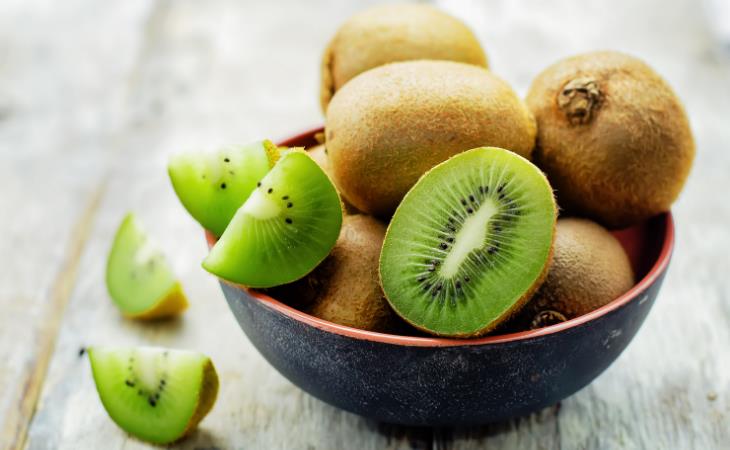
The delicious, tangy, green kiwi, which originated in China and is now grown in tropical regions throughout the world, is also loaded with a surprising amount of vitamin C. One kiwi fruit contains 56 mg of vitamin C, and a cup of sliced, green kiwis gives you 167 mg of vitamin C. Not many know that kiwis contain almost three times the amount of vitamin C found in oranges and strawberries. Plus, it provides a healthy amount of vitamin K in addition to potassium and vitamin E. 
 
Kiwis are available in abundance during the winter season. Consume them daily to boost your vitamin C intake and strengthen your immunity. Did we mention that you should eat the brown and fuzzy skin of a kiwi too? Research indicates that eating the skin of a kiwi can increase its fiber content by 50% and raise its vitamin E concentration by 34%!

5. Grapefruits

Grapefruit
Grapefruit, like other citrus fruits, is normally available all year, although its peak season is from late fall to early spring. This sweet, tangy, juicy fruit is grown in the U.S. primarily in California, Texas, Florida, and Arizona. Grapefruit is another terrific source of vitamin C, with one medium-sized fruit containing 98% of your daily value for vitamin C as well as 79% of your daily value for vitamin A. It also contains lycopene, which has antioxidant properties and may play a role in reducing the risk of certain types of cancer, most notably prostate cancer, research suggests. 
 
6. Winter Melons

 Winter melon, or ash gourd
Winter melon, or ash gourd, is a mild-tasting oblong fruit that's native to South and Southeast Asia but is also available in the USA. A 100-g portion of raw ash winter melon offers 14% of your daily value for vitamin C along with 3 g of fiber. 
 
Winter melon is also rich in flavonoids and carotenes, two antioxidants that may help protect your body from cell damage and conditions such as type 2 diabetes and heart disease.

7. Kumquats

Kumquats
Kumquats, which resemble tiny, oblong oranges, are tangy citrus fruits with a sweet-tart flavor. Native to Asia, these delightful small fruits were eventually cultivated in North America and are most widely grown in Florida, Louisiana, Alabama, and California. 
 
Sometimes called “Winter Citrus,” this fruit is chock-full of vitamin C and dietary fiber. A 100-g serving of kumquats contains 73% of your Recommended Dietary Intake of vitamin C and 6.5 g of fiber. Kumquats are also cholesterol-free and low in fat and sodium. Additionally, this winter citrus fruit is high in water, making it a weight-loss-friendly food. 
 

During the winter months, kumquats are among the most affordable, fresh, and readily available fruits. Head over to your nearest grocery store and try them today!


This is only for your information, kindly take the advice of your doctor for medicines, exercises and so on.   

https://gscrochetdesigns.blogspot.com. one can see my crochet creations  
https://gseasyrecipes.blogspot.com. feel free to view for easy, simple and healthy recipes    
https://kneereplacement-stickclub.blogspot.com. for info on knee replacement

https://GSiyers home remedies.blogspot.com     is my latest addition to my blogs. I'm going to add posts there, do give me your valuable feed back on my blogs. Thanks a lot, take care, be healthy and be happy.


Labels: , , , , , , , , , ,

Friday, September 16, 2022

The Best and Worst Skincare Ingredients According to Derms

The world of skincare is very susceptible to trends. As a result, the risk of picking up skincare products that are completely mismatched with your skin’s needs just because they’re trendy or “natural” is pretty high. But remember - trends come and go, but you only have one skin your entire life. Hence, it’s much cleverer to stick to well-studied, effective skincare that you know your skin loves and needs. 
 
To find these optimal products for you, dermatologists recommend examining the ingredients list of your skincare and picking products with active ingredients aligned with your needs. For example, if you struggle with hyperpigmentation, you need products that will brighten and even out your skin tone. 
 
Below we list 10 effective skincare ingredients and another 5 that dermatologists recommend staying away from. We list the benefits of each ingredient, explain how these ingredients can help the skin, and point towards types of products that typically contain these ingredients.  
 
Retinoids

If you’ve ever researched anti-aging skincare, you’ve likely heard of retinol. This active ingredient is an over-the-counter version of vitamin A, and it’s often called the “gold standard of anti-aging skincare.” Retinol is a retinoid, and so are retinal, tretinoin, and other retinol derivatives. All of these vitamin A products work in a similar way, speeding up the natural skin turnover cycle on a cellular level. 
 
Apart from wrinkle prevention, vitamin A products can diminish fine lines and treat acne. A 2017 study suggests that retinol can treat acne and reduce skin inflammation, whereas an experiment from 2016 supports the “anti-aging” benefits of retinol. 
 
Retinol is present in all kinds of skincare products - from eye creams to serums, oils, and facial moisturizers. Tretinoin and some other retinoids are not available over-the-counter; gels containing tretinoin can only be prescribed by a doctor. The only exclusion to that rule in the US is Differin gel - a retinoid available without a prescription.

Niacinamide
Vitamin B3, or niacinamide, is a rising star in the skincare world, and for good reason. This stable, cell-communicating ingredient has several benefits for the skin, namely: 
 
Minimizes the appearance of fine lines and wrinkles 
 
Reduces redness Evens out the skin tone 
 
Diminishes acne
 
Provides anti-inflammatory properties 
 
Boosts your sunscreen’s UV protection 
 
Lessens skin oil production and refines the appearance of pores. 
 
So who will benefit from this ingredient? According to a 2021 review, this ingredient can help you address a number of skin concerns, from hyperpigmentation to skin redness, wrinkles, overly oily skin, and acne. Since niacinamide is a very stable ingredient, it’s readily available in countless skincare products, including moisturizers and serums.  
 
Green tea extract
Rich in EGCG and many other antioxidants, green tea is a great drink to enjoy. But these very same antioxidants are also beneficial for the skin. A concentrated (and often fermented) form of green tea called green tea extract is very hydrating and soothing for the skin. It also helps reduce skin redness and protects the skin from the sun’s UV radiation and its harmful effects. A 2019 study also suggests that green tea extract has anti-aging benefits. 
 
You can use strong lukewarm green tea as a hydrating toner. However, the benefits of skincare products containing green tea extract will be more concentrated and potent. Skin toners and many skincare products for the eye area, such as eye cream or eye patches, often contain green tea extract.  
 
Azelaic acid
Don’t be frightened by the word ‘acid’ in this ingredient. This active skincare ingredient is never harsh or irritating on the skin. On the contrary, azelaic acid has potent anti-inflammatory properties, and it’s widely used to treat acne and rosacea (a skin condition that causes blushing, redness, and visible blood vessels in the skin of the face). 
 
According to a 2022 review study, azelaic acid is an effective rosacea treatment and an ingredient that’s beneficial for acne. Another study from 2020 also suggests that azelaic acid is just as effective as tretinoin but less effective than benzoyl peroxide at treating acne. However, unlike the latter, azelaic acid is less likely to dry out and irritate the skin. 
 
This ingredient can be found at a concentration of 10 percent or less in over-the-counter treatments, such as facial moisturizers, lotions, toners, and serums. Products with 15 percent azelaic acid can only be prescribed by a dermatologist. 
 
Please note that azelaic acid doesn’t exfoliate the skin as well as some other acid ingredients. If you’re looking for an exfoliating acid,
 
Zinc
Zinc is a mineral we need in our diets to stay healthy. Among the many health benefits of zinc is its anti-inflammatory effect on the skin and faster wound healing. For this reason, zinc is present in many skincare products formulated to treat acne, rosacea, and eczema. 
 
Zinc eradicates the P. acnes bacteria that cause pimples and reduces skin oiliness too, making it a great ingredient to prevent or reduce acne. A 2014 review study also suggests that applying zinc topically can help treat eczema and rosacea. 
 
Although few skincare ingredients will advertise having zinc on the bottle, you can turn to the ingredients list and often find it there.  
 
Peptides
Peptides are the amino acids that make up our skin cells. These days, scientists have started making peptides that are easily absorbed by the skin in the lab. Applying products with peptides on the skin can boost the production of collagen, elastin, and hyaluronic acid, which, in turn, slows down the signs of aging and give you stronger, firmer skin. 
 
Smaller studies confirm that applying products with peptides in them for 2 weeks or more can reduce the appearance of wrinkles. So, if you’re concerned with aging skin, pick up a cream with peptides in it. The name ‘peptide’ is often part of the ingredient in the INCI list. Some examples include Palmitoyl oligopeptide, Tripeptide 1, and Palmitoyl pentapeptide (also known as Matrixyl 3000).  
 
Ceramides
Ceramides are another group of ingredients that mimic the natural compounds of the skin. These are skincare ingredients that have the shape of fatty acids naturally produced by the skin. When applied to the skin, ceramides help moisturize and protect the skin from environmental pollutants, dry air, and cold or hot weather. 
 
Ceramides will not clog pores, so they can be used by any skin type, but people with a weak skin barrier and those with dry skin will notice greater benefits from ceramide moisturizers. According to a 2020 research paper, people with eczema have found that applying a lotion with ceramides to the affected areas improved skin hydration and relieved skin dryness. 
 
Like peptides, these ingredients are mainly easy to spot in an ingredients list, as they contain the word ‘ceramide.’ Ceramide 1, ceramide 6, and phytosphingosine are just 3 examples of many existing ceramides in skincare products. 
 
Thermal water
Never heard of thermal water? This ingredient is a classic in French skincare (and you know you can trust French women to know their skincare). Thermal water is mineral-rich water that improves skin suppleness, protects the skin from free radicals, and reduces skin irritation and redness. There’s also some evidence suggesting it can balance the skin’s microbiome, which is why many people with eczema and psoriasis find that thermal water helps calm their skin. 
 
Using thermal water is easy. Simply spray your face with thermal water to cool off and rehydrate throughout the day, or use it as a hydrating toner after washing your face but before applying moisturizer. Last but not least, misting the skin with thermal water on a flight works great too. 
 
Hyaluronic acid
Hyaluronic acid is another very famous skincare ingredient. You may have even heard that this hydrating ingredient can retain up to 1,000 times its weight in water, which is true. This means that it’s super hydrating for the skin, and dermatologists say that it can make your skin appear plumper too. 
 
Hyaluronic acid is naturally produced in the body, but with age, we produce less and less of it, which can make your skin appear parched. Adding some topical hyaluronic acid through a hydrating serum or moisturizer will help restore its natural levels in the skin. 
 
 According to a 2021 experiment, middle-aged women noticed improved skin smoothness, hydration, and plumping, as well as a reduction in fine lines and wrinkles when they used hyaluronic acid topically on a daily basis.  
 
Vitamins C and E
Vitamin C is often advertised as one of the most potent brightening and anti-aging skincare ingredients. But few people are aware that it works best when it’s combined with its less glamorous sister ingredient - vitamin E. So, what do these two vitamins do for your skin, and why are they best used in tandem? 
 
Vitamin C - ascorbic acid and its derivatives, such as ascorbyl palmitate - is a potent antioxidant that protects your skin from damage, maintains collagen production, and helps fade hyperpigmentation (such as sun spots and acne scars). This makes vitamin C an excellent ingredient for mature skin. According to a 2017 research paper, applying vitamin C to the skin has an anti-aging effect. 
 
Vitamin E is also a strong antioxidant. It protects the skin from environmental damage and makes your skin’s barrier more resilient. When combined with vitamin C, vitamin E can reduce your risk of sun damage, hyperpigmentation, and skin cancer according to a 2016 research paper. 
 
That is why you’ll often find these two ingredients in facial sunscreens and anti-aging serums. Do keep in mind, however, that you don’t have to apply these ingredients to the skin to reap their benefits. Getting them through consuming plenty of vegetables and fruit works just as well, if not better. 
 
Should I avoid any specific skincare ingredients?
Dermatologists say that the skincare ingredients you need will largely depend on your skin type. Even those tried and tested ingredients we list above don’t work for everyone. So the best course of action is to try a variety of ingredients, one at a time, and see what works and what doesn’t. 
 
That being said, there are certain ingredients generally known to irritate and harm the skin. These include: 
 
Synthetic fragrance and coloring are known skin irritants. Skip them. 
 
Coconut oil is great for the hair and body, but on the face, it can clog your pores and cause acne. 
 
Essential oils - these can be irritating, and you can build up a skin allergy to certain oils, especially citrus, bergamot, and lavender essential oil. 
 
Propylene glycol - this preservative is used to extend the shelf-life of skin-care products, but it’s irritating so often that the Contact Dermatitis Society called it the 2018 Allergen of the Year. 
 
Note that we didn’t mention all common and effective skincare ingredients in this list. These are just some of the most well-researched, effective, and non-irritating ingredients backed by dermatologists.

This is only for your information, kindly take the advice of your doctor for medicines, exercises and so on.   

https://gscrochetdesigns.blogspot.com. one can see my crochet creations  
https://gseasyrecipes.blogspot.com. feel free to view for easy, simple and healthy recipes    
https://kneereplacement-stickclub.blogspot.com. for info on knee replacement

Labels: , , , , , , , , , , ,