Tuesday, February 16, 2021

8 Common Thyroid Dysfunctions and What Causes Them

The thyroid is a gland inside of our necks, just below the Adam’s apple (in men), which is an incredibly important part of our endocrine (hormonal) system that helps regulate our metabolism, manages protein synthesis, growth and more. Of course, just because it affects mainly physiological processes in the body doesn’t mean it ends there, as energy production through metabolism has a profound effect on our brains.
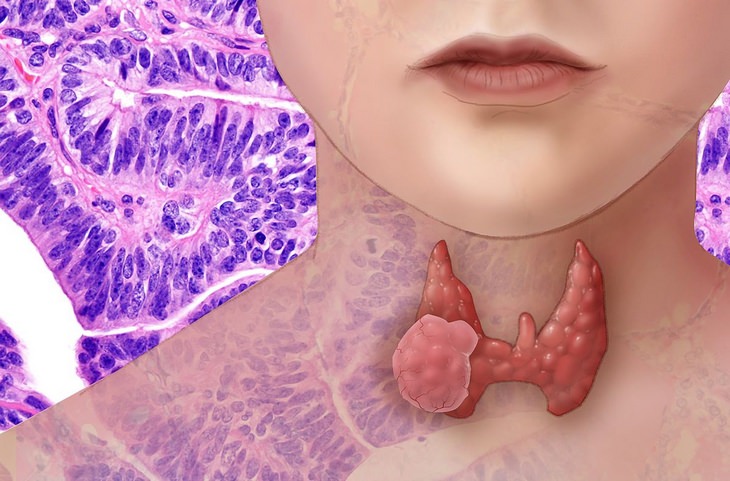
Around one in eight people have a thyroid disorder. Of these, a majority are unaware they have it, and a huge majority are women. Why are women more susceptible? Because most thyroid disorders are caused by autoimmune diseases, which disproportionately affect women. Because thyroid problems often have numerous nonspecific symptoms, they are very easily misdiagnosed. 
 
1. Hypothyroidism
Hypothyroidism is a disorder that manifests in reduced activity in the thyroid gland. Because one of the main functions of the thyroid is regulating metabolism, an underactive gland causes slower metabolism. This, in turn, may cause inexplicable weight-gain, loss of appetite, constipation, dry and flaky skin, hair thinning, sensitivity to cold and depression. 
 
In developing countries, the leading cause for hypothyroidism is a lack of dietary iodine, while in developed countries, hypothyroidism is typically associated with an autoimmune disease. 
 
2. Hyperthyroidism 
As you can probably tell by the name, this condition is the opposite of hypothyroidism and describes an overactive thyroid gland. Unsurprisingly, the symptoms of hyperthyroidism are nearly an exact mirror image of hypothyroidism: weight loss that is not tied to diet or activity and paired with an increased appetite, frequent diarrhea, irritability, confusion, an increased heartbeat, hand tremors, heat intolerance, sleep disorders, and mood swings. 
 
Like hypothyroidism, the chief culprit behind hyperthyroidism are autoimmune diseases, and so it affects females to a much greater extent than men, but it also appears to be hereditary and can be caused by too much iodine in the diet. 
 
3. Goiter   Thyroid disorders: goiter
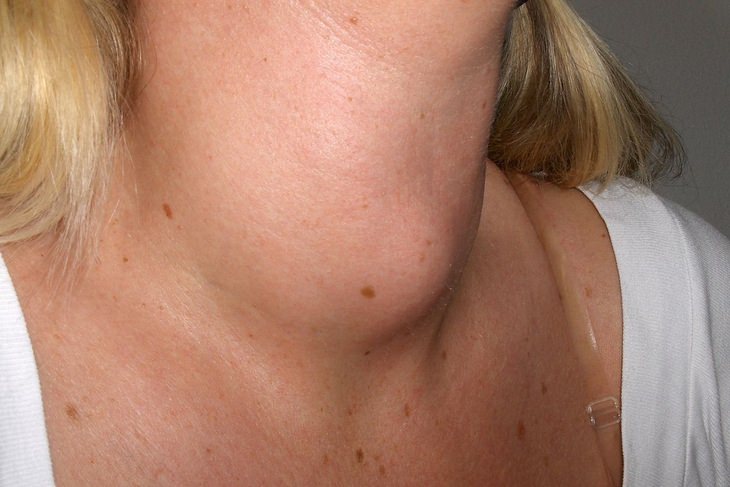
Rather than a thyroid disorder in and of itself, goiter is a symptom of other thyroid diseases. Goiter is a swelling of the neck due to an enlarged thyroid gland which can be caused by any thyroid disorder, but not having goiter doesn’t rule out a thyroid disorder. 
 
It can present itself as a slight swelling of the neck, as a grapefruit-size globular swelling, or as several smaller balls in the neck. Goiter is typically painless, but a large goiter can make eating and breathing difficult. 
 
4. Thyroid storm 
Thyroid storm is a rare and life-threatening complication of an overactive thyroid (hyperthyroidism), which causes high fever, vomiting, and hypertension in early stages, followed by dramatically low blood pressure and circulatory shock in later stages. Thyroid storm could result in heart failure or heart attack. 
 
Thyroid storm could be triggered by any number of conditions that aren’t related to the thyroid, such as blood poisoning, fever, dehydration and more. People are at larger risk of a thyroid storm if they leave their hyperthyroidism untreated or if they discontinue their hyperthyroidism treatment.
 
5. Hashimoto’s disease  Thyroid disorders: Hashimoto's disease thyroiditis
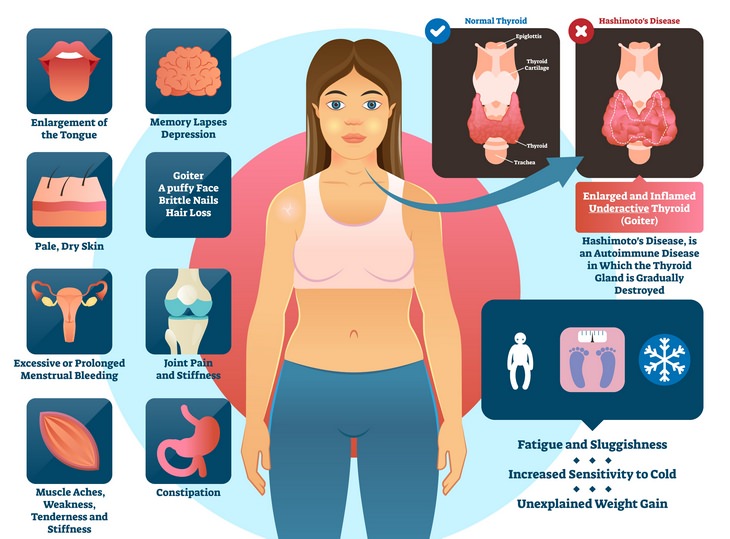
Perhaps the leading cause of hypothyroidism in the west is Hashimoto’s disease, an autoimmune disease that causes the immune system to actively attack the thyroid gland. Though this may cause swelling in the thyroid (and goiter as a result), the overall effect is a gradual shrinking of the thyroid until its destruction. 
 
As an autoimmune disease, Hashimoto’s disease is more common among people who suffer from other autoimmune diseases, specifically type 1 diabetes, celiac disease, vitiligo, and alopecia, but it is also genetic and could be inherited. 
 
6. Graves’ Disease  Thyroid disorders: Grave's disease bulging eyes
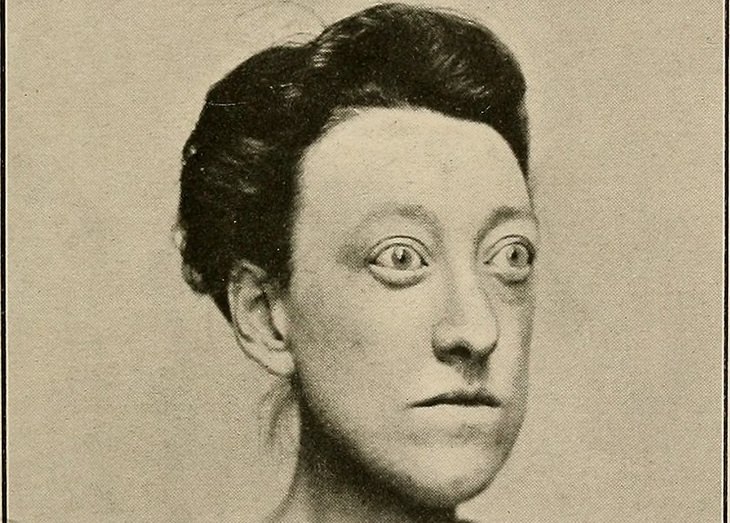
Another autoimmune disease, Graves’ is the most common cause behind hyperthyroidism and can be initially triggered by stress, infection or childbirth. Additional symptoms of Graves’ are discolored, swollen shins with lesions or nodules, as well as eyes that bulge out. 
 
Much like Hashimoto’s, people suffering from a preexisting autoimmune disease are more likely to develop Graves’ disease, and conversely, those with Graves’ are more likely to develop unrelated autoimmune conditions. There also appears to be a genetic factor. 
 
7. Thyroid nodules  Thyroid disorders: thyroid nodules
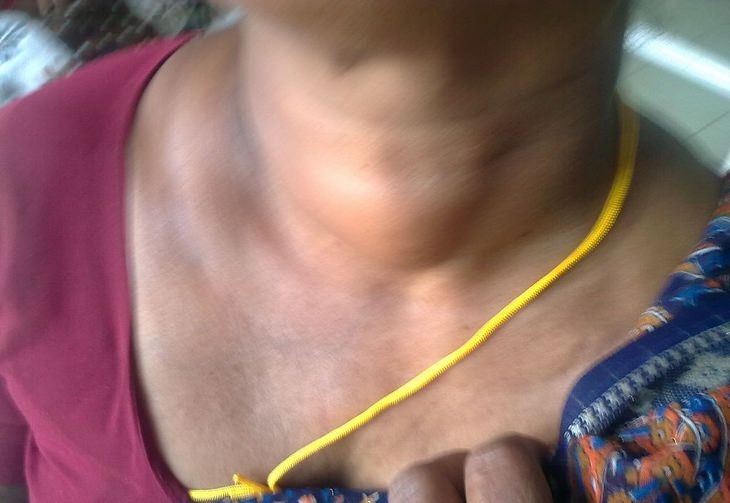
The most common thyroid problem and the cause of the least concern are nodules in the thyroid gland. These can be asymptomatic and imperceptibly small or present as lumps in the throat. In the case of goiter, one or more lumps are indicative of nodules. Only 5% of thyroid nodules are malign. 
 
Problems swallowing or speaking and a hard, immobile lump are more indicative of malignancy, while a family history of autoimmune diseases and thyroid conditions accompanied by a nodule that is soft and painful are all signs of the nodule being benign. 
 
Thyroid nodules are extremely common, with about 50% of people having a nodule at some point in their life. Other thyroid conditions, such as Hashimoto’s and Graves’ will often cause nodules as well. 
 
8. Thyroid cancer 
 Thyroid disorders: thyroid cancer                                 Source: National Human Genome Research Institute (NHGR

Most types of thyroid cancer have an excellent prognosis and are very manageable, as they do not tend to metastasize. Though not overly common, diagnosed cases are on the rise, but that may very well be due to better detection, rather than the cancer being on the rise. 
 
The lack of detection in the past may be due to a lack of complaints from patients, who did not realize something was wrong to begin with. There are four types of thyroid cancer: 
 
Papillary 
Follicular 
Medullary 
Anaplastic. 
 
Of those, only anaplastic thyroid cancer, which is an extremely rare, fast-acting and metastasizing type of cancer, is of great concern. For the other three types of cancer, the survival rate over five years is 90% and 84% over ten years.

This is only for your information, kindly take the advice of your doctor for medicines, exercises and so on.     

https://gscrochetdesigns.blogspot.com. one can see my crochet creations  
https://gseasyrecipes.blogspot.com. feel free to view for easy, simple and healthy recipes    
https://kneereplacement-stickclub.blogspot.com. for info on knee replacement


Labels: , , , , , , , , , , , ,

Friday, March 27, 2020

Is Pink Eye a Symptom of Coronavirus? Eye Doctors Say Conjunctivitis Could Be Rare Early Sign

As the number of COVID-19 cases continue to rise in the US, so too do the reported symptoms that are caused by the coronavirus—most recently, according to experts, conjunctivitis, otherwise known as pink eye, or an irritation of the eye that causes redness, swelling, and sometimes discharge.

In an alert updated on Tuesday, the American Academy of Ophthalmology (AAO) reported that coronavirus "can cause a mild follicular conjunctivitis otherwise indistinguishable from other viral causes." The organization went on to explain that the conjunctivitis—which affects an estimated 1-3% of those with COVID-19—is possibly transmitted by "aerosol contact with the conjunctiva," or the mucous membrane that covers the eye.

It's not uncommon for a viral illnesses to show up in the eyes. "Many viral illnesses can affect the eye, typically causing a follicular type of conjunctivitis," Vicente Diaz, MD, a Yale Medicine ophthalmologist, tells Health. "We are learning that COVID-19 can affect the conjunctiva in a low percentage of people," he says, adding that, in those who have these ocular symptoms, the eye's secretions may also be able to transmit the virus.

The AAO's alert included two published reports, which suggest the link between COVID-19 and conjunctivitis. The first, a small February 2020 study in the Journal of Medical Virology, which found that one patient among 30 who had been hospitalized in China for COVID-19 had conjunctivitis, and had coronavirus (SARS-CoV-2) in their ocular secretions. The other larger study, published in February 2020 in the New England Journal of Medicine, claimed that, of 1,099 patients across 30 different Chinese hospitals, nine had "conjunctival congestion."

The AAO also referenced reporting from CNN, which highlighted a registered nurse from a Washington-based nursing home, who shared that visibly red eyes were common among elderly patients who went on to become sick with COVID-19.

While the AAO says that conjunctivitis or pink eye may be an uncommon but still present symptom of COVID-19, it's also important to remember that many other things can cause conjunctivitis as well, like other viruses, bacteria, and even allergies—the last of which would be a much more likely cause of pink eye right now, with spring allergy season upon us, says Dr. Diaz.

If you do have symptoms of conjunctivitis—coupled with respiratory symptoms and a fever—call your physician first before you go in because you might be COVID-19 positive, urges Kevin Lee, MD, an eye physician and surgeon from the Golden Gate Eye Associates within the Pacific Vision Eye Institute. The AAO also warned eye doctors and emergency physicians that, the presence of conjunctivitis "increases the likelihood ophthalmologists may be the first providers to evaluate patients possible infected with COVID-19."

For the rest of us, this information should serve as a reminder that the virus can spread via eye droplets. “Crying and other ocular secretions can also transmit the virus, if a person is COVID-19 positive,” says Dr. Lee. Obviously, this isn’t the time to share makeup or other cosmetics with your friends or family. “To avoid possible transmission, do not share cosmetics or eye drops,” Dr. Lee adds.

And again, diligent hand washing hygiene is key. “People don’t realize how often they touch their face, so please be cognizant,” says Dr. Lee. “Avoid rubbing your eyes or touching your face especially after contact with public surfaces.”

The information in this story is accurate as of press time. However, as the situation surrounding COVID-19 continues to evolve, it's possible that some data have changed since publication. While Health is trying to keep our stories as up-to-date as possible, we also encourage readers to stay informed on news and recommendations for their own communities by using the CDC, WHO, and their local public health department as resources.


This is only for your information, kindly take the advice of your doctor for medicines, exercises and so on.     

https://gscrochetdesigns.blogspot.com. one can see my crochet creations  
https://gseasyrecipes.blogspot.com. feel free to view for easy, simple and healthy recipes    
https://kneereplacement-stickclub.blogspot.com. for info on knee replacement

Labels: , , , , , , , ,

Tuesday, June 26, 2018

Types of Immunotherapy for Lymphoma

Your specialist may talk to you about using immunotherapy to help treat your lymphoma. It’s a new type of cancer treatment that works with your natural immune system to find and kill cancer cells in your body.
These are the different kinds of immunotherapy you may get for lymphoma:
  • Monoclonal antibodies
  • Immunomodulating drugs
  • Immune checkpoint inhibitors
  • CAR T-cell therapy

Monoclonal Antibodies

Your doctor will get your lymphoma cells tested to see if they have certain markers -- proteins called antigens. You’ll get a monoclonal antibody drug that aims at the antigens found on your lymphoma cells.
Monoclonal antibodies are made in a lab. They’re designed to lock onto certain antigens that cancer cells make too much of. This means that they affect mostly cancer cells with little damage to normal cells.
Monoclonal antibodies can work in -
 1. They keep cancer cells from growing by blocking signals sent out by the cancer cells. Blocking the signals stops these processes of the cancer cells growing.

2. They can also bind to the cancer cells and trigger your immune system to kill them. They may do this by marking the cells so your immune system attacks them. Or they can block the signals the cancer cells send out to tell your immune system to leave them alone.

3. Monoclonal antibodies can be attached to toxins, chemo, or radioactive substances. They then carry these cell-killing materials to the cancer cells and lock onto the antigen. This leads to the death of the cancer cells, with little to no effect on your normal cells that don’t have the antigen.

Here are some of the ways monoclonal antibodies can be used, depending on the type of lymphoma you have:
Follicular lymphoma: If you have a large stage I or II, or a certain kind of stage III or IV follicular lymphoma, your first treatment will likely be rituximab and chemo. You might get radiation, too. Then, if the lymphoma shrinks or goes away, you may get rituximab alone as maintenance therapy.
You can get rituximab alone or along with different chemo if the lymphoma comes back after treatment or stops responding to the treatment you’re getting.
Ibritumomab (Zevalin) or obinutuzumab (Gazyva) are other monoclonal antibodies you might get instead of rituximab.

Mantle call lymphomas: You might get rituximab along with chemo as the first treatment for mantle cell lymphoma. You can also get rituximab as maintenance treatment or if the lymphoma comes back.

Diffuse large B-cell lymphoma: You will get rituximab along with chemo for any stage of diffuse large B-cell lymphoma (DLBCL). You may also get radiation afterward.
You may get a monoclonal antibody called pembrolizumab (Keytruda) if the lymphoma comes back or doesn’t respond to the treatment with rituximab.

Burkitt lymphoma: Doctors can use rituximab to treat Burkitt lymphoma as your first treatment or as a later treatment. You’ll get it along with chemo.

Marginal zone lymphomas: Both gastric and non-gastric MALT lymphomas can be treated with rituximab. So can nodal and splenic marginal zone lymphomas. If you have any stage of one of these cancers, you might get rituximab, often along with chemo, as one of your treatments. You may also get it if the cancer comes back.

Rituximab, alone or with chemo, might be the first treatment you get for lymphoma in your skin (cutaneous B-cell lymphoma). Doctors can also combine it with the drug hyaluronidase (this is called Rituxan Hycela) and give it as a shot right into the skin lymphoma if it’s only in one area.

You might get a different monoclonal antibody, brentuximab vedotin (Adcetris), by IV if other treatments haven’t worked. Alemtuzumab (Campath) is another option if the lymphoma comes back after other treatments. You might get it by IV or as a shot into the skin lymphoma.

Hodgkin's lymphoma: You may get a monoclonal antibody called brentuximab vedotin (Adcetris) if you can’t have a stem cell transplant or classic Hodgkin's lymphoma comes back after treatment. You might get this as part of your first treatment if you have certain symptoms and blood test results. This drug binds to the CD30 antigen, which is common on Hodgkin's lymphoma cells. It’s attached to a chemo drug, which then kills the cell.

You can get rituximab along with chemo and radiation if you have early stage nodular lymphocyte predominant Hodgkin's disease (NLPHD) that’s causing symptoms or large tumors. You can also get it if you have more advanced-stage NLPHD, either alone or with chemo, and maybe radiation.

T-cell lymphomas: If your lymphoma stops responding to chemo, your doctor may talk to you about trying the monoclonal antibody called alemtuzumab (Campath) or brentuximab vedotin (Adcetris).

Immunomodulating Drugs

These drugs help your immune system work better, but doctors don’t know exactly how they work. The two drugs used are thalidomide (Thalomid) and lenalidomide (Revlimid).
You may get one of these drugs if you have one of these types of non-Hodgkin's lymphoma (NHL): a T-cell lymphoma; or a follicular, marginal zone, mantle cell, or diffuse large B-cell lymphoma. You might also get one of these drugs if you have Hodgkin's lymphoma that hasn’t responded to other treatments or that came back after treatment.
You can only get these drugs if you agree to take special precautions to prevent pregnancy because they cause severe birth defects.

Immune Checkpoint Inhibitors

Cells have proteins on them called checkpoints. They help your immune system know the difference between good and bad cells. Lymphoma cells can make these checkpoints and trick your immune system into not killing them. These drugs help keep this from happening.
For example, PD-1 is a checkpoint on your T cells. When it binds to the protein called PD-L1 on another cell, the T cell is stopped from killing that cell. Your Hodgkin's lymphoma cells may make a lot of PD-L1. This tells your T cells to leave them alone. There are drugs that can block PD-1. This means your T cells aren’t turned off and your immune system can attack the cancer cells.

Classic Hodgkin's lymphoma: If the lymphoma has continued to grow while you’re getting other treatment that includes a monoclonal antibody, nivolumab (Opdivo) may be an option.
If you have a stage III or IV Hodgkin's lymphoma that’s not responding to chemo or monoclonal antibodies, or has come back after a transplant, nivolumab or pembrolizumab (Keytruda) might be helpful.

CAR T-Cell Therapy

This is a very new treatment used for some types of B-cell lymphoma. CAR stands for chimeric antigen receptor. CARs are designed to lock onto antigens found on your lymphoma cells. Each patient has their own CAR T cells made just for them.

To do this, you get some T cells filtered out of your blood to make CARs in a lab. These cells are multiplies and injected back, so that the CAR T cells travel through your blood to find, lock onto, and kill the cancer cells. They continue to grow and multiply in your body so that CAR T cells can go on to kill cancer cells for months, or maybe even years.

Your doctor may talk to you about CAR T-cell therapy if you have diffuse large B-cell lymphoma (DLBCL) that’s not responding to other treatments. It’s also approved to treat relapsed or refractory primary mediastinal large B-cell lymphoma, high grade B-cell lymphoma, and DLBCL arising from follicular lymphoma.

THIS IS ONLY FOR INFORMATION, ALWAYS CONSULT YOU PHYSICIAN BEFORE HAVING ANY PARTICULAR FOOD/ MEDICATION/EXERCISE/OTHER REMEDIES.                                                                                                                                                                                                        PS- THOSE INTERESTED IN RECIPES ARE FREE TO  VIEW MY BLOG-                                                                                           https://gseasyrecipes.blogspot.com/  

FOR INFO ABOUT KNEE REPLACEMENT, YOU CAN VIEW MY BLOG-                                                                                        https:// kneereplacement-stickclub.blogspot.com/                              
FOR CROCHET DESIGNS                                                                                                                                                                                                                                 https://gscrochetdesigns.blogspot.com


Labels: , , , , , , , , , ,

Monday, June 03, 2013

What is thyroid cancer?

In 2012, it was estimated that 42 million Indians are affected till date with thyroid cancer.

It is a growing trend among women to be affected with breast, gallbladder and thyroid cancer.  

Cancer prevention: What is thyroid cancer? 

The thyroid is a gland that lies in front of the windpipe (trachea), just below the voice box. The gland uses iodine from food to make thyroid hormones. When the normal cells in the Thyroid Gland change into abnormal cells and grow out of control spreading to another organ, it results in Thyroid Cancer. Although it is an uncommon form of cancer but there are different types of thyroid cancer like Papillary thyroid cancer (PTC), Follicular thyroid cancer (FTC), Medullary thyroid cancer (MTC), Anaplastic carcinoma and Thyroid lymphoma.

What are the symptoms of thyroid cancer?

Initially, people are unable to notice any symptoms at initial stages. But as a thyroid cancer grows and develops, it is more likely to cause symptoms like:

- Hoarseness in voice or being unable to talk
- Lump in the neck
- Enlargement of the neck
- Trouble in breathing
- Trouble in swallowing
- Coughing up blood

All of these symptoms can also be caused by conditions that are not thyroid cancer.

What are the causes of thyroid cancer?

Radiation exposure: the most important risk factor for the development of differentiated thyroid cancer is a history of radiation exposure during childhood. Potential sources of radiation exposure include medical uses of radiation (eg, treatment of childhood malignancies) or environmental exposure secondary to atomic weapons (eg, Nagasaki/Hiroshima, Japan), or nuclear power plant accidents (eg, Chernobyl). 

Family history: a history of thyroid cancer in a first-degree relative or a family history of a thyroid cancer syndrome increases the risk that a nodule may be malignant.

Other: there are a number of other possible (but not proven) risk factors that have been reported. Their relative importance appears to be small, but not completely defined. Potential risk factors include the following:
- Occupational and environmental exposures
- Hepatitis-C-related chronic hepatitis
- Increased parity and late age during the first pregnancy

 the treatments for thyroid cancer

Thyroid cancer is usually treated in the following ways:

Surgery: In most cases, thyroid cancer is treated with surgery to remove the cancer. Doctors remove a part or all of your thyroid gland. At times the nearby lymph nodes are also removed, which are bean-shaped organs that help in the body's infection-fighting system.

Radioactive iodine: Radioactive iodine (also called "radio iodine therapy") comes in the form of a pill or liquid that can be swallowed. It has a small amount of radiation and can destroy much of the thyroid gland.

Thyroid hormone: Doctors prescribe thyroid hormone medicines after surgery or radioactive iodine treatment. That way, the body receives the correct amount of thyroid hormone.

External-beam radiation therapy: This treatment uses high doses of X-rays, called radiation, to kill cancer cells. The radiation comes from a machine that is outside the body.

Chemotherapy: Chemotherapy is a drug treatment that uses chemicals to kill cancer cells. It is typically given as an infusion through a vein. Although, Chemotherapy is not commonly used in the treatment of thyroid cancer, but it may benefit some people who don't respond to other, more standard therapies.

Finally , "To avoid the cancer from coming back after a treatment, regular follow-up tests including examinations, blood tests, and imaging tests are a must. Doctors will also perform regular follow-up blood tests to keep a check on the thyroid hormone levels."

Labels: , , , , , , , , , , , , ,