Monday, February 19, 2018

Blood, urine tests can detect autism in kids

Scientists have developed new blood and urine tests that can diagnose autism in children, allowing patients to get appropriate treatment much earlier in their lives. Autism spectrum disorders (ASD) are defined as developmental disorders mainly affecting social interaction and they can include a wide spectrum of behavioural problems. These include speech disturbances, repetitive and/or compulsive behaviour, hyperactivity, anxiety, and difficulty to adapt to new environments, some with or without cognitive impairment. Since there is a wide range of ASD symptoms diagnosis can be difficult and uncertain, particularly at the early stages of development. "Our discovery could lead to earlier diagnosis and intervention," said a researcher. "We hope the tests will also reveal new causative factors. With further testing we may reveal specific plasma and urinary profiles or "fingerprints" of compounds with damaging modifications," said the researcher. "This may help us improve the diagnosis of ASD and point the way to new causes of ASD," she said. The study found a link between ASD and damage to proteins in blood plasma by oxidation and glycation - processes where reactive oxygen species (ROS) and sugar molecules spontaneously modify proteins. They found the most reliable of the tests they developed was examining protein in blood plasma where, when tested, children with ASD were found to have higher levels of the oxidation marker dityrosine (DT) and certain sugar-modified compounds called "advanced glycation endproducts" (AGEs). Genetic causes have been found in 30-35 per cent of cases of ASD and the remaining 65-70 per cent of cases are thought to be caused by a combination of environmental factors, multiple mutations, and rare genetic variants. However the research team also believe that the new tests could reveal yet to be identified causes of ASD. The research also confirmed the previously held belief that mutations of amino acid transporters are a genetic variant associated with ASD. Researchers, recruited 38 children who were diagnosed with ASD (29 boys and nine girls) and a control group of 31 healthy children (23 boys and eight girls) between the ages of five and 12. Blood and urine samples were taken from the children for analysis. The team discovered that there were chemical differences between the two groups. The changes in multiple compounds were combined together using artificial intelligence algorithms techniques to develop a mathematical equation or "algorithm" to distinguish between ASD and healthy controls. The outcome was a diagnostic test better than any method currently available.

THIS IS ONLY FOR INFORMATION, ALWAYS CONSULT YOU PHYSICIAN BEFORE HAVING ANY PARTICULAR FOOD/ MEDICATION/EXERCISE/OTHER REMEDIES.    
PS- THOSE INTERESTED IN RECIPES ARE FREE TO VIEW MY BLOG-                      
HTTP:GSEASYRECIPES.BLOGSPOT.COM/
FOR INFO ABOUT KNEE REPLACEMENT, YOU CAN VIEW MY BLOG-                                                     
HTTP://KNEE REPLACEMENT-STICK CLUB.BLOGSPOT.COM/
FOR CROCHET DESIGNS

HTTP://MY CROCHET CREATIONS.BLOGSPOT.COM

Labels: , , , , , , , , , , , ,

Tuesday, January 16, 2018

How preterm birth may impact language skills

Altered development of a part of brain region essential to hearing and understanding sound in preterm infants is associated with poorer language skills in early childhood, a study has found. 

The neural machinery that supports hearing is typically functional by 15 weeks before birth, making babies sensitive to speech and language while they are still in the womb. However, the developmental disturbances to auditory cortex may underlie speech and language impairments at age 2, the researchers said.

The team focused on the primary auditory cortex -- which is the first cortical region to receive auditory signals from the ears via other parts of the brain -- and the non-primary auditory cortex -- which plays a more sophisticated role in processing those stimuli.

The analysis revealed that the primary auditory cortex matures earlier but more slowly than the non-primary auditory cortex, which changes rapidly in the last 10 weeks of the typical gestation period. Developmental differences in the non-primary auditory cortex of preterm infants were associated with reduced expressive language ability, such as gesturing and vocabulary, in a follow-up assessment at two years of age.

"We have a pretty limited understanding of how the auditory brain develops in preterm infants," said lead author at the varsity.


"We know from previous research on full-term newborns that not only are foetuses hearing, but they're also listening and learning," the author added.

For the study, the team examined 90 premature infants born prior to 30 weeks gestation, and 15 full-term babies. The team used diffusion neuro-imaging to study development of the auditory cortex in the infants' brains.

"This technique measures the diffusion of water in the brain tissues, which can tell you a lot about the development of neurons and axons," the Dr. said.

"It's exciting to me that we may be able to use this technique to help predict later language ability in infants who are born preterm," the Dr. noted. 


THIS IS ONLY FOR INFORMATION, ALWAYS CONSULT YOU PHYSICIAN BEFORE HAVING ANY PARTICULAR FOOD/ MEDICATION/EXERCISE/OTHER REMEDIES.    
 
PS- THOSE INTERESTED IN RECIPES ARE FREE TO VIEW MY BLOG-                      
HTTP:GSEASYRECIPES.BLOGSPOT.COM/
FOR INFO ABOUT KNEE REPLACEMENT, YOU CAN VIEW MY BLOG-                                                                       
HTTP://KNEE REPLACEMENT-STICK CLUB.BLOGSPOT.COM/
FOR CROCHET DESIGNS

HTTP://MY CROCHET CREATIONS.BLOGSPOT.COM

Labels: , , ,

Thursday, March 30, 2017

Fast-Food Wrappers Contaminated with Toxins Can Now Be Traced

The harmful effects of junk food is no hidden secret. But did you know that even the wrappers in which they are wrapped can put you at health risk? A shocking report that did the rounds in February revealed that most fast food packaging materials contained toxic chemicals that were contaminating the food we were consuming. It particularly highlighted greaseproof papers, which contained more than two dozen highly fluorinated chemicals, including phased-out substances, which may lead to developmental problems in children, decreased fertility and an increased risk of cancer. The question on everyone's mind was how to prevent the harmful health effects of consuming junk food. Now researchers from University of Alabama and the University of Notre Dame seem to have come up with a solution.

The scientists have found a new technique by which one can trace hazardous chemicals from fast food wrappers (bread, desserts, burgers and pizzas) that enter the human body. The technique enables researchers to radiolabel three forms of perfluorinated and polyfluorinated alkyl substances (PFAS) and track the fate of these chemicals when they enter the body.

This announcement comes as a good surprise, leaving many hopeful in identifying and tracking toxic substances, particularly PFASs (per- and polyfluoroalkyl substances), also known as PFCs, that come mostly from older, recycled materials or other undetermined sources. They are known to be harmful to the human body and were found to be used extensively in fast-food wrapping paper at many popular chain restaurants.


Tracing PFAS compounds is a difficult task. In the newly designed method, the scientists tried to do so by using radio tracers. One of the fluorine atoms on the PFAS molecule was replaced with a radioactive form of fluorine, the same radioisotope fluorine-18 that is used for medical positron emission tomography scans in hospitals around the world.

"For the first time, we have a PFAS tracer or chemical that we have tagged to see where it goes in mice," said senior author Suzanne Lapi. "Each of the tracers exhibited some degree of uptake in all of the organs and tissues of interest that were tested, including the brain. The highest uptake was observed in the liver and stomach, and similar amounts were observed in the femur and lungs."

Exposure to PFASs is linked to kidney and testicular cancer, elevated cholesterol, decreased fertility, and thyroid problems in adults. In children, it is said to have adverse effects on growth, learning and behaviour and decreased immune response to vaccines.

PFASs are also found in stain-resistant products, firefighting materials and nonstick cookware. They tend to easily contaminate the food.

"We are very excited about this technique, which borrows from our current work developing nuclear medicine imaging agents," said first author Jennifer Burkemper. "This work can enable rapid screening of PFAS compounds to gain key insights into their biological fate."

The study was published in the Journal of Environment Science and Technology.
 

this is only for your information, kindly take the advice of your doctor for medicines, exercises and so on. 
https://gscrochetdesigns.blogspot.com. one can see my crochet creations  
htps://gseasyrecipes.blogspot.com. feel free to view for easy, simple and healthy recipes 
https://kneereplacement-stickclub.blogspot.com. for info on knee replacement


Labels: , , , , , , , , ,

Wednesday, January 04, 2017

Can Parents' Weight Hinder Toddlers' Development?

Children who have obese parents may show signs of developmental delays, such as poor social skills, by the time they're 3 years old, a new study suggests.

The specific developmental problems seem to differ depending on whether the mother, father or both parents are obese, according to researchers from the U.S. National Institute of Child Health and Human Development.
"Specifically, mothers' obesity was associated with a delay in achieving fine-motor skills, and fathers' obesity in achieving personal and social skills -- that includes skills for interacting with others," said lead researcher Edwina Yeung. She's an investigator in the institute's division of intramural population health research.
"When both parents were obese, it meant longer time to develop problem-solving skills," she added.
However, one pediatric neurologist not involved with the research isn't convinced that the study authors proved their case.
And Yeung acknowledged the same. "We used observational data, which doesn't allow us to prove cause and effect, per se," she explained.
The researchers did find that, compared with children of normal-weight mothers, children of obese mothers were 67 percent more likely to fail a test of fine-motor skills (using their hands and fingers) by age 3.
In addition, children of obese fathers were about 71 percent more likely to fail tests of personal and social skills, which may indicate how well they relate to and interact with others, by age 3, the researchers said.
Children whose mother and father were both obese were nearly three times more likely to fail tests of problem-solving ability by age 3, the findings suggested.
According to Yeung, about 2 percent to 4 percent of the children failed any single test.
Yeung said she can't explain the apparent connection between parental obesity and kids' developmental problems. For maternal obesity, some animal studies have suggested that inflammation could affect the fetal brain, she said.
With paternal obesity, the effect on offspring might be due to either gene mutations or other inherited genetic factors in sperm, Yeung said.
Most research into understanding child health and development has focused on mothers and their pregnancies. "Our findings suggest that factors from fathers may also play a role and deserve attention," Yeung said.
The report was published online Jan. 2 in the journal Pediatrics.
One child health expert doesn't think obese parents should be overly concerned by this study.
"Children of obese parents are not doomed to have developmental problems," said Dr. Ian Miller. He is a pediatric neurologist and director of neuroinformatics at Nicklaus Children's Hospital in Miami.
Any medical condition that affects the brain -- such as lead-poisoning, sickle cell disease, iron-deficiency anemia, autism, epilepsy or cerebral palsy -- can cause developmental problems, Miller said. He isn't ready, however, to add obesity to that list.
No matter whether parents are obese, normal weight or underweight, every child who might have a developmental problem should be screened and given help and therapy, he suggested.
Obesity may be a marker for increased risk of these problems, Miller said. The risk for developmental problems is low among all children, including those of obese parents. "It's not a 'sky is falling' type of scenario," he said.
For the study, Yeung and her colleagues collected data on more than 5,000 women and their children who were part of the Upstate KIDS study, which sought to determine if fertility treatments could affect child development from birth through age 3.
The women were enrolled in the study about four months after giving birth in New York state (excluding New York City) between 2008 and 2010.
About one in five pregnant women in the United States is overweight or obese, Yeung said.
To check the children's development, parents completed the Ages and Stages Questionnaire after doing a series of activities with their children, Yeung said.
The test doesn't diagnose specific problems, but is a screen for potential problems, so that children can be referred for further testing, she explained.
Children were tested at 4 months of age, and six more times through age 3 years. Mothers also gave information on their health and weight, both before and after pregnancy, and the weight of their partners, Yeung said.
Yeung said more studies are needed to explore this study's findings.

this is only for your information, kindly take the advice of your doctor for medicines, exercises and so on.

https://gscrochetdesigns.blogspot.com. one can see my crochet creations
https://gseasyrecipes.blogspot.com. feel free to view for easy, simple and healthy recipes 
https://kneereplacement-stickclub.blogspot.com. for info on knee replacement  

Labels: , , , , , , , , , , , ,

Sunday, February 28, 2016

A Dangerous Sitting Posture for Children

THIS IS ONLY FOR INFORMATION, ALWAYS CONSULT YOUR PHYSICIAN BEFORE HAVING ANY PARTICULAR FOOD/ MEDICATION/EXERCISE/OTHER REMEDIES.


FOR INFO ABOUT KNEE REPLACEMENT, YOU CAN VIEW MY BLOG
HTTP://KNEE REPLACEMENT-STICK CLUB.BLOGSPOT.COM/

FOR CROCHET DESIGNS- http://My Crochet Creations.blogspot.com/


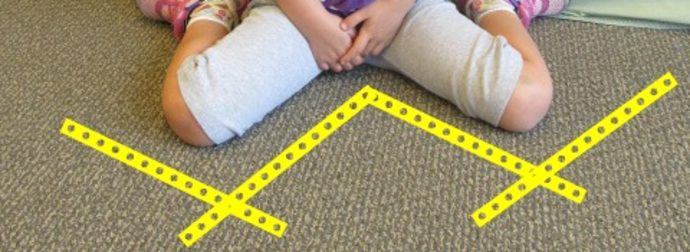
As parents and grandparents, you probably know the feeling of relief that comes with knowing the child you're responsible for isn't running around the house and is just sitting to read, watch, play, write or draw. While these activities give us a sense of security and allow us to watch the children more closely, there is another danger you should pay attention to, and that is the way in which the children sit. If you are in your home and your child is sitting on the floor for some activity, just check they are not sitting in the following position:
dangerous child sitting position

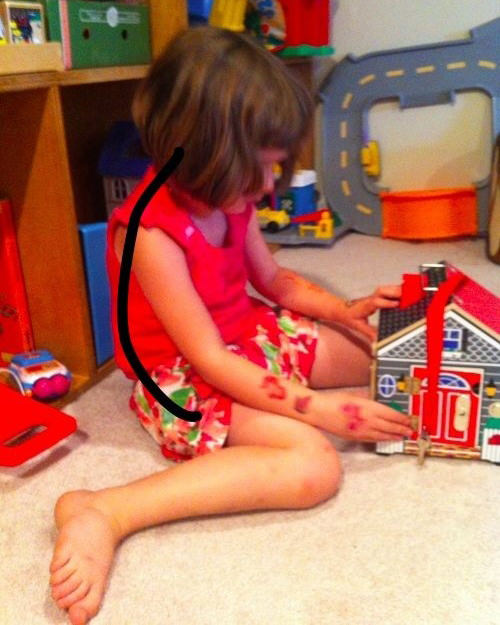
Many children tend to sit in this posture, which helps them support the side of their bodies as they enjoy their activities. Unfortunately, this kind of position may cause untold damage to their growth along the years, due to orthopedic problems, developmental problems and bad control over the body's balance. While sitting in this harmful posture, the child creates the shape of the letter W  with his/her legs. This posture prevents children from sitting with their back straight, which may weaken the back muscles over time.

bad sitting position for children

 
Instead of them sitting in this way, guide the children to sit with their heels under their buttocks or with their legs crossed on the ground. They can still play and draw as always, but at the same time they will use their muscles to stabilize their backs instead of using their legs incorrectly.

dangerous child sitting position

It may be that the child is more comfortable sitting in this dangerous posture, but when they grow up without back and spine problems such as Scoliosis, they'll thank you for it.

Labels: , , , , , ,