Thursday, February 25, 2021

Woke Up With a Stiff Neck? Here's How to Treat and Prevent It

We’ve all experienced the following scenario: you wake up one morning, only to find out that your neck is all sore and achy. When you try to turn to the side, you feel excruciating pain and realize that your neck is frozen in one position. But having a stiff neck isn’t just painful, it also restricts your movements and makes daily activities, like driving, dangerous. 
 
In this article, we’ll explain how you can reduce your chances of getting a stiff neck and how to reduce the symptoms when it does occur. 
 
What Causes a Stiff Neck?
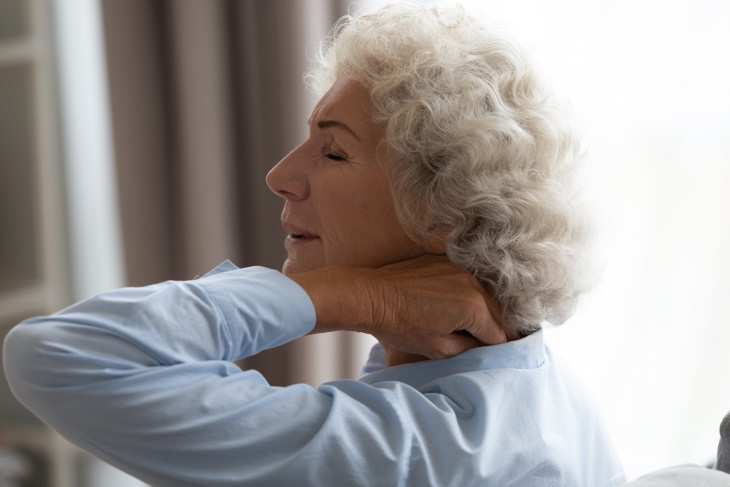
Stiff Neck pain in neck woman
An episode of neck stiffness is often sudden, and you will surely be wondering, what did you do wrong? Well, there are many things involved, and factors like your posture, level of activity, previous injuries, age, and even stress definitely play a big role. 
 
In most cases, neck stiffness occurs when the neck muscles and tendons are overused, overstretched, or strained. For example, looking down at your phone, sitting in a hunched position in front of the computer, or sleeping in an awkward position can all distort the natural neck posture. Hence, these bad habits can create tension and pain. 
 
However, in some cases, neck stiffness can point to a more serious issue, namely: 
 
Arthritis of the neck is also known as cervical spondylosis. This degenerative condition causes pain and stiffness in the neck, especially when you're staying in the same position for a long time. Other symptoms include headaches, balance problems, and weakness or numbness in the hands and arms. 
 
Whiplash is a more severe type of neck injury that occurs after sudden or sharp movements, such as a car accident or injury. Other symptoms of whiplash include headaches, back and shoulder pain, difficulty concentrating, dizziness, memory loss, and a prickling or burning sensation in the neck. 
 
Meningitis is an infection of the membrane that lines the brain and the spinal cord. This condition is a medical emergency and could be life-threatening. Like any infection, meningitis causes a fever that is accompanied by headaches, nausea, confusion, irritability, sensitivity to light, and being extremely sleepy or unable to wake up. 
 
In this article, we will show you how to prevent and treat neck stiffness brought about by minor neck injuries, as all three of the additional causes require professional care. 
 
How to Prevent Neck Stiffness 
 If you notice that neck stiffness and pain is a recurrent issue, it’s likely because of poor posture, a lack of exercise, and bad habits. Apart from the obvious, i.e. exercising and stretching your neck muscles regularly, these are the beneficial daily habits and hints that will help you prevent neck stiffness. 
 
1. Stop and stretch when you’re driving for long periods of time

Sitting behind the wheel for long periods of time can strain your neck. If you’re planning a long drive, it’s mandatory to take breaks, stand up, and stretch your neck every hour or so. You can even set an alarm on your phone to help you remember that it’s time for a break. Also, make sure that you’re sitting in a comfortable and neutral position while driving. 
 
2. Practice good posture during the day 
Our everyday activities can either affect or protect our neck health, and we’re sure that we all wish to stick to the latter option. This is why you should avoid looking down while reading books, scrolling on the smartphone, sitting at the computer, and even watching TV. 
 
When you're looking down, all these activities can strain and stretch out the neck muscles. Therefore, make it a rule to read or use devices at eye level, set up your computer desk ergonomically, and take frequent breaks. 
 
3. Be careful when carrying bags 

Stiff Neck man putting bag into car
It doesn’t matter if you’re walking around with a heavy bag on the same shoulder all the time or just overestimated how many shopping bags you can pick up one time, carrying heavy loads can strain the muscles of the neck. Using backpacks instead of a purse or briefcase can help distribute the weight more evenly and prevents injuries and neck strain.
 
When carrying shopping bags, take fewer bags at a time and make sure you’re using your legs and not the upper body to pick them up. 
 
4. Adjust your sleeping position  
If you woke up with a stiff neck in the morning, chances are that your sleeping position is to blame. Stomach sleepers are the highest risk of neck stiffness and pain, as this sleep position puts a lot of strain on the neck muscles. 
 
Try to switch to side-sleeping instead, and read our article about the best sleeping positions to do it right. Your mattress or pillow may be too soft, too, so make sure to consult a professional to help you find at least a pillow with just enough support. 
 
5. Use headphones or an earpiece to talk on the phone 
Are you one of those people who like to free up their hands while talking on the phone by keeping the phone between the shoulder and the head? If so, then we found the habit that’s making your neck so sore and stiff. Simply connect your phone to a pair of headphones or an earpiece, and your problem will be solved.

How to Restore Neck Flexibility and Reduce Pain  
Here’s what to do with a stiff neck when it’s already too late for prevention and you have a problem on your hands. First and foremost, understand that the problem will probably stick around for a day or two, and it’s best if you don’t drive or do heavy physical activities at this time because your neck is injured. 
 
A gentle and mindful approach goes a long way in releasing all that tension, helping with the pain, and improving neck flexibility. 
 
Here are a few tips: 
 
1. Apply a heat or ice compress
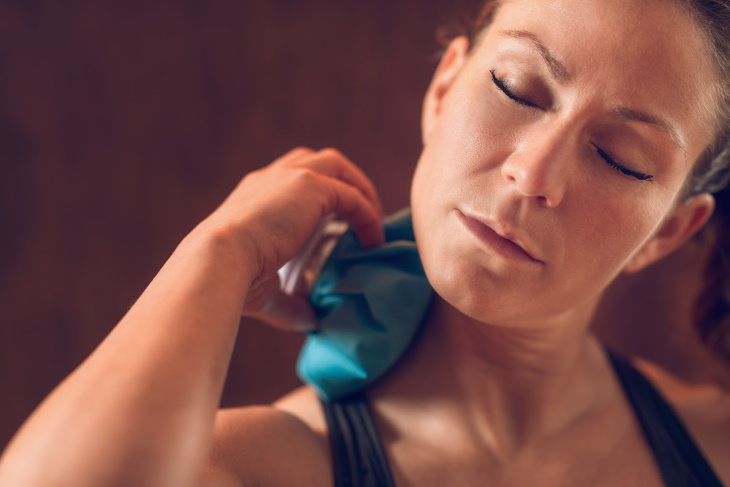
Stiff Neck woman applying heat pad on neck
Using heat and ice can help relieve inflammation in the neck. It works the best within 48 hours after the pain first started. Simply take an ice pack or a heating pad and apply it over the affected area for up to 20 minutes. 
 
 If you don’t have these items, you can use a bag of ice or frozen peas wrapped in a towel in place of an ice pack, or a plastic bottle filled with warm water instead of a heating pad. You can repeat the process every 20-30 minutes. 
 
2. Use over-the-counter painkillers 
Even if you’re feeling more stiffness than pain per se, it’s a good idea to take a painkiller that belongs to the NSAID group of pain medications, such as ibuprofen (Advil), acetaminophen (Tylenol), or naproxen sodium (Aleve). This is because these medications have an anti-inflammatory effect that will help clear up the neck stiffness faster. 
 
3. Take a bath
A major cause of neck stiffness and pain is stress. Therefore, engaging in any relaxing activity - watching movies, listening to music, meditation - will usually help your neck pain and stiffness. We recommend a warm bath, as it combines relaxation with the application of heat. 
 
4. Avoid using a collar to immobilize a stiff neck 
It’s best to continue with your daily activities and avoid putting on a collar to immobilize the neck unless advised otherwise by your doctor. The reason why is because a little stretch and movement usually help your neck recover more quickly. 
 
5. Stretch gently 
Once your pain isn’t very sharp anymore, you can start doing a few gentle neck stretches. Make sure to stretch gently and slowly, as this will reduce the pain and stiffness as opposed to sudden movements that will only cause more inflammation. 
 
Here are a few examples of stretches: 
 
-Bring your shoulder blades together a few times, then roll your shoulders from front to back. 
 
-Try to slowly turn the head from one side to another, but without forcing yourself through any pain. 
 
-You can also try acupressure to reduce the pain.

6. Gentle aerobic exercises
As we mentioned above, you should probably avoid doing any serious exercise for the first few days if you’re suffering from neck stiffness. That doesn’t mean that you shouldn’t move altogether, though. In fact, engaging in low-impact exercise helps alleviate muscle tension and stiffness. Walking, biking or yoga are just a few examples of such safe and helpful activities. 
 
When to Seek Medical Help 
Usually, following the above-mentioned tips can help relieve neck pain and stiffness in a few days. If the symptoms continue or worsen after a few days and your neck pain interferes with your daily activities, you should consult your healthcare provider. 
 
You should also go to the doctor immediately if you experience any of the following symptoms that accompany neck stiffness: 
You feel pain, weakness, or numbness in your arms or legs 
Persistent headaches 
Confusion and irritability 
Fever 
The pain started after a car accident, fall, or injury. 
 
I wish you good health!

This is only for your information, kindly take the advice of your doctor for medicines, exercises and so on.     

https://gscrochetdesigns.blogspot.com. one can see my crochet creations  
https://gseasyrecipes.blogspot.com. feel free to view for easy, simple and healthy recipes    
https://kneereplacement-stickclub.blogspot.com. for info on knee replacement

Labels: , , , , , , , , , , , ,

Sunday, October 20, 2019

Hawaii Warns Tourists Of Parasitic Worm That Can Burrow Into Human Brains

Hawaii is the favorite destination of numerous people, and if you are among them, you should know that the Health Department of the state has released warnings about a parasitic worm capable of infecting humans and affecting the brain and spinal cord.

Namely, the Centers for Disease Control and Prevention (CDC) reported there have been three brand new cases of United States mainland adults infected with this brain worm while visiting Hawaii Island.

The cases were entirely unrelated, became infected at different times, and lived in different places.
These cases add up to the state’s case total to 5 infections in 2019 and 10 infections in 2018. Officials report that this new eruption in parasitic worm infections is caused by a boom in the population of semi-slugs, a carrier of the worm.

According to the statement of the Health Department, even though it is not clear how these people were infected in Hawaii, one of them recalls eating several homemade salads while in Hawaii.
On the other hand, the other remembers eating unwashed raw fruits, vegetables, and other plants straight from the land.

In all of the Hawaii cases, the particular parasite was the rat lungworm (Angiostrongylus cantonensis), which usually lives inside the lungs of rats. Females lay eggs there and then young worms leave their nest soon and seek for a new home.

The larvae get trapped in the rat’s airway and are then swallowed and passed through their digestive system.

Therefore, snails, slugs, and other feces-eating bugs are intermediate hosts until new rodents eat them. Prepubescent parasites live in the rat’s brain until they’re mature enough to resettle and reproduce in the lungs.

While some people infected with this parasite don’t have any symptoms, others can develop a rare form of meningitis called eosinophilic meningitis.

The symptoms of this condition include severe headache, stiff neck, low-grade fever, tingling or pain, and vomiting. The Hawaii Department of Health reports that symptoms usually start one to three weeks after exposure to the parasite.

The State of Hawaii Department of Health warns that one gets infected by eating food contaminated by the larval stage of A. cantonensis worms, found in raw or undercooked snails or slugs. Sometimes raw produce can contain a small infected snail or slug, or part of one.

Diagnosing this infection is difficult, as it might not cause any symptoms, and blood tests won’t identify the parasite. Typically, patients infected with the worm are left to manage their symptoms until it dies on its own.

However, do not let this news scare you away, as this does not mean that you should remove Hawaii from your top destination list. You should just be cautious instead.

Therefore, if you are visiting Hawaii soon, avoid eating snails and slugs, wash all the produce bought in stores, especially foods like salads, and keep them in airtight containers.

this is only for your information, kindly take the advice of your doctor for medicines, exercises and so on.   
https://gscrochetdesigns.blogspot.com. one can see my crochet creations  
https://gseasyrecipes.blogspot.com. feel free to view for easy, simple and healthy recipes    
https://kneereplacement-stickclub.blogspot.com. for info on knee replacement


Source: www.livescience.com

Labels: , , , , , , , , ,

Friday, September 27, 2019

The Surprising Connection Between Melanin and Hearing

Did you know that white cats are a lot more likely to be deaf? Did you know the odds of the cat being deaf were dramatically exacerbated by having either one or two blue eyes? It’s true: 20% of green-eyed white cats are deaf, 40% of white cats with one blue eye are deaf, and about 75% of blue-eyed white cats are deaf. It doesn’t stop there, as white dogs are also likelier to be deaf, as are white ferrets. Albino animals, too, seem to be disproportionately deaf.
Melanin and Hearing: white cat with heterochromia deaf
But what does hair or eye color have to do with hearing loss? And can such a connection between hair, skin and eye color be drawn in humans, as well? Looking at medical literature, it certainly seems so.
One particularly well-known congenital disorder that some scientists believe may explain hearing loss in animals is called Waardenburg syndrome, and it affects humans as well. People born with Waardenburg tend to have brilliant blue, wide-set eyes, pale blotches on the skin that may appear like vitiligo, and varying degrees of deafness.
Melanin and Hearing: Waardenburg syndrome
Patient with Waardenburg syndrome, displaying broad nose bridge and wide-set eyes
To assume that Waardenburg is the cause for congenital propensity to deafness would mean that all of the aforementioned animals also have this syndrome and that this syndrome explains everything there is to know about the relationship between color and deafness. But this theory doesn’t quite hold up when put to the test.
Several epidemiological studies into the association of paler skin and hearing loss have come up with some shocking results: black people are roughly 50% less likely to develop hearing loss when compared to white counterparts. Studies specifically targeting whites and blacks whose occupation incorporated increased hazard of hearing loss found much the same thing: whites were more susceptible to hearing loss. Well, considering Waardenburg syndrome affects a mere fraction of society and people of various races, it can’t very well explain this disparity, can it?
But it doesn’t end here. Remember how paler eyes predicted higher chances of deafness among white cats? A 2001 study looking at 130 deaf patients found that the same was true of humans. Of the entire study population, 32 patients had acquired deafness as a result of meningitis and the rest had become deaf due to various other reasons. Among the general deaf population, 73% had pale eyes, compared to 27% with dark eyes, while among the meningitis group, the results were even more dramatic, as 94% of the deaf patients had pale eyes, compared to only 6% with dark eyes.
How about hair color? Does that also figure into risks of hearing loss? According to a 2012 study of military personnel who were exposed to sounds of gunfire, soldiers with blond or light brown hair were significantly more vulnerable to hearing loss compared to fellow combatants with dark hair.
The common thread between paler skin tone, lighter hair color, and green and blue irises is melanin, or more accurately, the lack of it. Melanin is the pigment that is responsible for the color of our skin, our hair, and our eyes, and it is produced in specialized cells called melanocytes. Typically speaking, melanocytes are dispersed equally throughout the body, but some unique conditions (such as Waardenburg) may cause particular areas of the skin or the eyes to have an abnormally low level of melanocytes, causing a striking difference between that area and the rest of the body (nonwhites with blue eyes, for example). But what does all of this have to do with deafness?
Well, we don’t rightly know. We know that all of the color variations presented here are also associated with lack of melanocytes in the inner ear, and can thus surmise that the melanocytes within the ear have an important role in hearing, but we do not know what it is. In the meanwhile, until we manage to figure out the exact mechanism that connects paler complexion to hearing loss, knowing whether you (or ones you hold dear) are in the risk group or not may be able to aid you in avoiding situations that may put your hearing in danger.
this is only for your information, kindly take the advice of your doctor for medicines, exercises and so on.   
https://gscrochetdesigns.blogspot.com. one can see my crochet creations 
 

https://gseasyrecipes.blogspot.com. feel free to view for easy, simple and healthy recipes    
https://kneereplacement-stickclub.blogspot.com. for info on knee replacement


Labels: , , , , , , , , ,

Wednesday, November 14, 2018

WHO maps dangerous misuse of antibiotics

The World Health Organization warned Monday that antibiotics consumption is dangerously high in some countries while a shortage in others is spurring risky misuse, driving the emergence of deadly superbug infections. 

In a first, the United Nations health agency said it had collated data on antibiotic use across large parts of the world and had found huge differences in consumption.

The report, based on 2015 data from 65 countries and regions, showed a significant difference in consumption rates from as low as around four so-called defined daily doses (DDD) per 1,000 inhabitants per day in Burundi to more than 64 in Mongolia. 

"The large difference in antibiotic use worldwide indicates that some countries are probably overusing antibiotics while other countries may not have sufficient access to these life-saving medicines," WHO warned in a statement.

Discovered in the 1920s, antibiotics have saved tens of millions of lives by defeating bacterial diseases such as pneumonia, tuberculosis and meningitis. 

But over the decades, bacteria have learned to fight back, building resistance to the same drugs that once reliably vanquished them.

The WHO has repeatedly warned the world is running out of effective antibiotics, and last year urged governments and big pharma to create a new generation of drugs to fight ultra-resistant supergerms. 
"Overuse and misuse of antibiotics are the leading causes of antimicrobial resistance," head of WHO's essential medicines unit, said in a statement.

"Without effective antibiotics and other antimicrobials, we will lose our ability to treat common infections like pneumonia," she warned.

- 'Urgent action' -
Bacteria can become resistant when patients use antibiotics they do not need, or do not finish a course of treatment, giving the half-defeated bug a chance to recover and build immunity.

Hill insisted that the findings "confirm the need to take urgent action, such as enforcing prescription-only policies, to reduce unnecessary use of antibiotics." 

While overuse of antibiotics is worrying, WHO said low numbers were also of concern.

"Resistance can occur when people cannot afford a full course of treatment or only have access to substandard or falsified medicines," it said.

WHO's report showed large differences in antibiotic consumption even within regions.
In Europe, which provided the most complete data for the report, the average antibiotic consumption was nearly 18 DDD per 1,000 inhabitants per day.

But within the region, Turkey, which ranked the highest at over 38 DDD, showed nearly five times higher consumption than the lowest consumer-country Azerbaijan, which counted fewer than eight DDD.  

WHO acknowledged the picture of how antibiotics are used around the world remains far from complete.

Monday's overview, for instance, includes only four countries in Africa, three in the Middle East and six in the Asia-Pacific region.

Notably missing from the chart are the United States, China and India.

WHO stressed that many countries face major challenges in collecting reliable data, including lack of funds and trained staff.

Since 2016, the UN agency has been supporting data collection in 57 low- and middle-income countries in a bid to set up a standardized system for monitoring antibiotic use.

"Reliable data on antibiotic consumption is essential to help countries to raise awareness of appropriate antimicrobial use," WHO said.


THIS IS ONLY FOR INFORMATION, ALWAYS CONSULT YOU PHYSICIAN BEFORE HAVING ANY PARTICULAR FOOD/ MEDICATION/EXERCISE/OTHER REMEDIES.                                                                                                                                                                                                             PS- THOSE INTERESTED IN RECIPES ARE FREE TO  VIEW MY BLOG-                                                                                           https://gseasyrecipes.blogspot.com/   

FOR INFO ABOUT KNEE REPLACEMENT, YOU CAN VIEW MY BLOG-                                                                                                    https:// kneereplacement-stickclub.blogspot.com/                              

FOR CROCHET DESIGNS                                                                                                                                                                                                                                 https://gscrochetdesigns.blogspot.com


Labels: , , , , , , ,

Wednesday, October 03, 2018

Reasons Behind Headache

Headache is one of the most common reasons why people use over the counter analgesics (OTC-drugs) such as paracetamol (acetaminophen), aspirin, and other non-steroidal anti-inflammatory drugs (NSAIDs) like ibuprofen, naproxen, and diclofenac.
While these drugs are generally safe and effective when used as directed, their use has been associated with certain risks. Paracetamol (acetaminophen) may harm the liver, aspirin has been associated with increased risk of bleeding from the gastrointestinal tract, and NSAIDs should be used with caution in patients with cardiovascular disease or hepatic or renal impairment.

How to Decide if a Headache Is Serious or Not

A headache that is due to a specific underlying condition, such as sinusitis or meningitis, is often referred to as secondary to distinguish it from more benign conditions such as migraine, tension headache, and cluster headache which are known as primary. A primary headache is a headache that is due to the headache condition itself and not due to another cause .
The differentiation of the small number of patients with serious, sometimes life-threatening headaches from the overwhelming majority with benign primary headaches is of immense importance. Failure to acknowledge a serious secondary headache can have potentially fatal consequences.
The key to distinguishing secondary headache from a primary headache lies in the features of the headache, other symptoms occurring at the same time, and the physical examination.

The following features may point to a secondary headache rather than a primary headache :
A severe persistent headache that reaches maximal intensity within a few seconds or minutes
No similar headaches in the past
The presence of concomitant infection 
Severe persistent headache that reaches maximal intensity within a few seconds or minutes.
No Similar headaches in the past
The presence of a concomitant infection ( sinusitis or some respiratory tract infections) 
Altered mental status ( confusion, fainting or fluctuations in the level of consciousness)
Headache with seizures
Headache with exertion
Above 50 years
Below 5 years
Malignant tumours, HIV
Visual disturbances
Neurological abnormaloties 
Neck stiffness or other signs of meningitis
Trauma

The following features indicate a low-risk for a dangerous underlying cause and suggest a primary headache:
Stable pattern of headache over many months or years
Family history of similar headaches
Normal physical examination
Headaches consistently triggered by hormonal cycle, specific foods, sensory input or weather changes

For most patients, the diagnostic test of choice is a magnetic resonance imaging (MRI) brain scan. Computed tomography (CT) of the brain is usually obtained in the setting of trauma or the abrupt onset of headache. Spinal tap with examination of cerebrospinal fluid is useful in diagnosing subarachnoid bleeding and infection.

The following are some reasons why you might get that headache
  1. Stress: Physical stress or emotional stress can be identified as one of the most common causes for your headache. Tension, anxiety and depression may trigger a headache. This is also known as tension headache. In this condition, the muscles of your scalp, neck, face and jaw tighten, thus causing pain. Fatigue may also lead to this type of headache.
  2. Eye problems: Sometimes eye problems may be the cause of your headache. Diseases such as glaucoma can cause headache. Straining your eyes for seeing distant objects or glaring at your computer screen for long can also result in headache.
  3. Eating and sleeping disorders: Change in eating and sleeping pattern can also cause headache. Inadequate sleep or caffeine withdrawal can give you terrible headache sometimes.
  4. Ear, nose or throat disorders: Ear, nose or throat problems can also give rise to headache. Sinus caused by cold or infection, tonsillitis or throat infections can also prompt a headache.
  5. Medication: Excessive use of medication can be a factor responsible for your headache. This is also known as rebound headache.
  6. Dental problems: Jaw or dental problems sometimes may trigger a mild headache which can turn severe also. The alignment of lower and upper jaw, tooth decay may be some of the causes for headache.
  7. Hormonal problems: Sometimes a decline of your estrogen levels can also be a reason for your headache.
  8. Bad posture: Sometimes, poor posture may strain the muscles of your back and neck, triggering a headache.
Headache can be very annoying. Sometimes pain relief medicines help in controlling headache, but consuming them regularly may affect your health. 

THIS IS ONLY FOR INFORMATION, ALWAYS CONSULT YOU PHYSICIAN BEFORE HAVING ANY PARTICULAR FOOD/ MEDICATION/EXERCISE/OTHER REMEDIES.                                                                                                                                                                                                                                            PS- THOSE INTERESTED IN RECIPES ARE FREE TO  VIEW MY BLOG-                                                                                           https://gseasyrecipes.blogspot.com/   

 
FOR INFO ABOUT KNEE REPLACEMENT, YOU CAN VIEW MY BLOG-                                                                                                                                https:// kneereplacement-stickclub.blogspot.com/                              

FOR CROCHET DESIGNS                                                                                                                                                                                                                                 https://gscrochetdesigns.blogspot.com

Labels: , , , , , , , , , , ,