Friday, December 27, 2024

What are Cardiovascular Diseases?

According to the World Health Organization (WHO), cardiovascular diseases (CVD) are the #1 cause of death in the world. In 2012, WHO estimates that 17.5 million people died of CVDs – that’s 31% of global mortality! CVDs are often left undetected because many people refuse to do something as simple as going to get checked out.

What are cardiovascular diseases?(CVD)

When cardiovascular diseases are mentioned, most people immediately think of heart attacks, but that’s just an acute event. A CVD is a condition where the heart cannot perform its job properly, and they include cardiomyopathy, coronary artery disease, and arrhythmia. Such conditions can prevent blood from reaching the brain, which can cause brain damage and even be fatal. 
 
Risk Factors for Cardiovascular Diseases

It’s like we’ve been told for years – an unhealthy diet, lack of exercise, tobacco use, alcohol abuse, as well as having genetic inclinations, are all risk factors for heart problems like CVDs. In extreme cases, they could also be a result of hypertension. 
 
 What are the Main Cardiovascular Diseases?  
Many heart diseases are left undiagnosed until the patient suffers a heart attack or stroke. Here is a list of the major CVDs and their symptoms: 
 
Clogged Arteries: When fat and cholesterol build up in your arteries, it forms a sticky barrier called “plaque,” which can restrict and even stop blood flow through those arteries. Clogged arteries often go unnoticed until a person suffers a heart attack. However, if you’re suffering from frequent chest pains (angina), you might be showing signs of a coronary arterial disease. 
 
Heart Attack: When a buildup of plaque breaks, it can cause a blood clot to form. If that clot blocks an artery, it chokes the blood supply to that area in your heart. Without blood, your heart doesn’t get the oxygen it needs to function, which can quickly damage the tissue in that area. The more extensive the damage, the more life-threatening it can be. 
 
The primary symptoms of a heart attack are: 
 
A feeling of discomfort that spreads to your arm, back, jaw, or throat 
 
Pain or pressure in your chest (more common in men) 
 
Fast or irregular heartbeats 
 
Weakness, shortness of breath, anxiety (more common in women) 
 
Nausea, heartburn, or indigestion (more common in women)​ 
 
Even if the symptoms are mild, it can be a serious medical emergency, so seek help immediately. (How to perform CPR)

Arrhythmia (Irregular Heartbeat): The heart is a biological machine that uses electrical impulses to work. Your heartbeat can slow down, quiver, or speed up if those impulses become erratic. If the arrhythmia is temporary, it poses no danger to your health, but regular arrhythmia affects your blood flow, which can be detrimental to your health. If you notice that your ticker is acting funny, talk to your doctor. ​ 
 
Cardiomyopathy (Heart Muscle Disease): Your heart is a muscle, and if it becomes weak for any reason, it starts struggling to pump blood to the rest of your body. Cardiomyopathy can be caused by diabetes, obesity, and high blood pressure, amongst other things, and can lead to heart failure. 
 
Heart Failure: This does not mean that your heart stopped working, but rather that it is too weak to send enough blood to the rest of your body. To compensate, the heart grows in size and the rhythm increases, but it also weakens the muscle and lowers the blood flow even more, which eventually makes the problem even worse.

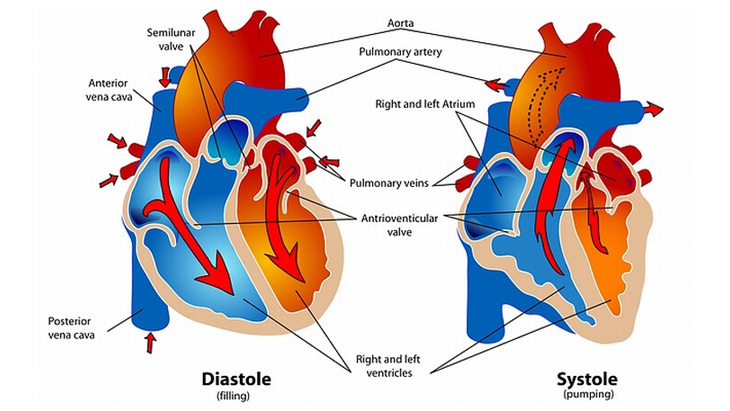
Congenital Heart Defects: The heart is comprised of four chambers, each separated by valves that regulate blood flow through it. Some people are born with a leaky valve, or the walls that separate each chamber might be damaged. Defects can lead to arrhythmia, infection of the valves, and heart failure. Congenital heart defects can often remain undiagnosed until adulthood, and not all of them require treatment. Severe cases will call for surgical intervention or medication.
If You Have Questions On Heart Disease, Answer Them Here

Sudden Cardiac Death: Unlike a heart attack, in this case, your heart’s electrical system goes on the fritz, which causes your heart to beat irregularly and very fast. In this situation, instead of pumping blood, the heart basically shakes and quivers. 
 
A person suffering from sudden cardiac death can die in minutes, but getting CPR can often save them, so call the EMTs immediately and start performing CPR on them. 
 
Testing for CVDs

EKG: Electrocardiogram is a painless test where the doctor places electrodes on your skin for a few minutes to measure your heart’s electrical activity. An EKG can also determine if you’re having a heart attack or have had one in the past, as well as determine the regularity of your heartbeat. 
 
Stress test: For this, you use a treadmill or stationary bike in a progressive workout while your heart is being monitored by an EKG. This will tell doctors how your heart works under stress. ​ 
 
Holter monitor: If your doctor suspects that your heart might be skipping a beat here and there, he’ll give you a Holter monitor to wear throughout the day. This device constantly measures the electrical activity of your heart to give your doctor more comprehensive data. 
 
 X-rays: By taking an X-ray of your chest, doctors can tell if your heart has an irregular shape or size. 
 
Echocardiogram: This is an ultrasound for your heart, and it shows your heart’s activity in real time, allowing doctors to spot possible issues with your pump. 
 
Cardiac CT: Cardiac computerized tomography takes detailed X-rays of your heart and blood vessels. This helps doctors find plaque or calcium buildups in your arteries, as well as valve problems and more. 
 
Cardiac Catheterization: A tiny tube is inserted into a blood vessel that leads to your heart, and the doctor then injects a dye into it, making any blockages visible on X-ray. 
 
Life with a Heart Disease 
Most heart diseases are long-lasting, and can sometimes be asymptomatic for years, but if left untreated – they will get progressively worse.

Once your disease has been diagnosed, it’s possible that your whole lifestyle will change. You may need to start taking pills daily to control your cholesterol, blood pressure, rhythm, heart rate, and for clot prevention. 
 
If you suffer from a blocked artery, you may need to go through surgical intervention to unblock it. Angioplasty is an operation where a doctor guides a catheter with a balloon into the blocked artery. When it reaches the blockage, the balloon is filled with air, opening the blockage. Your surgeon may also put in a small mesh tube to keep the artery open

More severe cases will call for bypass surgery, which involves taking a blood vessel from another part of your body and using it to replace the damaged blood vessel, thereby “bypassing” it. 
 
Whether you’ve been diagnosed with or treated for CVD, get on a cardiac rehab program. Specialists will help you with nutrition, exercises, and emotional support to help you get back on track.


This is only for your information, kindly take the advice of your doctor for medicines, exercises and so on.   

https://gscrochetdesigns.blogspot.com. one can see my crochet creations  
https://gseasyrecipes.blogspot.com. feel free to view for easy, simple and healthy recipes    
https://kneereplacement-stickclub.blogspot.com. for info on knee replacement
https://cancersupportindia.blogspot.com  for infor on cancer and health related topics
https://GSiyers home remedies.blogspot.com   is the latest addition to my blogs. I'm going to add posts there, do give me your valuable feed back on my blogs. Thanks a lot, take care, be healthy and be happy.

Labels: , , , , , , , , , , , , ,

Sunday, February 09, 2020

Silent Heart Attack: Warning Signs and Treatment

A heart attack is mostly imagined as a dramatic event. Sharp pains in the chest, shortness of breath, sometimes even falling to the ground. However, that is not always the case. According to a recent study published in Circulation journal, an astounding 45% of heart attacks are defined as silent ones, or silent myocardial infarctions (SMIs). That means that the symptoms of these heart attacks are so mild that they’re often dismissed as something else. Experiencing a heart attack without realizing it and getting the appropriate treatment is, of course, very dangerous. Here’s how you can recognize a silent heart attack and react accordingly.

What Is a Silent Heart Attack?

Both silent and traditional heart attacks occur when the heart does not get a sufficient supply of oxygen-rich blood. The reason that might happen is usually ischemic heart disease, which is a condition where a waxy substance called plaque builds up inside the coronary arteries. The plaque creates the blockage, which prevents the blood from reaching the heart muscle. Blood flow must be restored quickly, otherwise, that section of the heart begins to die.

Although the symptoms of a silent heart attack are not severe and can often go unnoticed, it is just as serious as a traditional heart attack!


What Are the Symptoms?
The sensations you want to look out for include varying degrees of fatigue, heartburn, shortness of breath and discomfort in the chest, back, or jaw. The symptoms are similar to those of a traditional heart attack, but lack the extreme pressure on the chest, stabbing pain in the arm, neck and/or jaw, sweating, and dizziness. They can be so mild and brief that they are often confused with ordinary irritations, like indigestion, heartburn or even just the result of a challenging workout. 


The risk factors for both kinds of heart attacks are pretty much the same – a family history of heart attacks, older age, smoking, insufficient exercise, obesity, and conditions like high blood pressure, high cholesterol, and diabetes. It is also worth noting that the study has concluded that both classic and silent heart attacks are more common in men than women. Despite that, women have higher mortality rates due to this medical condition. 


So How Can You Recognize a Silent Heart Attack?
The lasting effect of a silent heart attack will show up on an electrocardiogram (EKG) – which will reveal the damage caused to the heart. 


If you have a suspicion concerning an SMI, it is best to consult your doctor about undergoing such a screening. Do not brush those symptoms aside. Many people who experience a silent heart attack don’t seek immediate care because of a lack of awareness, which combined with the scarring damage SMI causes the heart, increases the risk of a second, potentially more harmful heart attack.  


A Silent heart attack is a way the body uses to signal you there is an underlying medical condition that needs your attention, so don't ignore your body's call for help and seek diagnosis and treatment.


This is only for your information, kindly take the advice of your doctor for medicines, exercises and so on.     
https://gscrochetdesigns.blogspot.com. one can see my crochet creations  
https://gseasyrecipes.blogspot.com. feel free to view for easy, simple and healthy recipes    
https://kneereplacement-stickclub.blogspot.com. for info on knee replacement
 

Labels: , , , ,

Monday, February 03, 2020

What is a silent heart attack? How to recognize the warning signs

  • Silent heart attacks are just as dangerous and common as traditional heart attacks.
  •  
  • Silent heart attacks are milder than traditional heart attacks and may not come with any symptoms.
  •  
  • People who have a silent heart attack may not know it and therefore don't seek necessary treatment.
Heart attacks often have a classic roster of symptoms: chest pain, shortness of breath, and the sensation of something heavy on the chest. 

But not always. Silent heart attacks, more formally known as a silent myocardial infarction (SMI), are "silent" because symptoms are so mild that people often do not realize they occurred. 

But that doesn't mean you can ignore a silent heart attack — medical experts say it's just as dangerous as a traditional one. Here's how to tell if you're having a silent heart attack and what to do about it.

What is a silent heart attack

A 2015 study published in the journal Circulation of nearly 10,000 participants compared silent heart attacks and traditional ones, and found that silent heart attacks accounted for nearly half of all heart attacks. 

A cardiologist  says there can be situations where people have no symptoms with a silent heart attack. But often, there are a few mild symptoms that can be difficult to recognize.  

These include fatigue, heartburn, discomfort in the chest, back, or jaw, and shortness of breath, according to the doctors. A traditional heart attack can have similar symptoms, but also often includes a sensation of pressure or pain in the chest, arms, neck, back, and/or jaw.

Furthermore, the symptoms of a silent heart attack can easily be mistaken for something else, such as indigestion, a challenging workout, or even a toothache. And even though the symptoms may not feel severe, Weinberg says a silent heart attack is just as serious as any other heart attack. 

Silent heart attacks are dangerous

Heart attacks — both silent or traditional — occur when insufficient blood flows to the heart. And, a silent heart attack is just as dangerous as a traditional one. It increases your likelihood of another heart attack, as well as the potential for heart failure. 

"It's critical to open up a blocked heart artery as soon as it's blocked so we're not in a situation where there's decreased blood flow and ultimately scar tissue that would impair somebody's ability to have normal heart function," Weinberg says. 

While the  Circulation study found that silent heart attacks were more common in men than women, it also found that women were more likely to die as a result of one. This may be due to women — and their doctors — not necessarily taking symptoms seriously enough, according to the doctors.

Also, researchers have found that silent heart attacks are more common in older adults with diabetes. For example, in a study published in 2012 in the Journal of the American Medical Association, 14% of the 337 participants with diabetes experienced a silent heart attack compared to 9% of the same population that had a traditional heart attack.

And with a traditional heart attack, doctors can recommend treatments that include surgery, medications, and lifestyle adjustments. That's why silent heart attacks are so worrisome: If you don't know you had a heart attack, you won't take advantage of treatment and prevention tactics. 

Moreover, you may only realize you had a heart attack after the fact when you start to experience symptoms of heart failure because the silent heart attack has damaged the heart muscles.

How to recognize silent heart attacks 

If you think you might be experiencing symptoms of a heart attack, you should go to the emergency room immediately. But in most cases of silent heart attacks, the symptoms are so mild or nonexistent that a person wouldn't necessarily think to go to the ER. 

Often, the diagnosis occurs in a routine physical or during a doctor's visit prompted by lingering symptoms such as fatigue, shortness of breath, and indigestion. 

The risk factors are the same for a traditional and silent heart attack: A family history of heart attacks, older age, lifestyle choices such as smoking or insufficient exercise, obesity, and conditions such as high blood pressure, high cholesterol, and diabetes. 

If your doctor suspects you had a silent heart attack, the likely next step will be for you to get an electrocardiogram (EKG), which will show your heart's electrical activity and reveals damage to the heart caused by a heart attack, says the experts.

This is only for your information, kindly take the advice of your doctor for medicines, exercises and so on.     
https://gscrochetdesigns.blogspot.com. one can see my crochet creations  
https://gseasyrecipes.blogspot.com. feel free to view for easy, simple and healthy recipes    
https://kneereplacement-stickclub.blogspot.com. for info on knee replacement


Labels: , , , , , , , , , , , , , , , , ,