Friday, December 27, 2024

What are Cardiovascular Diseases?

According to the World Health Organization (WHO), cardiovascular diseases (CVD) are the #1 cause of death in the world. In 2012, WHO estimates that 17.5 million people died of CVDs – that’s 31% of global mortality! CVDs are often left undetected because many people refuse to do something as simple as going to get checked out.

What are cardiovascular diseases?(CVD)

When cardiovascular diseases are mentioned, most people immediately think of heart attacks, but that’s just an acute event. A CVD is a condition where the heart cannot perform its job properly, and they include cardiomyopathy, coronary artery disease, and arrhythmia. Such conditions can prevent blood from reaching the brain, which can cause brain damage and even be fatal. 
 
Risk Factors for Cardiovascular Diseases

It’s like we’ve been told for years – an unhealthy diet, lack of exercise, tobacco use, alcohol abuse, as well as having genetic inclinations, are all risk factors for heart problems like CVDs. In extreme cases, they could also be a result of hypertension. 
 
 What are the Main Cardiovascular Diseases?  
Many heart diseases are left undiagnosed until the patient suffers a heart attack or stroke. Here is a list of the major CVDs and their symptoms: 
 
Clogged Arteries: When fat and cholesterol build up in your arteries, it forms a sticky barrier called “plaque,” which can restrict and even stop blood flow through those arteries. Clogged arteries often go unnoticed until a person suffers a heart attack. However, if you’re suffering from frequent chest pains (angina), you might be showing signs of a coronary arterial disease. 
 
Heart Attack: When a buildup of plaque breaks, it can cause a blood clot to form. If that clot blocks an artery, it chokes the blood supply to that area in your heart. Without blood, your heart doesn’t get the oxygen it needs to function, which can quickly damage the tissue in that area. The more extensive the damage, the more life-threatening it can be. 
 
The primary symptoms of a heart attack are: 
 
A feeling of discomfort that spreads to your arm, back, jaw, or throat 
 
Pain or pressure in your chest (more common in men) 
 
Fast or irregular heartbeats 
 
Weakness, shortness of breath, anxiety (more common in women) 
 
Nausea, heartburn, or indigestion (more common in women)​ 
 
Even if the symptoms are mild, it can be a serious medical emergency, so seek help immediately. (How to perform CPR)

Arrhythmia (Irregular Heartbeat): The heart is a biological machine that uses electrical impulses to work. Your heartbeat can slow down, quiver, or speed up if those impulses become erratic. If the arrhythmia is temporary, it poses no danger to your health, but regular arrhythmia affects your blood flow, which can be detrimental to your health. If you notice that your ticker is acting funny, talk to your doctor. ​ 
 
Cardiomyopathy (Heart Muscle Disease): Your heart is a muscle, and if it becomes weak for any reason, it starts struggling to pump blood to the rest of your body. Cardiomyopathy can be caused by diabetes, obesity, and high blood pressure, amongst other things, and can lead to heart failure. 
 
Heart Failure: This does not mean that your heart stopped working, but rather that it is too weak to send enough blood to the rest of your body. To compensate, the heart grows in size and the rhythm increases, but it also weakens the muscle and lowers the blood flow even more, which eventually makes the problem even worse.

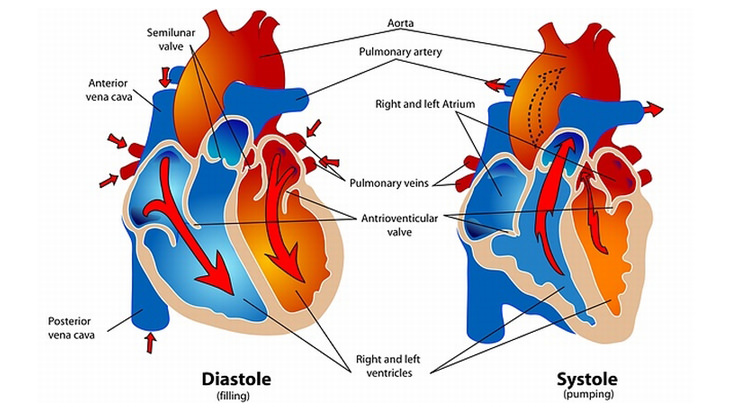
Congenital Heart Defects: The heart is comprised of four chambers, each separated by valves that regulate blood flow through it. Some people are born with a leaky valve, or the walls that separate each chamber might be damaged. Defects can lead to arrhythmia, infection of the valves, and heart failure. Congenital heart defects can often remain undiagnosed until adulthood, and not all of them require treatment. Severe cases will call for surgical intervention or medication.
If You Have Questions On Heart Disease, Answer Them Here

Sudden Cardiac Death: Unlike a heart attack, in this case, your heart’s electrical system goes on the fritz, which causes your heart to beat irregularly and very fast. In this situation, instead of pumping blood, the heart basically shakes and quivers. 
 
A person suffering from sudden cardiac death can die in minutes, but getting CPR can often save them, so call the EMTs immediately and start performing CPR on them. 
 
Testing for CVDs

EKG: Electrocardiogram is a painless test where the doctor places electrodes on your skin for a few minutes to measure your heart’s electrical activity. An EKG can also determine if you’re having a heart attack or have had one in the past, as well as determine the regularity of your heartbeat. 
 
Stress test: For this, you use a treadmill or stationary bike in a progressive workout while your heart is being monitored by an EKG. This will tell doctors how your heart works under stress. ​ 
 
Holter monitor: If your doctor suspects that your heart might be skipping a beat here and there, he’ll give you a Holter monitor to wear throughout the day. This device constantly measures the electrical activity of your heart to give your doctor more comprehensive data. 
 
 X-rays: By taking an X-ray of your chest, doctors can tell if your heart has an irregular shape or size. 
 
Echocardiogram: This is an ultrasound for your heart, and it shows your heart’s activity in real time, allowing doctors to spot possible issues with your pump. 
 
Cardiac CT: Cardiac computerized tomography takes detailed X-rays of your heart and blood vessels. This helps doctors find plaque or calcium buildups in your arteries, as well as valve problems and more. 
 
Cardiac Catheterization: A tiny tube is inserted into a blood vessel that leads to your heart, and the doctor then injects a dye into it, making any blockages visible on X-ray. 
 
Life with a Heart Disease 
Most heart diseases are long-lasting, and can sometimes be asymptomatic for years, but if left untreated – they will get progressively worse.

Once your disease has been diagnosed, it’s possible that your whole lifestyle will change. You may need to start taking pills daily to control your cholesterol, blood pressure, rhythm, heart rate, and for clot prevention. 
 
If you suffer from a blocked artery, you may need to go through surgical intervention to unblock it. Angioplasty is an operation where a doctor guides a catheter with a balloon into the blocked artery. When it reaches the blockage, the balloon is filled with air, opening the blockage. Your surgeon may also put in a small mesh tube to keep the artery open

More severe cases will call for bypass surgery, which involves taking a blood vessel from another part of your body and using it to replace the damaged blood vessel, thereby “bypassing” it. 
 
Whether you’ve been diagnosed with or treated for CVD, get on a cardiac rehab program. Specialists will help you with nutrition, exercises, and emotional support to help you get back on track.


This is only for your information, kindly take the advice of your doctor for medicines, exercises and so on.   

https://gscrochetdesigns.blogspot.com. one can see my crochet creations  
https://gseasyrecipes.blogspot.com. feel free to view for easy, simple and healthy recipes    
https://kneereplacement-stickclub.blogspot.com. for info on knee replacement
https://cancersupportindia.blogspot.com  for infor on cancer and health related topics
https://GSiyers home remedies.blogspot.com   is the latest addition to my blogs. I'm going to add posts there, do give me your valuable feed back on my blogs. Thanks a lot, take care, be healthy and be happy.

Labels: , , , , , , , , , , , , ,

Saturday, March 07, 2020

Extreme endurance exercise can increase risk of cardiovascular events

For most people, the benefits of aerobic exercise far outweigh the risks, however, extreme endurance exercise - such as participation in marathons and triathlons for people who aren't accustomed to high-intensity exercise - can raise the risk of sudden cardiac arrest, atrial fibrillation (a heart rhythm disorder) or heart attacks, according to a new Scientific Statement "Exercise-Related Acute Cardiovascular Events and Potential Deleterious Adaptations Following Long-Term Exercise Training: Placing the Risks Into Perspective-An Update from the American Heart Association," published today in the Association's premier journal Circulation.

Aerobic exercises are activities in which the large muscles move in a rhythmic manner for a sustained time. They can be done at low intensity or high intensity and include walking, brisk walking, running, bicycling, swimming and many others.

Exercise is medicine, and there is no question that moderate to vigorous physical activity is beneficial to overall cardiovascular health. However, like medicine, it is possible to underdose and overdose on exercise - more is not always better and can lead to cardiac events, particularly when performed by inactive, unfit, individuals with known or undiagnosed heart disease.

More people are running marathons, participating in triathlons and doing high-intensity interval training. The purpose of this statement is to put the benefits and risks of these vigorous exercise programs in perspective."Barry A. Franklin, Ph.D., chair of the writing committee for the new Scientific Statement, director of preventive cardiology and cardiac rehabilitation at Beaumont Health in Royal Oak, Michigan, professor of internal medicine at Oakland University William Beaumont School of Medicine in Rochester, Michigan
After reviewing more than 300 scientific studies, the writing committee found that, for the vast majority of people, the benefits of exercise and improving physical fitness outweigh the risks. Physically active people, such as regular walkers, have up to a 50% lower risk of heart attack and sudden cardiac death. However, the committee also identified potential risks with intense exercise training.

The writing group also reviewed a small study that concluded the risk of sudden cardiac death or heart attack is low among people participating in high-intensity exercise such as marathons and triathlons. However, over time, the risk of heart attack or sudden cardiac death among male marathon participants has risen, suggesting that these events are attracting higher risk participants (those who may have an underlying or undiagnosed cardiovascular condition such as heart rhythm abnormalities or a prior heart attack). For women, who comprised only 15% of the study population, the occurrence of sudden cardiac death was 3.5-fold less than in men.

Among participants in triathlons almost 40% of cardiac events occurred in first-time participants, indicating that inadequate training or underlying heart problems may be involved. The writing group also found that:
  • Half of cardiac events occur in the last mile of a marathon or half-marathon, so maintaining a steady pace rather than sprinting is advised;
  • The risk of cardiac events is greater at high altitudes, but can be decreased by spending at least one day acclimating to the elevation prior to strenuous activity;; and
  • Risk of atrial fibrillation (AFib), a common heart arrhythmia that raises the risk of stroke, is beneficially reduced with moderate exercise volumes but is highest in people who are sedentary and almost as high in people who are engaged in very high volumes of exercise training, that is, high-intensity training (such as running 60-80 miles a week).
For people who want to become more active, the Association suggests that most people can start a light program of exercise and build up slowly to a moderate to vigorous exercise regimen without seeing a physician first, unless they have physical symptoms such as chest pain, chest pressure or severe shortness of breath while exercising. "It is important to start exercising - but go slow, even if you were an athlete in high school," said Franklin.

In addition, people with known heart disease (such as a previous heart attack, bypass surgery or angioplasty) should get their doctor's approval prior to starting an exercise program.

For currently inactive/sedentary people, the Association also suggests checking with your doctor before engaging in any strenuous activities such as shoveling snow or racquet sports, which create rapid increases in heart rate and blood pressure and greatly increase the strain on the heart.
To implement a healthy physical activity program:
  • Warm up before exercise by doing the planned activity - such as walking - at a slower pace to let your heart rate rise gradually;
  • Walk on a level surface for 6-8 weeks, progressing to walking up hills, jogging or taking part in more vigorous activities as long as no symptoms occur such as shortness of breath, lightheadedness, chest pain or chest pressure;
  • Increase the amount of time spent on exercise incrementally from five to ten minutes at the beginning and build up slowly to the desired time;
  • Lower the intensity of your exercise when environmental conditions place a greater strain on the heart, such as high humidity or high altitude to which you are not accustomed;
  • Cool down after exercise by walking at a slow pace to let your heart rate return to normal; and
  • Stop and seek medical evaluation if you experience any heart-related symptoms such as lightheadedness, shortness of breath, or chest pain or pressure.

This is only for your information, kindly take the advice of your doctor for medicines, exercises and so on.     

https://gscrochetdesigns.blogspot.com. one can see my crochet creations  
https://gseasyrecipes.blogspot.com. feel free to view for easy, simple and healthy recipes    
https://kneereplacement-stickclub.blogspot.com. for info on knee replacement
 

Labels: , , , , , , ,

Thursday, April 05, 2018

Cardiomyopathy

Cardiomyopathy is a progressive disease of the myocardium, the heart muscle. The condition is either confined to the heart or is part of generalised systemic disorders. They often lead to cardiovascular death or progressive heart failure-related disability.

These diseases have many causes, signs and symptoms and treatments. The heart muscle either becomes enlarged, thick or rigid in cardiomyopathy. In rare cases, the muscle tissue is replaced with a scar tissue.

The main types of cardiomyopathy are dilated cardiomyopathy, hypertrophic cardiomyopathy, restrictive cardiomyopathy and arrhythmogenic right ventricular dysplasia.

Some other types of cardiomyopathy are called ‘unclassified cardiomyopathy’ and ‘stress-induced cardiomyopathy’, also known as broken heart syndrome.

Cardiomyopathy can be inherited i.e. a family history of cardiomyopathy, sudden cardiac arrest, or heart failure. Four in ten cardiomyopathies – a major cause of sudden cardiac death and heart failure in young people – are genetic, according to a study published today.

Often, the cause isn’t known and it can affect all ages and certain age groups are more likely to have certain types of cardiomyopathy, according to a Consultant Interventional Cardiologist.
  
Symptoms
People with cardiomyopathy never have signs or symptoms in the early stages of the disease. It usually occurs later as the heart weakens.

“The cardiac expression of these genetic diseases starts early in some patients,” said the first author of the study. “In others it is delayed for many decades – longer than previously thought.”

Symptoms such as – shortness of breath, fatigue, and light-headedness or dizziness, edema or swelling in the ankles, feet, legs, abdomen, and veins in the neck, fainting attacks during physical activity, arrhythmias (irregular heartbeats), chest pain, especially after physical exertion or heavy meals.

Medication
People with cardiomyopathy condition are prescribed medicines such as ACE inhibitors, angiotensin II receptor blockers, beta blockers, and calcium channel blockers to lower the blood pressure. Beta blockers, calcium channel blockers, and digoxin help in decreasing the heart rate.

An antiarrhythmic drug helps to keep the heart beating with a normal rhythm. Diuretics are used to remove excess fluid and sodium from the body. Anticoagulants – “blood thinners” helps to prevent blood clots. Blood thinners are often used to prevent blood clots from forming in people who have dilated cardiomyopathy.

Treatment
With proper lifestyle modification, one can lower the risk for diseases or conditions that may lead to or complicate cardiomyopathy. A healthy diet and physical activities are part of a healthy lifestyle. A healthy diet includes a variety of fruits, vegetables, and grains.
It is suggested to consume foods that are low in saturated fat, trans fat, and cholesterol. Salt intake should be reduced. Smoking and consumption of alcohol and illegal drugs should be avoided. Having a good sleep and rest will help in reducing stress.
It is also important to note that one should take proper measures to treat conditions such as diabetes and high blood pressure.

Treatment
People with cardiomyopathy should get medical advice before performing any kind of physical activities. Implanted devices mentioned below helps the heart work better. The goal of treatment is to help your heart be as efficient as possible and to prevent further damage and loss of function.

Pacemaker, a small device that’s placed under the skin helps to control arrhythmias. It uses electrical pulses to prompt the heart to beat at a normal rate.

Cardiac resynchronization therapy (CRT) device coordinates contractions between the heart’s left and right ventricles.

A left ventricular assist device (LVAD) helps the heart pump blood to the body. An LVAD can be used as a long-term therapy or as a short-term treatment for people who are waiting for a heart transplant.

An implantable cardioverter defibrillator (ICD) helps control life-threatening arrhythmias that may lead to a sudden cardiac arrest.

This small device is implanted in the chest or abdomen and connected to the heart with wires. If an ICD senses a dangerous change in heart rhythm, it will send an electric shock to the heart to restore a normal heartbeat.

Heart Transplant is considered as a last resort treatment for people whose condition has become so severe that all treatments have failed. 

THIS IS ONLY FOR INFORMATION, ALWAYS CONSULT YOU PHYSICIAN BEFORE HAVING ANY PARTICULAR FOOD/ MEDICATION/EXERCISE/OTHER REMEDIES.                                                                                                                                                                                                      PS- THOSE INTERESTED IN RECIPES ARE FREE TO VIEW MY BLOG-                                                                                           https://gseasyrecipes.blogspot.com/   
FOR INFO ABOUT KNEE REPLACEMENT, YOU CAN VIEW MY BLOG-                                                           https:// kneereplacement-stickclub.blogspot.com/                              
FOR CROCHET DESIGNS                                                                                                                                                                                                                                         https://my crochet creations.blogspot.com/


Labels: , , , , , , , , , ,