Tuesday, December 14, 2021

The Types of Scars and Possible Treatments

External scars are caused by injury to the skin. They occur when the body produces collagen to heal and close the wound. This is a protein fiber that's naturally thicker and less flexible than the rest of the skin. The scar tissue won't have hair follicles or sweat glands, and it will usually start itching at some point. In this article, we'll cover external scars only: the different kinds and different treatments to each type, as well as why they all itch. External scar tissues include: 
- Stretch marks 
- Keloids 
- Atrophic scars 
- Hypertrophic scars.  
 
Why do scars itch?
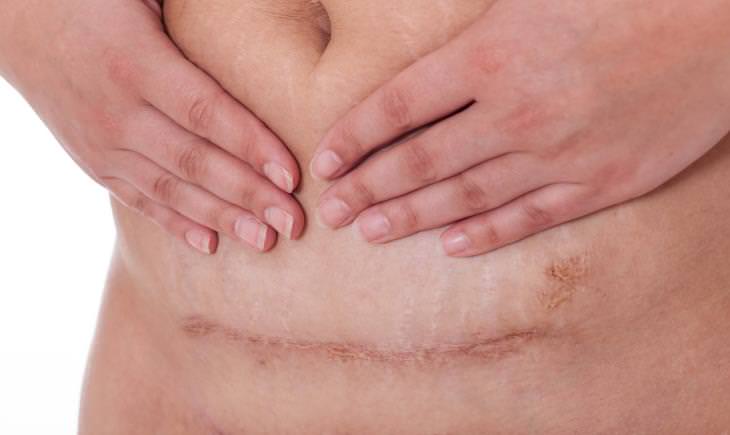
normal C section scar
New scars may itch due to slight damage to the nerve endings near the injury. Nerves can become sensitized and cause an itchy sensation as they heal. Therefore, if your scar itches, it's healing. An old scar is at least two years old. An old scar may itch if the skin is too tight, as is often the case after a burn. Tight and dry skin is easily irritated.
 
Possible Treatment Plans 
Noninvasive treatments are fit for small scars, new and old alike. These include the following topical treatments: creams, over-the-counter silicone bandages, prescription compression bandages, or massaging new scars while applying pressure. These treatments require diligent upkeep for several months for you to see results. 
 
Invasive treatments are fit for larger scars that cause severe discomfort and don't respond to topical treatments. These may include laser therapy, surgical excision, corticosteroid injections, cryosurgery (a chemical freezing of the tissue), and as a last resort, radiation therapy. 
 
Prevention is Easier than Treatment 
The best approach is to avoid injury instead of doing damage control. This can be done even before the scar forms. The key steps are to keep the skin clean, apply healing ointments, and use silicone bandages diligently. This regimen will help you prevent abnormal scarring as well as itching, and it will promote healthy skin healing. Do keep in mind that some scarring is inevitable. 
 
When to See a Doctor About a Scar 
Since we were babies, our mothers told us not to itch a scab. The medical reasoning behind that is that itching can introduce bacteria into the healing wound, causing an infection. If the scar is swollen more than usual, hot to the touch, painful, or the itching you experience interferes with your daily life, see a doctor. Cosmetic appearance is also a good reason to consult your doctor.
 
Stretch Marks
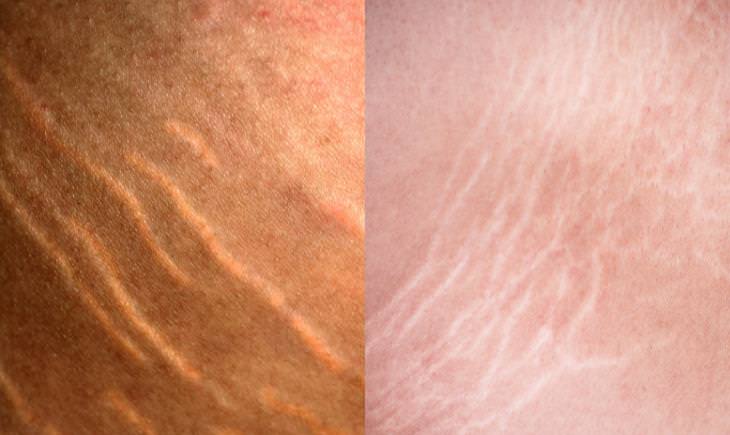
scar type  Stretch Marks
These can be caused by an increase of cortisone, apart from the well-known causes like pregnancy, rapid growth, or weight gain. Cortisone is a hormone naturally produced by the body. Having too much of it causes the skin to lose elasticity. Raised levels of cortisone (not to be confused with cortisol, the stress hormone) are caused by adrenal gland disorders, as this is the gland that produces this hormone. 
 
Extensive use of corticosteroid creams, lotions, and pills can also abnormally increase cortisone levels. These are used topically to treat eczema, dermatitis, and other skin conditions. Taken internally, they "treat rheumatoid arthritis, inflammatory bowel disease (IBD), asthma, allergies, and many other conditions. These drugs also help suppress the immune system in order to prevent organ rejection in transplant recipients," according to Mayo Clinic. 
 
A common myth about stretch marks is that they can be erased. However, that is sadly not the case. They will fade over time, even with no treatment at all. While there are treatments to improve their appearance, these scars will never vanish completely. Exfoliating treatments and collagen restoring creams, such as tretinoin may help, but they must be combined with daily use of sunscreen.

Keloid Scars
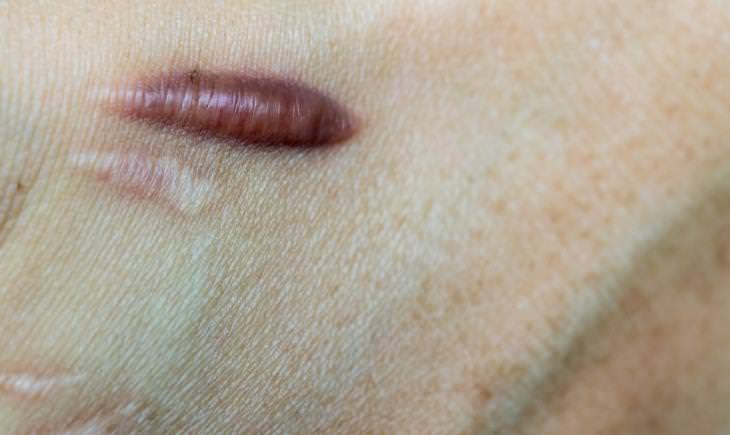
scar type keloid
Keloids occur when there's an abnormal growth of scar tissue. They can be much larger than the original wound. Keloids are harmless and mainly pose a cosmetic concern. They may take weeks or months to grow, and they may be itchier than other forms of scars. About 10% of the population is affected by them. 
 
Removing a keloid scare can be tricky, as the skin will try to scar up and heal again, growing more keloids that could be larger than the ones before. Over time, a keloid will shrink, and moisturizing it will help the discomfort. Silicone pads, pressure dressings, and even injections can be effective for treating a newly formed keloid. Laser treatments and cryosurgery will help an older keloid. While the risks of such a procedure are low, the chances of it regrowing are high.

Hypertrophic Scars
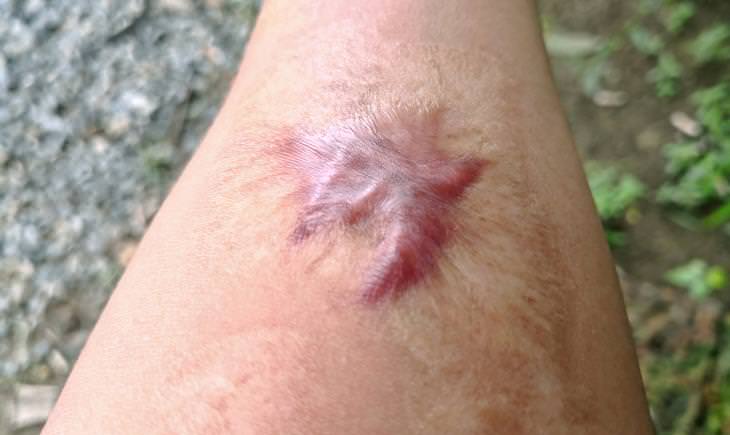
scar type hypertrophic
A form of scarring that's usually confused with keloids is a hypertrophic scar. It is an abnormal response to injury in the form of overgrown scar tissue. Hypertrophic scars may be genetic or caused by an infection. Hypertrophic scars are different from keloids in that they don't grow beyond the wound size. They're not as large or raised as a keloid scare, and are generally lighter in color. 
 
Usually, hypertrophic scars are not treated in the first year after injury. A scar takes a year or longer to fully form and settle, and the body works relentlessly to rebuild damaged tissues. After a year, the treatments are the same as for any other scar, as described throughout the article.
 
Atrophic Scar
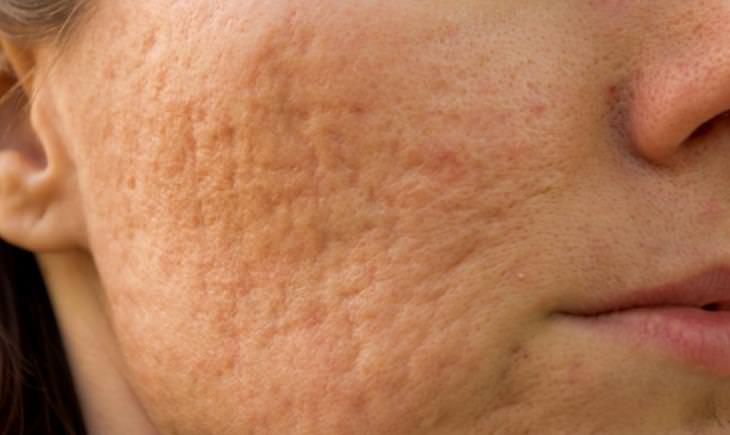
scar type atrophic
The exact opposite of hypertrophic scarring is the atrophic scar. If hypertrophic scars are raised, then atrophic scars are indented and heal below the normal layer of the skin. The most common form of such scars is acne scarring, which leaves one's face full of tiny indents. They're quite difficult to treat and require a diligent and complex treatment plan that may involve any of the following: chemical peels, filler injections, micro-needling therapy, excision, and skin grafts.
 
Last but not least - if you're left curious as to whether regular boring scars have a fancy name as well, we've got nice news: they're called normotrophic scars!

This is only for your information, kindly take the advice of your doctor for medicines, exercises and so on.   

https://gscrochetdesigns.blogspot.com. one can see my crochet creations  
https://gseasyrecipes.blogspot.com. feel free to view for easy, simple and healthy recipes    
https://kneereplacement-stickclub.blogspot.com. for info on knee replacement

Labels: , , , ,

Thursday, April 05, 2018

Cardiomyopathy

Cardiomyopathy is a progressive disease of the myocardium, the heart muscle. The condition is either confined to the heart or is part of generalised systemic disorders. They often lead to cardiovascular death or progressive heart failure-related disability.

These diseases have many causes, signs and symptoms and treatments. The heart muscle either becomes enlarged, thick or rigid in cardiomyopathy. In rare cases, the muscle tissue is replaced with a scar tissue.

The main types of cardiomyopathy are dilated cardiomyopathy, hypertrophic cardiomyopathy, restrictive cardiomyopathy and arrhythmogenic right ventricular dysplasia.

Some other types of cardiomyopathy are called ‘unclassified cardiomyopathy’ and ‘stress-induced cardiomyopathy’, also known as broken heart syndrome.

Cardiomyopathy can be inherited i.e. a family history of cardiomyopathy, sudden cardiac arrest, or heart failure. Four in ten cardiomyopathies – a major cause of sudden cardiac death and heart failure in young people – are genetic, according to a study published today.

Often, the cause isn’t known and it can affect all ages and certain age groups are more likely to have certain types of cardiomyopathy, according to a Consultant Interventional Cardiologist.
  
Symptoms
People with cardiomyopathy never have signs or symptoms in the early stages of the disease. It usually occurs later as the heart weakens.

“The cardiac expression of these genetic diseases starts early in some patients,” said the first author of the study. “In others it is delayed for many decades – longer than previously thought.”

Symptoms such as – shortness of breath, fatigue, and light-headedness or dizziness, edema or swelling in the ankles, feet, legs, abdomen, and veins in the neck, fainting attacks during physical activity, arrhythmias (irregular heartbeats), chest pain, especially after physical exertion or heavy meals.

Medication
People with cardiomyopathy condition are prescribed medicines such as ACE inhibitors, angiotensin II receptor blockers, beta blockers, and calcium channel blockers to lower the blood pressure. Beta blockers, calcium channel blockers, and digoxin help in decreasing the heart rate.

An antiarrhythmic drug helps to keep the heart beating with a normal rhythm. Diuretics are used to remove excess fluid and sodium from the body. Anticoagulants – “blood thinners” helps to prevent blood clots. Blood thinners are often used to prevent blood clots from forming in people who have dilated cardiomyopathy.

Treatment
With proper lifestyle modification, one can lower the risk for diseases or conditions that may lead to or complicate cardiomyopathy. A healthy diet and physical activities are part of a healthy lifestyle. A healthy diet includes a variety of fruits, vegetables, and grains.
It is suggested to consume foods that are low in saturated fat, trans fat, and cholesterol. Salt intake should be reduced. Smoking and consumption of alcohol and illegal drugs should be avoided. Having a good sleep and rest will help in reducing stress.
It is also important to note that one should take proper measures to treat conditions such as diabetes and high blood pressure.

Treatment
People with cardiomyopathy should get medical advice before performing any kind of physical activities. Implanted devices mentioned below helps the heart work better. The goal of treatment is to help your heart be as efficient as possible and to prevent further damage and loss of function.

Pacemaker, a small device that’s placed under the skin helps to control arrhythmias. It uses electrical pulses to prompt the heart to beat at a normal rate.

Cardiac resynchronization therapy (CRT) device coordinates contractions between the heart’s left and right ventricles.

A left ventricular assist device (LVAD) helps the heart pump blood to the body. An LVAD can be used as a long-term therapy or as a short-term treatment for people who are waiting for a heart transplant.

An implantable cardioverter defibrillator (ICD) helps control life-threatening arrhythmias that may lead to a sudden cardiac arrest.

This small device is implanted in the chest or abdomen and connected to the heart with wires. If an ICD senses a dangerous change in heart rhythm, it will send an electric shock to the heart to restore a normal heartbeat.

Heart Transplant is considered as a last resort treatment for people whose condition has become so severe that all treatments have failed. 

THIS IS ONLY FOR INFORMATION, ALWAYS CONSULT YOU PHYSICIAN BEFORE HAVING ANY PARTICULAR FOOD/ MEDICATION/EXERCISE/OTHER REMEDIES.                                                                                                                                                                                                      PS- THOSE INTERESTED IN RECIPES ARE FREE TO VIEW MY BLOG-                                                                                           https://gseasyrecipes.blogspot.com/   
FOR INFO ABOUT KNEE REPLACEMENT, YOU CAN VIEW MY BLOG-                                                           https:// kneereplacement-stickclub.blogspot.com/                              
FOR CROCHET DESIGNS                                                                                                                                                                                                                                         https://my crochet creations.blogspot.com/


Labels: , , , , , , , , , ,