Sunday, June 06, 2021

6 Great Exercises for Smoothing and Tightening Your Face

When we hear the term "facelift," most of us think of a painful medical procedure that involves surgery and some recovery time. Many women and men get a facelift to give them that youthful glow back, but you really don't need to go under the knife to get these results. By carrying out the following 6 stretching exercises, called "Facial Yoga," you can make yourself look youthful again without any painful procedures.
1. The brow lift 

face exercise
Forehead wrinkles bother many people because they get deeper over the years and can make you seem angry. You can minimize these wrinkles and prevent the formation of new ones with the following simple exercise that stretches the muscles behind the skin and, in doing so, helps smooth it. 
 
How to: 
• Place the lower part of your right palm on your right eyebrow and the lower part of your left palm on your left eyebrow. 
 
• Lift the muscles of your eyebrows up with your palms, as if you’re surprised, and lower them back as if you’re angry. 
 
• Stretch your eyebrows up and down 10 times. When you come to the last time, hold your eyebrows up for 30 seconds. Lower your eyebrows, and hold them in this position for 30 seconds and relax. 
 
• Then repeat the exercise - 10 repetitions of raising and lowering and 30 seconds of release.
2. The filler  
Laughter lines are certainly charming, but not when they are deep, creating deep grooves on the sides of the lips. The next smiley exercise will help you fight fire with fire, and get rid of these laughter lines once and for all. 
 
How to: 
• Place your fingers on your cheeks and press lightly. 
 
• Smile widely and use your fingers to hold the smile in place by gently pressing on the cheeks. 
 
• Close your lips half-way and press your cheeks to create resistance. 
 
• Keep each position (full smile and half smile) for 10 seconds and release the stretch. Repeat the exercise 10 times.​ 
 
3. The neck lift 
 
Eventually, gravity catches up with all of us, and our neck skin starts sagging and wrinkling in a way no one wants to experience. This next stretch below will help prevent this from happening and also improve the appearance of the "double chin" that is common in older people.  
 
How to
• Lightly close your mouth. 
 
• Separate your upper and lower teeth as far as you can without opening your mouth. 
 
• Move your jawbone forward while stretching the lower lip, holding it in this position for 5 seconds. 
 
• Slowly bring your jaw, lips, and teeth back to the original position. 
 
• Repeat the exercise 10 times. 
 
4. “Oh” face 
With the help of some exaggerated facial movements and sounds, you can stretch the area around your lips. Just pretend that you’re in a voice development class and that way you can benefit from this simple exercise two-fold.  
 
How to: 
• Open your mouth and then press your lips together so that they’re closed but your upper and lower teeth aren’t touching. 
 
• Now say "Oh" with excessive stretching of the lips to create the sound. • Then say “eee" while stretching the lips back to half a smile. 
 
• Repeat these two sounds 10 times, relax your lips, and perform 3 total sets. 
 
5. The neck stretch 
face exercise
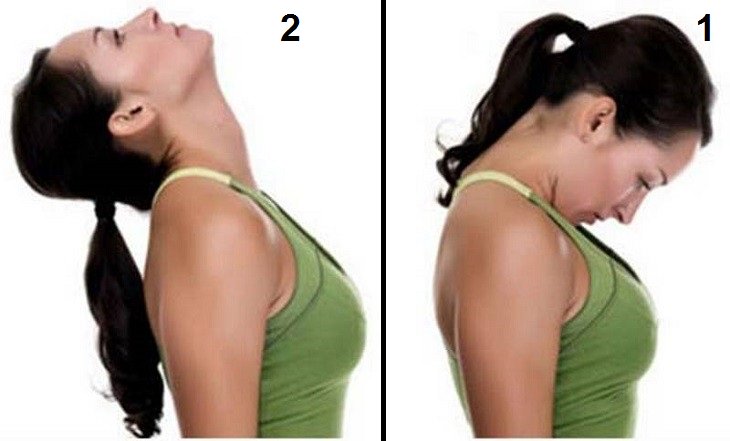
This stretch will not only smooth out your neck skin but will also help relieve pain that many people experience in this area. You can do this stretch wherever you are, even sitting at home or at the office, and within a few moments you can get pain relief and rejuvenate your appearance. face exercise

How to:  
• Hold your chin against your chest until you feel a stretch in your neck. 
 
• Start lifting your head upwards in a circular motion. 
 
• As you move, bend your head back and look up at the ceiling. Hold your head in this position for a few seconds, and lower it back down in a slow circular motion. Repeat the exercise 10 times. 
 
6. The all-inclusive face life  face exercise

This last exercise is certainly entertaining, and although it seems funny, its results are serious. With this general facelift, you can stretch muscles in several areas of the face, strengthening them, improving the appearance of wrinkles and preventing the formation of new ones.

How to: 
• Place your palms above the cheekbones and place your fingers on your head. 
 
• Close your eyes and move your hands - palms and fingers - back and to the side. While doing so, stick out your tongue and stretch it forward and down as far as you can. 
 
• Stay in this position for 60 seconds and then release. 
 
• Repeat the exercise 3 times.

This is only for your information, kindly take the advice of your doctor for medicines, exercises and so on.   

https://gscrochetdesigns.blogspot.com. one can see my crochet creations  
https://gseasyrecipes.blogspot.com. feel free to view for easy, simple and healthy recipes    
https://kneereplacement-stickclub.blogspot.com. for info on knee replacement

Labels: , , , , , , , , , , , , , ,

Thursday, December 07, 2017

Angina — causes, risk factors, symptoms, diagnosis and treatment

Do you often feel a nagging pain in your chest? It’s time you stop blaming indigestion and heart burn for the same. You could have an angina attack.
What is angina?
Angina is the medical term used to describe chest pain originating from the circulatory system and the heart. It is not a disease or condition by itself. It is rather a crucial symptom that indicates an underlying heart disease.
Causes and types of angina
‘Angina is chest discomfort caused due decreased oxygen supply to a part of the heart muscle. It is caused due to partial or complete obstruction to arteries supplying the heart,’ says a consultant cardiologist.
Depending on the type of pain and the duration for which it lasts, angina is classified into 4 different types:
  • Stable angina: It occurs when the heart muscle has to work harder in order to pump blood. Situations like emotional stress, physical exertion and cold temperature may cause angina by interrupting the blood flow to the heart. This type of angina lasts for a short while and is relieved with medicines and rest.
  • Unstable angina: It is also called angina pectoris. It can occur without any exertion, while you’re at rest. Building plaque and obstruction of main coronary arteries usually is the primary reason causing unstable angina. The pain may last for 10-15 minutes.
  • Prinzmetal angina/Variant angina: It occurs due to spasms in the coronary arteries. Pain occurs at rest, particularly between midnight and early morning.    
  • Microvascualar angina: It is mild pain that usually lasts for longer than 10 minutes and may continue for 30 minutes or more. It occurs due to interrupted blood flow through the smallest coronary arteries.
Signs of angina
Dr.  explains a few feature of angina that differentiates it from regular chest pain due to other reasons not originating from the heart.
‘Angina is usually felt as pressure, heaviness, tightening, squeezing or aching across the chest, particularly behind the breastbone. This pain often radiates to the neck, jaw, arms, back or even the teeth. Patients may also suffer from indigestion, heart burn, weakness, sweating, nausea and shortness of breath.’
‘Any chest pain or discomfort which occurs at rest and continues for more than 10 minutes requires medical attention if it is associated with:
  • Profuse sweating
  • Giddiness
  • Weakness
  • Nausea
  • Light headedness
‘The threshold to consult a doctor should be low if the subject has risk factors for atherosclerosis (fat acculumation in arteries) like advanced age, smoking,diabetes, hypertension, family history of heart disease and obesity/sedentary life style,’ he explains.
Diagnosis of angina:
According to the Dr., angina can be difficult to differentiate from chest pain arising from other systems of the body. Therefore he suggests that it is best for you to let the doctor decide the cause of chest pain because self diagnosis could be misleading and may result in complications.
‘Chest pain can occur from almost any organ in chest other than heart like lungs, ribs, esophagus (food pipe), aorta (largest artery of body) and pericardium (layers of heart).  Any chest pain which typically precipitates on exertion and gets relieved on rest favours heart origin. A well localised pain, varying with phases of respiration or posture and any chest pain which is reproducible on palpation are unlikely to be coming from heart.
Depending on your explanation of chest pain and physical examination your doctor may recommend you the following tests to confirm angina and its underlying cause.
  • Blood tests: Certain blood markers like cholesterol and triglycerides can help identify the chances the artery blockage and plaque formation causing angina
  • ECG: Electrocardiogram is used to check the electrical activity of your heart using an ECG device
  • Echocardiography: It is a test that helps the doctor to visualise the heart real time to analyse how effectively it works
  • Coronary angiography: In this test, a specific dye is injected in the blood stream to check the rate at which blood flows through the arteries. It is an important test to identify CHD.
  • Stress test: A simple exercise test can determine the electrical activity and functioning of your heart while you’re exercising.
Treatment and prevention:
‘An untreated angina can result into full blown heart attack with severe damage to heart muscle. It can also result into shock like state resulting into irreversible damage to heart and abnormal heart rhythms,’ says the Dr. Therefore, early medical attention is important to get appropriate treatment at the right time. Here are some medicines that your doctor may prescribe you:
Medicines for unstable angina:
  • Blood thinning agents like heparin and nitroglycerin may be prescribed to improve blood blow though narrow arteries
  • Aspirin and clopidrogel may be prescribed to prevent blood clotting and reduce the chances of heart attack
  • Medicine to control blood pressure may be required if you are hypertensive
  • Statins may be prescribed to lower cholesterol
Medicines for stable angina:
  • Nitrates are given to prevent angina
  • Nitroglycerin, aspirin and clopidrogel may be prescribed to prevent blood clotting and improve blood flow through the arteries
  • Beta blockers may be given to lower heart rate and help it work smoothly
Surgical procedures
Angioplasty- It is the most common surgery performed to open up blocked arteries using a small device called stent.A stent is a small device that is placed in the blocked artery to open it up and improve blood flow.
Bypass surgery: In this procedure, a healthy blood vessel (called a graft) is used to form a bypass or another route to supply blood to the heart .
Since, heart disease is the underlying cause of angina, preventative measures include controlling risk factors that could lead to heart disease.
  • Eating healthy food, avoid junk is the mainstay for controlling cholesterol levels and maintaining a good lipid profile
  • Exercising regularly, at least 30 minutes every day, will help you lose weight, boost your good cholesterol levels and improve your heart function.
  • Smoking is the main cause of atherosclerosis that can lead to angina. So if you smoke, you should quit now                

    THIS IS ONLY FOR INFORMATION, ALWAYS CONSULT YOU PHYSICIAN BEFORE HAVING ANY PARTICULAR FOOD/ MEDICATION/EXERCISE/OTHER REMEDIES.   

    PS- THOSE INTERESTED IN RECIPES ARE FREE TO VIEW MY BLOG-                      

    HTTP:GSEASYRECIPES.BLOGSPOT.COM/
    FOR INFO ABOUT KNEE REPLACEMENT, YOU CAN VIEW MY BLOG-                                                                       
    HTTP://KNEE REPLACEMENT-STICK CLUB.BLOGSPOT.COM/
    FOR CROCHET DESIGNS

    HTTP://MY CROCHET CREATIONS.BLOGSPOT.COM

Labels: , , , , , , , , , , , , , , ,

Thursday, February 04, 2016

Remedies to Get Youthful Hands

THIS IS ONLY FOR INFORMATION, ALWAYS CONSULT YOUR PHYSICIAN BEFORE HAVING ANY PARTICULAR FOOD/ MEDICATION/EXERCISE/OTHER REMEDIES.

FOR INFO ABOUT KNEE REPLACEMENT, YOU CAN VIEW MY BLOG
HTTP://KNEE REPLACEMENT-STICK CLUB.BLOGSPOT.COM/

FOR CROCHET DESIGNS- http://My Crochet Creations.blogspot.com/


I tend to obsess over lines and wrinkles on my face, but my hands are an area I often overlook. I do occasionally get a manicure, or slather on some cream (when I remember to), but for the most part, I barely give my hands much thought.
My perception of my hands changed a couple of weeks ago. They appeared to be paper-dry, wrinkly, veiny and were splattered with spots. And while my face may not show my age, my hands clearly give it away. So, I made it a point to give my hands a little TLC. Here's what really works for me:  

Why Do Your Hands Show Their Age?
Sun damage is one of the biggest culprits for aging hands. So, as a rule of thumb, I like to keep the following motto in mind: 'More time in the shade means less skin damage as you age'. I also abide by a new golden rule: 'Treat your hands as you would your face' - moisturizing frequently, using sunscreen and minimizing exposure to the elements to help keep my hands looking young. But, there's more...
 
1. Give Yourself a Hand Massage
Hands

A hand massage isn't just relaxing - it increases blood flow, tightening up sagging skin. Once a week, shake out your hands for one minute, loosening them up, then add three to four drops of olive oil to your left palm. In small circular movements with medium pressure, work your right thumb over your palm, and up and down each finger. Then, turn your hand over and repeat the process, following the same techniques on your right hand. Olive oil will keep your skin hydrated, smooth and supple.
 
2. Moisturize Daily

For the best results, opt for an anti-aging hand cream with brightening ingredients. Look out for moisturizers with ingredients such as kojic acid, mushroom extract, vitamin C and licorice to help clear any dark spots you may have. A moisturizer should be used twice a day and within two to three months, you'll notice a difference in the way your hands look.
 3. Exfoliate
 Once a week, exfoliate your hands with a homemade scrub. Preparing it is easy. Just combine equal parts sugar and olive oil and massage it into your hands. When done, wipe the scrub off with a towel, and if your hands feel greasy, wash them.  
 
4. Protect your Hands 
Keep your hands out of the sun by wearing sunscreen on a daily basis. UV rays cause skin-plumping proteins like collagen and elastin to break down quickly. Whenever possible, wear gloves to help protect your hands not only from the sun, but other weather elements too.
 5. Cover Up with Makeup
 To instantly camouflage fine lines and age spots, add a drop of liquid foundation to a dollop of hand cream, rubbing it all over the top of your hands. This makeup trick will also help to even out your skin tone and smooth the look of wrinkles.
 
6. Care for Your Nails
 For better-looking hands, your nails need some attention too. Start off by applying some cuticle oil every day (even over a manicure) to help maintain stronger nails. Periodically, give your nails a break from polish, giving them at least a few days to recover. To further protect your nails, wear gloves when doing the dishes, as harsh soap and hot water may make them weak.

Labels: , , , , , , , , ,

Friday, April 25, 2014

Make your own face-masks

Face skin is the most delicate one. It is essential to take care of it on a daily basis. And so, when you are not keen on spending a lot at spa for facials, try some quick home methods to let your skin glow:

Quick mask to brighten your skin: Take a slice of ripe papaya, remove seeds and pulp. Rub the inside of papaya peel on your face, neck and hands. Let it dry for 15 to 20 minutes, then wash it off. Try this mask twice a week.

For daily cleansing and toning: Brew a cup of green tea and cool it. Then soak two clean, round cotton balls in the tea and squeeze out any excess liquid. Place one on each of your eyes for 15 minutes. Also, apply this tea as toner on your face daily.

Mask to tightening skin: 2 tbsp plain yogurt with 1 tbsp fresh lemon juice and apply to your cleansed face and neck. Let it dry for 20 to 30 minutes. Wash it off with running water.

To moisturize your face: Combine 2 tbsp honey with 1 lemon juice. Apply to your clean face and leave on for 20 minutes. Wash it off.


PS- THIS IS ONLY FOR INFORMATION, ALWAYS CONSULT YOU PHYSICIAN BEFORE HAVING ANY PARTICULAR FOOD/ MEDICATION/EXERCISE/OTHER REMEDIES.
PS- THOSE INTERESTED IN RECIPES ARE FREE TO VIEW MY BLOG-
HTTP:GSEASYRECIPES.BLOGSPOT.COM/
FOR INFO ABOUT KNEE REPLACEMENT, YOU CAN VIEW MY BLOG-
HTTP://KNEE REPLACEMENT-STICK CLUB.BLOGSPOT.COM/

FOR CROCHET DESIGNS


HTTP://MY CROCHET CREATIONS.BLOGSPOT.COM

Labels: , , , , , , , , , ,