Friday, September 03, 2021

Pay Attention to These Foot Symptoms for Better Health

Although “my feet are killing me!” is one of the most overused exaggerations in the entire world, the truth is that the condition of your feet can say a lot about the overall state of your health, as well as indicate any underlying issues you may have.

Reflexologists and massage therapists have been proponents of manipulating points on the feet to improve the health of internal organs for a very long time. Although the evidence to prove this is somewhat scant, it's true that a person’s state of health can be expressed through their feet.
 
In addition to containing a quarter of the entire human body’s bones, the feet also bear its entire weight. There are no less than 33 joints, 100 tendons, muscles and ligaments in them, as well as countless nerves and blood vessels that link to the heart, spine and brain. 
 
Taking the above into account, it perhaps isn’t a surprise to know that if there is something wrong with someone’s feet, the likelihood is that their entire body will be affected as well. 
 
Let’s take a look at 10 things about the human body that can be revealed by the condition of the feet: 
 
1. Foot Cramping and Spasms 
If you happen to get cramps and spasms in your foot, it could be a sign of a deficiency in your body. Spasms can be caused by dehydration, which occurs as a result of the muscles not getting enough oxygen. Another reason for muscles spasms could be that there is a lack or imbalance of electrolytes or nutrients in your body.

If you experience spasms specifically when walking, then this could indicate a circulatory problem. 
 
A further reason for spasms to occur is overexertion, or failing to stretch adequately prior to exercising. Last but not least, the type of shoe you’re wearing may be causing you discomfort. If you’re a lady who happens to enjoy wearing sky-high heels, for instance, you should look more closely at your choice of footwear to see if they’re to blame for the spasms.  
 
2. An Enlarged Big Toe
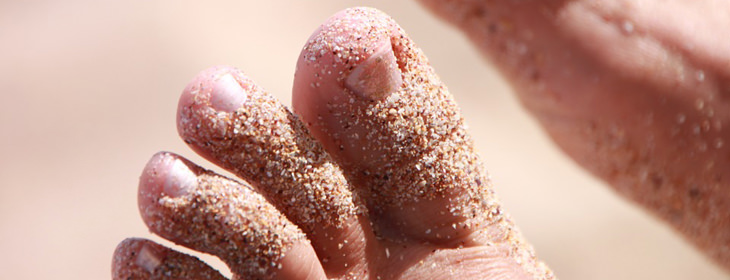
Gout is the most common type of inflammatory arthritis in men, and it can cause the big toe to become red, hot, swollen and extremely painful. Gout occurs as a result of too much uric acid building up in bodily tissues and fluids. It’s also to blame for an increased risk of developing kidney stones. 
 
This type of inflammatory arthritis usually manifests itself in the big toe because uric acid crystals tend to collect in the coolest part of the body. Overweight or obese people are more at risk of developing gout, as well as those who drink excessive amounts of alcohol and/or consume lots of meat. Furthermore, certain medication can exacerbate the risk. 
 
3. Cold Feet, Warm Heart?  
Do your feet to tend to be abnormally cold? If they do, it could indicate that you have poor circulation, diabetes, hypothyroidisim or anemia. 
 
In addition, if your feet change color from red, to white, to blue, it could be a sign of Raynaud’s disease, which is a narrowing of the blood vessels when nerves overreact to the cold. 
 
Primary Raynaud’s sufferers are advised to avoid the cold and smoking tobacco, however 20% of all cases stem from an underlying disease.
 
4. Swollen Feet
Swollen feet can be indicative of numerous health problems, and if you happen to have this symptom you should most definitely get it checked by a doctor – it could be life-threatening. 
 
Poor circulation and related heart failure, kidney or liver disease could all be behind swollen feet, as could deep vein thrombosis, a blood clot, lymphatic build-up and cellulitis, among others. 
 
Try raising your feet when sitting down, exercising your legs, reducing your salt intake and avoiding tight clothes, if you happen to have swollen feet. 
 
5. Spoon-Shaped Toenails 
Concave-shaped toenails aren’t just unsightly – they could also be a sign of something underlying. The primary thing it’s associated with is nutritional deficiencies. They’re also associated with genetic disorders, circulatory problems, autoimmune diseases and musculoskeletal conditions.  
 
6. Colored Toenails
Conditions such as tuberculosis, jaundice due to liver problems, thyroid gland information and even sinusitis could all cause the toenails to yellow. 
 
Yellowed toenails can also be symptomatic of bronchiectasis, a lung condition that causes breathing problems. 
 
Different nail colors and textures could also indicate a whole range of various systemic problems. If you have toenail discoloration or deformities, you should seek medical advice immediately.  
 
7. Pins and Needles  
Circulatory problems, peripheral nervous system damage, a trapped nerve and a range of other ailments can lead to numbness or tingling in the feet. Diabetics who are exposed high blood glucose for an extended period can also experience nerve damage, which in turn leads to tingling in the feet. Pins and needles in the body’s extremities can also be one of the first symptoms of multiple sclerosis. 
 
 8. Aching Toe Joints
Some 90% of people who have rheumatoid arthritis will experience aching toe joints. The disease makes the lining of the joints swollen and inflamed. As a result, the joints and supporting ligaments and tissues are damaged, which ultimately leads to decreased mobility. 
 
Numerous anti-inflammatory foods can be consumed to help relieve these symptoms, and also provide pain relief. Furthermore, shoe inserts can help minimize pressure and correct the shape of the foot. Some people also have braces that they wear on their feet.

9. Foot Drop 
If you have difficulty lifting the front part of your foot, this could be a sign that you have drop foot, which is normally indicative of an underlying muscular, neurological or anatomical problem. 
 
Nerve or muscle damage as far up as the neck or shoulder could be causing the problem, causing your foot to drag when walking. 
 
Foot drop can occur as a result of a leg injury, or damage during a hip operation. It can also be the result of a neurological disease such as polio, as well as a brain or spinal cord disorder. 
 
A brace or splint can be used to help maintain a normal foot position, whereas nerve stimulation can also alleviate drop foot to a certain extent. Surgery can also be undertaken to treat nerves, fuse bones or correct the position of tendons.  
 
10. Persistent Sores
If you have diabetes, it’s possible that you have experience nerve damage to some extent. Nerve damage, or neuropathy, results in people being unable to feel or notice injuries such as blisters. 
 
A foot injury that hasn’t been seen to appropriately can lead to ulcers and gangrene, which, in a worst-case scenario, could lead to a food being amputated. Nerve damage can also cause feet and toes to change shape. 
 
Dry, cracked and peeling skin on the feet can also be a sign of diabetes, as can calluses and poor circulation.

Conclusion  
If you have a seemingly minor problem with your feet, it might warrant more attention than you first imagined. Keep all of the above in mind and seek medical advice should you feel the need to.

This is only for your information, kindly take the advice of your doctor for medicines, exercises and so on.   

https://gscrochetdesigns.blogspot.com. one can see my crochet creations  
https://gseasyrecipes.blogspot.com. feel free to view for easy, simple and healthy recipes    
https://kneereplacement-stickclub.blogspot.com. for info on knee replacement

Labels: , , , , , , , , , , , , , , ,

Friday, January 24, 2020

Honey - 4 Reasons Why You Should Start Eating It Today

Traditionally, the use of honey stretches back to time immemorial. It is still considered one of the most precious gifts of nature to mankind. Modern research also suggests that honey has unique medicinal and nutritional properties. Honey should be incorporated in your daily diet as it is one food which is naturally beneficial for your overall health and does have any side effects.

Following are the traditional uses of honey, according to ayurveda:

1. Prevents anemia: Honey contains high amounts of iron, manganese and copper which are very essential for building haemoglobin. According to ancient texts, honey is a traditional cure as well as prevention for anemia as it helps in maintaining the optimum level of red blood corpuscles and haemoglobin.

2. Promotes eye health: Honey has been used to treat various eye diseases since ancient times. It is known to improve vision with daily application. It is an effective cure against diseases like  conjunctivitis, trachoma or even something as minor as eye itching. It is also beneficial to treat glaucoma in the early stages. 

3. Skin care: Ancient texts on ayurveda mention that external application of honey is effective in curing sores or other wounds. It works like an antiseptic and helps to soothe pain and hastens the healing process. It is also used to treat skin burns or carbuncles.

4. Cure for coughs: Honey is extremely useful in treating coughs. It works as a demulcent which aids in soothing the swollen mucous membrane present on the upper respiratory tract. It relieves you from irritating coughs and associated symptoms like frequent spurts of cough while talking and difficulty in swallowing. It is a chief ingredient in ayurvedic cough syrups for the same reason. You can also try honey gargles to relieve pain from throat inflammation. 

This is only for your information, kindly take the advice of your doctor for medicines, exercises and so on.     
https://gscrochetdesigns.blogspot.com. one can see my crochet creations  
https://gseasyrecipes.blogspot.com. feel free to view for easy, simple and healthy recipes    
https://kneereplacement-stickclub.blogspot.com. for info on knee replacement
 

Labels: , , , , , , , , , , , , ,

Monday, January 06, 2020

How to Use a Potato to Heal Your Entire Body (Including Detox, Fever, and Infection

Potatoes have gotten a lot of flak in recent years due to their carbohydrate-rich nature. Proponents of low-carbohydrate diets shun potatoes as awful and unhealthy. However, potatoes—particularly raw potatoes or the juice of a raw potato—have a never-ending list of health benefits.


In this article I am going to cover the health benefits of raw potatoes and various remedies using potatoes. In the second part of the article, I’ll explain how to detox with potato on feet, how to use potato as a remedy for fever and how to use it to draw out infection and sickness.

Potatoes – Health Benefits

There are many different types of potatoes that come in all shapes and sizes. Potatoes are packed with nutrients such as potassium,  thiamin and niacin as well as vitamin C, making them an ideal part of a healthy diet. They can also be used to treat various ailments, either taken internally or as a topical treatment.
To get a serving of potato juice—either to use in smoothies as a nutrient-rich accompanist to other fruits and veggies, or for use as a topical medicine—simply cube up two medium potatoes, then run them through your juicer. This should yield a half-cup of potato juice. You can leave the skin on but make sure to scrub it thoroughly.
You may wish to mix the potato juice with other fruit and vegetable juices or smoothies, as the taste of potato juice alone is mild and not so palatable.

Nutrients In Potato Juice

Potassium – A 1/2-cup of potato juice provides almost 27% of the daily recommended dietary intake of potassium for all adults. Read more about the importance of potassium in my article about potassium deficiency---- causes, symptoms and what to do.
Vitamin C – A 1/2-cup of potato juice provides more than 50% of the dietary reference intake of vitamin C for adults.
Thiamine (vitamin B1) – A 1/2-cup of potato juice provides 20% of the recommended dietary allowance for adult men, and almost 22% for adult women.
Niacin (vitamin B3) – A 1/2-cup of potato juice provides almost 20% of the recommended dietary allowance for adult men and 22.5% for adult women.

Home Remedies Using Raw Potato

The list of remedies using raw potatoes or their juice is virtually infinite. Although some of these remedies are simply folk remedies passed down through the generations, others have been studied empirically and are backed by hard science. Here are a few great potato remedies you may wish to try.

Digestive health and stomach problems

Potatoes have been used for centuries by people with digestive issues ranging from heartburn to indigestion. A 2006 study found that two-thirds of patients with digestive upset reported their problems abating when they used potato juice to treat them.

According to the study from 2013, potato juice has also been used to relieve gastritis (inflammation of the stomach), stomach ulcers and helps cleanse the intestines and reduce the amount of acid in the gastrointestinal system.

Stomach (peptic) ulcers

Another folk remedy with roots in real science is use of potato juice for stomach ulcer treatment and prevention.
A team of scientists from the University of Manchester, led by professor Ian Roberts, found that potatoes could prevent and even cure stomach ulcers because of a never-before-known molecule in the juice of the potato that fends off the bacteria that pave the way for stomach ulcers.

Cancer-killing properties

Although potatoes may not be the answer to curing all cancer types, one 2013 study published by researchers from China’s Northeast Agricultural University found that a substance in potato juice called patatin was able to halt the proliferation of cancer cells in mice with melanoma cancer.

Lipid panel improvement and antioxidant qualities

If you had bad cholesterol and high triglyceride levels, potato juice may be the answer to getting your lipid panel numbers where they need to be.
This may be in part due to the antioxidant qualities that potatoes possess. A 2012 study performed by Polish researchers from the Poznan University of Life Sciences found that potatoes are high in antioxidative activity—and that this quality increases when potatoes are processed via juicing.

Arthritis

According to the  Studies from 2013, one to two teaspoons of potato juice taken before each meal can help to improve arthritis symptoms.
Alternately, you can boil clean potato peelings in a pot of water for three to five minutes, then strain and cool. You can drink one cup of this up to four times per day to relieve arthritis pain and inflammation.

Scurvy

Scurvy is a disease caused by a deficiency of vitamin C, whose symptoms are swollen, bleeding gums and problems with wound healing. Due to the high levels of vitamin C, potato juice can be beneficial for fending off scurvy when taken regularly.

Skin care

Potatoes are a wonderful natural cleanser, especially for facial skin. Grate a raw potato and rub it over the skin, then rinse. The nutrients in the potato can absorb into the skin to nourish and moisturize your face, leaving you glowing and healthy.
Some people say that potato juice can be used on your face to whiten the skin and remove dark spots and hyperpigmentation. But I was unable to find any research to support it.
Here’s how to use a potato to whiten your skin and remove dark spots:
  1. Grate a small potato, put it in a cheesecloth and squeeze out the juice.
  2. Using a cotton ball, apply the potato juice on the skin areas where you have hyperpigmentation or dark spots.
  3. Use once a day before going to bed to a get a more even skin tone.

Burns, sores, cuts, cracks

To treat minor skin injuries, grate a small amount of potato and mix with honey or olive oil. Apply this mixture to the affected area and fix in place with a bandage for about two hours.
To treat a sunburn, slice a potato thinly and place them on the burned area for a few minutes to moisturize skin and relieve pain.

Headaches

To treat a headache with potato, slice the tuber thinly and place the slices on the forehead.
To treat chronic headaches, take one-quarter cup of hot potato juice before each meal, no more than three times per day.

Awaken tired eyes

You can perk up sleepy eyes by placing a slice of potato over each eyelid and leaving them on for just a few minutes.

Improving liver function

To improve the function of your liver, try a potato skin tea. Just boil the peelings from one large potato in one cup of water for five minutes. Strain and drink once cooled. Drink this daily to keep your liver and gallbladder at top performance.

Relief from swelling and itching

Potato slices can be applied to swollen, tender skin to reduce swelling and can also relieve itching associated with insect bites or dermatitis. Place a slice on the affected area and leave it in place until it warms to body temperature, and replace as needed.

Detox with Potatoes on Feet

Your skin is sometimes called the third kidney because if its role in body detox. I’ve already mentioned that you can draw out toxins through your skin by taking detox baths or you can even detox your armpits.

There are many books and websites that claim that you can detox your entire body through your feet. While there is no scientific evidence to support it, a lot of people say that they use foot detox pads.
Instead of buying foot detox pads, why not use a potato on your feet as a simple way to detox your body.
Here’s how to use the potato foot detox:
  1. Put two thin slices of raw potato in a pair of tight fitting socks and place the potato slices under your feet.
  2. Leave for a few hours to draw out toxins from your body.

Potato Slices in Socks as a Remedy for Fever

I’ve recently learned about a folk remedy for fever using potatoes. If you suffer from fever, all you need to do is put a slice of chilled raw potato at the bottom of your feet. Put it in your sock and leave for a 2-3 hours to break the fever.
While there is no scientific evidence to support it, a lot of people claim that it helps to reduce fever.

Do Potatoes on Feet Pull Out Sickness?

There is an anecdotal evidence that potatoes can pull out sickness but I couldn’t find scientific evidence to support it. The idea of putting potatoes in your socks for sickness could be attributed to foot reflexology which can be traced back to ancient Egyptian and Chinese civilizations.

According to reflexology, each area in your foot corresponds to an area in your body. Reflexology uses massage therapy techniques to stimulate nerves, mostly in the palm of your hand and bottom of your foot. Each of these nerves branches off to different organs and glands in your body. I have already mentioned that potatoes have a wide range of health benefits and nutrients. So possibly, according to reflexology, when placed under your feet, these nutrients spread thorough your body to kill bacteria and viruses.

Feel free to leave a comment if you use potatoes on feet for sickness as this will allow me to share the information with other readers.

Do Potatoes Draw Out Infection?

A lot of people use a potato poultice to draw Infection from wounds, boils, or skin abscesses. Depending on the infection, it may help to draw out the pus within 1-3 days. According to the Journal of Medicinal Plants Studies, potatoes have been used for healing burns, skin cracks, sores, and other types of skin infections. Raw potatoes are also used to relieve swelling and itching caused by insect bites.

Here is how to make a raw potato poultice to treat infection and relieve inflammation:
  1. Grate or scrape the raw potato (peel and pulp). Remember to thoroughly wash the potato skin first.
  2. Put the grated potato in a gauze.
  3. Place the gauze and grated potato over the infected skin area and cover with a cloth bandage to hold into place.
  4. Leave the potato poultice on the inflamed skin area for 1-2 hours each session to help pull out the infection. Rinse the affected area in a salt water wash after each application.
  5. Use for 24 hours to reduce inflammation and heal the infection.
Please see your doctor if the infection gets worse or doesn’t improve. Also be aware of other signs that your infection gets worse. You shouldn’t use the potato poultice on an open wound.

Is a Sweet Potato a True Potato?

Sweet potatoes are a completely different type of vegetable from potatoes.
Traditional types of potatoes  like the ones used to make fries, potato mash, and roast potatoes are from the nightshade family  Solanaceae. However,  sweet potatoes aren’t actually potatoes because they are from the morning glory plant family.
Sometimes, potatoes are called ‘white potatoes’ or ‘Irish potatoes’ to distinguish them from sweet potatoes.

Potatoes – A few precautions

Potatoes can heal, but there is such a thing as too much of a good thing in this case—avoid ingesting too much of potato juice per day, as higher dosages may be toxic. It is recommended not to drink more than half a cup of potato juice daily.
Also, potatoes with a greenish color under the skin should be avoided, as these contain higher levels of a chemical called solanine, which can interfere with nerve activity and cause severe nausea, diarrhea and cramping.

this is only for your information, kindly take the advice of your doctor for medicines, exercises and so on.     
https://gscrochetdesigns.blogspot.com. one can see my crochet creations  
https://gseasyrecipes.blogspot.com. feel free to view for easy, simple and healthy recipes    
https://kneereplacement-stickclub.blogspot.com. for info on knee replacement
 

Labels: , , , , , , , , , , , , ,