Wednesday, February 17, 2021

7 Dangerous Types of Chest Pain You Should Be Wary Of

We’ve been told repeatedly that sharp, stabbing pain in the chest is a medical emergency. This is certainly true, as this type of chest pain may be a symptom of a heart attack. That’s why it’s necessary to get checked by a doctor if you experience this symptom, even though there are benign health conditions like precordial catch syndrome that also manifest themselves through sharp chest pain.

This increased awareness around heart attacks is vital, but so is the understanding that other types of pain in the chest shouldn’t be dismissed. For example, burning pain in the chest and pain that gets worse as you inhale can be equally dangerous and crucial to recognize. In this article, we will walk you through 7 types of chest discomfort and to which condition each type of pain is related.
 
1. A feeling like you have something heavy on your chest
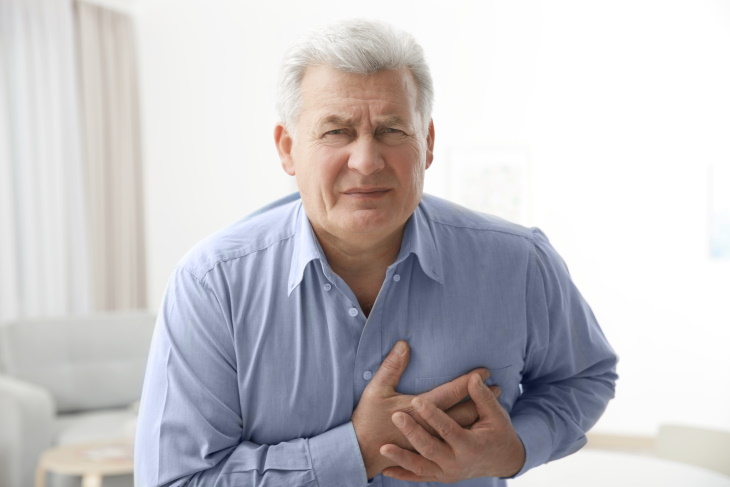
Types of Chest Pain man with chest pain
Some patients describe the chest pain they experience as a tightness, dull pain, or heaviness, almost as if they had a weight sitting on their chest. Like sharp chest pain, any of these symptoms can point to poor blood flow to the heart, which could result in a heart attack or a less threatening condition called angina. In the case of a heart attack, this chest discomfort can often be accompanied by other symptoms, such as: 
Lightheadedness 
 
The inability to exercise 
 
Heart palpitations 
 
 Pain radiating to the jaw or the left arm 
 
Shortness of breath. ​
 
2. Unexpected shallow breathing, chest tightness, and heart palpitations 
Other health conditions can sometimes mimic the symptoms of a heart attack. For example, a panic attack can often be sudden and extremely unpleasant, so people who experience it for the first time may mistake it for a heart attack. Like a heart attack, a panic attack causes chest pain, tightness in the chest, and heart palpitations. 
 
However, unlike a heart attack, the cause of these symptoms is stress and shallow breathing. A panic attack typically resolves within 20-30 minutes. For those who experience anxiety-related chest tightness or panic attacks, therapy sessions and relaxation techniques are helpful tools.
 
3. Intense pain when you inhale
If the pain and tightness in your chest appear to worsen when you take a deep breath, this can point to a lung issue. This type of pain and discomfort is present in pneumonia, before an asthma attack, a blood clot in the lungs, or in patients with pleurisy, an inflection in the lining of the lungs. 
 
This pain can appear on one of both sides of the chest, and it can spread to your shoulder. Many of these lung issues come with a fever, but not all do, and you’ll definitely need to visit your doctor and take medications to recover.

4. A burning sensation in the chest 
A burning and tight feeling in the chest could point to a digestive issue, such as acid reflux, stomach ulcers, or even a ruptured esophagus, which is the tube that connects your stomach and your throat. Needless to say, any of these conditions require immediate medical attention and they will not go away on their own. 
 
To ease your symptoms, it’s a good idea to avoid spicy and large meals in the second half of the day and it helps to sleep with your head elevated. 
 
5. Sharp pain when you lay down on your side 
If the pain you’re experiencing shows up when you’re resting on your side, or when you take a breath, it can also point to a condition called pericarditis. This condition occurs when the membrane that holds the heart called the pericardium becomes inflamed. 
 
Likewise, this symptom could be related to the inflammation of the heart muscle called myocarditis, or cardiomyopathy, which occurs when the heart muscle becomes weak. In any case, this symptom is no joke and requires immediate medical attention. 
 
6. Pain that gets worse while resting 
According to Nicholas Leeper, a cardiologist at Stanford Vascular and Endovascular Care, chest pain or tightness that lasts for days or weeks is also not a good sign. If your pain worsens when you’re doing even minor activities, or resting could be a sign of an underlying heart issue. It's difficult to be more specific than that, but knowing this is enough for you to know that you need to see a doctor since most heart issues are serious. 
 
7. You experience pain when you press down on your chest
If the pain appears when you press on the skin with your fingers or when you move the area, it’s indicative of a musculoskeletal issue. This means that your muscles, joints, nerves, bones, or connective tissues could be affected. If a doctor suspects that you’ve torn a muscle or fractured a rib, they will ask you whether you’ve overexerted yourself while exercising, hurt yourself while doing housework, and the like. They will also have you move the affected area and then rest. If resting helps ease the pain, this is another sign that you’re dealing with a musculoskeletal problem. Depending on the specific issue, you may require rest, physiotherapy, and other medications. 
 
In conclusion, remember chest pain and discomfort is a serious symptom that requires immediate medical attention. If you experience any kind of chest pain, try to describe to your doctor how it feels and what activities or poses make it worse. This can give your doctor a clue as to which organs could be affected and will help them diagnose and treat your health issue much faster. We hope that you found this article useful and informative.


This is only for your information, kindly take the advice of your doctor for medicines, exercises and so on.     

https://gscrochetdesigns.blogspot.com. one can see my crochet creations  
https://gseasyrecipes.blogspot.com. feel free to view for easy, simple and healthy recipes    
https://kneereplacement-stickclub.blogspot.com. for info on knee replacement


Labels: , , , , , , , , , ,

Thursday, May 14, 2020

Tactical Breathing: How to Stop Stress on the Spot

Many people use the term 'panic attack' loosely, describing an episode of minor stress. However, for some, the word is not just a figure of speech but a very real condition, which manifests itself through a physical reaction, that might include shallow breath and shaking. Those symptoms can easily be mistaken for something else, and worsen the panic attack. The first step to help yourself is to recognize what you’re going through, but even once you do, it might feel like the situation is just out of your control. It’s not. One simple way to regain control over your body is through regulated breathing, according to experts.

While there are quite a few breathing techniques that are useful to practice in different situations, one that was proven to be helpful during panic attacks, in particular, is tactical breathing or combat breathing. It is a method of diaphragmatic breathing that is often used by military personnel who are placed in very high-stress, panic-inducing environments. Many testified that practicing tactical breathing helps them focus, get in control of their emotions and thoughts, and manage stress in a matter of seconds. Because of the high success rates of this technique, it is now officially taught as part of the US military training.

What happens in your body during a panic attack?
It is important to understand what happens in our body during a panic attack. When we encounter a threat, our nervous system springs into action - it releases high concentrations of adrenaline to help us stay alert. This causes the heart rate to quicken, which sends more blood to the muscles (this can sometimes cause shaking). Your breathing becomes fast and shallow, to prompt you to take in more and more oxygen. Your senses become sharper, and blood sugar spikes.


If you needed to confront a dangerous situation that requires physical activity, like running away from a grizzly bear, those bodily changes would have been advantageous. But during a panic attack, the body goes into alert mode for no ‘actual’ reason. There is an unconscious communication that occurs between the mind and the body, where the mind sends a message saying “guard against this feared situation!”.

It could be the result of a recollection of a past event; the mind creates an image of the traumatic occurrence and instructs the physical body to act as if it is happening right now. It could also be a reaction of worry and fear from an event that has not yet occurred, but the mind questions your ability to cope with such a situation. These questions lead to an instant instruction to the body: "Guard against any of these worst possible outcomes.

In any case, managing those physical symptoms is crucial, and will help you calm yourself significantly faster.
 

How to practice tactical breathing    Breathe in slowly through your nose for a count of four.
    Hold the air in your lungs for a count of four.
    When you hold your breath, do not clamp down and create back pressure. Rather, maintain an expansive, open feeling even though you are not inhaling.
    Exhale slowly through your mouth for a count of four.
    Hold for a count of four.
    Repeat 3-5 times, visualizing each number as you count.


The practice can easily be done anywhere, and be of help in many daily situations. “I practice it in the morning, before a workout, while standing in line, while I’m stuck in traffic and whenever else I can. It helps me slow down my breathing rate and deepen my concentration. When I perform box breathing, even just for five minutes, I am left with a deeply calm body and an alert, focused state of mind,” Said Mark Divine, a US Navy Seal, to Time Magazine.

Do take note of how often you experience these symptoms of extreme fear and worry, and learn what habits might be triggering them. If you feel this is a repeating occurrence, its important to turn to a doctor for help. 


This is only for your information, kindly take the advice of your doctor for medicines, exercises and so on.     

https://gscrochetdesigns.blogspot.com. one can see my crochet creations  
https://gseasyrecipes.blogspot.com. feel free to view for easy, simple and healthy recipes    
https://kneereplacement-stickclub.blogspot.com. for info on knee replacement

Labels: , , , , , , , , , , ,

Thursday, April 04, 2019

Precordial Catch Syndrome: Harmless Chest Pain

Do you ever experience random and alarming sharp pains in your chest? Because of relatively high awareness to heart conditions, such an occurrence might trigger a great deal of anxiety, but not all chest pain- unpleasant though it may be- should be the cause of concern.
Precordial Catch Syndrome (or PCS) is fairly common among children and adolescents, but sometimes persists throughout adulthood, and is characterized by random short-lasting pain attacks in a highly localized area in the chest. Though the pain is often felt on the left side of the chest, it sometimes occurs on the right side as well, definitely ruling out a heart attack.
In fact, PCS has nothing to do with the heart, at all. Though the syndrome is not fully understood, it is believed that PCS is triggered by a pinching or irritation of nerves in the chest cavity in front of the heart.
What are some of its symptoms and how can you tell PCS apart from serious heart conditions?
•    PCS typically lasts a couple of seconds or minutes.
•    The pain does not radiate to any extremity or the neck and remains localized to a relatively small spot in the chest.
•    The pain typically occurs over the heart, but may also target the right side of the chest.
•    The pain is triggered and exacerbated by sharp movement.
•    Deep breaths also make the pain worse.
•    There are no additional symptoms beyond pain and shallow breathing. Sweat, abdominal pain, nausea and other symptoms typical of heart attack do not occur with PCS.
•    Shallow breathing can, however, cause dizziness and blurred vision.
Though uncomfortable to say the least, PCS is ultimately harmless, with attacks lasting mere moments and having no long-term impact on health. There is no known cure for this inconvenient syndrome, but it is very rare for people to suffer from PCS for the entirety of their lives, and in most cases, attacks subside altogether, never to return. 
THIS IS ONLY FOR INFORMATION, ALWAYS CONSULT YOU PHYSICIAN BEFORE HAVING ANY PARTICULAR FOOD/ MEDICATION/EXERCISE/OTHER REMEDIES.                                    PS- THOSE INTERESTED IN RECIPES ARE FREE TO  VIEW MY BLOG-                                                                                           https://gseasyrecipes.blogspot.com/                                                                                                                                                         FOR INFO ABOUT KNEE REPLACEMENT, YOU CAN VIEW MY BLOG-                                                  https:// kneereplacement-stickclub.blogspot.com/           

                   FOR CROCHET DESIGNS                                                                                                                                                                                                  https://gscrochetdesigns.blogspot.com


0 Comments:

Labels: , , , , , , , , , , , , , , ,

Tuesday, December 25, 2018

Silent Asthma !

Silent Symptoms of Asthma

A couple of sources referred to the “silent symptoms and signs of asthma.” The most well-known symptom of asthma is wheezing, that whistling sound your breath makes, usually on exhaling. Coughing is another well-known symptom of asthma. Neither of those are silent. But there are also other standard symptoms, such as:
  • Shortness of breath
  • Chest tightness
Those symptoms could be referred to as “silent,” since they don’t specifically make noise, I guess. And if those are your only symptoms, health care professionals might not take them as seriously as a chronic cough or wheezing.
Other so-called “silent” symptoms might include:
  • Yawning or sighing, when frequent
  • Rapid, shallow breathing
  • Frequent respiratory infections, including colds, that are hard to shake
  • Difficulty sleeping
  • Fatigue
However, these are not true clinical symptoms of asthma. Instead, they are more likely the effects of having asthma that is not well-controlled.

Silent Chest

Another use of the word silent in connection with asthma that I saw mentioned a few times (but never in the credible sources I am used to using) was “silent chest.” This term appears to be linked at times to a type of  asthma attack called " status asthmaticus".

These are the hallmark features of this type of asthma attack:
  • Airway inflammation and obstruction occurs suddenly and rapidly
  • Little or no wheezing
  • Breathing becomes extremely difficult and worsens with associated fatigue
  • Difficult to detect at first by lay people
  • Life-threatening
In short, the airways may seem to almost shut down during this type of asthma exacerbation. I remember when my children were in grade school, there was a playground death at their school of a student who had one of these rapid onset asthma attacks. There was little time for his teachers to figure out what was wrong, let alone to call for emergency help in time.

In Summary

There are a number of anecdotal articles about silent asthma. But it does not appear to be a term used extensively in asthma research. So, while you may have been told you or your child have “silent asthma,” it is not a true classification. My advice? Ask your health care professional to explain in detail what is meant by this term in reference to your health status. Find out what you need to know to stay safe and healthy.

THIS IS ONLY FOR INFORMATION, ALWAYS CONSULT YOU PHYSICIAN BEFORE HAVING ANY PARTICULAR FOOD/ MEDICATION/EXERCISE/OTHER REMEDIES.                                                                                
 PS- THOSE INTERESTED IN RECIPES ARE FREE TO  VIEW MY BLOG-                                                                                           https://gseasyrecipes.blogspot.com/                                                                                                                                                                             FOR INFO ABOUT KNEE REPLACEMENT, YOU CAN VIEW MY BLOG-                                               
     https:// kneereplacement-stickclub.blogspot.com/                                                                                     
  FOR CROCHET DESIGNS                                                                                                                                                                                                              https://gscrochetdesigns.blogspot.com
  

Labels: , , , , , , , , , , ,