Wednesday, February 17, 2021

7 Dangerous Types of Chest Pain You Should Be Wary Of

We’ve been told repeatedly that sharp, stabbing pain in the chest is a medical emergency. This is certainly true, as this type of chest pain may be a symptom of a heart attack. That’s why it’s necessary to get checked by a doctor if you experience this symptom, even though there are benign health conditions like precordial catch syndrome that also manifest themselves through sharp chest pain.

This increased awareness around heart attacks is vital, but so is the understanding that other types of pain in the chest shouldn’t be dismissed. For example, burning pain in the chest and pain that gets worse as you inhale can be equally dangerous and crucial to recognize. In this article, we will walk you through 7 types of chest discomfort and to which condition each type of pain is related.
 
1. A feeling like you have something heavy on your chest
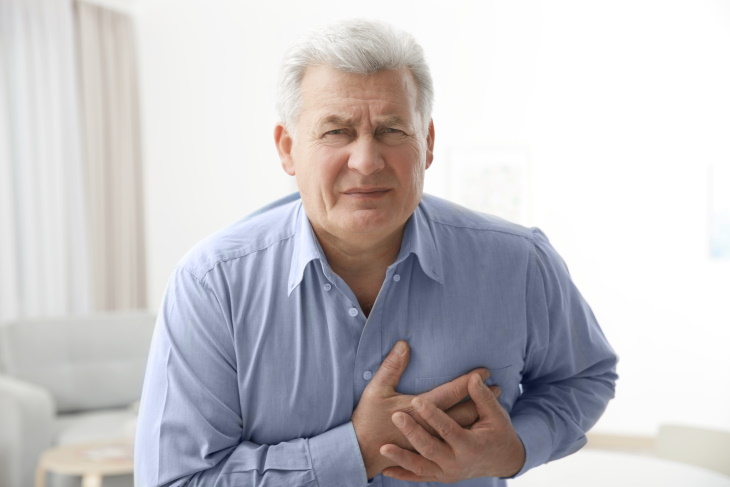
Types of Chest Pain man with chest pain
Some patients describe the chest pain they experience as a tightness, dull pain, or heaviness, almost as if they had a weight sitting on their chest. Like sharp chest pain, any of these symptoms can point to poor blood flow to the heart, which could result in a heart attack or a less threatening condition called angina. In the case of a heart attack, this chest discomfort can often be accompanied by other symptoms, such as: 
Lightheadedness 
 
The inability to exercise 
 
Heart palpitations 
 
 Pain radiating to the jaw or the left arm 
 
Shortness of breath. ​
 
2. Unexpected shallow breathing, chest tightness, and heart palpitations 
Other health conditions can sometimes mimic the symptoms of a heart attack. For example, a panic attack can often be sudden and extremely unpleasant, so people who experience it for the first time may mistake it for a heart attack. Like a heart attack, a panic attack causes chest pain, tightness in the chest, and heart palpitations. 
 
However, unlike a heart attack, the cause of these symptoms is stress and shallow breathing. A panic attack typically resolves within 20-30 minutes. For those who experience anxiety-related chest tightness or panic attacks, therapy sessions and relaxation techniques are helpful tools.
 
3. Intense pain when you inhale
If the pain and tightness in your chest appear to worsen when you take a deep breath, this can point to a lung issue. This type of pain and discomfort is present in pneumonia, before an asthma attack, a blood clot in the lungs, or in patients with pleurisy, an inflection in the lining of the lungs. 
 
This pain can appear on one of both sides of the chest, and it can spread to your shoulder. Many of these lung issues come with a fever, but not all do, and you’ll definitely need to visit your doctor and take medications to recover.

4. A burning sensation in the chest 
A burning and tight feeling in the chest could point to a digestive issue, such as acid reflux, stomach ulcers, or even a ruptured esophagus, which is the tube that connects your stomach and your throat. Needless to say, any of these conditions require immediate medical attention and they will not go away on their own. 
 
To ease your symptoms, it’s a good idea to avoid spicy and large meals in the second half of the day and it helps to sleep with your head elevated. 
 
5. Sharp pain when you lay down on your side 
If the pain you’re experiencing shows up when you’re resting on your side, or when you take a breath, it can also point to a condition called pericarditis. This condition occurs when the membrane that holds the heart called the pericardium becomes inflamed. 
 
Likewise, this symptom could be related to the inflammation of the heart muscle called myocarditis, or cardiomyopathy, which occurs when the heart muscle becomes weak. In any case, this symptom is no joke and requires immediate medical attention. 
 
6. Pain that gets worse while resting 
According to Nicholas Leeper, a cardiologist at Stanford Vascular and Endovascular Care, chest pain or tightness that lasts for days or weeks is also not a good sign. If your pain worsens when you’re doing even minor activities, or resting could be a sign of an underlying heart issue. It's difficult to be more specific than that, but knowing this is enough for you to know that you need to see a doctor since most heart issues are serious. 
 
7. You experience pain when you press down on your chest
If the pain appears when you press on the skin with your fingers or when you move the area, it’s indicative of a musculoskeletal issue. This means that your muscles, joints, nerves, bones, or connective tissues could be affected. If a doctor suspects that you’ve torn a muscle or fractured a rib, they will ask you whether you’ve overexerted yourself while exercising, hurt yourself while doing housework, and the like. They will also have you move the affected area and then rest. If resting helps ease the pain, this is another sign that you’re dealing with a musculoskeletal problem. Depending on the specific issue, you may require rest, physiotherapy, and other medications. 
 
In conclusion, remember chest pain and discomfort is a serious symptom that requires immediate medical attention. If you experience any kind of chest pain, try to describe to your doctor how it feels and what activities or poses make it worse. This can give your doctor a clue as to which organs could be affected and will help them diagnose and treat your health issue much faster. We hope that you found this article useful and informative.


This is only for your information, kindly take the advice of your doctor for medicines, exercises and so on.     

https://gscrochetdesigns.blogspot.com. one can see my crochet creations  
https://gseasyrecipes.blogspot.com. feel free to view for easy, simple and healthy recipes    
https://kneereplacement-stickclub.blogspot.com. for info on knee replacement


Labels: , , , , , , , , , ,

Friday, March 20, 2020

If You Have One of These 7 Types of Stomach Pain, Here's What it Means

Stomach issues can be quite discomforting - yet despite the uncomfortable feeling, how often have you really looked into what is going on in your gut? Knowing the signs and symptoms of the various kinds of pain you are experiencing can shed light onto the underlying cause of your stomach issues. Here are seven of the most common stomach symptoms and what they may be telling you about your health:

1. Burning sensation in the chest

Possible cause: Acid reflux

Acid reflux is caused by stomach acid that has washed back up into your chest. Most people tend to experience the burning sensation right beneath the breastbone.

What to do: Unfortunately, there's no one size fits all. Foods that trigger heartburn may vary from person to person. But once you have figured out what food is bothering you, cutting it out of your diet ought to help. You may also try adjust your sleep position - sleep slightly propped up (at about a 15-degree angle. This will help keep the acid down in your stomach - where it belongs.


2. Pain around your belly button

Possible cause: Appendicitis

Appendix pain usually starts with a dull pain around the belly button area. As it worsens, the intense discomfort will move towards your right hip bone.

What to do: In a case like this, it's important that you head to the hospital as soon as possible, as you will need surgery in order to have it removed. Not taking your appendix out right away can run the risk of the appendix rupturing, which is incredibly dangerous.


3. Sharp pain under your ribs

Possible cause: Gallstones

Gallstones are little lumps of cholesterol and bile, which vary from the size of a pea to that of a golf ball. No matter how big or small your gallstones may be, an obstruction in your gallbladder causes a sharp pain that tends to worsen after eating.

What to do: Estrogen, contraceptive use and general fertility can impact your risk for getting gallstones - it also tends to occur more in women. Gallstones usually aren't cause for major concern, however if problems persist, surgery might be an option.
 

4. A burning sensation in your stomach

Possible cause: Peptic ulcer
Daily chronic pain that tends to worsen after eating is a classic symptom of an ulcer. This burning sensation will occur in your gut.

What to do: Stop taking medicine like ibuprofen, as they may make the problem worse. It's also essential that you visit your doctor. Depending on how severe your ulcer is, you may need to take medicine or have surgery.

5. Whole belly discomfort and the urge to run to the bathroom

Possible cause: Lactose intolerance

Some individuals are unable to eat lactose. And pain associated from lactose intolerance is not confined to a specific area. The whole belly generally tends to feel discomfort, because it's usually a small intestine problem. Unfortunately, it gets worse. The discomfort caused in your belly is a combination of gas and diarrhea.

What to do: The best place to start is to figure out your level of lactose intolerance. A few slices of pizza, for instance, may not cause you much harm, but a bite of ice cream may send you rushing to the bathroom. Test what dairy you can and cannot have whenever you plan to stay home. Have a couple of glasses of milk and see what happens, then take it from there.
 

6. Intestinal cramps and chronic diarrhea

Possible cause: Gluten sensitivity


You may be allergic to gluten or have celiac disease. In which case, you'll notice bloating, gas and cramps in your gut after eating foods that contain gluten.

What to do: The best course of action would be to test how you react to certain foods and speak with your doctor to determine how to eliminate them. If your gluten allergy is severe you might want to speak to a nutritionist, make sure that your are getting enough of the nutrients you need.


7. Bloody diarrhea, pain, and fever

Possible cause: Colitis or Crohn's disease

Symptoms are generally associated with gas, cramps and bloating. You may also discover blood in your stool, possibly accompanied by nausea and fever.

What to do: Speak to your doctor immediately. Both Crohn's disease and colitis operate on a spectrum of severity. Treatment may vary accordingly. Your doctor may prescribe anti-inflammatory medicine or advise a more extensive treatment. As always, it's better to be safe than sorry as both conditions can land you in hospital if not managed properly.


This is only for your information, kindly take the advice of your doctor for medicines, exercises and so on.     

https://gscrochetdesigns.blogspot.com. one can see my crochet creations  
https://gseasyrecipes.blogspot.com. feel free to view for easy, simple and healthy recipes    
https://kneereplacement-stickclub.blogspot.com. for info on knee replacement

Labels: , , , , , , , , , , , ,

Monday, February 24, 2020

What does pain in the right side of abdomen mean?

These are the three reasons

Abdominal pain is a common issue, which all us experience from time to time. It can be due to indigestion after eating, constipation or gas and generally goes away on its own after some time. But if you experience sharp pain on a particular side of your abdomen that lingers for a long time then it is not normal.

Pain on a particular side of the abdomen can happen due to several medical conditions. But before stressing about it, you need to assess your pain to get a clear picture. Here is this article we will reveal 3 reasons you might experience ache on the right side of the abdomen.

3 reasons you might experience pain on the right side:
Appendicitis

The most common reason for right side abdominal pain is appendicitis. Appendicitis is an inflammation of the appendix, which is a finger-shaped pouch, attached at the start of the large intestine, on the lower right side of your abdomen and has no known purpose. The pain caused due to inflammation of the appendix starts around the navel and moves to the lower right abdomen. You may feel quite uncomfortable while sitting or lying. The pain of appendicitis can be triggered with anything, there is no specific reason behind it. Surgical removal of the appendix is the only way to get rid of the pain. If you ignore the pain, the appendix can burst.

Muscle spasm and hernia

Performing intense workout can also be blamed for the sharp pain on the right side of the abdomen. When you run faster, your diaphragm moves more than it moves in general. Other than this, muscle fatigue, dehydration, and electrolyte abnormalities can also lead to muscle spasm. To avoid this, warm up properly before work out and do not overdo any exercise.

Even lifting heavyweights in the gym may cause a hernia. It is a condition in which an organ pushes through an opening in the muscle that holds it in place. So, be very careful while performing any physical activity.

Kidney stone

Our kidneys are located on both sides of the lower abdomen. So, even kidney stone can cause pain on the right side of your belly. Low back pain, low abdomen pain or pain in the groin are some common symptoms of kidney stones. However, as the stone moves in the urinary tract, the pain also changes its location. You may also witness blood in your urine and feel nauseated when suffering from this condition. In case of small stones, the doctors generally prescribe drugs to flush the stone out of the urinary system through urine, else they perform the surgery.

Labels: , , , , , ,

Tuesday, January 14, 2020

This is how you can tackle a pinched nerve in the neck

A pinched nerve in your neck can be troublesome and bothersome. It can make your life miserable. It can invite pain and discomfort. You will be unable to do your real-world activities easily. Due to applying too much pressure applied by the surrounding bones, muscles, cartilage, or tendons on a nerve or group of nerves, you may experience a pinched nerve. This can be frustrating and can snatch away your peace. Furthermore, this pressure can cause the nerve to lose its function and can lead to pain or numbness. Do you know that your nerves extend from the brain to your spinal cord and thus, send vital messages back and forth? If you are experiencing a pinched or compressed nerve then it may produce signals in the form of pain. But, remember that you should not ignore those signals.

If you are experiencing a pinched nerve in your neck , you may exhibit symptoms like the area can become numb, a sharp pain radiating outwards, needles sensation, your hands and feet can turn numb, and so on. You may also be at a risk of tennis elbow, carpal tunnel syndrome and on.

You may experience a pinched nerve in your neck due to an injury, obesity, arthritis and stress. And if your nerve remains compressed for a longer period of time then you will need to visit your specialist who will help you to tackle your problem. Along with that, you can just try these natural solutions as well!

You can massage your neck
You will be able to relax your muscles and enhance the blood circulation to your neck if you massage the affected area. So, if you wish to deal with a pinched nerve in your neck then massaging with warm oil can be a good option. You can massage your neck with warm coconut oil.

You can opt for a hot and cold compress
Going for a cold compress can help you to manage your pain and inflammation. While a hot compress can help you to relax the muscles around the pinched nerve. Moreover, you will be able to improve your blood circulation to that area and this will help you to bid adieu to your pinched nerve.

You can opt for yoga:
Yes, you have heard it right! Yoga can help you to get rid of many health ailments and hence, you will be able to stay fit and fine. It can be beneficial for you. It can help you to stretch your neck muscles which may help you to relax and enhance your blood circulation. Thus, you will be able to recover soon. You can try doing a cobra pose or a downward dog pose and you are sorted!

this is only for your information, kindly take the advice of your doctor for medicines, exercises and so on.     
https://gscrochetdesigns.blogspot.com. one can see my crochet creations  
https://gseasyrecipes.blogspot.com. feel free to view for easy, simple and healthy recipes    
https://kneereplacement-stickclub.blogspot.com. for info on knee replacement


Labels: , , , , , , , , , , , ,

Sunday, January 27, 2019

What a Sharp Pain in the Chest Means

Have you ever experienced a sharp and sudden pain in the chest? This may have been a condition called precordial catch syndrome (PCS). But, unlike a heart attack, it isn't harmful or life-threatening. Unlike a heart attack, the pain doesn't radiate or spread to other areas of the body. And unlike a heart attack, PCS won't cause other symptoms, including drenching or vomiting, for example. Rather, the pain is localized to an area to the front or side of the chest, usually no bigger than one to two fingertips wide. This is why it is referred to a 'precordial', meaning, 'in front of the heart'. 

Breathing can make the pain more intense, and some people find that shallow breaths can help blunt symptoms. Others believe that one deep inhalation can provoke a 'popping sensation' that helps resolve the issue. Therefore, PCS disappears just as quickly and suddenly as it arises. 

Sessions can typically last between 30 seconds and three minutes. There are no other symptoms, and there are no lasting signs. Yet while it is very rarely harmful, and goes away of its own accord, it may trigger anxiety and repetitive shallow breathing, causing a person to feel dizzy and light-headed. 

The sensation, which is also called a Texidor's Twitch, may be confused for a heart attack, but it is an extremely common condition that tends to occur during adolescence and early adulthood. It has also been reported in young children - even kids as young as kids, as well as in adults. 


But, what exactly is causing the pain? The truth is, we don't know what sparks an attack, though most experts think the pain is caused by the irritation or pinching of nerves in the chest cavity's inner lining (the pleura). Nevertheless, it does not cause any damage to the heart or the lungs. Ultimately, it is benign provided there is no underlying heart condition - what a healthcare practitioner should be able to rule out. Still, it can be extremely uncomfortable. 

Unfortunately, for now, there is no cure or treatment, but there are certain situations that may cause an attack, which can be avoided. In fact, PCS usually occurs while resting - though never while sleeping, and often when the person is slouched or changes their posture abruptly. This means that the risk of an attack may be reduced somewhat by sitting up straight. 

Nevertheless, the good thing in all of this is that, just like braces and teenage acne, it is something that most people grow out of, and episodes become less frequent as you get older, and usually stop completely by the time we reach our early to mid-twenties.

THIS IS ONLY FOR INFORMATION, ALWAYS CONSULT YOU PHYSICIAN BEFORE HAVING ANY PARTICULAR FOOD/ MEDICATION/EXERCISE/OTHER REMEDIES.                                    PS- THOSE INTERESTED IN RECIPES ARE FREE TO  VIEW MY BLOG-                                                                                           https://gseasyrecipes.blogspot.com/       
                                                                                                                                                                      FOR INFO ABOUT KNEE REPLACEMENT, YOU CAN VIEW MY BLOG-                                                  https:// kneereplacement-stickclub.blogspot.com/           
                                                                         
  FOR CROCHET DESIGNS                                                                                                                                                                                                  https://gscrochetdesigns.blogspot.com 


Labels: , , , , , ,