Thursday, June 10, 2021

How to Manage Psoriasis at Home With Natural Treatments

Even though psoriasis flareups are more common in dry and cold weather, summer is the best time of the year to take care of psoriasis and make those red and itchy lesions vanish from the skin. This article focuses on tips and natural treatments effective at alleviating symptoms of psoriatic skin lesions, but you can also read our previous article titled A Guide to Understanding Psoriasis for more general information on this topic.
Psoriasis Relief - General Tips  
Psoriasis is an inflammatory systemic disease that manifests itself first through red scaly skin lesions. Any part of the body, including the scalp, heels, and nails can be affected by psoriasis. Over time, the disease tends to spread to the joints, causing psoriatic arthritis. Psoriasis is also linked to certain gastrointestinal issues. 
 
A tailored and comprehensive medical treatment is necessary to manage and slow down the progression of the disease. In addition to your dermatologist’s and rheumatologist’s tips and recommendations, it’s just as important to develop your own ways of alleviating skin symptoms and preventing lesions from appearing on the skin. Here are a few tips to consider:
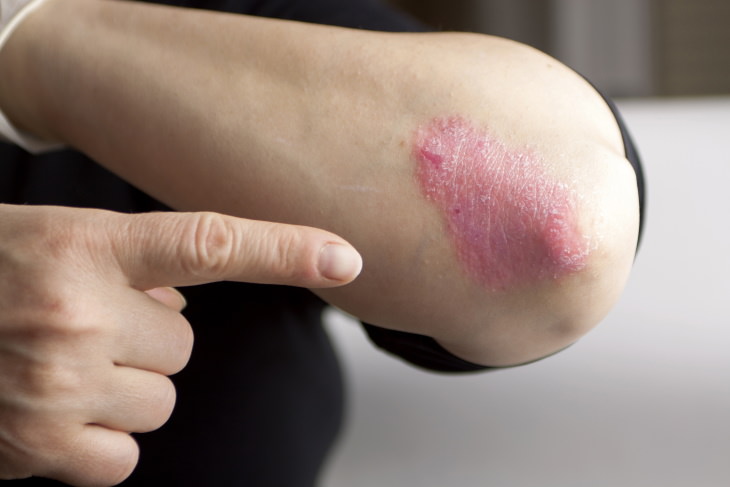
Psoriasis Natural Remedies Arm with psoriasis
Avoid scratching, damaging, or burning the skin. 
Psoriatic skin problems are your body’s abnormal response to trauma. Preventing sunburns, resisting scratching insect bites, and protecting your skin from mechanical rubbing from tight or itchy clothing all go a long way. 
 
- Prevent dry skin. 
Dry conditions can make psoriasis worse because they deplete the skin from natural oils, causing microscopic cracks in the skin. These tiny cracks can then develop into psoriatic lesions; this is why psoriasis often forms on the driest parts of the skin, such as the elbows, heels, and knuckles. Body lotions, face creams, and ointments are the best way to prevent your skin from losing moisture.
 
 - Avoid fragrances.  
The majority of creams, bath salts, and soaps contain perfume and dyes that can irritate the skin. This is crucial to know for psoriasis patients, whose skin is more sensitive to these irritants. Opt for fragrance-free, sensitive skin-friendly skincare products. 
 
- Alcohol, stress, and smoking make psoriasis worse. 
Lifestyle changes and a healthy diet may not cure psoriasis, but they can reduce your symptoms quite a bit. 
 
- Use sunscreen. 
Phototherapy is a very effective psoriasis treatment, but it’s not the same as tanning. Phototherapy is a controlled in-office treatment that uses a very specific UV wavelength on psoriasis lesions and eradicates them. On the other hand, Tanning can increase skin inflammation by making your skin red or sunburnt, which can lead to a flare-up. 
 
Natural Treatments for Psoriasis  
 
1. Aloe vera 
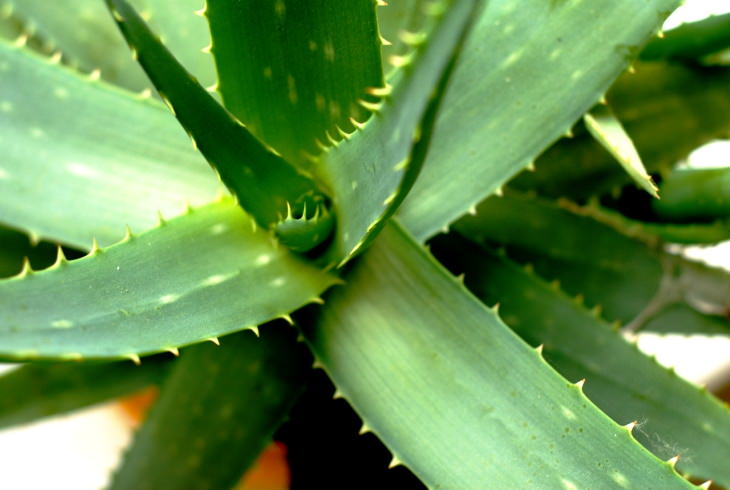
Psoriasis Natural Remedies Aloe vera
Aloe vera juice, aloe vera gel, or any other moisturizer that contains at least 0.5% aloe extract reduces the redness, scaling, itching, and inflammation associated with psoriasis. 
 
According to a 2010 study, aloe vera cream is a bit more effective at mediating psoriasis symptoms compared to a steroid cream containing 0.1% triamcinolone acetonide. A more recent study of 2,248 patients with mild and moderate psoriasis used a topical cream with 3% aloe vera. The patients saw a marked improvement in symptoms, including clearing skin plaques, compared to placebo. 
 
The Mayo Clinic suggests that you apply an aloe cream on the affected area several times a day for a month to notice a significant improvement. So be consistent, and also avoid aloe vera tablets. The National Psoriasis Foundation states that there’s no evidence of oral aloe supplements being effective at alleviating symptoms. 
 
2. Oatmeal baths 
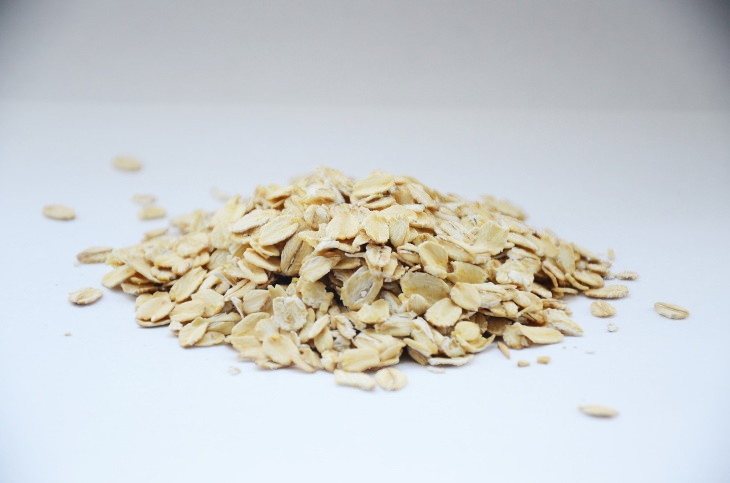
Psoriasis Natural Remedies Oatmeal
If you’re experiencing a flare-up of psoriasis on the body, and you experience a lot of itching and redness, a colloidal oatmeal bath can help soothe your skin. Colloidal oatmeal, or Avena sativa, is a powder made from finely ground and boiled oats. It’s scientifically proven to soothe irritated and inflamed skin. 
 
Prepare an oatmeal bath by grinding up 1 cup of oats in a spice grinder until completely fine and smooth. Pour the powder into a warm (not hot) bath to prevent skin irritation. Sit back and soak in the bath for at least 10-15 minutes, submerging the affected areas in the water. For best results, repeat this for a few days in a row.
3. Oregon grape 
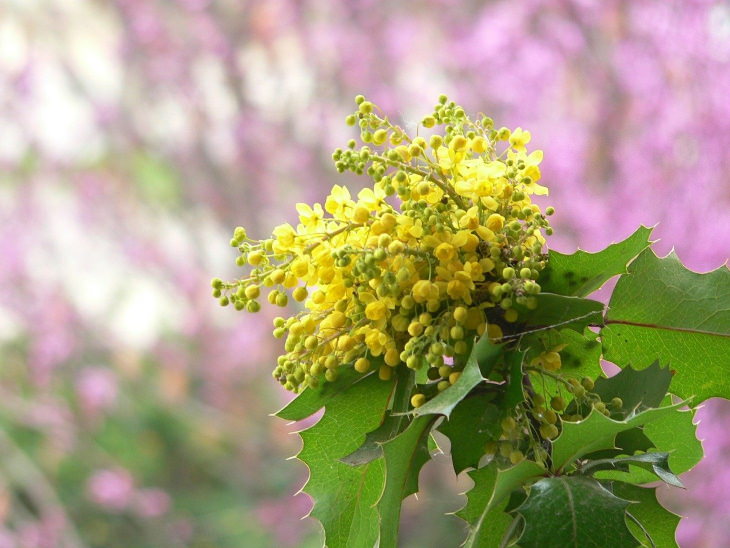
Psoriasis Natural Remedies Oregon grape
Oregon grape is a somewhat confusing name. Even though the fruits of Mahonia aquifolium look like grapes, they have nothing in common with the popular fruit. It’s actually an evergreen shrub from the barberry family. That said, this invasive species does seem to have some use for humans. Research shows that creams containing 10% of Oregon grape extract have antimicrobial properties and reduce the inflammatory immune response in psoriasis patients. 
 
A 2018 review article found that a cream containing Mahonia aquifolium is safe and effective for psoriasis. One particular study in 433 psoriasis patients found that symptoms either improved or disappeared after 12 weeks of daily treatment in over 80% of the participants. Other studies show similar results and also point out that the cream is well-tolerated. 
 
4. Tea tree oil
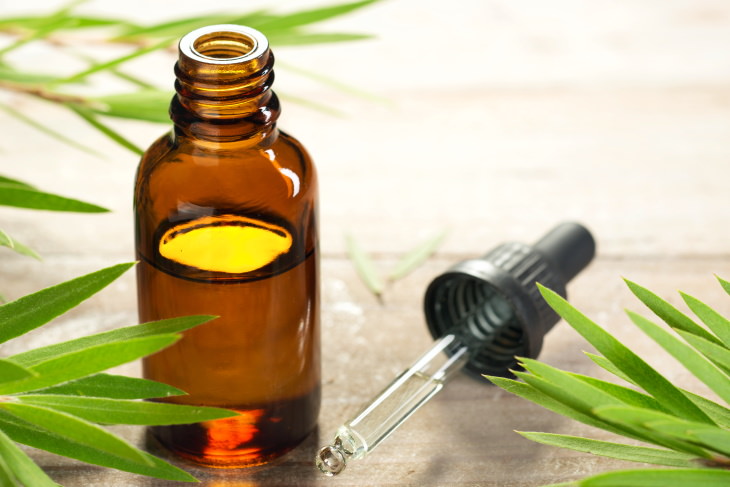
Psoriasis Natural Remedies Tea tree oil
As we mentioned at the beginning of the article, psoriasis can appear on the scalp. Unfortunately, treating scalp psoriasis can be tricky, especially if you have long hair. One general tip dermatologists recommend is to shampoo your hair and scalp as frequently as you can. This helps remove any built-up scales that can otherwise get out of control. 
 
When it comes to natural remedies that can be used on the scalp, tea tree oil is the top recommendation. Tea tree oil is an essential oil made from the leaves of the Melaleuca alternifolia plant, also known as Narrow-leaved paperbark. This essential oil has potent antifungal, anti-inflammatory, and antiseptic qualities. 
 
Even though most studies on tea tree for the scalp were done on a generally itchy scalp or dandruff, anecdotal evidence suggests that it may be also beneficial and taming the scales and itch in psoriasis patients. Many shampoos that contain tea tree oil are available on the market, but you can also just add a few drops of tea tree oil to your regular shampoo. When shampooing, leave the product on the scalp for 3-5 minutes to let the tea tree oil work. 
 
Note: never use undiluted tea tree oil directly on the scalp - this can lead to skin burns.
 
5. Turmeric

Psoriasis Natural Remedies Turmeric
Not all home treatments for psoriasis are topical. After all, psoriasis is a systemic inflammatory condition, and to treat the cause, you ought to strive for lowering the inflammation in your entire body. There are plenty of anti-inflammatory foods that can help you with that, but turmeric is definitely one of the most well-researched ingredients for psoriasis specifically. 
 
Curcumin, the active ingredient in turmeric, has a marked therapeutic effect in the treatment of psoriasis, according to a recent review article. Taking turmeric regularly can reduce psoriasis flare-ups. Turmeric supplements in capsules or tablets can help you get a steady dose of this spice every day, but you can also add it to your meals as a spice. 
 
6. Bath Salts
If you don’t particularly enjoy oatmeal baths, you can try adding Epsom salt or Dead Sea salt to your bath. Like colloidal oatmeal, bath salts can help soothe the itch. In addition, salt baths were found to help remove the scales from affected areas. Soaking in this mixture for a minimum of 15 minutes is not only soothing to itchy skin but also helps to shed the scaly skin associated with psoriasis. Dead Sea salt was found to be more beneficial than Epsom salt for reducing psoriasis symptoms in one clinical trial. 
 
Dead Sea salt is rich in minerals, which could account for this effect. For those of you wondering - yes, swimming in the sea can yield similar effects. When taking a salt bath, stay in the water for at least 15-20 minutes and repeat for a few days or even to see a real difference. 
 
In the above-mentioned study, the participants took 20-minute baths for 3 weeks. Lastly, don’t forget to moisturize your skin right after the bath to seal the nutrients and moisture in the skin.

This is only for your information, kindly take the advice of your doctor for medicines, exercises and so on.   

https://gscrochetdesigns.blogspot.com. one can see my crochet creations  
https://gseasyrecipes.blogspot.com. feel free to view for easy, simple and healthy recipes    
https://kneereplacement-stickclub.blogspot.com. for info on knee replacement

Labels: , , , , , , , , , , , , , , ,

Thursday, February 11, 2021

Relieve Skin Itching and Dryness With These Eczema Remedies

The itchy and inflamed skin that accompanies an eczema flareup is one of the most bothersome feelings a person can experience. An eczema rash can be triggered by even minor stress and appear on any part of the body, the face, and even on your scalp, especially in the dry and cold winter months.

There are many types of causes of this condition, but they are all characterized by skin itching, dryness, redness, and flakiness. If you’re experiencing an eczema flareup and nothing seems to help, consider adding these home remedies and following these tips in addition to what you’ve been already prescribed by your dermatologist.

Eczema Tips and Remedies itchy skin
Eczema-prone skin is super sensitive and is deficient in the natural skin barrier that helps seal in moisture in the skin. That’s exactly why those who suffer from this condition have to baby their skin and be extra mindful of everything that makes contact with their skin, be it the body care you use, clothing, and even fabric softener and detergent. 
 
In this article, we suggest several practical tips that help alleviate eczema symptoms, including a few useful home remedies you can try. 
 
1. Moisturize immediately after taking a shower or bath
Skin that’s prone to eczema is chronically dry, and the best way to protect your skin from becoming even flakier, itchier, and more inflamed is to cover it with an occlusive moisturizer, balm, or ointment. Moisturize right after a shower or bath, don’t wait for your skin to become drier. 
 
Ideally, you should quickly pat-dry your skin with a towel and moisturize within 3 minutes after getting out of the shower with a moisturizer rich in oils. You will need to do this every time you take a bath or shower, and if your eczema shows up on your hands, it’s also a good idea to moisturize your hands after you wash them throughout the day. Moisturizing will help prevent flareups and will also make a rash go away sooner. 
 
2. Try colloidal oatmeal baths Eczema Tips and Remedies oatmeal
If you’re experiencing a flareup that spreads on larger areas of the body and face, taking colloidal oatmeal baths for a few days in a row is scientifically-proven to reduce skin itchiness, calm down the redness, and heal the flakes or cracks in your skin. Colloidal oatmeal, or Avena sativa, is a powder made from finely-ground and boiled oats. 
 
Preparing a colloidal oatmeal bath is easy: simply pour an appropriate amount of the colloidal oatmeal in lukewarm water and soak for 10-15 minutes in the bath, making sure that all the affected areas are submerged in water. You can also make your own oatmeal powder by grinding 1 cup of oats in a spice grinder until completely fine and smooth. 
 
Colloidal oatmeal is also present in some creams and ointments, and these moisturizers are almost always fragrance- and irritant-free, so they will work well for eczema-prone skin. You can ask a shopping assistant at your local drugstore to help you find a moisturizer with colloidal oatmeal.
 
3. Bathe strategically 
Bathing can really help you reduce eczema flareups, as one of the common causes of a flareup is the accumulation of sweat on the skin or exposure to allergens, such as pet dander. In addition, baths can help rehydrate your skin. With that said, excessive bathing often has the opposite effect, and it can make your eczema worse in the following cases: 
 
When you’re using water that is too hot or too cold 
 
You’re bathing too frequently
 
Showering or bathing for too long. 
 
Therefore, you should be strategic with your bathing routine. The National Eczema Association recommends following these tips: 
 
1. Use exclusively lukewarm water. 
 
2. Bathe or shower once a day, more if you’re going to the gym or sweating. 
 
3. Limit bathing time to 10–15 minutes. 
 
4. Be aware of the cosmetic ingredients you should avoid 
Eczema-prone skin is a lot more sensitive to irritating skin ingredients than other people’s skin. This is exactly why you should be wary of the cosmetic products you’re using, be it your shampoo, shower gel, or moisturizer. First and foremost, avoid ingredients and products that strip the skin of its natural oils too much, such as alcohol, sodium lauryl sulfate, soap, and scrubs. 
 
Also, stick to fragrance-free, dye-free, and essential oil-free cosmetic products, as both of these ingredients can irritate the skin. Seeking out hypoallergenic products or even products sold for babies is a good tip.
 
5. Try natural oils
While essential oils can be quite drying and irritating for eczema-prone skin, moisturizing carrier oils are actually quite beneficial for those who suffer from eczema. Here are the 3 natural oils known to help eczema: 
 
1. Virgin coconut oil contains antibacterial and anti-inflammatory ingredients. It also helps seal the skin and protects it from environmental stressors. 
 
2. Evening primrose oil is favored by many eczema sufferers due to its anti-inflammatory properties. 
 
3. Sunflower oil also protects the skin from outside stressors and helps keep moisture in the skin. 
 
All of these oils can be applied topically to the body or the scalp, before or in place of a moisturizer. We advise against putting these oils on the face and parts of the body where you may experience acne, however, as they can block your pores. 
 
6. Be mindful of the laundry detergents you use
The laundry detergent you use can also have an effect on your skin's health. Opt for a gentle, fragrance-free detergent, as the fragrant components of the detergent can be transferred onto the skin and cause a rash. For identical reasons, we recommend you stop using fabric softener as well.

7. Watch your diet
Certain foods are known to trigger eczema flareups, too, especially in children. Be mindful of how your body reacts when you consume such foods as dairy, soy and soy products, eggs, and wheat. If you suspect that any of these foods are making your eczema worse, try eliminating it from the diet and see if it helps reduce your symptoms. 
 
In addition, nutritionists recommend eating more anti-inflammatory foods, such as those we listed in the article No More Inflammation With these 10 Food Combos. Since eczema is an inflammatory skin condition, enriching your diet with fruits, vegetables, herbs, and leafy greens can really improve your well-being. 
 
8. Avoid certain fabrics and clothing fits
Wearing tight-fitting clothing when you're having eczema can make your skin itchier and can lead to skin infections, so wear loose-fitting clothing in the affected areas of the skin. Certain fabrics can also lead to eczema flareups. Wool is the most notorious offender, but fabrics that don't allow the skin to breathe, like polyester, are also best avoided. 
 
Extra tip: for some people, nickel can also cause skin rashes. If you notice that your skin is becoming red and inflamed around the fingers, the neck, and behind the ears, it may be due to the jewelry you're wearing.

9. Extreme temperatures are your enemy
Climate is the last topic we will cover in this article. Unfortunately, eczema-prone skin is significantly more sensitive to changes in humidity and temperature, and traveling or going outside when it's cold or hot outside can easily lead to a rash. This is exactly why most people tend to experience flareups during the winter when the weather is cold outside and the central heating is drying out the air indoors. 
 
Bundle up, wear a scarf and gloves when you go outside to prevent a rash from appearing on your hands, neck, and face. At the same time, try not to sit next to a heater or radiator to avoid dry air. Many eczema sufferers swear by an indoor air humidifier in the cold months, but you can easily just put a wet towel near the radiator to get a similar effect in a pinch, too.

This is only for your information, kindly take the advice of your doctor for medicines, exercises and so on.     

https://gscrochetdesigns.blogspot.com. one can see my crochet creations  
https://gseasyrecipes.blogspot.com. feel free to view for easy, simple and healthy recipes    
https://kneereplacement-stickclub.blogspot.com. for info on knee replacement

Labels: , , , , , , , , , , , ,