Can Fragrance Improve Our Cognition by 200%?
Memory lapses and cognitive decline often
cast a disheartening shadow over the golden years. For adults over the
age of 60, a sense of fading mental sharpness can transform simple daily
tasks into insurmountable challenges. But what if a simple and
enjoyable remedy exists—one that harnesses the power of our senses?
Cognitive Decline in Older Age: A Silent Reality
Aging comes with wisdom, experience, and for many, a gradual decrease in
cognitive abilities. Everyday tasks like remembering names, following
conversations, and making decisions can become more difficult. Though
widely accepted as a natural part of aging, cognitive decline
significantly impacts the quality of life, not just for the individual
but also for their families and caregivers. Medications and therapies
are available, but these treatments often come with side effects and
limitations.
Smell and Memory: An Underestimated Connection

Scientific research has long suggested that
our sense of smell, or olfactory capacity, is closely linked to our
cognitive abilities. The loss of the ability to smell can often be a
harbinger of neurological and psychiatric diseases, such as Alzheimer’s,
Parkinson’s, and even schizophrenia. Recently, smell loss due to
COVID-19 has also been associated with subsequent cognitive decline.
Unlike eyesight and hearing, for which interventions like glasses and
hearing aids exist, there's been a dearth of solutions for the loss of
olfactory function—until now.
The Study
In an effort to make olfactory stimulation a practical and effective
method for cognitive enhancement, researchers at the University of
California, Irvine (UCI) designed a study to check just what the
influence of changing fragrances may have on cognitive functions.
Conducted through the UCI Center for the Neurobiology of Learning &
Memory, the study involved men and women aged 60 to 85 without memory
impairment. A key consideration was to simplify the application of
scents, particularly because earlier methods, which involved opening and
sniffing multiple bottles of odors, were impractical for older adults,
especially those already experiencing cognitive issues.
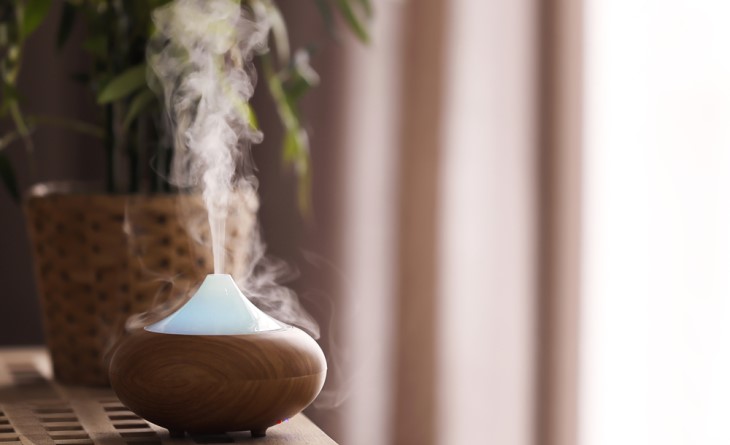
To accomplish this, each participant was
provided with a diffuser and 7 cartridges of different natural oils. The
enriched group received full-strength cartridges, while the control
group was given diluted versions. Each night, participants inserted a
different cartridge into their diffuser, which activated for two hours
as they slept. This approach not only streamlined the process but also
integrated it seamlessly into the participants' daily routines,
eliminating the need for any conscious effort during waking hours.
Results and future applications
The results were nothing short of astonishing. The enriched group
displayed a staggering 226% increase in cognitive performance compared
to the control group, as gauged by a common word list test used for
evaluating memory. Additionally, brain imaging indicated better
integrity in the left uncinate fasciculus - a crucial pathway connecting
regions responsible for memory and decision-making. Participants also
reported an improvement in sleep quality.
Notably, the study confirmed the long-standing scientific belief that
the olfactory sense is directly connected to the brain’s memory
circuits. With other senses like vision and hearing, the sensory data
(what we see and what we hear) first has to pass through a region called
the thalamus in our brain, before reaching the brain's memory circuits.
Think of it like a way station where all our other senses have to stop
and go through analysis, while our sense of smell bypasses this way
station. It doesn't stop at the thalamus at all, and so provides us with
a more direct and powerful link to our memory.
What Does This Mean for You?
The most compelling aspect of this study is its practical application. A
product based on the study is expected to come to market soon, giving
adults a simple, non-invasive way to potentially deter cognitive decline
and improve memory. Though the researchers aim to extend their study to
those with diagnosed cognitive loss, the current results are promising
for adults looking for an uncomplicated, at-home method to boost their
cognitive health.
In summary, if you've noticed your memory isn't what it used to be, this
could be an olfactory opportunity you won't want to forget about. The
study's findings not only shine a light on the untapped power of our
sense of smell but also offer a path to enhancing cognitive function in
older adults. While further testing is very much needed to better
understand how exactly this works, we would say that adding a few
different fragrances to the room while you sleep may be beneficial!
This is only for your information, kindly take the advice of your doctor for medicines, exercises and so on.
https://gscrochetdesigns.blogspot.com. one can see my crochet creations
https://gseasyrecipes.blogspot.com. feel free to view for easy, simple and healthy recipes
https://kneereplacement-stickclub.blogspot.com. for info on knee replacement
https://cancersupportindia.blogspot.com for infor on cancer and health related topics
https://GSiyers home remedies.blogspot.com is the latest addition to my blogs. I'm going to add posts there, do give me your valuable feed back on my blogs. Thanks a lot, take care, be healthy and be happy.
https://gscrochetdesigns.blogspot.com. one can see my crochet creations
https://gseasyrecipes.blogspot.com. feel free to view for easy, simple and healthy recipes
https://kneereplacement-stickclub.blogspot.com. for info on knee replacement
https://cancersupportindia.blogspot.com for infor on cancer and health related topics
https://GSiyers home remedies.blogspot.com is the latest addition to my blogs. I'm going to add posts there, do give me your valuable feed back on my blogs. Thanks a lot, take care, be healthy and be happy.
Labels: Alzheimer's, cognitive disabilities, fragrance, loss of olfactory function, memory lapses
posted by G S Iyer at 11:21 PM
0 comments
