Tuesday, December 12, 2023

The Effect of Chocolate on Your Brain

 Chocolate candy bars, brownies, chocolate milk, truffles, after-dinner mints, chocolate chip cookies - if it contains chocolate, we love it! Whether it's hot or cold, liquid or solid, it seems that the world just can't get enough chocolate!

Where Do Chocolate Cravings Come From?
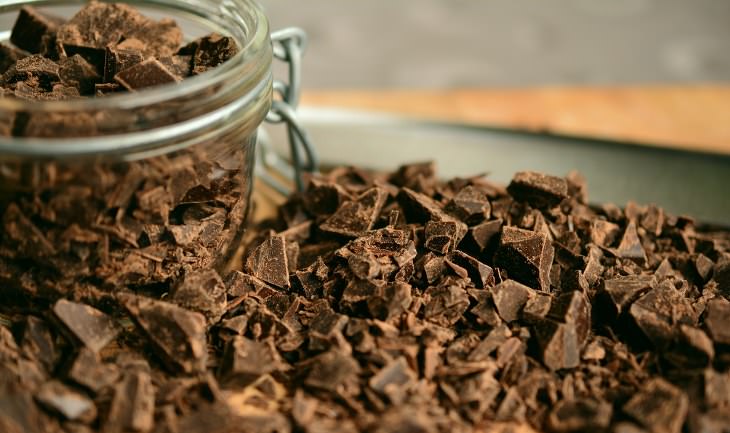
The Effect of Chocolate on Your Brain

Undoubtedly, many people can relate to a time when they experienced an almost uncontrollable craving for something sweet and chocolaty. We even have a word for people who frequently experience this - a chocoholic. Due to this being such a widespread phenomenon, scientists have decided to analyze the contents of chocolate and find out just why it seems to make us so happy. They discovered that chocolate contains around 380 distinct chemicals, which is why it's so hard to pin down which combination makes chocolate so magical. That's why further study was required to pin down the connection between the chemicals contained within chocolate and the functioning of the human nervous system. 
 
The Relationship Between Chocolate & the Nervous System
 
One researcher at the University of Michigan, Adam Drewnowski decided to discover whether consuming chocolate causes opioids to be produced in the human body. Opioids, named after opium, are chemicals that are known to instill a person with a sense of euphoria. The results of his experiments show that chocolate does indeed cause the brain to naturally produce opioids, and if the brain's opioid receptors become blocked, then the chance of binging on chocolate naturally decreases. 
 
 Emmanuelle diTomaso and Daniele Piomelli, former researchers at the Neurosciences Institute in San Diego looked into chocolate's chemical components and found that it contains at least three substances that "could act as cannabinoid mimics either directly (by activating cannabinoid receptors) or indirectly (by increasing anandamide levels)." A cannabinoid is something that has a similar effect to cannabis, also known as marijuana. In fact, the high that results from smoking or ingesting marijuana is mainly due to a cannabinoid called tetrahydrocannabinol (THC) temporarily binding to THC receptors in the human brain. Curiously, these researchers found that chocolate contains a chemical called anandamide, which binds to the same THC receptors as cannabis, and may result in a similar effect to a marijuana high. However, this chemical is far more common in dark chocolate than milk chocolate since it contains a much greater amount of cacao.

The Effect of Chocolate on Your Brain
The reason why chocolate doesn't normally get you as high as marijuana does (and the reason behind why it's legal practically everywhere) is explained by Christian Felder from the National Institute of Mental Health. When compared to the THC in marijuana, anandamide and other cannabinoids in chocolate produce a much weaker effect and stick around in the body for an even shorter time. In fact, Felder estimates that it would take around 25 pounds of chocolate for a 130-pound man to receive a marijuana-like effect. But even though eating chocolate usually doesn't get people to experience a high, it still seems like it contains enough brain-stimulating chemicals to make us feel a little happy and get a little addicted. 
 
Apart from all of this, chocolate also contains a chemical that's closely related to amphetamines, known as phenylethylamine. Much like amphetamines, phenylethylamine causes blood sugar and blood pressure levels to rise, often resulting in feelings of satisfaction and alertness, and that's exactly why it's often been nicknamed the 'love drug.' While there's still a lot of research that needs to be done on many of the other substances found within chocolate, there's one thing that we can all agree on - life is sweeter with a box of chocolates!


This is only for your information, kindly take the advice of your doctor for medicines, exercises and so on.   

https://gscrochetdesigns.blogspot.com. one can see my crochet creations  
https://gseasyrecipes.blogspot.com. feel free to view for easy, simple and healthy recipes    
https://kneereplacement-stickclub.blogspot.com. for info on knee replacement
https://cancersupportindia.blogspot.com  for infor on cancer and health related topics
https://GSiyers home remedies.blogspot.com   is the latest addition to my blogs. I'm going to add posts there, do give me your valuable feed back on my blogs. Thanks a lot, take care, be healthy and be happy.

Labels: , , ,

Thursday, March 10, 2022

How Sugar Affects the Brain, According to a Neuroscience Expert

Sugar rush. Sugar high. Sugar buzz. Sugar slump. We’ve all heard these phrases that describe what our brains feel like when we've had too much of a sweet treat.

But here’s the thing about sugar and your brain: Your noggin needs it because sugar is actually its main fuel. Our brains run on glucose—it fuels our cells, including our brain cells. We’re evolutionarily programmed to like sweets since they’re a great energy source. And when glucose levels are low in the blood (say, if you have hypoglycemia, or sometimes if it's just been a while since you've had something to eat), brain fog sets in, you fumble for words, you forget where you put down your phone, you look for a place to curl up for a quick nap.

When there’s too much sugar in the system, however, that can set off some really bad stuff in your body and your brain.

What happens in your brain when you eat sugar?

“When sugar hits our tongue, it activates certain taste buds that send a signal up to the brain, including the cerebral cortex,” says Nicole Avena, Ph.D., assistant professor of neuroscience at Mount Sinai School of Medicine, who wrote a book about sugar addiction. The signal activates the brain’s reward system; dopamine (a feel-good brain chemical) is released and the behavior is reinforced, which makes us want to repeat it (mmmm, that’s nice, give me more!).

Sugar is rare among dopamine-producing foods, Avena points out. “Most of the time when we eat something new and tasty, dopamine is released the first time we taste it,” she explains. “This is an evolutionary advantage to help us to pay attention to new and different tastes, in case they make us sick. If we eat something new and don't get sick, typically the dopamine response then goes away the next time—so basically we only release dopamine in response to eating new foods. However, sugar is different. It’s more like what happens with a drug of abuse, where dopamine is released every single time it’s consumed. Eating lots of sugar will continue to feel rewarding because the dopamine level doesn’t balance out, which it does when eating healthier foods. So sugar does act a bit like a drug in our system — which is why people get hooked on sugary foods.” 

Your brain on too much sugar:

We used to have to forage for sweet foods — but no more, of course. Our world is filled with sugary foods; and not just the obvious donuts and super-sweetened, super-large latte drinks. A host of surprising foods — from ketchup to salad dressing and marinara sauce —have sugar added to them. But our brains still function like sugar is a rarity.

When you repeatedly activate that reward system, your brain adapts and actually rewires itself, and you end up craving more and more. Research conducted on rats turned up this finding: When they were fed high-sugar diets, the rats’ brains released less of a certain chemical that helps bodies put on the brakes, so they were less able to stop eating it.

Those sugar-saturated rats also weren’t as good at certain memory tasks, which showed that certain brain functions in the prefrontal area and hippocampus (an important area for memory formation and retention) were impaired. Other rat-based studies showed that a high sugar diet increased inflammation in this area, which also affected short term memory.

Why sugar makes your brain crave more sugar:

You may not be aware that there’s a strong connection between our gut and our brain — and sugar comes into play here as well. “When that sugary thing you’ve eaten hits your gut,” Avena says, “it activates sugar receptors there too, which signal the brain to release insulin to deal with the extra sugar you’ve eaten.”

To explain further: Excess sugar drives the pancreas to produce extra insulin, a hormone involved in blood sugar regulation. The insulin signals fat cells to store excessive amounts of glucose, fatty acids, and other calorie-rich substances. As a result, too few calories remain in the bloodstream, so the brain thinks it’s now low on fuel (since it has those very high energy needs). So your hunger level rises quickly. And sugar is appealing then because it provides quick energy. Thus, the cycle begins again. And thus, cravings for more and more brownies or ice cream or candy.

Can you retrain your brain to crave less sugar?

Want to get your brain in line with a healthier sugar level? “Your brain can readapt when you cut back on sugar, and you won’t crave it as much,” says Avena. “However, it can take a while, even months, for this to happen, depending on the severity of dependence on sugar that one has.”

To find out more about how to start cutting back on sugar and shake off a sugar dependence, consider trying a 7-day detox plan at first. When you can successfully cut back, there's a payoff, besides a much healthier body: Just a small taste of, say, that delicious chocolate brownie will be enough of a sweet treat to satisfy you. 


This is only for your information, kindly take the advice of your doctor for medicines, exercises and so on.   

https://gscrochetdesigns.blogspot.com. one can see my crochet creations  
https://gseasyrecipes.blogspot.com. feel free to view for easy, simple and healthy recipes    
https://kneereplacement-stickclub.blogspot.com. for info on knee replacement


Labels: , , , , , , , , ,

Tuesday, April 09, 2019

10 Questions Every Nutritionist Hears

As awareness to health issues rises, so does misinformation and confusion about health and nutrition, so much so, that it’s hard to keep track of what’s good and what’s bad for you and what the best way to lose weight is. To help set the record straight, here are some of the most common questions people have about nutrition and what expert nutritionists have to say about them:
 
1. Are Carbs and Sugars the Devil Incarnate?
Since 1972, when Robert Atkins formulated his “revolutionary” diet, the market has been inundated with high-fat, low-carb diets, claiming that sugars and other complex carbohydrates are the number one reason for weight gain. Low-carb fad diets like keto and Atkins say that most of our body weight is stored in sugars, not fats, and that by cutting down sugars we will not only burn the sugars in our body, but also use fats as our main energy source. Sure, people employing such strict diets will see rather swift results as the body burns sugars, but for the fat burned to be on par with the fat consumed, a person needs to be intensely engaged in physical activity, especially since burning fat is substantially harder on the body compared to using up carbs for energy.
In the end, all extreme and restrictive diets are hard to maintain over time and may cause long-term damage to the body as weight, fats and sugars fluctuate wildly over periods of mere months.
A preferred nutrition balances carbohydrates, fats and proteins, shunning none, as all are important for our bodily functions. As for sweets, sugars that are naturally-present in food such as fruit and vegetables are just fine. What one should be wary of are mainly refined and added sugars.
2. What Diet Is the Best for Weight Loss?
None. The diet mentality focuses on highly-prohibitive eating regimens with short-term weight-loss in mind, causing even more extreme weigh-gain afterwards, not to speak of mental turmoil as you see all of the work you put into your diet crumble to dust.
Rather than thinking in terms of diets, we should be thinking about nutrition, and a type of menu and routine we can actually stick to long-term. Yes, the results won’t be immediate or impressive as those of the more extreme diets, but they will be sustainable.
Before eliminating stuff you love from the dining table, consider whether or not you’d like to reintroduce it back further down the line. If that’s the case, you’d be much better served building your diet around still eating or drinking that one thing you really love (in moderation, of course).
3. Can I Lose Weight Simply by Exercising?
To put simply- no. The notion that you can simply compensate for bad eating habits by running does not hold water, as eating the weight you lost exercising is surprisingly easy and people tend to overestimate how exerting their exercise actually was. Moreover, poor results might encourage a person to overindulge in exercise, as if working even harder will yield better results, risking actual harm to the body.
There is no magic trick to weight-loss. The best way to maintain a healthy lifestyle is to have sustainable healthy eating habits alongside regular physical activity.
4. What’s the Worst Thing People Consume?
Surprisingly, the main weight-offender isn’t a food at all, but a drink. Sugar-sweetened sodas are among the unhealthiest things people regularly consume, with a 20 oz bottle of coke containing 16 teaspoons of sugar. For comparison’s sake, imagine dropping 16 teaspoons of sugar into your coffee tumbler. Rather extreme, no? 
This amount of added sugars is impossible to effectively burn, causes dramatic rises and drops in blood sugar levels and can affect insulin sensitivity in the body, ultimately causing type 2 diabetes.
All of this is on top of literally zero health benefits.
5. What’s the Best Exercise to Lose Belly Fat?
This question belies a serious misconception that where body fats are stored has to do with which parts of our body are underdeveloped or weak. This is born out of a rather strange idea that fat magically turns to muscle when people work out, or vice versa. That is not actually how weight-loss or muscle definition work.
For all of the people focusing on sit-ups, planking and belly crunches out of some hope that this will make their stomach flat, it is quite possible and common for a person to have strong abdominal muscles AND a protruding gut.
The way the body stores fat boils down mostly to genetics and gender and has nothing to do with strength. Conversely, any activity that burns fat will burn it no matter where it is stored. 
6. What Should Be My Caloric Intake if I Want to Lose Weight?
There is no universal formula that works for everyone with regards to how many calories you should be consuming in a day. Reducing caloric intake too dramatically will doubtlessly yield results, but it will also have a poor effect on your psychology, constant craving and an eventual relapse.
By accounting for age, gender, current weight and height, you can come up with a general idea of a recommended daily calorie intake, but different bodies function differently, and you can never come up with a magic number by using formulas.
As a general rule, eating less than you’re currently eating is a good idea. By how much is exactly what you should be figuring out, and it is a process of self-learning. Monitor your weekly diet, try eating 5-10% less than that and take note of how you’re feeling and the effects on your weight. Take it slow and don’t be afraid to take steps backwards if you find yourself tired and starving.
7. Why Is Healthy Food so Expensive?
In short- it isn’t. A study held in Australia found that unhealthy diets were actually more expensive to maintain than healthy ones. While it may be true that whole grain breads are more expensive than refined grain white bread, bread isn’t the only component of an unhealthy diet. That same study found that as much as 64% of people’s food budget was being spent on take-out food, soda drinks and alcoholic beverages.
Another way of considering how “cost-effective” a healthy diet is are the medical bills one is saving by committing to a healthy lifestyle. Sadly, this sort of long-term thinking and investing is often hard to conceptualize and fully appreciate in a world that seems built upon immediate gratification.
8. What’s the Verdict on Gluten?
As a general rule, if someone is telling that this or that natural food or beverage is bad for you, using the plural form of “you”, he’s probably being incredibly irresponsible, as different things are bad for different people.
Gluten is a mixture of proteins that are present in some of the most popular grains, including wheat, barley, rye and oats.
In and of itself, gluten is of rather low nutritional value, but gluten cannot be isolated. The grains that contain gluten also contain valuable nutrients like iron, and B vitamins. Conversely, many gluten-free alternatives aren’t nearly as nutritious as whole grain flour, and can be richer in both fats and carbs.
If you aren’t suffering from a gastrointestinal condition that prohibits gluten (such as coeliac), there’s absolutely no reason for you to drop gluten.
9. What Are the Healthiest Foods?
Vegetables. Shocker, I know. More specifically, non-starchy vegetables should be your go-to. This includes most greens, tomatoes, broccoli, cauliflower and even the unfairly-maligned mushrooms. Vegetables are the best source for many nutrients, they have a sating effect on our stomach and they are rich in fibers, all in a package that yields very little calories.
Vegetables are the closest thing we have to a common thread between effective weight-loss measures.
10. Can I Snack?
Many diets tout eating many small meals throughout the day, and for good reason- eating between meals can stop you from overeating during lunchtime. Snacking could be a good idea, depending on what you’re snacking on and how much of it you’re eating. Nuts, fruit, raisins and veggies are all healthy snack options.
A good rule of thumb is to eat if you’re hungry, and to abstain from snacking if you’re prone to overindulge.
THIS IS ONLY FOR INFORMATION, ALWAYS CONSULT YOU PHYSICIAN BEFORE HAVING ANY PARTICULAR FOOD/ MEDICATION/EXERCISE/OTHER REMEDIES.                                    PS- THOSE INTERESTED IN RECIPES ARE FREE TO  VIEW MY BLOG-                                                                                           https://gseasyrecipes.blogspot.com/                                                                                                                                                         FOR INFO ABOUT KNEE REPLACEMENT, YOU CAN VIEW MY BLOG-                                                  https:// kneereplacement-stickclub.blogspot.com/           


                   FOR CROCHET DESIGNS                                                                                                                                                                                                  https://gscrochetdesigns.blogspot.com


Labels: , , , , , , , ,