Friday, June 11, 2021

The Tell-Tale Signs and Symptoms of a Heart Attack

People often expect a heart attack to be dramatic like it is in the movies, but the reality tends to be different and can even go unnoticed. Here are the tell-tale signs and symptoms of a heart attack:
 
What happens during a heart attack?
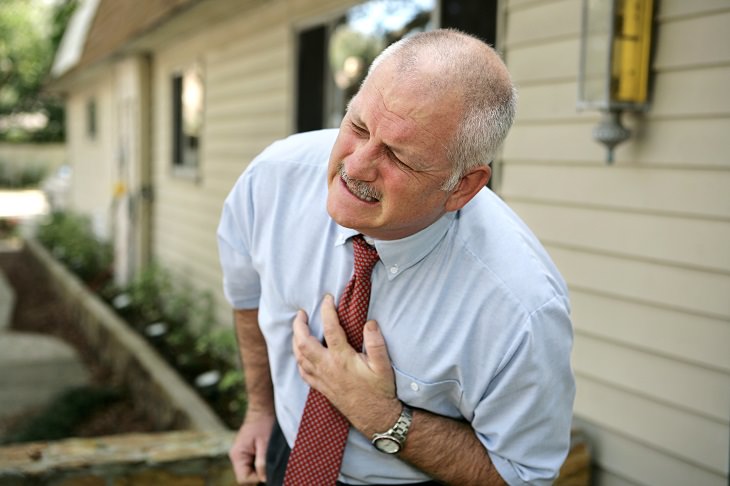
During a heart attack, the blood flow to the heart muscle is either reduced or completely stops. This typically happens because of a blood clot that is blocking an artery. When the heart muscle does not get oxygen-rich blood, it ceases to work.

Some common heart attack symptoms  
• A heart attack often causes chest pain. 
 
• There is a feeling of fullness or a clasping pain in the center of the chest. Most victims describe the pain as akin to an elephant standing on the chest (extreme pain). It usually lasts for about 15 minutes. 
 
• One also experiences shooting pain in the shoulders, neck, arm, back and sometimes even the teeth and jaw. 
 
• One finds increasing episodes of chest pain. 
 
• Prolonged pain in the upper abdomen. 
 
• Shortness of breath. 
 
• The victim might experience heavy sweating. 
 
• Since the heart’s pumping action is severely impaired during a severe heart attack, the victim might lose his/her consciousness. 
 
* In rare cases, as in patients who are diabetic, the heart attack may not be very painful, and sometimes can even be entirely painless. 
 
Some symptoms that may also appear include: 
 
• Pain in the abdomen 
 
• Heart burn 
 
• Unusual tiredness 
 
• Nausea 
 
• Tightness or pain in the neck, shoulders or upper back

Heart attack symptoms are not the same for everyone

Not everyone who has a heart attack has the same symptoms. Many a time, we also tend to ignore a heart attack thinking it might be mere abdominal discomfort due to gas pains or indigestion. If you have more than a few of the symptoms listed above, then you are likely to be having one. Get emergency help immediately. 
 
What to do in case of a heart attack? 
 
Rush to a hospital, immediately. If you recognize that you or someone around you is having a heart attack, get immediate medical help. 
 
• Take Aspirin: As soon as you recognize it is an attack, crush an aspirin, dissolve it in water and make the person drink it. 
 
• Emergency numbers: Every office and home must keep a list of emergency numbers like that of an ambulance service and hospital. 
 
A heart attack is different from cardiac arrest 
 
Do not confuse a heart attack with cardiac arrest. In the case of cardiac arrest, the heart suddenly stops. It occurs due to an electrical disturbance that obstructs the heart’s pumping function, which results in stopping blood flow to the rest of the body. Below are two fact files detailing the differences between a heart attack and cardiac arrest: 
 
Sudden Cardiac Arrest Fact File  
SCA is a chaotic electrical condition of the heart resulting in the loss of blood flow to the brain and body. The most common form of SCA is ventricular fibrillation. 
 
Causes  
Electrical impulses of the heart become chaotic due to a blow to the chest or other (sometimes-unknown) health-related issues. As a result, the heart stops beating regularly and begins to flutter rapidly. 
 
Symptoms  
Typically, there are no symptoms of SCA. Usually, the first indication of SCA is when the victim faints. The second sign is breathing cessation. 
 
Victim's Response 
A sudden cardiac arrest victim always loses consciousness from lack of oxygen. 
 
Risk of Death
A victim of SCA will die unless treated. If left untreated, the chances of survival decrease by 10% per minute. Typically, permanent brain damage occurs within 5-7 minutes. 
 
Treatment  
The only treatment for SCA is defibrillation from an automated external defibrillator (AED). A shock from the AED stops the chaotic electrical activity and allows the heart's sinus node to resume a normal electrical impulse. 
 
Heart Attack Fact File  
The medical term for a heart attack is myocardial infarction: a blockage of the coronary arteries leading to a decrease in blood flow. When this happens, the heart muscles die or become permanently damaged. 
 
Causes  
Plaque made of cholesterol and other cells builds up in the walls of the heart’s arteries. When the build-up is great enough, the plaque creates a blockage, known as an occlusion, which restricts the blood supply to the heart muscle. 
 
Symptoms  
Warning signs of a heart attack include a tightening feeling in the chest, a sore or numb left arm, lower back, neck, and/or jaw. Other signs include bad indigestion, a feeling that something heavy is sitting on your chest, and shortness of breath. 
 
Victim's Response  
The victim of a heart attack is usually conscious and alert. 
 
Risk of Death  
Most victims can recover fully and lead normal lives, but about a third of heart attacks are deadly. A heart attack can lead to sudden cardiac arrest. 
 
Treatment  
One treatment of a heart attack can be angioplasty, which opens up the blocked vessels with a medical balloon. Afterwards, a stent can be placed in the artery to help keep it open. Other treatments include clot-busting drugs called thrombolytics or nitroglycerin to reduce chest pain. 
 
So, remember this information, and most of all, remember the ABCs of heart care: Avoiding Tobacco, stress and fatty foods, Being more active and Choosing the right nutrition and lifestyle that will keep your heart healthy!

This is only for your information, kindly take the advice of your doctor for medicines, exercises and so on.   

https://gscrochetdesigns.blogspot.com. one can see my crochet creations  
https://gseasyrecipes.blogspot.com. feel free to view for easy, simple and healthy recipes    
https://kneereplacement-stickclub.blogspot.com. for info on knee replacement

Labels: , , , , , , , , , , , , , ,

Wednesday, June 05, 2019

Heartburn Medication May Increase the Risk of Death

Common over-the-counter and prescription drugs used to treat heartburn, acid reflux, and ulcers can do more harm than good. These medications are meant to normalize the acidity of your stomach, but by doing so, they also increase your risks of suffering from heart and kidney failure, as well as stomach cancer. We write more on these drugs and their effect on your health below.

What Kinds of Heartburn Medications are Dangerous?

There are two main groups of medications that treat high acidity in the stomach, but only one type of these drugs is associated with an increased death risk. These are the so-called PPIs (proton pump inhibitors), which are considered to be more potent than H2 inhibitors that are also used to treat heartburn and acid reflux.
PPIs are among the most common and often-prescribed medications ever, with one of these medications, omeprazole, being on the Model List of Essential Medicines of the World Health Organization. An estimated 15 million people in the U.S. alone take prescription PPIs, but even more people could be taking over-the-counter PPIs. Apart from omeprazole, which is over-the-counter in the U.S., other PPIs are:
  • Rabeprazole
  • Pantoprazole
  • Ilaprazole
  • Dexlansoprazole
  • Esomeprazole (OTC in the U.S.)
  • Lansoprazole (OTC in the U.S.).
Some of the common trade names for PPIs include Zegerid, Nexium, Aciphex, Prevacid, Dexilant, Prilosec, and Protonix.

What are the Health Risks of PPIs?

These heartburn medications have a known history or affecting the heart and kidneys, but, according to a recent study, taking PPIs can also cause stomach cancer. The study looked at over 157 000 participants who took prescription PPIs. After 10 years, they followed up on the participants and found that these subjects were, on average, 17% more likely to suffer a premature death than those who took H2 inhibitors.
More specifically, taking PPIs increased the patients’ risks of suffering from cardiovascular disease, kidney failure, and stomach cancer. Apart from being dangerous, PPIs are also overprescribed, with the study estimating that around half of their participants had no indication to take them and took them much longer than they had to.
This is very alarming, especially when you take into account that the duration of the treatment with PPIs proportionally increases one’s risks of death.

How to Protect Yourself from Adverse Effects

Since PPIs are prescribed so often and some of them are easily accessible over the counter, there should be more awareness about the dangers these medications pose to one's health. You should be especially careful about over-the-counter PPIs:
  • Don’t take more than instructed.
  • Don’t continue the treatment for more than 2 weeks. If your symptoms persist after 2 weeks, see a doctor.
  • Ask your doctor for less invasive alternatives.
The findings of this study don’t mean that you shouldn’t seek treatment for acid reflux or heartburn altogether, as, apart from being painful, these conditions can develop into peptic ulcers that are very dangerous to your health. At the same time, it’s best if you avoid long-term PPI treatments and seek out a safer treatment with your doctor, especially if you have to take it long term.

THIS IS ONLY FOR INFORMATION, ALWAYS CONSULT YOU PHYSICIAN BEFORE HAVING ANY PARTICULAR FOOD/ MEDICATION/EXERCISE/OTHER REMEDIES.                                    PS- THOSE INTERESTED IN RECIPES ARE FREE TO  VIEW MY BLOG-                                                                                           https://gseasyrecipes.blogspot.com/    
                                                                                                                                                     FOR INFO ABOUT KNEE REPLACEMENT, YOU CAN VIEW MY BLOG-                                                  https:// kneereplacement-stickclub.blogspot.com/  

                            FOR CROCHET DESIGNS                                                                                                                                                                                                  https://gscrochetdesigns.blogspot.com


Labels: , , , , , , ,

Sunday, May 05, 2019

A capsule tricks your stomach into feeling full; could it treat obesity?

A new capsule was recently cleared by the government to help adults who are overweight or obese shed some pounds when used along with diet and exercise, according to the  biotech company which developed the product.

The company announced government clearance this month and noted that the product, called Plenity, is the only prescription weight management product cleared for use by overweight adults with a body mass index of 25 or higher.

Body Mass Insex or BMI, is a person's weight in kilograms divided by the square of their height in meters, and the measurement is used to screen for obesity. A BMI of 25 to 29.9 is considered overweight, and a BMI of 30 or greater is considered obese.
 
Nearly 40% of people 20 and older in the United States are living with obesity.
 
The company said Plenity will be broadly available by prescription in the United States in 2020. No cost for the product has been announced.

How it works

Even though it looks like a pill, Plenity is considered a medical device.
 
The hydrogel capsule can be taken with water before lunch and dinner. In the stomach, the capsule releases thousands of particles that absorb water and swell to create small individual gel pieces. 
 
Those gel pieces increase the volume and elasticity of the stomach and small intestine, helping to make you feel full, which then could lead to weight loss.
 
Once in the large intestine, the hydrogel is partially broken down by enzymes, loses its three-dimensional structure, releases the water that was absorbed and then gets expelled in feces.
 
"The most compelling aspects of this approach are its effectiveness, novel mechanism of action and impressive safety data," said a weight loss expert.

"This approach creates another arm in the treatment algorithm of weight management and could be used by an overwhelming majority of people struggling with weight issues," he said.

Data from a study on Plenity,  in February, found that the treatment resulted in 6.4% weight loss in a group of 223 patients using the product compared with 4.4% in 213 patients using a placebo.

The device should be used with caution in patients with gastrointestinal conditions, such as gastroesophageal reflux disease, ulcers or heartburn, according to the researchers. The most common adverse events relating to the treatment are gastrointestinal disorders, including gastrointestinal discomfort.

Plenity isn't the only weight loss aid that has emerged in recent years; several interventions are on the market.
 
Yet "for the first time in a long time, it's a new treatment for obesity that doesn't affect the central nervous system," said a Dr. 
 
"So most of the drugs on the market that are appetite suppressants or work on the appetite regulatory system have some kind of central nervous system side effect, because any time you affect any neurotransmitter in the brain regarding appetite, there's always going to be another systemic effect of some system, whether it's moodiness or it can affect depression or it can affect headaches," said the Dr., who has no relation to Plenity but is board-certified in both pediatrics and obesity medicine.
 
"This is really, clearly just focused on the physicality of being more full," she said. "Your stomach is going to be more full, and it's excreted, and it's really not affecting your central nervous system in that sense."

'The wave of the future'

In general, a medication can be considered effective for weight management if, after one year of treatment, at least 35% of those in the drug group (and about double the proportion of people of the placebo group) lose at least 5% of their weight in a study or trial.

Weight loss drugs approved for long-term use include orlistat (brand name Xenical), lorcaserin (Belviq) and liraglutide (Saxenda) as well as the combination drugs naltrexone-bupropion (Contrave) and phentermine-topiramate (Qsymia).
 
In one recent study, these drugs helped overweight or obese people lost at least 5% of their body weight  at the end of a year -- that's at least 10 pounds if you weigh 200 -- compared with a placebo. 
 
Qsymia and Saxenda were associated with the highest odds of achieving that amount of weight loss.
For many, losing 5% to 10% of your body weight is associated with improved blood pressure, triglycerides and blood sugar, factors that lower the risk for heart disease and diabetes.

The Dr. called weight loss interventions like Plenity "the wave of the future," and she hopes the product soon might be approved for use in children.

"I see so many obese patients, and I really don't have options for them," she said. "And then we have something like this, which is literally just a cellulose that you swallow and you excrete. I think the biggest problem for me in pediatrics is going to be able to get the younger kids to be able to swallow the pills."
 
THIS IS ONLY FOR INFORMATION, ALWAYS CONSULT YOU PHYSICIAN BEFORE HAVING ANY PARTICULAR FOOD/ MEDICATION/EXERCISE/OTHER REMEDIES.                                    PS- THOSE INTERESTED IN RECIPES ARE FREE TO  VIEW MY BLOG-                                                                                           https://gseasyrecipes.blogspot.com/    
                                                                                                                                                     FOR INFO ABOUT KNEE REPLACEMENT, YOU CAN VIEW MY BLOG-                                                  https:// kneereplacement-stickclub.blogspot.com/  
         
                   FOR CROCHET DESIGNS                                                                                                                                                                                                  https://gscrochetdesigns.blogspot.com  
 

Labels: , , , , , , , , , , , ,

Thursday, December 13, 2018

3 Things That Increase Your Risk of Dementia

Did you know that as many as five million Americans, aged 65 and older may have Alzheimer's Disease? This number is expected to double every five-year interval beyond age 65, according to a statistics report.

While Alzheimer's is the most common form of dementia, it is not the only form. The risk factors for all kinds of dementia include age, alcohol use, smoking, atherosclerosis, diabetes, hypertension, and genetics. Furthermore, researchers have found some other surprising factors that can heighten your risk. In a recent study , researchers  found a correlation between over-the-counter sleep aids and cognitive decline. Below are three essential risk factors:

1. Anticholinergic Drugs
According to a recent study published, it was found that a class of drugs called anticholinergics is associated with poorer cognition and changes in brain structure and function. There are some you would never expect, including over-the-counter sleep aids, sedating allergy meds such as Benadryl, sedating pain meds like Tylenol PM and prescription meds such as some antidepressants and urinary incontinence treatments. 

A professor of radiology and imaging sciences says “We didn’t look at the amount each study participant took; just that they took them. However, we did see the risk heighten in the person who took more than one kind of anticholinergic.” It has been hypothesized that these drugs block the ability of the neurotransmitter acetylcholine to act with the receptors. In addition, the study also showed that once people went off these meds, their risk fell to normal levels.   

But, before you fret, she points out that for now, they have found a correlation between drugs and cognitive decline, but they haven't found for certain that one causes the other. “Don’t go off any prescribed medications without checking with your physician first. These drugs are used for important reasons, all of which need to be treated in order to have healthy lives. Ask about alternative therapies or have your physician monitor your cognitive function,” she says.

2. Lack of Vitamin D
Researchers found that among study participants, older adults with blood levels of vitamin D that were below 20 ng/mL had an increased risk of cognitive decline in:

Episodic memory: Memory of past autobiographical events

Semantic memory: Memory of specific learned facts or general knowledge


Visuospatial ability: The ability to orient objects in the space around you using visual cues (this involves depth perception, the ability to find one’s way home and reading, among other things)


Executive function: Reasoning, problem-solving, planning and following directions


Study researcher says “It is unknown if vitamin D supplements will slow or prevent cognitive decline — randomized control trials are needed to test this. In the meantime, older adults with low vitamin D status, in consultation with their doctor, should consider vitamin D supplements, which are relatively safe, presuming the upper tolerable limit of 4000 IU per day is not exceeded.”

Vitamin D is found in natural sources like:  
•   Fatty fish (tuna, mackerel, swordfish, and salmon)
•   Foods fortified with vitamin D, such as dairy products, orange juice, soy milk, yogurt, and cereals
•   Beef liver
•   Cod liver oil
•   Swiss cheese
•   Egg yolk

3. Heartburn Meds
Heartburn medication with proton pump inhibitors (PPIs) are among the most commonly used drugs worldwide. In a German study, the possible link among older adults between dementia and PPIs such as Prilosec and Prevacid has been discovered. The study concluded that  “the avoidance of PPI medication may prevent the development of dementia.” 

Professor  urges a measured response, explaining “This is a good study, based on solid science. However, we don’t know yet if the relationship is because PPIs lead to dementia, or that that the people who take these meds may be at higher risk for dementia anyway — smokers, heavy drinkers, obesity.”

So what is a person to do? “Be prudent,” says the Prof. “You shouldn’t stop taking these medications without speaking with your physician first, but you should be wary about taking them in the long term. If you need the drug, use it, but don’t take it just for mild symptoms."

THIS IS ONLY FOR INFORMATION, ALWAYS CONSULT YOU PHYSICIAN BEFORE HAVING ANY PARTICULAR FOOD/ MEDICATION/EXERCISE/OTHER REMEDIES.                                                                                                                                                                                                                                                                                        PS- THOSE INTERESTED IN RECIPES ARE FREE TO  VIEW MY BLOG-                                                                                           https://gseasyrecipes.blogspot.com/                                                                                                                                                                             FOR INFO ABOUT KNEE REPLACEMENT, YOU CAN VIEW MY BLOG-                                                                                                                             https:// kneereplacement-stickclub.blogspot.com/                                                                                       FOR CROCHET DESIGNS                                                                                                                                                                                                                                 https://gscrochetdesigns.blogspot.com      

Labels: , , , , , , , , , , , , , , , ,