Tuesday, September 09, 2025

Turns Out, 'Dopamine Anchoring' Is the Anti-Procrastination Trick You Need to Cross Off Your Decluttering and Organizing Home Chores

We've all been guilty of enthusiastically penning a comprehensive to-do list, only to then put it off until the very last moment. But what if I told you that there's a science-backed way to overcome mental roadblocks and tackle your home refresh chores in a fun way?

And that's through dopamine anchoring. This science-backed method helps you associate otherwise taxing things like decluttering your home with a positive feeling, which makes ticking off chores and making progress a whole lot easier.

Now, let's gain a deeper understanding of what dopamine anchoring entails, how it benefits us, and how to activate it at home.

Associating positive thoughts through rewards is at the heart of this concept.

"Dopamine anchoring refers to a psychological technique of using conditioning to intentionally pair a behavior someone might usually avoid doing with a pleasurable reward," says Dr. Ashwini Nadkarni, assistant professor of psychiatry at Harvard Medical School.

"This way, your brain forms an association between something that's either unpleasant or neutral with something that generates a dopamine-boosting stimulus, and over time, links the two together to enhance motivation."

Let's be real, your home will encounter plenty of different types of mess, especially with the festive season slowly creeping up. And to tackle each space, you will need some sort of motivation to help you through it. This is where dopamine anchoring comes in handy.

How Can it Help With Decluttering and Organizing?

 By using dopamine anchoring, you can move the past any mental decluttering roadblocks.

Anna Tatsioni, design director at Decorilla, explains that dopamine anchoring is all about pairing the good with the bad to make tasks and chores manageable. So blending this concept with easy home organization ideas or actioning it alongside your decluttering schedule is super helpful.

"Most interior designers and homeowners who have renovated will be all too familiar with how overwhelming decluttering can be. It's an inevitable first step in most interior design projects, and to make this much more enjoyable (and less mentally taxing), I recommend dopamine anchoring," she says.

"For example, I save a new episode of my favorite podcast to listen to while I sort through items. Another option is rewarding myself with a sweet treat after finishing a room. As long as I’m sandwiching the chore of decluttering with a positive experience, it makes the process feel less like a chore and more like part of the creative process."

By pairing the task of organizing with something that feels good, Anna finds that dopamine anchoring keeps momentum high and helps transform cluttered rooms into clean canvases that are ready for an update. "It’s a small psychological trick, but it can make the process of preparing a home for interior styling far more enjoyable and satisfying," she notes.

Another clever (and satisfying) way to imbibe this practice into your daily routine could also be to treat yourself to dopamine decor that doubles as organizers. This way, you can keep your space tidy while using stylish storage ideas to keep clutter at bay.


How You Can Use Dopamine Anchoring at Home

Take your time and don't rush the process of learning how to use dopamine anchoring to your advantage. 

"Dopamine anchoring works because we are working with our preferences and interests rather than trying to force habit changes and motivation with willpower alone," says cognitive behavior therapist Caitlyn Oscarson. "This allows change that feels like it's going along with the current instead of pushing upstream."

When you're practicing this approach at home, she recommends starting small. "Select one area that you want to declutter or organize, and pick a simple salient reinforcer to get you started," she advises. "Then personalize it by really thinking about what sort of activity is enjoyable and reinforcing to you."

She points out that keeping it consistent is key. "Pair the same pleasurable activity with organizing or decluttering to solidify the association and track visible wins," she adds.

"Before and after photos or a simple tally can reinforce momentum. Also, remember to be patient. These associations can take time, so don't worry if it doesn't feel like it is working at first."

Whether you're organizing your closet, decluttering your kitchen, or making your way through your household cleaning schedule, let dopamine anchoring aid you in your day-to-day tasks.


This is only for your information, kindly take the advice of your doctor for medicines, exercises and so on.   

https://gscrochetdesigns.blogspot.com. one can see my crochet creations  
https://gseasyrecipes.blogspot.com. feel free to view for easy, simple and healthy recipes    
https://kneereplacement-stickclub.blogspot.com. for info on knee replacement
https://GSiyers home remedies.blogspot.com   is the latest addition to my blogs


Labels: , , ,

Thursday, March 11, 2021

6 Practical Tips to Make Face Masks More Comfortable

With cities and businesses around the world reopening up slowly but steadily, life for most of us will become more active once again. Still, life will hardly return to normal in the nearest future, as the COVID-19 pandemic isn't going away any time soon and we need to gain new and sustainable habits to shield ourselves from the Coronavirus. Apart from hand-washing and social distancing, one such habit is wearing face masks every time we go outside, a habit that's important and yet quite uncomfortable, especially when you have to spend a lot of time outside.

Chafing on the nose and behind the ears, foggy glasses and difficulty breathing are just some of the issues that came up when people started wearing face masks on a daily basis. All these issues may be quite inconvenient and discourage you from wearing a mask in public for a long time - a habit that is bound to not end well. Learn to prevent all of these and other problems you may encounter below. 
 
1. Stop Glasses from Fogging Up

 Tips to Make Face Masks More Comfortable face mask and glasses

Wearing face masks is especially troublesome for glasses wearers because glasses tend to fog up when you're breathing a tad too heavily or your mask doesn't fit tightly over your nose. Luckily, there are few tips you can follow to prevent fogging: 
 
Wear glasses slightly further away from your face by wearing them lower on your nose to prevent fogging. 
 
Make sure the face mask has wiring that makes it fit more tightly on the nose to prevent air from escaping and fogging up your glasses. 
 
Try to breathe steadily, inhaling through the nose, and exhaling through the mouth to avoid fogging up your glasses or sunglasses. 
 
2. Make Breathing Fresher and Easier
Sugar-free mints are a good thing to have in your arsenal these days. Not only will they help prevent smelling your own unpleasant breath if that's an issue, but they will also mask any unpleasant odors your face mask may have. In addition, dentists point out that the menthol flavor will help you breathe easier in a mask if your mask is making you a bit claustrophobic or you notice that breathing is more difficult in a mask.
 
3. Avoid Extra Contaminants
 Tips to Make Face Masks More Comfortable woman shopping in a face mask and gloves
Most people don't realize this, but long hair is a possible health hazard, as it, too, can catch virus particles from the air and transfer those onto the surface of the mask. To avoid this from happening, pull your hair back into a ponytail or any other updo that would keep your hair away from your face. Not only will this protect you from the virus, but it will also trap less heat in the mask and prevent the skin from sweating underneath the mask, which could render the face-covering ineffective in the summer heat.

4. Prevent Irritation
We have previously explained why wearing a face mask can irritate the skin and cause acne. In that article, we've explained how you can adjust your habits and skincare routine to prevent these issues.
 
However, if you find that wearing a face mask causes chafing on the nose, chin, or lips, there is another method you can use to ease this issue. Simply put a piece of tissue in the areas where the mask rubs against the skin to prevent irritation. 
 
5. Relieve Pain Behind the Ears
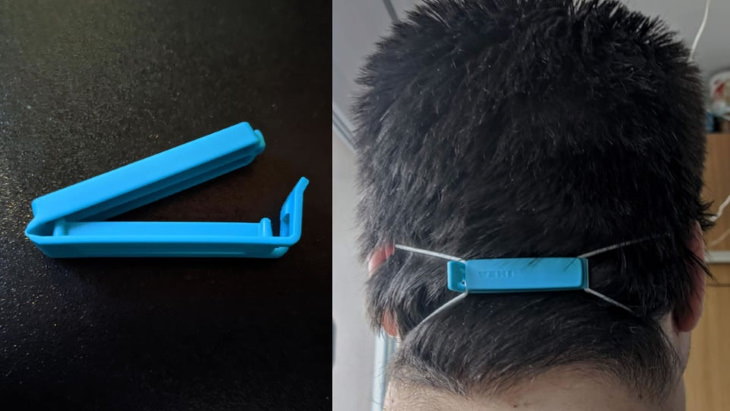
 Tips to Make Face Masks More Comfortable bag clip trick
Unfortunately, the tissue trick we mentioned above won't help ear chafing - a problem the overwhelming majority of people are experiencing, but there is a solution to this problem, too. You can simply use a paper clip or a bag clip like the one in the picture above to secure the mask on your face. 
 
Do keep in mind, however, that it's very important to make sure the mask still fits you properly after using this trick, or else the mask covering is useless. If the mask becomes too loose on the sides after you've attached the ear elastics to a clip, you'll need to shorten the elastics. 
 
6. Always Have One on Hand
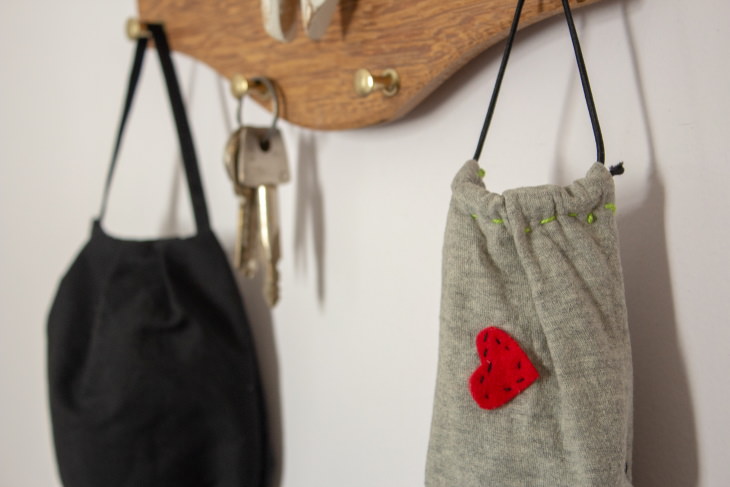
 Tips to Make Face Masks More Comfortable masks hanging near the keysOne of the biggest inconveniences with face masks is that you have to remember to take it with you every time you exit your home. To never forget your face mask at home, simply get in the habit of hanging a clean face mask next to your house or car keys. This way, you'll be a lot more likely to wear a mask, and you'll store it safely, too, since the mask won't lay on any potentially contaminated surfaces and won't accumulate germs in a handbag or pocket.

This is only for your information, kindly take the advice of your doctor for medicines, exercises and so on.     

https://gscrochetdesigns.blogspot.com. one can see my crochet creations  
https://gseasyrecipes.blogspot.com. feel free to view for easy, simple and healthy recipes    
https://kneereplacement-stickclub.blogspot.com. for info on knee replacement


Labels: , , , , , , , , ,

Thursday, October 17, 2019

What happens when you swallow a pill without water

Do you take medicine without water?

Have you ever swallowed a pill without water? At some point, you might have tried to pull this stunt either because you are too lazy to get a glass of water or you are too busy. Whatever the reason might be, but gulping pills without water is not a good thing to do. Not because you may choke while doing so, but the reason is more dangerous.

Why is it harmful?

The reason why it is recommended to take pills with fluid is that it makes swallowing easier and prevents the tablets from getting stuck in your esophagus. If you just gulp down the tablets, there are rife possibilities that it will get stuck in the esophagus and will make you uncomfortable. The pill can cause irritation and inflammation in the esophagus and can further lead to a number of issues like heartburn, chest pain and at times it even worse like bleeding and holes. 

 Be careful

You might not witness the symptoms right away due to the absence of pain nerves in the esophagus. But if the pills do not make their way down, it may harm the delicate tissue of the esophagus, which can cause further complications like dehydration and ulcer.
The consequence is even worse when you are consuming some specific medicines for osteoporosis or antibiotics. 

The bottom line
To avoid any unwanted complication, it is best to drink plenty of water while taking your medications. As per the Cleveland Clinic, a person should take oral medications with 250 ml of water. Apart from this, you should always take your medicine while standing or sitting. You may choke if you lie down and have your pill. For the same reason, it is recommended to have your tablets 15 minutes before going to bed, so that pills can pass down the esophagus.  

this is only for your information, kindly take the advice of your doctor for medicines, exercises and so on.   
https://gscrochetdesigns.blogspot.com. one can see my crochet creations  

https://gseasyrecipes.blogspot.com. feel free to view for easy, simple and healthy recipes    
https://kneereplacement-stickclub.blogspot.com. for info on knee replacement


Labels: , , , , , , , , , , , , , , , ,

Thursday, September 12, 2019

Advanced MRI brain scan can predict stroke-related dementia

Advancement of technology has made it easier for practitioner to diagnose diseases which were earlier tough to predict and at times went undetected.

A study has found that an advanced MRI brain scan analysis in patients with stroke-related, small vessel disease, helped predict problems with thinking, memory and even dementia.


When a stroke or other disease damages tiny blood vessels in the brain, the condition is known as small vessel disease. This condition is the most common cause of thinking problems ( planning,  organising information and processing speed) and can even lead to dementia. Although early treatment could help patients at risk, no effective test is available to identify them.


This study evaluated the accuracy of a new MRI analysis technique using diffusion tensor imaging (DTI) , in predicting thinking problems and dementia related to small vessel disease.


A single scan measured the brain in fine detail to reveal damaged areas. By comparing these images to a healthy person's, researchers were able to classify the brain into areas of healthy versus damaged tissue.


Results showed that participants with the most brain damage were much more likely to develop thinking problems. The analysis also helped predict 3/4ths of the dementia cases that occurred during the study.


We've developed a useful tool for monitoring patients at risk of developing dementia and could target those who need early treatment, said senior author of the study.


The study included 99 patients with small vessel disease caused by ischemic stroke, a type of stroke that blocks the blood vessels deep within the brain. Slightly more than 1/3rd were female, average age 68, and most were Caucasian.


Patients received the MRI scans annually for 3 years and thinking tests annually for 5 years. 18 participants developed dementia during the study, with an average time to onset of approximately 3 years and 4 months.


This advanced MRI analysis offers a highly accurate and sensitive marker of small vessel diseases severity in a single measure that can be used to detect who will and will not go on to develop dementia in a 5 year period , noted the author.


this is only for your information, kindly take the advice of your doctor for medicines, exercises and so on.   
https://gscrochetdesigns.blogspot.com. one can see my crochet creations 
https://gseasyrecipes.blogspot.com. feel free to view for easy, simple and healthy recipes    
https://kneereplacement-stickclub.blogspot.com. for info on knee replacement
    

Labels: , , , , , , , , , , , , ,