Friday, December 21, 2018

Decorative ceramics wares in your homes may raise cancer risk

Love to decorate your homes with ceramics wares and glass painting? Beware, they may contain high levels of cadmium that can raise the risk of cancer, warns researchers.

Cadmium is commonly used to give products a bright red, orange or yellow pigment, but over time the decoration on glass can start to flake and the glaze on ceramics fail, ingestion of which can potentially raise risks to human health as well as the environment. 

The findings showed that cadmium was also found in everyday household products like second-hand plastic toys, drinking glasses, alcoholic beverage bottles. 

The surfaces of these common items were covered by cadmium more than the recommended levels which is said to be ranging from 50 to 800 parts per million (ppm).

The highest readings of up to 70,000 ppm were recorded on the enamels of old and new drinking glasses and bottles, with cadmium detected in about 70 per cent of the 197 logos, patterns, text, pictures and cartoons tested on 72 products, the researchers revealed in the paper published recently.

"If you asked most people about cadmium, they would probably know very little about it. But it is listed among the World Health Organisation's 10 chemicals of major public health concern, alongside substances such as lead and asbestos," said a Prof.

"The health risk depends on how easily the cadmium can flake off or leach out. Additional tests performed indicate that this is greatest for enamelled glassware," said the Prof.

In addition, cadmium was found in new ceramic items such as mugs, plates and bowls, with the highest recorded level of 40,000 ppm, and in old plastic products including toys, with a maximum 35,000 ppm in a decorative brooch.

THIS IS ONLY FOR INFORMATION, ALWAYS CONSULT YOU PHYSICIAN BEFORE HAVING ANY PARTICULAR FOOD/ MEDICATION/EXERCISE/OTHER REMEDIES.                                                                                
 PS- THOSE INTERESTED IN RECIPES ARE FREE TO  VIEW MY BLOG-                                                                                           https://gseasyrecipes.blogspot.com/                                                                                                                                                                             FOR INFO ABOUT KNEE REPLACEMENT, YOU CAN VIEW MY BLOG-                                               
     https:// kneereplacement-stickclub.blogspot.com/                                                                                     
  FOR CROCHET DESIGNS                                                                                                                                                                                                                                 https://gscrochetdesigns.blogspot.com
  

Labels: , , , , , , , , , , , , , , , , , , ,

Wednesday, December 07, 2016

Lung cancer- diagnosis, treatments

Cigarettes are packed with cancer-causing chemicals. They also disarm the lungs' natural defense system. The airways are lined with tiny hairs called cilia. To protect the lungs, they sweep out toxins, bacteria, and viruses. Tobacco smoke stops the cilia from doing their job. This lets the cancer-causing chemicals build up.

 Symptoms
Lung cancer begins quietly. There are usually no symptoms or warning signs in the early stages. As it gets worse, you may notice: Fatigue
A cough that won't go away
Chest pain, especially during deep breaths
Wheezing or shortness of breath
Coughing up bloody phlegm

Spiral CT may pick up early lung cancers in some people, but it's not clear whether it finds them early enough to save lives. Smokers should get scans. If either your x-ray or sputum test suggests that you could have cancer, then biopsy is the next procedure.This is done normally through FNA, where n fine needle is inserted and a small sample of the tumour is taken out to determine if it is cancer or not.

Two Main Types

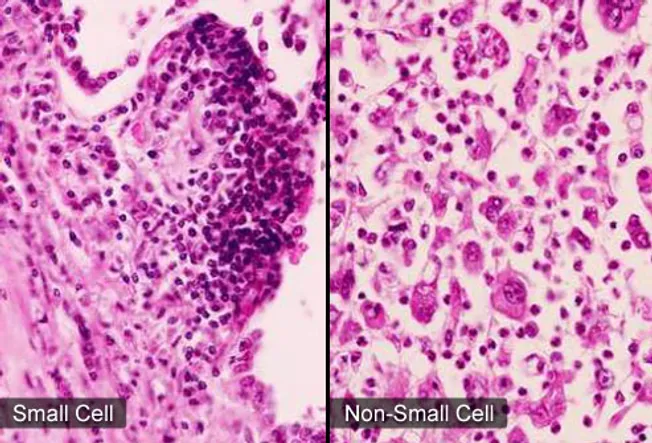
Small-cell lung cancer is more aggressive, meaning it can spread quickly to other parts of the body early in the disease. It is due to cigarette use and is rare in nonsmokers. Non-small-cell lung cancer grows more slowly and is more common. It's responsible for almost 85% of all lung cancers.

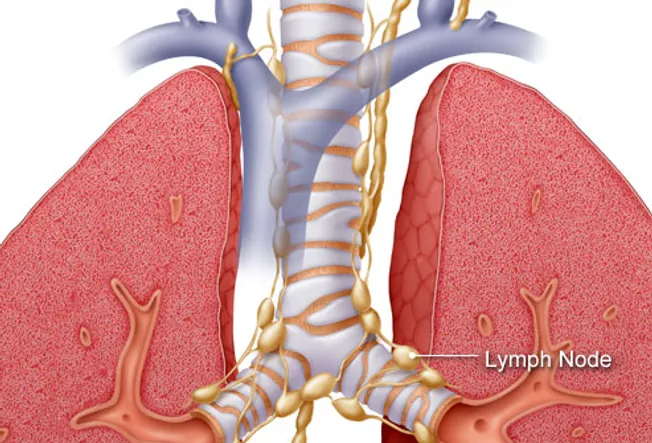
 Small-cell lung cancer is divided into two stages: "Limited" means the cancer is confined to one lung and maybe nearby lymph nodes. "Extensive" means the cancer has spread to the other lung or beyond. Non-small-cell lung cancer is assigned a stage of I through IV, depending on how far it has spread.

 Treatment
When doctors find non-small-cell lung cancer before it spreads beyond one lung, an operation can sometimes help. The surgeon may remove the part of the lung that has the tumor, or if necessary, the entire lung. Some people get radiation or chemotherapy afterward to kill any remaining cancer cells. Surgery usually doesn’t help with small-cell lung cancer because it probably has already spread before diagnosis.
  
In Advanced Lung Cancer
When lung cancer spreads too far to be cured, treatments may still help people live longer and have a better quality of life. Radiation and chemotherapy can shrink tumors and help control symptoms, such as bone pain or blocked airways. Chemotherapy is usually the main treatment for small-cell lung cancer.

Modern Treatments

Targeted therapy plus chemotherapy may help, if other approaches don’t work. One type prevents the growth of new blood vessels that feed cancer cells. Others interrupt the signals that prompt lung cancer cells to multiply, as shown in the image here.
Immunotherapy works with your immune system to fight advanced cases of non-small-cell lung cancer. It doesn’t work for everyone, but when it does, the results look strong. You’d also get chemotherapy.

Quit Smoking- According to studies, it is found that even those who are diagnosed with lung cancer, of they quit smoking, do better than those who don't quit !
Second-hand smoke --- Breathing in secondhand smoke at home or at work also appears to raise your risk. People who are married to someone who smokes are 20% to 30% more likely to get lung cancer than the spouses of nonsmokers.
Dangers of jobs-  People who work with uranium, arsenic, and other chemicals should try to limit their exposure. Asbestos, which was once widely used in insulation, is a known cause of lung cancer. It’s rarely used now, but workers who were exposed years ago are still at risk.
 Radon Gas
This natural radioactive gas is found at higher than normal levels in certain parts of the U.S. The gas can build up inside homes and raise the risk of lung cancer, especially in people who smoke. It is the second leading cause of lung cancer in the U.S. You can’t smell or see it, but you can use a simple test kit to find it.

Other risks of Lung cancer-
A family history of lung cancer
Drinking water that's high in arsenic
Lung cancer does happen to people with no well-known risk factors -- including those who've never smoked. Researchers don't know why. It seems to happen to women more than men. And one type, adenocarcinoma, is more common in nonsmokers than smokers.

 this is only for your information, kindly take the advice of your doctor for medicines, exercises and so on.


https://gscrochetdesigns.blogspot.com. one can see my crochet creations

https://gseasyrecipes.blogspot.com. feel free to view for easy, simple and healthy recipes

https://kneereplacement-stickclub.blogspot.com. for info on knee replacement


Labels: , , , , , , , , , , ,

Saturday, January 31, 2015

Everything One Wants To Know About Lung Cancer

Lung cancer is the top cause of cancer deaths in both men and women. But this wasn't always the case. Before the widespread use of mechanical cigarette rollers, lung cancer was rare. Today, smoking causes nearly 9 out of 10 lung cancer deaths, while radon gas, pollution, and other chemicals play a smaller role. Newly developed drugs can offer hope for people diagnosed today.

Smoking Causes Lung Cancer

Cigarettes are not only packed with cancer-causing chemicals, but they also disarm the lungs' natural defense system. The airways are lined with tiny hairs known as cilia. These hairs protect the lungs by sweeping out toxins, bacteria, and viruses. Tobacco smoke stops the cilia from doing their job. This allows the cancer-causing chemicals to collect in the lungs.

Symptoms

Lung cancer begins quietly. There are usually no symptoms or warning signs in the early stages. As it gets worse, symptoms may include:
  • A cough that won't go away
  • Chest pain, especially during deep breaths
  • Wheezing or shortness of breath
  • Coughing up bloody phlegm
  • Fatigue

Labels: , , , , , , , , , , , , ,

Friday, October 18, 2013

Air pollution is the leading cause of lung cancer, says World Health Organisation

The air we breathe is laced with cancer-causing substances and is being officially classified as carcinogenic to humans, the World Health Organisation has said. 

The International Agency for Research on Cancer (IARC) said that in 2010, 223,000 deaths from lung cancer worldwide resulted from air pollution.

The agency also said that there is convincing evidence it increases the risk of bladder cancer.

It listed the main sources of outdoor air pollution as transport, power generation, industrial and agricultural emissions, and heating and cooking in residential buildings. 

Some air pollutants also have natural sources, it added.

Air pollution is already known to increase risks for a wide range of diseases, such as respiratory and heart diseases. 

Depending on the level of exposure in different parts of the world, the risk was found to be similar to that of breathing in second-hand tobacco smoke, Kurt Straif, head of the agency's section that ranks carcinogens, told reporters in Geneva.

In a statement, deputy head of the WHO cancer agency, Dana Loomis, said: 'Our task was to evaluate the air everyone breathes rather than focus on specific air pollutants.

'The results from the reviewed studies point in the same direction: the risk of developing lung cancer is significantly increased in people exposed to air pollution.'

Air pollution, mostly caused by transport, power generation, industrial or agricultural emissions and residential heating and cooking, is already known to raise risks for a wide range of illnesses including respiratory and heart diseases.

Research suggests that exposure levels have risen significantly in some parts of the world, particularly countries with large populations going through rapid industrialisation.

IARC reviewed thousands of studies on air pollution tracking populations over decades and other research such as those in which mice exposed to polluted air experienced increased numbers of lung tumours.

In a statement released after reviewing the literature, the Lyon-based agency said both air pollution and particulate matter - a major component of it - would now be classified among its Group 1 human carcinogens.

That ranks them alongside more than 100 other known cancer-causing substances in IARC's Group 1, including asbestos, plutonium, silica dust, ultraviolet radiation and tobacco smoke.

Dr. Christopher Wild, director of IARC, told a news briefing in Geneva that the work's aim is to be as comprehensive as possible.

He said: 'Often we're looking at two, three or four decades once an exposure is introduced before there is sufficient impact on the burden of cancer in the population to be able to study this type of question.'

ps- this is only for information, always consult you physician before having any particular food/ medication/exercise/other remedies.
ps- those interested in recipes are free to view my blog-

http://gseasyrecipes.blogspot.com/


for info about knee replacement, you can view my blog-


http://Knee replacement-stick club.blogspot.com/


for crochet designs


http://My Crochet Creations.blogspot.com

Labels: , , , , , , , , , , , , ,

Monday, March 04, 2013

Beta Carotene


Beta-Carotene

The body turns beta-carotene into the antioxidant vitamin A.
Foods rich in beta-carotene, such as leafy greens and orange and yellow vegetables, lower the risks for cancer and heart disease. But studies show beta-carotene supplements don’t lessen cancer or heart disease risks in healthy adults and may raise the risk of lung cancer in smokers and people exposed to asbestos

Labels: , , , , , , , , , ,