Thursday, September 19, 2024

Colorectal Cancer Symptoms: The Pain That This 34-Year-Old Ignored For Months Before His Diagnosis

Joe Faratzis, 34, shares the early signs of colorectal cancer that he overlooked, his diagnosis and treatment. Faratzis shares that he noticed his first symptoms in 2019 when he started to have faint abdominal pain. He says that he started to experience this pain in the bottom right side of his abdomen whenever he bent over. However, since it happened only periodically, once or twice a week, he didn’t think much about it.

According to a report in SELF, speaking to Julia Ries, Faratzis said that he spoke about the issue with his primary care doctor who told him to get a CT scan but he ignored it then. However, he now says that if he had gotten the CT scan back then, it would have averted a lot of troubles.

The next sign of colorectal cancer

Nearly six months after the stomach pain, Faratzis said that he noticed a couple of bright red spots of blood on the toilet paper after I went to the bathroom, once or twice a week. However, since it was never an alarming amount, he wasn’t concerned. But, today when he speaks about his disease, he says that the blood in his stool should have been a major indicator and that he should have spoken to his doctor.

The BIG red flag

A few months later, when Faratzis was sitting on the couch, he passed a gas and saw blood. He went to the bathroom and there was nearly half a cup of blood in the toilet. While it wasn’t painful, it seemed like there was an issue. He then went ahead and fixed an appointment with a doctor.

The Diagnosis

He explained his symptoms to the doctor and he conducted a digital rectal exam. However, the doctor didn’t find anything concerning other than a tiny bit of blood in my lower rectum. Faratzis was then referred to a gastrointestinal specialist as they thought he probably had haemorrhoids. The GI doctor asked for a colonoscopy and a month later, he had a colonoscopy.


Faratzis was sedated for the procedure and when he woke up, the doctor told him they had found a big tumour and had taken a biopsy to check if it was malignant. Three days later, his doctor told him he had adenocarcinoma.

After several tests and imaging, the doctors told him he had stage II colorectal cancer and that the cancer was localized to his colon. He was advised to do chemotherapy, radiation and get surgery to remove the cancer from the colon.

He took an oral chemo daily. Along with that, he also underwent radiation treatment five days a week for a few months to reduce the size of the tumour before having surgery. After this, he had a low anterior resection, a surgery to remove the portion of my colon containing cancer and an ileoscopy, a procedure where your small intestine is redirected out through your stomach into a bag.


The cancer spread

After the surgery, more imaging tests were done and it revealed that the cancer had exploded and it had spread to the lungs and liver. That’s when he was diagnosed with stage IV colorectal cancer. For three months, he did intravenous chemotherapy to kill the lungs and liver lesions. The chemotherapy got rid of the spots in the lungs and shrunk the liver lesions. However, there were several other liver lesions, for which he underwent a laparoscopic procedure.

Three months later, his lung lesions were back, however, the doctors were able to burn and free them away. He says, “This process repeated itself: Throughout 2021 and 2022, we’d find new spots on my lungs or liver and have to zap them. I probably had 9 or 10 lung surgeries that worked, but also led to some not-so-fun complications, like a collapsed lung, along the way.”

He says that he was never given a prognosis, or survival rate but he’s learnt that even if you have stage IV cancer, if you’re able to find tumours early and have them removed, there’s a chance you could continue to live for a really long time. “This isn’t always the case, but, thankfully, my doctors have been able to surgically remove all the malignant lesions that have popped up so far.”


Labels: , , , , , ,

Thursday, December 20, 2018

New Test Predicts Cervical Cancer With 100% Accuracy

Researchers have developed a cervical cancer test that can detect the disease up to five years before it manifests, with 100% accuracy in a randomized clinical trial of more than 15,000 women. However, they also said it could take up to five years for it to become routine procedure in gynecologist’s offices.

“This is an enormous development,” said a Prof. and the lead researcher behind the new test. “We were surprised by how well this new test can detect and predict early cervical cancers years in advance, with 100% of cancers detected, including adenocarcinomas, which is a type of cervical cancer that is very difficult to detect.”

India is home to a quarter of the world’s cases of cervical cancers 1 and 2; here, the disease accounts for 26 % of all cancers in women, and 17% of their cancer-related deaths. Cervical cancer screening efforts have been disjointed, and reliant on the invasive Pap smear to identify cellular mutations, as well as a test for the human papillomavirus, an infection that indirectly underlies the majority of the world’s cervical cancer cases. Neither test is foolproof, with Pap smears detecting only around 50% of precancerous cells, and the HPV test only detecting a past or present infection, but not whether it will develop into cancer. The HPV vaccine, despite its proven efficacy in preventing the infection that underlies most cervical cancer cases — and thus lowering the rate of cervical cancer — has been adopted only slowly, as part of public health campaigns  at the national level.

The new test detects naturally occurring chemical markers that overlay DNA that’s been affected by HPV infection, to predict cervical cancer before it develops. It reflects a new trend in cancer research and treatment, one that sees the pantheon of diseases primarily as the result of epigenetics — that is, how, when and why a body ‘reads’ and carries out genetic blueprints. These words explains it best: if each of our lives are a movie, our cells are the actors, genetics is the script — and epigenetics is the directing.

“In contrast to what most researchers and clinicians are saying, we are seeing more and more evidence that it is in fact epigenetics, and not DNA mutations, that drives a whole range of early cancers, including cervical, anal, oropharyngeal, colon, and prostate,” the Prof. said.

In the clinical trial, the new test detected 100% the invasive cervical cancer cases (a total of eight) that developed among a set of 15,744 women. The women in the trial also underwent Pap smears and HPV testing, which detected 25% and 50% of the cervical cancer cases respectively.

Among a subset of HPV-positive women, the new test was slightly less accurate but still highly efficient, detecting 93% of precancerous cervical lesions, compared to 86% detected by a Pap smear and HPV test combined, and 61% detected by a Pap smear alone.


THIS IS ONLY FOR INFORMATION, ALWAYS CONSULT YOU PHYSICIAN BEFORE HAVING ANY PARTICULAR FOOD/ MEDICATION/EXERCISE/OTHER REMEDIES.                                                                                
 PS- THOSE INTERESTED IN RECIPES ARE FREE TO  VIEW MY BLOG-                                                                                           https://gseasyrecipes.blogspot.com/                                                                                                                                                                             FOR INFO ABOUT KNEE REPLACEMENT, YOU CAN VIEW MY BLOG-                                               
     https:// kneereplacement-stickclub.blogspot.com/                                                                                     
  FOR CROCHET DESIGNS                                                                                                                                                                                                                                 https://gscrochetdesigns.blogspot.com


Labels: , , , , , , , , , , ,

Wednesday, November 23, 2016

Even If You're Not A Smoker Your Lung Cancer Chances Are Still High

Ankita never smoked a cigarette in her life. So she assumed her nagging chronic cough must’ve something to do with congestion or pollution. She was first diagnosed with bronchitis in March 2015 but no amount of medication helped. The chest irritation became unbearable, she could barely utter a line without coughing.
5 months later, extensive X-rays revealed a possible patch of pneumonia. After days of antibiotics and weight loss, she finally thought that it would be the end of all the coughing jokes. But that was not to be. The cough got worse.

Days after her 32nd birthday, she collapsed with breathlessness and heartburn. An extensive investigation revealed a tumour, the size of a lemon, buried at the back of her lung which escaped all scans over the past year.

Ankita was diagnosed with lung cancer, stage 4. The worst kind. Incurable and untreatable. Ankita, not her real name, never smoked a cigarette in her life.

 Ankita belongs to my extended family. She was into biking, hiking; the healthiest, most outdoorsy person I knew. Clearly, not even clean living guarantees a free pass.

Till the last decade, the average age of lung cancer was 70-years. It only happened after years of smoking or living in a cloud of second hand smoke. Today, according to CDC Atlanta, 10 to 15% of all lung cancer patients are young, healthy, non-smokers under the age of 40.
And the unsettling part - in Delhi, 20% of lung cancer patients have never touched a cigarette in their lives; the incidence is 5% more than the global average.
The percentage of non-smoking lung cancer patients has gone up to 20%. Increasing air pollution levels may have a role to play. 
Dr Julka, Oncologist, AIIMS 
 
In the US, lung cancer in non-smokers has become the sixth largest cause of death. There are no such pan- India statistics but according to the Delhi Cancer Registry, lung cancer cases have shown the highest spurt among all cancers in the Capital, shooting up from 14 cases per one lakh population in 2008 to 16 cases per one lakh population in 2010.
While smoking and tobacco consumption remain the number 1 cause of lung cancer, the rate at which non-smokers are getting this disease is worrying. We still don’t know a lot about this cancer in non-smokers.
Dr Sanjeev Mehta, Pulmonologist
What we know is this:
  • In the last decade, more women non-smokers have been diagnosed with lung cancer than men.
  • The symptoms, if any, in the young and the non-smoking lot often get mistaken for something else. By the time the disease is diagnosed, they are already pretty sick.
  • Asians and African-Americans have a higher rates of illness and death from lung cancer than the Americans or people of European descent.
  • Living with a smoker increases chances of lung cancer in the non-smoker by 31 percent : Centers for Disease and Prevention.
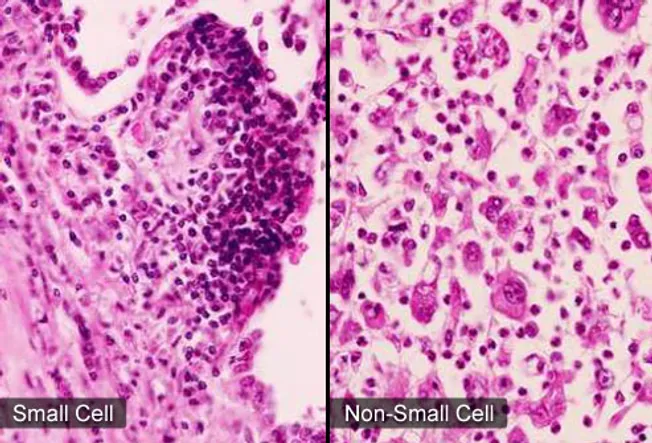
  • Adenocarcinoma or non-small cell lung cancer, is what non-smokers mostly get. Ankita has this one. Scientists feel this type of lung cancer needs more potent treatment to make it a livable disease.
So is it just a stroke of bad luck or an errant gene allowed to run amok?

Genetic Alteration Makes Some Carcinogen Sponges: The genetic changes in non-smokers are pretty different from smokers. And then some people are what the medical community describes as ‘carcinogen sponges’ - their bodies are not designed to wipe out toxins. They are made to hoard cancerous elements.

Air Pollution: What could be the reason behind the staggering statistic of 20% non-smoking lung cancer patients in Delhi? Better diagnostic facilities for one but countless studies worldwide have proved a correlation between air pollution and lung cancer.

Exposure To Asbestos: The World Health Organisation says that exposed workers are seven times as likely to die of lung cancer and those who smoke, in this group, run a 90 times higher risk of getting lung cancer than their counterparts.

Cooking fumes: Scientists say this could be the reason why Asians run a higher risk than Europeans. Could all the kitchen-slogging and toxic cooking oil fumes be doing more harm than good?
A lot of research is needed to understand these causes.

Investment in lung cancer research has doubled over the last decade but it still receives only one-third the funds breast cancer receives and less than half of those given for leukemia - the bias stems from the fact that lung cancer is primarily self-inflicted. But that’s not true anymore. Anyone with lungs is at risk of lung cancer.

this is only for your information, kindly take the advice of your doctor for medicines, exercises and so on.

https://gscrochetdesigns.blogspot.com. one can see my crochet creations
https://gseasyrecipes.blogspot.com. feel free to view for easy, simple and healthy recipes

https://kneereplacement-stickclub.blogspot.com. for info on knee replacement


Labels: , , , , , , , , ,

Monday, November 07, 2016

BLADDER CANCER- SYMPTOMS, DIAGNOSIS AND TREATMENT

Cancer is the growth of abnormal cells in the body. Bladder cancer typically begins in the inner lining of the bladder, the organ that stores urine after it passes from the kidneys. Most bladder cancers are caught early, when treatments are highly successful and the disease has not spread beyond the bladder. But bladder cancer tends to come back, so regular check-ups are important.

Symptoms-1) Blood in Urine
Blood in the urine can be a sign of bladder cancer, either visible to the eye or picked up by routine testing. The urine may look darker than usual, brownish, or (rarely) bright red. Most commonly, blood in the urine is not caused by cancer, but by other causes. These include exercise, trauma, infections, blood or kidney disorders, or drugs, such as blood thinners.  


2)Bladder Changes
Bladder symptoms are more likely to come from conditions other than cancer. But bladder cancer can sometimes cause changes to bladder habits, including:
    Needing to go, with little or no results
    Having to go more often than usual
    Painful urination
    Difficulty urinating
Urinary tract infections or bladder stones can cause similar symptoms, but require different treatments.


Risk factors- 1) Smoking
Smokers are about four times more likely to get bladder cancer than people who have never smoked. Chemicals in tobacco smoke are carried from the lungs to the bloodstream, then filtered by the kidneys into urine. This concentrates harmful chemicals in the bladder, where they damage cells that can give rise to cancer.
2) Chemical Exposure
Research suggests that certain jobs may increase your risk for bladder cancer. Metal workers, mechanics, and hairdressers are among those who may be exposed to cancer-causing chemicals. If you work with dyes, or in the making of rubber, textiles, leather, or paints, be sure to follow safety procedures to reduce contact with dangerous chemicals. Smoking further increases risk from chemical exposure.
3) Other factors-
    Gender: Men are three times more likely to get bladder cancer.
    Age: Nine out of 10 cases occur over age 55.
    Race: Whites have twice the risk of African-Americans.
Other factors at play include a family history of bladder cancer, previous cancer treatment, certain birth defects of the bladder, and chronic bladder irritation.


Diagnosis: 1) Testing
There's no routine test for bladder cancer. But if you're at high risk or have symptoms, your doctor may first order a urine test. If needed, a procedure called cystoscopy lets your doctor see inside the bladder with a slender lighted tube with a camera on the end. The cystoscope can be used to remove small tissue samples (a biopsy) to be examined under a microscope. A biopsy is the best way to diagnose cancer.
2)  Imaging
If cancer is found, imaging tests can show whether it has spread beyond the bladder. An intravenous pyelogram uses dye to outline the kidneys, bladder, and ureters, the tubes that carry urine to the bladder. CT and MRI scans give more detailed images of these, and can show the lymph nodes nearby. An ultrasound uses sound waves, instead of radiation, to produce images. Additional imaging tests look for cancer in the lungs and bone.


Types of Bladder Cancer
The main types of bladder cancer are named for the type of cells that become cancerous. The most common is transitional cell carcinoma, which begins in the cells that line the inside of the bladder. Squamous cell carcinoma and adenocarcinoma are much less common.  


Stages of Bladder Cancer
Stage 0: Cancer stays in the inner lining.
Stage I: Cancer has spread to the bladder wall.
Stage II: Cancer has reached the muscle of the bladder wall.
Stage III: Cancer has spread to fatty tissue around the bladder.
Stage IV: Cancer has spread to the pelvic or abdominal wall, lymph nodes, or distant sites such as bone, liver, or lungs.


Treatment: 1) Surgery
Transurethral surgery is most often done for early-stage cancers. If cancer has invaded more of the bladder, the surgeon will most likely perform either a partial cystectomy, removing a portion of the bladder, or a radical cystectomy, to remove the entire bladder. For men, the prostate and urethra may also be removed. For women, the uterus, fallopian tubes, ovaries, and part of the vagina may also be removed.
2) After Surgery
If your entire bladder must be removed, your surgeon will construct another means of storing and passing urine. A piece of your intestine may be used to create a tube that allows urine to flow into an external urostomy bag. In some cases, an internal reservoir -- drained via a catheter -- can be constructed. Newer surgeries offer the possibility of normal urination through the creation of an artificial bladder.
3) Chemotherapy
Chemotherapy involves drugs designed to kill cancer cells. These drugs may be given before surgery to shrink tumors, making them easier to remove. Chemotherapy is also used to destroy any cancer cells left after surgery and to lower the chances that the cancer will return. Hair loss, nausea, loss of appetite, and fatigue are common side effects. The drugs can be given by vein or directly into the bladder.
4)  Immunotherapy
This type of treatment is delivered directly to your bladder, so it doesn’t treat cancer that has spread beyond it. One treatment, Bacillus Calmette-Guerin therapy, sends in helpful bacteria through a catheter. It triggers your immune system to attack the cancer. Flu-like symptoms are a common side effect of the once-a-week treatment. Immunotherapy may be used after surgery to reduce the risk of recurrence.
5)Radiation
Radiation uses invisible, high-energy beams, like X-rays, to kill cancer cells and shrink tumors. It's most often given from outside the body by machine. Radiation is often used in tandem with other treatments, such as chemotherapy and surgery. For people who can't undergo surgery, it may be the main treatment. Side effects can include nausea, fatigue, skin irritation, diarrhea, and pain when urinating.


 Survival Rates
Survival rates depends on the stage at diagnosis. About half of  bladder cancers are caught when the disease is confined to the inner lining of the bladder. Nearly 96% of these people will live at least five years, compared to people without bladder cancer. The more advanced the cancer, the lower this figure becomes. But keep in mind that these rates are based on people diagnosed from 2006 to 2012. The treatments and outlook may be better for cancers diagnosed today. And each person’s case is different.


Life After Bladder Cancer
What one can do is stop smoking if you do. Eat plenty of fruits, veggies, whole grain cereals, eat less meat, limit alcohol, be regular with your follow-up with your doctor, do daily exercise, do meditation.


 this is only for your information, kindly take the advice of your doctor for medicines, exercises and so on.
https://gscrochetdesigns.blogspot.com. one can see my crochet creations


https://gseasyrecipes.blogspot.com. feel free to view for easy, simple and healthy recipes

https://kneereplacement-stickclub.blogspot.com. for info on knee replacement

Labels: , , , , , , , , , , ,

Saturday, July 30, 2016

Rare Gene Mutation Linked To Oesophageal Cancer Discovered

Scientists have discovered that a rare genetic mutation is associated with susceptibility to esophageal cancer and familial Barrett esophagus.

Researchers at University Hospitals Case Medical Centre in the US,  set out to identify novel disease susceptibility variants in familial Barrett esophagus (FBO) in affected individuals from a large multigenerational family.

Barrett's esophagus is a serious complication of gastroesophageal reflux disease. In Barrett's esophagus (BO), normal tissue lining the esophagus - the tube that carries food from the mouth to the stomach - changes to tissue that resembles the lining of the intestine.

The team, led by Chak along with Kishore Guda, of the Case Comprehensive Cancer Centre, used targeted next generation gene sequencing to find a rare mutation (S631G) in FBO in the uncharacterised gene VSIG10L that segregated with disease in affected family members.

Studies showed that this mutation disrupts maturation of the normal esophageal lining.

"Instances of esophageal cancer are on the rise, and the disease has a poor five-year survival rate of less than 15 per cent," said Chak.

"However early detection through screening can prevent the development of esophageal cancer. Further research assessing this gene variant may reveal pathways important for the pathogenesis of BO and esophageal adenocarcinoma, leading to earlier detection and better treatment options," he said.

Affecting up to 6.8 per cent of the population, BO is a leading predictor of esophageal cancer.

Compared with the general population, patients with BO have an 11-fold higher risk of developing adenocarcinoma of the esophagus.

However, despite a dramatic increase in the disease over the past four decades, there have been few advances in understanding and improving treatment options.

Discovery of this variant, which is the first susceptibility variant discovered in FBO, shows novel biology in disease pathogenesis, and indicates early screening and close clinical monitoring for individuals harbouring this germline variant.

"This is a step forward in combating this deadly disease as we discovered a new way to categorise those at risk for esophageal adenocarcinoma," said Chak.

The study was published in the journal JAMA Oncology.


 this is only for your information, kindly take the advice of your doctor for medicines, exercises and so on.
https://gscrochetdesigns.blogspot.com. one can see my crochet creations
https://gseasyrecipes.blogspot.com. feel free to view for easy, simple and healthy recipes

https://kneereplacement-stickclub.blogspot.com. for info on knee replacement

Labels: , , , ,

Saturday, January 31, 2015

Everything One Wants To Know About Lung Cancer

Lung cancer is the top cause of cancer deaths in both men and women. But this wasn't always the case. Before the widespread use of mechanical cigarette rollers, lung cancer was rare. Today, smoking causes nearly 9 out of 10 lung cancer deaths, while radon gas, pollution, and other chemicals play a smaller role. Newly developed drugs can offer hope for people diagnosed today.

Smoking Causes Lung Cancer

Cigarettes are not only packed with cancer-causing chemicals, but they also disarm the lungs' natural defense system. The airways are lined with tiny hairs known as cilia. These hairs protect the lungs by sweeping out toxins, bacteria, and viruses. Tobacco smoke stops the cilia from doing their job. This allows the cancer-causing chemicals to collect in the lungs.

Symptoms

Lung cancer begins quietly. There are usually no symptoms or warning signs in the early stages. As it gets worse, symptoms may include:
  • A cough that won't go away
  • Chest pain, especially during deep breaths
  • Wheezing or shortness of breath
  • Coughing up bloody phlegm
  • Fatigue

Labels: , , , , , , , , , , , , ,