Cancer Support India

Monday, August 02, 2021

Expert answers the right amount of ghee you must have

The right amount of ghee you must have

In Indian households, it is common to add ghee in every food generously. Be it dal, rice or chapati, every food has a thick layer of ghee on top of it. Ghee is nutritious and adding it to your food nourishes your tissues and improves the functioning of all the organs. But another fact is that adding too much of it to the diet may lead to diarrhoea, fat accumulation in the arteries and can decrease the metabolism. Celebrity nutritionist recently took to her Instagram handle to guide us about the right amount of ghee one must have daily.

​What does the expert recommend?

Ghee or clarified butter is a staple in Indian cuisine, commonly used for cooking and enhancing the flavour. It has now gained popularity in other parts of the world and is a healthier alternative to butter.

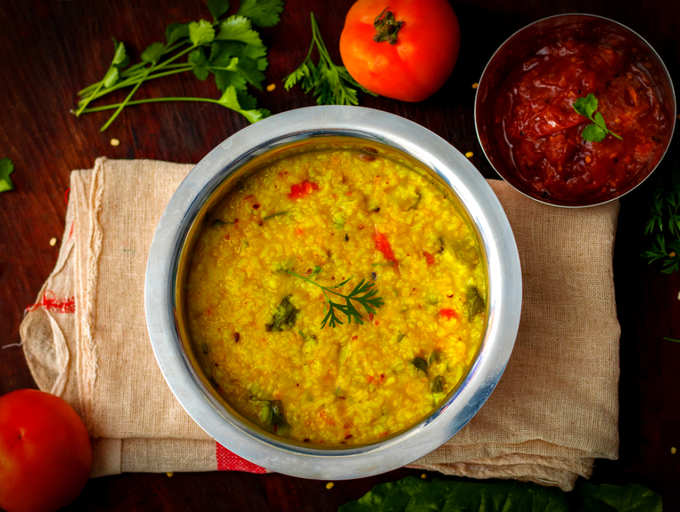
The nutritionist recommends adding ghee to your food in proportion. It all depends on the quantity and type of food you are making. If you are having millet then add more ghee, but if it is rice and dal add a little bit of ghee in it. "You must add enough ghee to enhance the flavour, but not too much that it masks all the other flavour," she said.

Ghee should also be added to your child's food once they start eating solids. Four to five teaspoons of ghee in a bowl of food are good for your child's health once they turn seven-month-old. Once they turn a year old, half a teaspoon of ghee is enough for them.

readmore

​Nutritional value of ghee

Ghee is more concentrated in fat than butter as it does not contain water and milk solids. It is prepared slowly by boiling butter till the time all the water evaporates and the fat is separated. Apart from cooking, ghee is also used in Ayurveda for treating different health ailments.

In terms of nutrient value, ghee and butter contain more or less the same amount of vitamins and minerals. Ghee contains a high amount of Vitamin A, E, and D. Besides, it also contains omega-3s (monounsaturated fats) conjugated linoleic acid and butyric acid.

​The bottom line

Ghee is processed either from buffalo milk or cow milk. You can try both and see which one suits you. For kids, it is mainly recommended to give cow milk. The ones available in the market are not always pure and chemical-free. If it is possible, try to make ghee at home. You can also apply ghee tropically on your and your baby's skin. It can make their skin smooth and supple.


This is only for your information, kindly take the advice of your doctor for medicines, exercises and so on.   

https://gscrochetdesigns.blogspot.com. one can see my crochet creations  
https://gseasyrecipes.blogspot.com. feel free to view for easy, simple and healthy recipes    
https://kneereplacement-stickclub.blogspot.com. for info on knee replacement

Labels: arteries, D & E, diarrhea, fat accumulation, ghee/ clarified butter, less ghee, linoleic n butyric acid, lowers metabolism, millets, more ghee, omega 3 fatty acids, rice n dal, right amount, too much, Vitamins A

posted by G S Iyer at 2:31 AM 0 comments

Sunday, January 17, 2021

23 Vitamin D Benefits That Can Save Your Life

Let the sunshine vitamin in

Vitamin D is called the sunshine vitamin because our bodies produce it in response to sunlight. Given valid concerns about skin cancer and premature aging, we tend to slather on sunscreen—which protects skin, but also limits the ability to produce vitamin D. This also limits the vitamin D benefits we absorb. “Most doctors recommend spending about 15 minutes a day in the sun without sunscreen to give your body a chance to create its daily dose of vitamin D,” Michael Holick, MD, professor, and director of the Vitamin D, Skin and Bone Research Laboratory at Boston University Medical Center says. You can also get it from milk and other types of dairy, and some breakfast cereals which are fortified with vitamin D.

Healthier pregnancies for moms and babies

Expecting moms with low blood levels of vitamin D during pregnancy are at higher risk for potentially fatal high blood pressure (preeclampsia), early delivery, and low birth weight babies. And it doesn’t stop there—moms who are deficient in D are also more likely to require a C-section delivery and are at greater risk for infections, says Dr. Holick. It’s crucial for moms to have enough because D receptors in the uterine muscle may strengthen contractions during labor, one of many vitamin D benefits. The vitamin may also boost immunity for mom and baby, he says. So how much vitamin D does a pregnant woman need? In one study, women who took high doses of vitamin D during pregnancy had a much lower risk of complications. Discuss with your doctor whether you could benefit from supplements.

Prevent obesity

Another reason for expecting moms to get enough D: Researchers out of the Keck School of Medicine at the University of Southern California report that pregnant women who are deficient may actually program their babies to become obese as children and adults. Six-year-olds born to mothers with very low vitamin D levels during their first trimester had bigger waists than kids whose mothers had enough vitamin D. These kids also had 2 percent more body fat, the study showed. “These increases may not seem like much,” says study author Vaia Lida Chatzi, MD, PhD, an associate professor of preventive medicine at the Keck School of Medicine, in a news release. However, “even a half-inch increase in waist circumference is a big deal, especially if you project this fat surplus across their lifespan.”

Keep your lungs strong

Kids born to moms who were deficient in vitamin D are more likely to develop asthma and other breathing disorders, says Dr. Holick, the author of The Vitamin D Solution: A 3-Step Strategy to Cure Our Most Common Health Problem. “We know that adequate levels of vitamin D help build an effective immune system and that the mother’s immunity carries over to her child during pregnancy and beyond.”

Avoid diabetes

You’re never too young to rake in the vitamin D benefits. Children who get enough vitamin D during their first year of life are less likely to develop type 1 diabetes later on. In fact, research shows that children who got 2,000 IUs of D daily during their first year of life were 88 percent less likely to develop diabetes over the next 30 years. And there’s some evidence that adequate vitamin D may also protect against type 2 diabetes, the form of the disease most closely tied to obesity. “Men and women with the highest intake of calcium and vitamin D have a 33 percent reduced risk of developing type 2 diabetes,” Dr. Holick says. One possible explanation for this protection is that the beta cells in the pancreas that secrete insulin have vitamin D receptors, and getting enough of the nutrient may help these cells churn out insulin and keep blood sugar levels in check.

Ward off autoimmune disease

Autoimmune diseases are on the rise, and insufficient vitamin D may be the reason. According to Dr. Holick, research has linked low D to an increased risk of rheumatoid arthritis, Crohn’s disease, multiple sclerosis, and lupus. When vitamin D binds with receptors in the immune system, it helps our immune system to do its job more effectively—namely recognizing and attacking dangerous invaders, and not attacking normal, healthy tissue, which is the definition of an autoimmune problem.

Build stronger bones

Vitamin D and calcium work together to build and maintain healthy bones. “Vitamin D helps calcium do its job and without it, our bones become brittle,” says Wilmington, NC-based integrative medicine specialist David Friedman, ND, author of Food Sanity: How to Eat I a World of Fads and Fiction. “Two common bone diseases are caused by a lack of vitamin D: rickets (in children) and osteomalacia (in adults). Both lead to diffuse body pains, muscle weakness, and fragile bones,” he says.

Prevent breast cancer

The research is fairly clear, says Dr. Holick: Adequate levels of vitamin D can reduce your risk for breast cancer. “Sun exposure and vitamin D status during the early adult years will reduce the risk of developing advanced breast cancer later in life.” Women with a lot of sun exposure had half the risk of developing breast cancer as women with low sun exposure, according to research in the American Journal of Epidemiology.

Reduce your risk of other cancers

Breast cancer isn’t the only cancer that vitamin D may protect us from, Dr. Holick explains. Research suggests that sufficient levels may reduce the risk for colorectal, breast, prostate, and pancreatic cancer, to name a few. In one study of 34,000 adults, those with high levels of vitamin D had a 20 percent lower chance of developing all types of cancers.

Keep your heart healthy

This is a big one, says Dr. Holick: “There are 200 genes in the cardiovascular system regulated by vitamin D,” he says, and some studies have found hints that vitamin D can stop cholesterol from clogging arteries. He points out that the nutrient can also “regulate blood pressure and improve the function of cells in the heart.” New research shows that vitamin D3 can restore damage to the cardiovascular system caused by diseases such as high blood pressure and diabetes. Doctors now recognize that many patients who have a heart attack will have a deficiency of D3, according to lead study author Tadeusz Malinski, PhD, Marvin & Ann Dilley White Chair and Distinguished Professor at the Ohio University College of Arts and Science in Athens. In a press release, Dr. Malinski stated, “It doesn’t mean that the deficiency caused the heart attack, but it increased the risk of heart attack.”

Save your brain

Severe vitamin D deficiency has a big impact on cognitive function, Dr. Holick says. People with extremely low blood levels of vitamin D were more than twice as likely to develop Alzheimer’s disease or other types of dementia than those with normal vitamin D levels, according to one study—though it’s still too early to make any specific recommendations.

Ward off colds and the flu

Most of us think about zinc and vitamin C when we think about staving off colds and the flu, but vitamin D should also be on the list, Dr. Holick says. A study of healthy adults found that those with blood levels of vitamin D were less likely to develop upper respiratory infections, and research out of Japan showed that school children who took 1,200 IUs of D a day had a 42 percent lower risk of flu.

Healthy arteries

Taking high doses of vitamin D may keep arteries more flexible, which can potentially lower risk for heart disease, heart attack, and stroke, a new study suggests. When overweight young black men and women took vitamin D supplements for four months, their arterial stiffness decreased. Study participants who took 2,000 IU a day experienced a 2 percent decrease in arterial stiffness, and those who took only the currently recommended dose—600 IU—experienced a slight increase in arterial stiffness—about 0.1 percent. “The current recommended daily dose of vitamin D may be OK for bone health, but evidence suggests that we may need more to achieve other health benefits,” Dr. Holick says.

Boost your mood

Low levels of vitamin D are linked to shortfalls of the mood chemical serotonin, Dr. Holick says. “In studies of animals deficient in serotonin, we have shown that vitamin D improves serotonin levels.” Many antidepressants and anti-anxiety medications target serotonin. Women with moderate to severe depression improved after they were treated for vitamin D deficiency, according to a small study presented at the Endocrine Society’s 94th Annual Meeting in Houston. “Detection and treatment of vitamin D deficiency in patients with depression may be an easy and cost-effective adjunct to mainstream therapies,” the researchers conclude, though they note that more research is needed.

Improve balance and avoid falls

When seniors participating in a Meals on Wheels program received vitamin-D rich meals delivered to their doors, their risk of falling dropped. The study appeared in the Journal of the American Geriatrics Society. Falls can have devastating consequences, especially for the elderly.

Help prevent deaths from heart disease

A normal intake of vitamin D can slash the risk of early death among people with cardiovascular disease by 30 percent, a Norwegian study found. “We discovered that the right amount of vitamin D reduces the risk of death substantially.” says study author Jutta Dierkes, Professor in the Department of Clinical Medicine at the University of Bergen in Norway. The main takeaway? “If you are at risk for deficiency, ask your doctor to check your vitamin D levels to see where you stand,” says Todd Sontag, DO, family medicine specialist with Orlando Health Physician Associates in Florida.

Ease IBS

Vitamin D benefits apply to irritable bowel syndrome (IBS) symptoms, too. These supplements may relieve some IBS symptoms such as abdominal pain, bloating, diarrhea, and constipation, according to University of Sheffield researchers. These symptoms can greatly diminish a person’s quality of life. “It is evident from the findings that all people with IBS should have their vitamin D levels tested and a large majority of them would benefit from supplements,” says study author Bernard M Corfe, BSc, PhD, principal investigator in Molecular Gastroenterology at the University of Sheffield in the U.K., in a news release.

Help eliminate headaches

Chronic headaches are tough to treat and manage. Now, new research suggests that vitamin D deficiency may increase a person’s risk: Men with the lowest blood levels of vitamin D were two times more likely to suffer from headaches weekly compared to men with the highest levels of D.

Avoid heart failure

A heart attack can damage the heart muscle and, if the damage is severe, will increase your risk for heart failure. A study in mice suggests that regular consumption of vitamin D can reduce this risk. The results appear in the journal Heart Lung and Circulation. The mice’s hearts didn’t develop the excessive scarring and thickening of heart tissue that typically follows a heart attack, the researchers report. You might be low on vitamin D and not even know it.

Protect against autism

Researchers have linked low vitamin D levels at birth with an increased risk of autism by age three. Those newborns with the lowest vitamin D levels in the study had the highest risk of developing autism compared to newborns with higher levels of vitamin D—although the researchers stress that more studies need to be done to confirm this link.

Ward off multiple sclerosis (MS)

With this autoimmune disease, the body eats away the protective coating on crucial nerves, breaking down the lines of communication between the brain and body. A study in Neurology reveals that maintaining high vitamin D levels may help reduce the risk of MS. For every step up in blood level concentrations of vitamin D, the risk of developing MS decreased by 39 percent. And study participants with a vitamin D deficiency had a 43 percent higher chance of developing MS. “Vitamin D may also have a beneficial effect on the course of MS by lowering the risk of relapses,” Dr. Holick says.

Protect against severe asthma attacks

Vitamin D may cut your risk of potentially fatal asthma attacks in half. Popping vitamin D supplements slashed the risk of a type of severe asthma attack requiring hospitalization by 50 percent, according to a study in Lancet Respiratory Medicine. What’s more, vitamin D supplements also reduced asthma attacks that would require treatment by steroid pills or injections by up to 30 percent.

Live a longer, healthier life

If all of the other life-saving vitamin D benefits weren’t enough, you should know it also tacks years onto your life, says Dr. Sontag. “The lower your vitamin D, the higher your mortality risk,” he says. “We don’t know why yet, but we know there are survival benefits when you increase your vitamin D.”

Do you need a supplement?

So how much vitamin D do you need to derive these awesome benefits? The Institute of Medicine (IOM) recommends 600 IUs of D per day for almost everyone. If you are 71 and older, you may need as much as 800 IUs per day, the IOM states. These numbers may be OK for bone health, but you’ll need more to get these other the benefits, Dr. Holick says. A simple blood test can tell you where you stand and if supplements make sense.


This is only for your information, kindly take the advice of your doctor for medicines, exercises and so on.     

https://gscrochetdesigns.blogspot.com. one can see my crochet creations  
https://gseasyrecipes.blogspot.com. feel free to view for easy, simple and healthy recipes    
https://kneereplacement-stickclub.blogspot.com. for info on knee replacement


Labels: anti-cancer, arteries, autism, autoimmune disease, boost mood, diabetes, headache, healthy heart, IBS, improves balance, pregnancy, strong bones, strong lungs, Vitamin D

posted by G S Iyer at 10:42 PM 0 comments

Saturday, May 02, 2020

14 Essential Do-at-home Medical Tests


Modern medicine relies heavily on lab tests and imaging equipment, but some medical tests are so easy they can be conducted in the comfort of your own home. Needless to say, we believe that regular medical checks are the best way to prevent disease.

However, some of the early symptoms of specific conditions could be missed during routine checkups. That’s why it is even better to check your own health from time to time using these proven tests targeted at different health concerns.

Also, you will learn a lot of health facts as you read. I, for one, had no idea that flexibility is related to arterial health, or that your waistline is not the best place to measure if you want to know whether you have excess weight.

1. Anemia.
THE TEST: You need to do this test in front of a mirror. Pull back your lower eyelid and check the color of the inside of the eyelid. If it’s pink, you’re good to go, but if the color is pale or yellowish, it may be a sign of iron deficiency. If you are also very pale and get tired very easily, this may be due to anemia, so it’s best to see your doctor.

2. Poor hearing.
THE TEST: In a quiet room, sit down and rub your right fingers together close to your right ear. You will hear a quiet rubbing sound. Now extend your right hand as far from the ear as you can and repeat. Also, don’t forget to test the left ear as well. Can you hear the sound every time? If so, your hearing is great!

3. Obesity.
It turns out that the best way to know if you’re clinically overweight is by measuring your neck. A 2017 study by the University Hospital Medical School in Sofia determined that a neck measurement over 36 cm for women and 39 cm for men could predict obesity.
THE TEST: Get a measuring tape and determine the circumference of your neck. If it’s below the measurements we mentioned above, you have nothing to fear, but if it’s more than that, you will need further physical examination.

4. Diabetes
Numbness of the feet is an often-ignored early symptom of diabetes, which occurs as a result of nerve damage. To test yourself for foot numbness, you will need a partner and a pencil.
THE TEST: You will need to take off your shoes and close your eyes, while your partner will have to poke your feet with either the sharp or the eraser side of the pencil without telling you.
You will need to identify yourself whether it’s the eraser side or the sharp side. If you can guess, you have nothing to fear. If, however, you couldn’t tell them apart, you need to see a doctor. By the way, the same symptom can occur in persons with lupus and Lyme disease, all of which require professional treatment. 

5. Lung and cardiovascular disease.
THE TEST: First, find a set of stairs that has 8-12 steps. Now, while you’re walking upstairs, talk, sing or read something out loud. If at any point of the journey upstairs you feel short of breath and your heart is pounding, it could indicate that your lungs and circulatory system cannot handle the workload, so better get them checked.

6. Hormone imbalance or lack of vitamins.
Humans shed over 50 strands of hair every day and its part of our natural life cycles, but too much hair loss can indicate a health concern.

THE TEST: If you gently rake through your hair or pull on it slightly and more than 3-4 hairs fall out at a time, it might be a suspicious symptom.

Don’t run to the doctor just yet, though, as hair loss is a common symptom of stress. If it persists for a longer period of time, however, consider a trip to a doctor as it may indicate a hormonal imbalance or vitamin deficiency. 

7. Heart and lung disease.
DIY Medical Tests
Like
THE TEST: This test is called Schamroth's window and it is used to tell whether someone has nail clubbing, a symptom of poor oxygen supply to the extremities due to chronic lung and heart disease. Curl your pointing fingers like on the photo and connect the two fingernails.
Do you see a tiny space in-between the fingers like the one we highlighted in the picture? Great, you’re fine. If, however, there is no such space, it may be a sign of clubbing. 

8. Age-related macular degeneration (AMD).
AMD is the leading cause of blindness and poor eyesight for people over 50, so it is important to conduct regular checks for this condition.
THE TEST: To test yourself for AMD, look at a door or window frame from across the room one eye at a time for 30 seconds. If you see a slight bend in the straight frame of the door or window, it may be because of AMD.

9. Dementia
a clock drawn on a chalkboard with white chalk

THE TEST: If dementia is a possible concern, consider this test. Draw a clock on a piece of paper, write on all the numbers on the clock and make it show 3:40.

If you drew the clock in a closed circle, you receive 1 point. If you placed the numbers correctly, you receive another point. If you have all twelve numbers on your picture, you receive one more point. Lastly, if the hands show the correct time, you receive the 4th point. For those of your who scored 3 or less, it is a good idea to get screened for dementia.

10. Check your moles
Melanoma is the leading cause of deaths related to skin cancer, so it is important to check your moles regularly.

THE TEST: These are the things you need to keep in mind when monitoring the moles on your body (remember the anagram ABCDE):
1. Asymmetry (dangerous moles are often not the same on both sides).
2. Border (melanomas always have irregular rough edges)
3. Color (if your mole is changing colors, it’s important to get it checked by a doctor).
4. Diameter (a malignant mole is usually larger than 6mm, about the size of a pencil eraser)
5. Evolving (is it growing? If so, it might be a bad tumor).

11. Brain Health
Your sense of balance is an indicator of how healthy your brains are, as proven by a recent Japanese study.

THE TEST: To test your sense of balance, just measure how long you can stand on 1 leg without wobbling. If you start to wobble after just 20 seconds, you could have brain problems such as stroke and dementia in the future.

12. Carpal tunnel syndrome (CTS).
Carpal tunnel syndrome is a very painful condition that affects people who engage in excessive small motoric movements, particularly office workers, artists, and factory workers. It occurs when the nerve that goes from your wrist to your hand gets compressed, which causes excruciating pain.

THE TEST: To check if you are at risk of CTS, lift your hands up with your palms across from your face. Try to reach the mid part of your palm with your fingers as shown in the picture above. People with no risk of CTS should be able to hold this position for 1-2 minutes. If any tingling or pain occurs while you’re doing the test, it’s safest to get your wrists checked by a professional.

13. Problems with the arteries.
 THE TEST: Lie down on the floor and place your feet against the wall at about a 45-degree angle and wait for several minutes. Tip: you can use pillows to prop up your legs if it’s difficult to keep them up.

If one or both of your feet rapidly changed color and became much paler, it could indicate a problem with the blood circulation in your extremities. In particular, it could be a sign of peripheral artery disease (PAD), which is dangerous if left untreated as it can lead to stroke and heart attack.

14. Artery health
Researchers at the University of Texas proved that being flexible means so much more than just having healthy muscles and joints. The discovered that people who are flexible have more flexible arteries, which makes blood flow more easily through the blood vessels.
THE TEST: Try this test to determine how flexible you are. Sit down on the floor with your legs extended forward and try to reach your toes with your hands while keeping your lower back straight. If your hands are very far away from your toes, you should start stretching more, otherwise, you’ll be at higher risk of stroke and heart disease.

Finally, we’d like to remind you that the information we provide in this article is for educational purposes and is not enough to diagnose an illness. For an accurate diagnosis, we recommend to consult your healthcare provider. 


This is only for your information, kindly take the advice of your doctor for medicines, exercises and so on.     

https://gscrochetdesigns.blogspot.com. one can see my crochet creations  
https://gseasyrecipes.blogspot.com. feel free to view for easy, simple and healthy recipes    
https://kneereplacement-stickclub.blogspot.com. for info on knee replacement


Labels: AMD, anemia, arteries, brain health, CTS, dementia, diabetes, do-at-home medical tests, heart n lung disease, hormone imbalance, moles, obesity, poor hearing

posted by G S Iyer at 6:17 AM 0 comments

About Me

Name: G S Iyer

View my complete profile

Previous Posts

  • Healthy-Looking People Can Have Lung Disease Too: ...
  • The Best High-Protein Carbs to Add to Your Grocery...
  • New Rapid Brain Tumour Test Cuts Diagnosis Time to...
  • Blood Test May Predict Cancer Risk Years Before Di...
  • Vasectomy Reversal Outcomes Vary Widely Between Su...
  • Genomic Newborn Screening Could Detect Childhood C...
  • Neuroimaging Reveals Brain Abnormalities After Lig...
  • Nutrition for PMOS (Polyendocrine Metabolic Ovaria...
  • Polyendocrine Metabolic Ovarian Syndrome (PMOS)
  • The symptoms which women call " normal": 6 everyd...

Archives

  • August 2004
  • September 2004
  • October 2004
  • December 2004
  • January 2005
  • May 2005
  • June 2005
  • July 2005
  • May 2006
  • June 2006
  • July 2006
  • December 2006
  • February 2007
  • May 2007
  • September 2008
  • October 2008
  • May 2010
  • June 2010
  • July 2010
  • August 2010
  • September 2010
  • October 2010
  • November 2010
  • December 2010
  • January 2011
  • February 2011
  • March 2011
  • April 2011
  • May 2011
  • June 2011
  • July 2011
  • August 2011
  • September 2011
  • October 2011
  • November 2011
  • December 2011
  • January 2012
  • February 2012
  • March 2012
  • April 2012
  • May 2012
  • June 2012
  • July 2012
  • August 2012
  • September 2012
  • October 2012
  • November 2012
  • December 2012
  • January 2013
  • February 2013
  • March 2013
  • April 2013
  • May 2013
  • June 2013
  • July 2013
  • August 2013
  • September 2013
  • October 2013
  • November 2013
  • December 2013
  • January 2014
  • February 2014
  • March 2014
  • April 2014
  • May 2014
  • June 2014
  • July 2014
  • August 2014
  • September 2014
  • October 2014
  • November 2014
  • December 2014
  • January 2015
  • February 2015
  • March 2015
  • April 2015
  • May 2015
  • June 2015
  • July 2015
  • August 2015
  • September 2015
  • October 2015
  • November 2015
  • December 2015
  • January 2016
  • February 2016
  • March 2016
  • April 2016
  • May 2016
  • June 2016
  • July 2016
  • August 2016
  • September 2016
  • October 2016
  • November 2016
  • December 2016
  • January 2017
  • February 2017
  • March 2017
  • April 2017
  • May 2017
  • June 2017
  • July 2017
  • August 2017
  • September 2017
  • October 2017
  • November 2017
  • December 2017
  • January 2018
  • February 2018
  • March 2018
  • April 2018
  • May 2018
  • June 2018
  • July 2018
  • August 2018
  • September 2018
  • October 2018
  • November 2018
  • December 2018
  • January 2019
  • February 2019
  • March 2019
  • April 2019
  • May 2019
  • June 2019
  • July 2019
  • August 2019
  • September 2019
  • October 2019
  • November 2019
  • December 2019
  • January 2020
  • February 2020
  • March 2020
  • April 2020
  • May 2020
  • June 2020
  • July 2020
  • August 2020
  • September 2020
  • October 2020
  • November 2020
  • December 2020
  • January 2021
  • February 2021
  • March 2021
  • April 2021
  • May 2021
  • June 2021
  • July 2021
  • August 2021
  • September 2021
  • October 2021
  • November 2021
  • December 2021
  • January 2022
  • February 2022
  • March 2022
  • April 2022
  • May 2022
  • June 2022
  • July 2022
  • August 2022
  • September 2022
  • October 2022
  • November 2022
  • December 2022
  • January 2023
  • February 2023
  • March 2023
  • April 2023
  • May 2023
  • June 2023
  • July 2023
  • August 2023
  • September 2023
  • October 2023
  • November 2023
  • December 2023
  • January 2024
  • February 2024
  • March 2024
  • April 2024
  • May 2024
  • June 2024
  • July 2024
  • August 2024
  • September 2024
  • October 2024
  • November 2024
  • December 2024
  • January 2025
  • February 2025
  • March 2025
  • April 2025
  • May 2025
  • June 2025
  • July 2025
  • August 2025
  • September 2025
  • October 2025
  • November 2025
  • December 2025
  • January 2026
  • February 2026
  • March 2026
  • April 2026
  • May 2026
  • June 2026
  • July 2026
  • August 2026
  • September 2026

Powered by Blogger