Saturday, December 28, 2024

Most Common Foot Issues We Suffer as We Get Older

Exploring the intricate landscape of aging, one often encounters the paradox of weight gain juxtaposed with the loss of vital cushioning in unexpected places, notably the feet. This contradiction is not just a matter of esthetics or discomfort but can significantly affect daily life and mobility. The fat pad atrophy that occurs in our feet as we age robs us of essential padding, leading to pain and vulnerability in the ball of the foot and heel. Solutions range from cushioned footwear to custom-made orthotics and, in some cases, medical interventions like filler injections.

Fat Pad Atrophy 
Aging brings about a curious contradiction where the body accumulates fat in numerous areas yet loses it where it's most needed—underneath our feet. This reduction in the protective fat pad, especially prevalent in the heel and ball of the foot, exposes the bones to greater impact with each step, leading to discomfort and increased vulnerability to injury. Countermeasures include the use of specially designed cushioned footwear or orthotics, which aim to replicate the lost padding and mitigate discomfort. In more severe cases, medical interventions such as injections of fillers can offer relief by artificially enhancing the cushioning of the foot.

Morton's Neuroma 
 
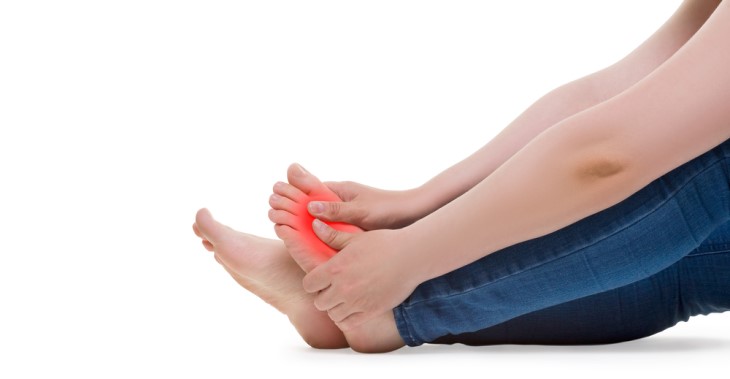
Morton's Neuroma typically arises from the thickening of tissue around the nerves leading to the toes, producing a sensation akin to stepping on a pebble that isn't there. The condition frequently afflicts those who wear high heels or tight shoes, emphasizing the importance of footwear that provides ample space for the toes to move freely. Treatment strategies focus on relieving the pressure on the nerves, ranging from the simple switch to more accommodating shoes, to the use of pads within the shoe, and in cases where discomfort persists, medical options such as steroid injections or surgical intervention may be considered.

Skin Changes and Heel Issues 
 
As the skin ages, it produces less oil and elastin, making it drier and less elastic. This condition is particularly troublesome for the heels, where dry, cracked skin can become painful and even lead to infection. Management involves a regimen of deep moisturizing with creams that contain exfoliating agents, regular removal of dead skin with a pumice stone, and the daily application of moisturizers. In instances where over-the-counter solutions fail to provide relief, prescription-strength ointments may be necessary. 
 
Plantar Fasciitis 
 plantar fasciitis
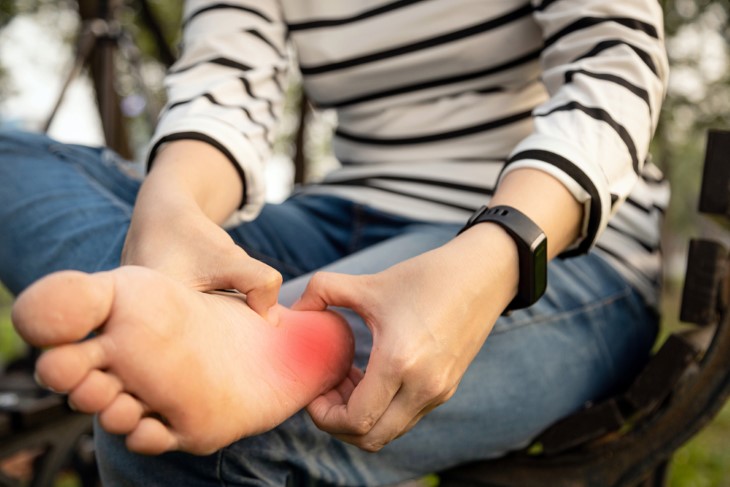
 Plantar fasciitis, a common source of heel pain, results from inflammation of the plantar fascia, the ligament that stretches across the bottom of the foot. This condition often stems from overuse or excessive pressure on the foot, particularly in individuals with high arches or excess weight. Treatment focuses on alleviating the inflammation and supporting the foot to prevent further strain, incorporating rest, ice, over-the-counter pain relievers, and stretching exercises designed to strengthen the calf muscles and reduce tension on the plantar fascia.

Ingrown Toenails 
 
Ingrown toenails occur when the edge of a toenail grows into the surrounding skin, causing pain, swelling, and potentially leading to infection. Factors such as improper nail trimming, tight footwear, and conditions like diabetes can increase the risk. Preventative measures include proper foot hygiene, appropriate nail cutting techniques, and wearing shoes with sufficient room for the toes. In more severe cases, removal of part of the nail by a healthcare professional may be necessary to alleviate the condition.

Osteoarthritis 
 
Osteoarthritis in the feet is a testament to a lifetime of use, where the gradual breakdown of cartilage leads to pain and stiffness in the joints. This degenerative condition is more common in individuals over the age of 65 and can significantly impact mobility and quality of life. Management strategies include physical therapy to maintain joint mobility, pain relief medications, and in some cases, orthotic devices to support the foot and reduce pressure on the affected joints. 
 
Adult-Acquired Flatfoot 
 
Contrary to the common perception that flat feet are a condition only of childhood, adults can acquire flat feet due to factors such as injury, obesity, diabetes, and high blood pressure. This condition leads to pain and an altered gait as the tendons supporting the arch of the foot become damaged. Treatments vary from supportive orthotics that help distribute foot pressure evenly, to physical therapy, braces, or even surgery in severe cases to restore functionality. 
 
Achilles Tendon Issues 
 achilles tendon
The Achilles tendon, vital for walking, climbing, and running, becomes more susceptible to injury as blood flow decreases with age. Symptoms include pain at the back of the ankle, which can escalate to significant injuries if left untreated. Early intervention with rest, ice, and anti-inflammatory medication can prevent further damage, but persistent or severe cases might require surgical repair.

Diabetic Foot Complications 
 
Diabetes can wreak havoc on foot health, leading to a range of complications from neuropathy to serious infections. The loss of sensation means injuries can go unnoticed and untreated, potentially leading to ulcers and even the necessity for amputation. Management focuses on meticulous foot care, regular monitoring for any changes or injuries, and strict blood sugar control to minimize risk. 
 
Gout and Bunions 
 
Gout, a form of arthritis caused by excess uric acid, and bunions, from the misalignment of the big toe, both lead to significant foot pain and can impede daily activities. Gout treatments include medication to reduce uric acid levels and lifestyle changes to avoid triggers, while bunions may require padding, modified footwear, or surgery to correct the deformity and alleviate pain. 
 
Bone Spurs and Bursitis 
 
Bone spurs and bursitis are conditions that can cause foot pain through abnormal growths and inflammation, respectively. Spurs result from osteoarthritis or tendon strain, while bursitis is caused by repeated motion or pressure. Both conditions benefit from conservative treatments such as ice, rest, and NSAIDs, with more severe cases possibly requiring surgical intervention.

Toe Deformities: Hammertoe and Claw Toe
 hammertoe
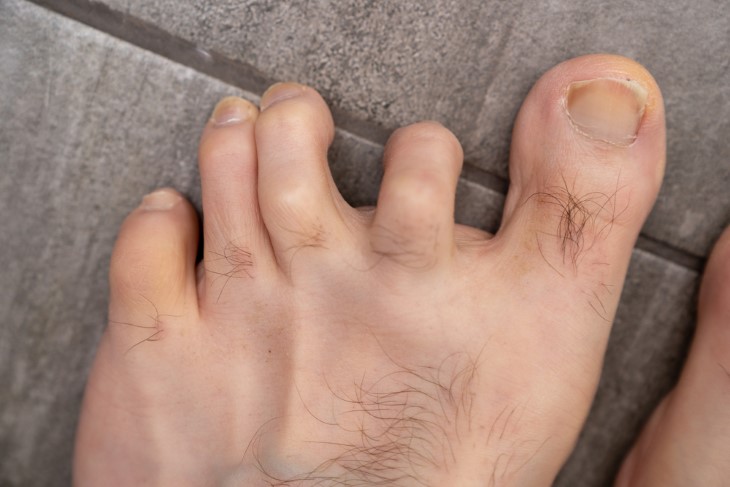
 Hammertoe and claw toe deformities cause the toes to bend into abnormal positions, leading to discomfort and difficulty with footwear. These conditions can be managed with special shoes or inserts to relieve pressure, exercises to maintain flexibility, and in some cases, surgery to correct the deformity.

Stress Fractures and Fungal Infections 
The risk of stress fractures increases with age due to decreased bone density, requiring rest and possibly medication for healing. Fungal infections also become more prevalent, with treatment focusing on anti-fungal medications. Both conditions underscore the importance of preventive care and early treatment to maintain foot health and mobility.


This is only for your information, kindly take the advice of your doctor for medicines, exercises and so on.   

https://gscrochetdesigns.blogspot.com. one can see my crochet creations  
https://gseasyrecipes.blogspot.com. feel free to view for easy, simple and healthy recipes    
https://kneereplacement-stickclub.blogspot.com. for info on knee replacement
https://cancersupportindia.blogspot.com  for infor on cancer and health related topics
https://GSiyers home remedies.blogspot.com   is the latest addition to my blogs. I'm going to add posts there, do give me your valuable feed back on my blogs. Thanks a lot, take care, be healthy and be happy.

Labels: , , , , , ,

Saturday, January 05, 2019

Healing Plantar Fasciitis

Heel pain can be excruciating, especially when you are required to stand on your feet all day. Suffering from this chronic discomfort may be due to plantar fasciitis. Yet, while it may seem like a cause of concern, plantar fasciitis is treatable.  As you're about to see in the video below, Specialist Dr. walks us through how a professional would go about treating plantar fasciitis through exercises. The chiropractic orthopedist also gives some valuable advice on how to maintain healing at home.
What causes Plantar Fasciitis? Plantar fasciitis most commonly appears in individuals who put more stress on their feet than the average person, such as athletes, women who frequently wear high heels or individuals who are overweight. 
The pain associated with plantar fasciitis can be severe. Some people describe it as a stabbing pain, which usually starts first thing in the morning. This stabbing sensation is a result of the plantar fascia - the thick band of tissue that runs across the bottom of the foot, which connects the heel bone to the toe, becoming inflamed. 

Healing Plantar Fasciitis Once you have been diagnosed with plantar fasciitis, Dr. recommends taking an interdisciplinary approach. He suggests decreasing the inflammation caused by the plantar fasciitis in the foot first, then focusing on flexibility exercises in the calf muscle, as you will see in the video below. Dr. also recommends using a device known as an intracell stick - a tool which you too can safely use at home.
If however, your plantar fasciitis continues to act up, then a procedure known as Graston is necessary. In this technique, a specialist uses a stainless steel instrument to break down scar tissue adhesions, to lengthen the tissue and to create elasticity, driving blood into the area.
Rest: It's important to keep weight off your foot until the inflammation goes down.
Ice: This is an easy way to treat inflammation, and there are a few ways you can use it.
To make an ice pack, wrap a towel around a plastic bag filled with crushed ice or around a package of frozen corn or peas. Put it on your heel 3 to 4 times a day for 15 to 20 minutes at a time.

Or you can fill a shallow pan with water and ice and soak your heel in it for 10 to 15 minutes a few times a day. Be sure to keep your toes out of the water.
Another option is to fill a small paper or foam cup with water and freeze it. Then rub it over your heel for 5 to 10 minutes. Never put ice directly on your heel.

Pain relievers: Nonsteroidal anti-inflammatory drugs (NSAIDs) can make your foot feel better and help with inflammation.

Stretching and exercise: Stretch your calves, Achilles tendon, and the bottom of your foot. Do exercises that make your lower leg and foot muscles stronger. This can help stabilize your ankle, ease pain, and keep plantar fasciitis from coming back.

Athletic tape: Tape can support your foot and keep you from moving it in a way that makes plantar fasciitis worse.

Shoe inserts. Also called insoles, arch supports, or orthotics, they can give you extra cushion and added support. You can get them over-the-counter (OTC) or have them custom made. Typically, your results will be just as good, and cheaper, with OTC inserts. When you choose one, firmer is better -- and make sure it has good arch support.
Heel cups. With each step you take, your heel pounds the ground and puts tension on your plantar fascia. These heel-shaped pads that go in your shoes may help. They raise your heel to relieve tension and give you extra cushion. They often don't work as well as inserts, but they're a cheap option to try.
Night splints. Most of us sleep with our feet pointed down, which shortens the plantar fascia and Achilles tendon. Night splints, which you wear while you sleep, keep your feet at a 90-degree angle. So instead of shortening your plantar fascia, you get a good, constant stretch while you sleep. 
They can be bulky, but they tend to work really well. And once the pain is gone, you can stop wearing them. 
Walking cast or boot. Typically, your doctor would suggest a walking cast or boot -- called a controlled ankle motion (CAM) walker -- only when other treatments have failed. The cast or CAM walker forces you to rest your foot, which can help relieve pain. But it's not a cure. When the cast comes off, the pain may return. That means you'll need other treatments too, like insoles and stretching.

Can You Prevent Plantar Fasciitis?

Once your foot feels better, you can make a few lifestyle changes to help keep plantar fasciitis from coming back. These include:

Lose weight. If you're overweight or obese, you may put more pressure on the bottom of your feet. That pressure can lead to plantar fasciitis.

Choose shoes with good support. Replace your athletic shoes often. Stay away from high heels.
Don't go barefoot on hard surfaces. This includes your first few steps when you get up in the morning. It’s common to feel plantar fasciitis then. So you’ll want to keep some supportive footwear by your bed.
You may also want to ask your doctor if it would help to wear inserts in your shoes.

Do low-impact  exercise. Activities like swimming or cycling won't cause plantar fasciitis or make it worse. After you’re done, stretch out your calves and feet. For instance, curl and relax your toes and make circles with your feet and ankles.

Avoid high-impact activities. These include running and jumping, which put a lot of stress on your feet and can make your calf muscles tighter if you don’t stretch them out.
Keep doing your leg and foot stretches. Two of these include:
  1. Stretch your calves. Stand facing a wall. Put your hands on the wall. Step one foot behind the other, keeping both feet parallel to each other. Gently lean toward the wall, keeping your back heel on the ground. Hold for 10 seconds, and then switch feet. Repeat several times on each side.
  2. Stretch the bottom of your foot. Sit down and cross one foot over your other leg. Hold your toes and gently bend them backward.
Untuck your bedsheets. If your sheets are tucked too tightly and you sleep on your back, your feet will be in a pointed position while you sleep.
THIS IS ONLY FOR INFORMATION, ALWAYS CONSULT YOU PHYSICIAN BEFORE HAVING ANY PARTICULAR FOOD/ MEDICATION/EXERCISE/OTHER REMEDIES.                                                                                
 PS- THOSE INTERESTED IN RECIPES ARE FREE TO  VIEW MY BLOG-                                                                                           https://gseasyrecipes.blogspot.com/                                                                                                                                                                             FOR INFO ABOUT KNEE REPLACEMENT, YOU CAN VIEW MY BLOG-                                               
     https:// kneereplacement-stickclub.blogspot.com/                                                                                     
  FOR CROCHET DESIGNS                                                                                                                                                                                                              https://gscrochetdesigns.blogspot.com
Labels: , , , , , , , , ,

Wednesday, November 14, 2018

Cuases And Treatment For Heel Pain

The toes and heels are the most load bearing components within your feet which take most of the weight when walking, running, exercising or even standing up. The heels are an especially vulnerable part of the body which can become painful either due to injuries or excessive stress put on it. Pain in your heels can also be a sign of other problems in your body.

Heel pain is an extremely common complaint, and there are several common causes. It is important to make an accurate diagnosis of the cause of your symptoms so that appropriate treatment can be directed at the precise cause of the problem. Once the source of the pain is clear, a more targeted treatment plan can help you speed your recovery. Furthermore, knowing the right cause of symptoms can help you take steps to prevent the condition from returning. If you have pain, some causes include:

Most Common Causes of Heel Pain  

Plantar Fasciitis: This is the most common condition that causes heel pain. Plantar fasciitis is due to irritation and inflammation of the tight tissue that forms the arch of the foot. Plantar fasciitis is characterized by pain on the bottom of the heel that is often felt upon weight bearing after rest, such as when taking your first steps in the morning or when standing up after prolonged sitting. There are many treatments that people use for plantar fasciitis including ice application, anti-inflammatory medications, footwear modification, stretching, and others. Often it takes time and avoidance on aggravating activities in order for the body to fully recover from this condition. The words plantar fasciitis and heel spur are often used interchangeably, and while they don't really mean the exact same thing, they often are used to describe the same problem.  

Achilles tendonitis: This type of tendonitis causes an inflammation of the Achilles tendon and is the result of overuse or trauma to the Achilles, the large cord-like tendon that attaches to the back of the heel bone. The pain is usually located at the part of the tendon that is slightly above the heel bone, although this can also cause pain directly at the insertion of the tendon on the heel bone. Achilles tendonitis often causes nagging pain that may take months or longer to resolve. Some simple treatments including ice, anti-inflammatory medications, or heel wedges can be helpful, but in more advanced situations, the foot may need to be immobilized for a time.

Other Sources of Heel Pain 

Tarsal Tunnel Syndrome:  This nerve condition causes a large nerve in the back of the foot to become pinched. Similar to carpal tunnel syndrome in the hand, tarsal tunnel syndrome can cause heel pain. In addition, other nerve symptoms such as numbness and tingling can occur in people who have this condition.

Stress Fractures::  Overuse injuries of the bone can lead to stress fractures. A stress fracture is especially concerning in athletes such as long distance runners who have heel pain. Typically these symptoms will occur gradually over time, especially when athletes or long distance runners increase their running mileage.

Heel Bursitis:  or 'Pump Bump': Bursitis is inflammation of a fluid-filled sac that lies between a tendon and bone. Retrocalcaneal bursitis causes pain deep in the back of the heel and is the result of inflammation of a bursa that lies beneath the Achilles tendon where it attaches to the back of the heel bone. Another type of  bursitis occurs from the shoe rubbing against a bony prominence on the heel bone. This results in pain, redness, and sometimes swelling on the upper part of the back of the heel.                                                                                                  

Sprains or straining the leg: Exercising is one of the most common culprits behind heel damage. Wearing the wrong shoes over prolonged periods, which can cause your balance to be shifted and will lead you to put strain on your heels and cause pain. Falling or spraining during exercising or training can also cause heel pain. 

Achilles tendon:  A common cause for heel pain, the Achilles tendon connects the calf muscle to the heel. If this is torn or damaged, it can cause pain in your heel.

Arthritis:  The deposition of uric acid crystals in parts of your body may result in arthritis; this is a fairly common cause for heel pain as well.

When to Call the Doctor

If you are unsure of the cause of your symptoms, or if you do not know the specific treatment recommendations for your condition, you should seek medical attention. Treatment of heel pain must be directed at the specific cause of your problem. Some signs that you should be seen by a doctor include:
  • Inability to walk comfortably on the affected side
  • Heel pain that occurs at night or while resting
  • Heel pain that persists beyond a few days
  • Swelling or discoloration of the back of the foot
  • Signs of an infection, including fever, redness, warmth
  • Any other unusual symptoms

Treatment

Treatment depends entirely on the cause of the problem. Therefore, it is of utmost importance that you understand the cause of your symptoms before embarking on a treatment program. If you are unsure of your diagnosis, or how severe your condition is, you should seek medical advice before beginning any treatment plan.
Some common treatments are listed here. Not all of these treatments are appropriate for every condition, but they may be helpful in your situation. 

Rest: Avoiding the precipitating activity; for example, take a few day off jogging or prolonged standing/walking. Just resting usually helps to eliminate the most severe pain, and will allow the inflammation to begin to cool down. 

Apply Ice packs: Icing will help to diminish some of the symptoms and control the heel pain. Icing is especially helpful after an acute exacerbation of symptoms. 

Exercises and stretches: Exercises and stretches are designed to relax the tissues that surround the heel bone. Some simple exercises, performed in the morning and evening, often help patients feel better quickly. 

Anti-Inflammatory Medications: Anti-inflammatory medications help to both control heel pain and decrease inflammation. Over-the-counter medications are usually sufficient, but prescription options are also available. 

Shoe Inserts: Shoe inserts are often the key to successful treatment of heel pain. The shoe inserts often permit patients to continue their routine activities.

Prevention

Preventing symptoms of heel may be a critical component to the long-term treatment of your condition. Depending on the exact source of pain, prevention strategies may slightly differ, but in general there are some steps that you can take to avoid a recurrence of heel pain symptoms. Some of these steps include:

Gradually increasing activity levels, especially athletes who were increasing their athletic activities or running mileage, progressing gradually over time, and taking breaks to ensure has opportunity to heal, can help prevent recurrent wound healing problems.

Maintaining ideal body weight: Excess body weight causes a number of medical concerns, among them is the increased burden on the lower extremities. People with excess body weight have a higher chance of developing arthritis in your joints, and place increased stress on the lower extremities, including the heel.

Wearing the right footwear: Wearing appropriate footwear for different types of weight-bearing activities is critical for prevention of many types of heel pain. Some activities require appropriate support or cushioning, and wearing the appropriate footwear for the activity can help avoid a recurrence of heel pain.

Early identification of discomfort: Usually your body will let you know when you are doing some kind that is causing an aggravation. Listening to the symptoms, especially in the early stages, can give you an opportunity to address a problem before it becomes severe. Continuing to perform an activity that is causing worsening of symptoms, can lead to a more significant problem that is harder to address.

THIS IS ONLY FOR INFORMATION, ALWAYS CONSULT YOU PHYSICIAN BEFORE HAVING ANY PARTICULAR FOOD/ MEDICATION/EXERCISE/OTHER REMEDIES.                                                                                                                                                                                                             PS- THOSE INTERESTED IN RECIPES ARE FREE TO  VIEW MY BLOG-                                                                                           https://gseasyrecipes.blogspot.com/   

FOR INFO ABOUT KNEE REPLACEMENT, YOU CAN VIEW MY BLOG-                                                                                                    https:// kneereplacement-stickclub.blogspot.com/                              

FOR CROCHET DESIGNS                                                                                                                                                                                                                                 https://gscrochetdesigns.blogspot.com
Labels: , , , , , , , , , , , ,

Friday, April 22, 2016

Beat Heel Pain Once and For All With These Methods...

 THIS IS ONLY FOR INFORMATION, ALWAYS CONSULT YOUR PHYSICIAN BEFORE HAVING ANY PARTICULAR FOOD/ MEDICATION/EXERCISE/OTHER REMEDIES.


FOR INFO ABOUT KNEE REPLACEMENT, YOU CAN VIEW MY BLOG
HTTP://KNEE REPLACEMENT-STICK CLUB.BLOGSPOT.COM/

FOR CROCHET DESIGNS- http://My Crochet Creations.blogspot.com/
It’s never pleasant when you head out for a walk or jog and you begin to feel a throbbing sensation in your heels. Contrary to what you might think, this sensation afflicts no less than 40% of all Americans each year, according to the American Podiatric Medical Association. Factors that contribute to this discomfort include repetitive strain, natural aging, or even wearing the wrong shoes. This guide will elaborate on the reasons for heel pain, and also offer you 5 effective solutions to alleviate it:  


1. Plantar Fasciitis


This is the most common cause of heel pain, afflicting some 2 million people annually. The plantar fascia is a band of tissues that runs down the arch of the foot, connecting the toes to the heel. Its function is to help the foot absorb shock, but it can become inflamed after being subjected to repeated pressure from walking or running. The resulting pain is most pronounced in the morning, or after a period of time spent sitting or standing.
The reason for the pain being most pronounced in the morning is because the arch of your foot goes back to its natural position when you’re sleeping, as does your plantar fascia. As soon as you take your first step after you wake, your plantar fascia stretches out again, causing micro tears, which can be very painful. Other causes for plantar fasciitis are tight calf muscles or Achilles tendons, wearing shoes with little to no arch support, being flat-footed, or increasing the amount of physical activity you’re doing far too quickly.
How to Treat It
Over-the-counter anti-inflammatories such as Ibuprofen work well, as does icing the affected area. Further irritation can be avoided by wearing more supportive shoes and resting your foot as much as possible. It’s also a good idea to change the shoes you wear every four to six months.
Exercises
  • Towel Stretch
Sit with your legs stretched out in front of you, then place a rolled towel around the ball of one of your feet. Hold each end of the towel with your hands, and then gently pull your foot towards you. Hold for 15-30 seconds, then repeat the exercise on your other foot.
  • Heel raise on the stair
Stand on a bottom stair, moving your feet backwards so that your heels fall off the edge. Hold the wall or rail for support, shifting your weight to one foot. Then, lower your foot’s heel toward the floor and hold for 15-30 seconds. Repeat the exercise on your other foot.

2. Fat Pad Atrophy
The average human being walks an astounding 100,000 miles in their lifetime, so it’s no surprise that the foot’s natural cushioning wears down over the years. Having thinner fat pads on your heel means that the pressure it’s exposed to increases. This is the second-most common reason for heel pain.
How to Treat It
This kind of heel pain can be treated using a threefold approach, namely resting your feet, icing your heels and taking anti-inflammatory. However the best thing you can do for this kind of ailment is to wear the most supportive shoes you can. This means wearing flats or high heels as infrequently as possible if you’re a woman. If you enjoy walking or running as part of your fitness regime, try do these activities on a soft surface such as grass or a track as opposed to a sidewalk.


3. Achilles Tendinitis


The Achilles tendon is the largest in the human body. It connects the calves to the heel bones. It can become inflamed following excessive physical activity, such as walking or jogging. Tightened calf muscles can also place strain on the Achilles tendons.
How to Treat It
The exercises as outlined above for plantar fasciitis also work wonders for Achilles tendinitis. Also try massaging your calves and tendons to increase blood flow to the area, as doing so can encourage healing. Consider wearing heel lifts in your shoes. If the pain persists over the course of a few weeks, be sure to see a physician.

4. Stress Fracture
If you happen to have increased the amount of jogging or walking you do, then it can lead to a small crack in the bones of your feet, which is known as a stress fracture. While stress fractures can occur in any of the bones in the human body, the bones in the feet are probably the most prone to them occurring due to the repetitive pounding they receive day after day.
How to Treat It
If you have any sort of suspicion that you have a stress fracture, be sure to see a doctor. In some instances, a diagnosis can be made on the basis of you elaborating your symptoms alone, however an imaging test can also be conducted should he or she need to investigate further. The best remedy for a stress fracture is lots of rest.
  5. Arthritis

This disease causes inflammation of the joints, and can affect your feet, just as it can affect most other parts of your body. The risk of developing arthritis is increased in people who are flat-footed. It generally affects the bones located in the middle of the foot, however it can also affect the heel bone. If you’ve ever had an ankle injury, it’s possible that you might develop post-traumatic arthritis due to cartilage damage sustained in the injury.
How to Treat It
Arthritis is best treated by resting your feet as much as possible and taking anti-inflammatory for pain relief. Ensuring that the muscles in your feet are strong will also help support the joint and lessen the impact placed on it. Also try the stretches as outlined above for plantar fasciitis. Last but not least, see your doctor, who might be able to recommend a shoe insert for stabilizing your foot.

Labels: , , , , , , , ,

Wednesday, April 29, 2015

How to differentiate a good pain from bad pain?


THIS IS ONLY FOR INFORMATION, ALWAYS CONSULT YOU PHYSICIAN BEFORE HAVING ANY PARTICULAR FOOD/ MEDICATION/EXERCISE/OTHER REMEDIES.


PS- THOSE INTERESTED IN RECIPES ARE FREE TO VIEW MY BLOG-
HTTP:GSEASYRECIPES.BLOGSPOT.COM


FOR INFO ABOUT KNEE REPLACEMENT, YOU CAN VIEW MY BLOG-
HTTP://KNEE REPLACEMENT-STICK CLUB.BLOGSPOT.COM/

FOR CROCHET DESIGNS


HTTP://MY CROCHET CREATIONS.BLOGSPOT.COM
://MY CROCHET CREATIONS.BLOGSPOT.COM
Pain is a signal from the body that something is amiss. Pain is a sharp or dull feeling triggered in the nervous system.

Once you take care of the existing problem - an external wound - the pain disappears. Sometimes, the ache goes on for weeks, even years. This is called chronic pain, and can be caused due to an ongoing problem, such as arthritis. Knowing when it is something that you can live with, or one that needs urgent medical attention is crucial.

SHOULDER

Safe ache: If you experience pain in your shoulder or a sudden catch while lifting something, you may have strained or, perhaps, injured the rotator cuff muscles (responsible for balancing the shoulder). It may start out as a simple impingement syndrome, one of the common causes of shoulder ache. This occurs when the shoulder blade puts pressure on the rotator-cuff muscles. For simple strains, apply ice and avoid overhead activities. Anti-inflammatories usually resolve the problem.

Bad ache: If your shoulder feels as if it's coming out of the socket or there is extreme pain and swelling, it may be a tear or other serious injury, which must be evaluated by a doctor. Arthritis or bursitis could also be responsible.

KNEE

Safe ache: For the most part, knee injuries are rarely an emergency unless you're lifting heavy weights and tear something. Pain while walking down stairs, for example, is often due to patellofemoral problems, during which you feel discomfort behind the kneecap and a grating sound in the knee if the leg is extended straight. You can work through it by avoiding exercises that trigger the pain or skip taking the stairs.

Bad ache: Hearing a pop at the time of the injury, significant swelling within the knee can indicate a serious injury and should be checked by a sports-medicine doctor. These symptoms indicate a possible torn ligament or meniscus tear ache that hurts while climbing. Pain while walking down the stairs is often due to patellofemoral issues, during which you feel discomfort behind the kneecap and hear a creaky sound in the knee if the leg is extended straight.

MID-BACK AND UPPER-BACK

Safe ache: Picking up a heavy suitcase and feeling a twinge between your shoulder blades could be a sign of bad lifting technique. Lifting too quickly can also cause a tweak of the spine, although sometimes, neck problems create referred pain to the shoulder blades.

Bad ache: See an orthopedic if you experience sharp pain, or have difficulty breathing. It could suggest a more serious condition, such as a thoracic herniated disc. Sometimes, pain between your shoulder blades is an unusual sign of a heart attack.

LOWER-BACK

Safe ache: Discomfort in the lower back is often a muscle strain or a sign of mental and emotional stress. For mild pain, avoid strenuous workout regimes, sitting long hours on the chair or running on a steep slope, and steer clear of stressful situations. Rest, ice, stretching, and meditation are enough to resolve the problem.

Bad ache: Patients should see a doctor if they experience low back pain as a result of severe trauma, or if it is accompanied by fever and chills, and sudden incontinence. Pain accompanied by nerve symptoms such as numbness or tingling down the leg and weakness indicate that a herniated disc may be causing pressure on a nerve root.

HIP

Safe ache: Hip pain should never be ignored. Pain felt in the groin comes from the hip joint itself (the ball-and-socket part of the joint) or the femoral neck (the top of the leg bone). Repetitive activity can cause bursitis and pain on the outside of the hip, and a pain in the buttocks may be nerve-related or result from a lower-spine condition.

Bad ache: Sometimes, pain from other areas of the body, such as the back or groin (from a hernia), can radiate to the hip. Along with the pain, you might have a reduced range of motion. You might notice that your pain gets worse with activity, especially if it's caused by arthritis. Some people develop a limp from persistent hip pain.

ACHILLES TENDON

Safe ache: High-impact movement like dance that requires you to do high jumps can cause pain in the Achilles tendon. This is the largest tendon in the body, which connects the calf muscle to the heel. It mostly refers to a sore muscle. If you experience pain and swelling near your heel that worsens with activity, you may have Achilles tendonitis. Resting and stretching the calf muscle helps.

Bad ache: Swelling and symptoms that worsen with walking on uneven surfaces, may be signs of a partially torn Achilles. Other signs may spark while walking up stairs, running, jumping, hopping or when performing heel raises. Do not delay seeing a doctor.

ANKLE STRAINS

Safe ache: Your ankle often pays the price for the wrong exercise moves. It can cause mild to severe sprains of the ligaments on the ankle's exterior. For any sprain, avoid walking and treat it with rest, ice, compression and elevation.

Bad ache: If you can't keep weight on your ankle, see a doctor for an X-rays.
   

Labels: , , , , , , , , , , , , ,