Sunday, May 29, 2022

3 Effective Self-Massage Techniques For Heel Pain

When your feet are tense and sore, a self-massage can be truly beneficial. One of the most common causes of heel and foot pain is a disorder called plantar fasciitis. This medical condition causes pain at the bottom of the foot when a ligament connecting the heel and the front of the foot becomes inflamed.
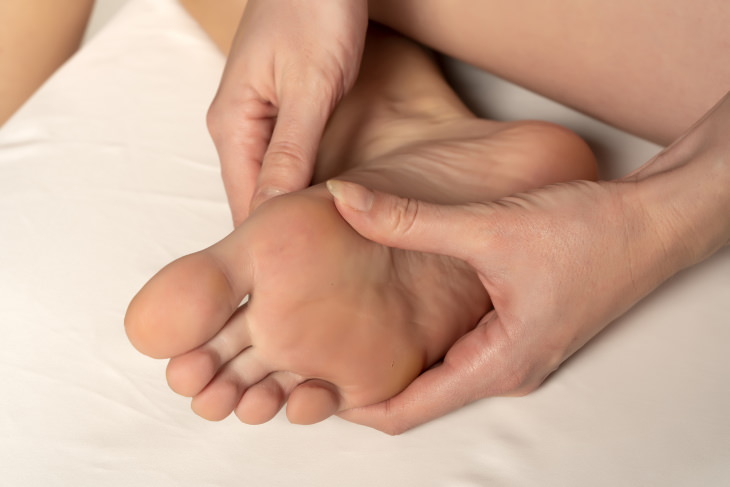
When done correctly, self-massage can bring relief from heel pain in general and plantar fasciitis specifically. If you’d like to give it a go, try these 3 safe foot massage techniques. You can do them yourself.  
 
A few tips before you start: 
 
Prep your feet before the deep self-massage by applying a little bit of moisturizer or oil onto the skin and gently massaging the feet. Alternatively, you can also soak your feet in warm water for 10 minutes before the massage. 
 
Try various self-massage techniques in different combinations to see what works best. 
 
Massaging should never be painful. To avoid pain, start with less pressure and don’t push on very tender spots. If you still feel uncomfortable, stop performing the massage altogether. ​
 
Self-Massage Techniques For Heel Pain
Self-Massage Techniques For Heel Pain Self-massage
You can experience foot pain in either one or both feet. The example below models pain in the right foot, but feel free to do the massage on either the left or right foot or even both feet. 
 
Follow these steps to perform a gentle self-massage with your hands: 
 
1. Sit down on the edge of a bed or chair and lift the right leg, resting it on the left leg so that you’re able to reach the right foot. 
 
2. Start using your thumbs to gently rub the sole of the right foot, moving in circles around the heel. Make at least 3-5 circles in each direction. 
 
3. Applying moderate pressure, move your thumb in a straight line from the heel to the ball of the foot to relax the arches of the feet. Make at least 1-2 minutes back and forth, gradually increasing the pressure. This will loosen up the fascia along the arches of the foot. 
 
4. If you need to apply even more pressure, you can lean in with your body weight. You can also try pointing and flexing your toes as you are massaging the foot.

Ball Self-Massage
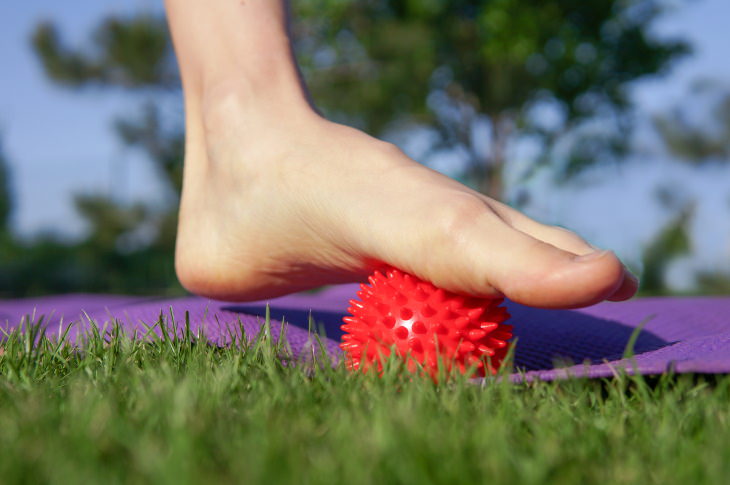
Self-Massage Techniques For Heel Pain Ball Massage
If performing the massage with your hands isn’t an option, a ball massage offers many of the same benefits. It helps ease tension and pain in the heels and arches of the foot. Many types of balls can be used for this massage, including a tennis ball, a golf ball, or even a dryer ball. 
 
Follow these steps to perform the massage: 
 
1. Sit down in a chair and place a ball under the arch of the affected foot. You can lean forward slightly to control the pressure on the ball. 
 
2. Start moving the foot so that the ball rolls up and down the arch of your foot. Then start moving the foot from side to side. 
 
3. Massage the foot for 2-3 minutes, alternating between the two types of movement and slowly increasing the pressure.
 
Ice Rolling  
This last technique is similar to the ball massage, but it uses a frozen bottle of water. The cooling sensation will help stretch the fascia at the bottom of the foot, calm the feeling of inflammation, and relaxes the foot muscles. It’s great to use in the morning to relax tense muscles. 
 
Follow these steps to perform the massage: 
 
1. Start by sitting on the edge of the bed or a chair. 
 
2. Place a frozen bottle under the sore foot. 
 
3. Start rolling the bottle back and forth. Start with light pressure and smaller strokes, then increase the pressure, massaging continually for 5-10 minutes.


This is only for your information, kindly take the advice of your doctor for medicines, exercises and so on.   

https://gscrochetdesigns.blogspot.com. one can see my crochet creations  
https://gseasyrecipes.blogspot.com. feel free to view for easy, simple and healthy recipes    
https://kneereplacement-stickclub.blogspot.com. for info on knee replacement


Labels: , , , ,

Wednesday, August 21, 2019

5 Reasons and 5 Solutions For Your Heel Pain

It’s never pleasant when you head out for a walk or jog and you begin to feel a throbbing sensation in your heels. Contrary to what you might think, this sensation afflicts no less than 40% of all Americans each year, according to the American Podiatric Medical Association. Factors that contribute to this discomfort include repetitive strain, natural aging, or even wearing the wrong shoes. This guide will elaborate on the reasons for heel pain, and also offer you 5 effective solutions to alleviate it:  

1. Plantar Fasciitis


This is the most common cause of heel pain, afflicting some 2 million people annually. The plantar fascia is a band of tissues that runs down the arch of the foot, connecting the toes to the heel. Its function is to help the foot absorb shock, but it can become inflamed after being subjected to repeated pressure from walking or running. The resulting pain is most pronounced in the morning, or after a period of time spent sitting or standing.
The reason for the pain being most pronounced in the morning is because the arch of your foot goes back to its natural position when you’re sleeping, as does your plantar fascia. As soon as you take your first step after you wake, your plantar fascia stretches out again, causing micro tears, which can be very painful. Other causes for plantar fasciitis are tight calf muscles or Achilles tendons, wearing shoes with little to no arch support, being flat-footed, or increasing the amount of physical activity you’re doing far too quickly.
How to Treat It
Over-the-counter anti-inflammatories such as Ibuprofen work well, as does icing the affected area. Further irritation can be avoided by wearing more supportive shoes and resting your foot as much as possible. It’s also a good idea to change the shoes you wear every four to six months.
Exercises
  • Towel Stretch
Sit with your legs stretched out in front of you, then place a rolled towel around the ball of one of your feet. Hold each end of the towel with your hands, and then gently pull your foot towards you. Hold for 15-30 seconds, then repeat the exercise on your other foot.
  • Heel raise on the stair
Stand on a bottom stair, moving your feet backwards so that your heels fall off the edge. Hold the wall or rail for support, shifting your weight to one foot. Then, lower your foot’s heel toward the floor and hold for 15-30 seconds. Repeat the exercise on your other foot.

2. Fat Pad Atrophy
The average human being walks an astounding 100,000 miles in their lifetime, so it’s no surprise that the foot’s natural cushioning wears down over the years. Having thinner fat pads on your heel means that the pressure it’s exposed to increases. This is the second-most common reason for heel pain.
How to Treat It
This kind of heel pain can be treated using a threefold approach, namely resting your feet, icing your heels and taking anti-inflammatories. However the best thing you can do for this kind of ailment is to wear the most supportive shoes you can. This means wearing flats or high heels as infrequently as possible if you’re a woman. If you enjoy walking or running as part of your fitness regime, try do these activities on a soft surface such as grass or a track as opposed to a sidewalk.
 
3. Achilles Tendinitis

The Achilles tendon is the largest in the human body. It connects the calves to the heel bones. It can become inflamed following excessive physical activity, such as walking or jogging. Tightened calf muscles can also place strain on the Achilles tendons.
How to Treat It
The exercises as outlined above for plantar fasciitis also work wonders for Achilles tendinitis. Also try massaging your calves and tendons to increase blood flow to the area, as doing so can encourage healing. Consider wearing heel lifts in your shoes. If the pain persists over the course of a few weeks, be sure to see a physician.

4. Stress Fracture
If you happen to have increased the amount of jogging or walking you do, then it can lead to a small crack in the bones of your feet, which is known as a stress fracture. While stress fractures can occur in any of the bones in the human body, the bones in the feet are probably the most prone to them occurring due to the repetitive pounding they receive day after day.
How to Treat It
If you have any sort of suspicion that you have a stress fracture, be sure to see a doctor. In some instances, a diagnosis can be made on the basis of you elaborating your symptoms alone, however an imaging test can also be conducted should he or she need to investigate further. The best remedy for a stress fracture is lots of rest.

5. Arthritis

This disease causes inflammation of the joints, and can affect your feet, just as it can affect most other parts of your body. The risk of developing arthritis is increased in people who are flat-footed. It generally affects the bones located in the middle of the foot, however it can also affect the heel bone. If you’ve ever had an ankle injury, it’s possible that you might develop post-traumatic arthritis due to cartilage damage sustained in the injury.
How to Treat It
Arthritis is best treated by resting your feet as much as possible and taking anti-inflammatories for pain relief. Ensuring that the muscles in your feet are strong will also help support the joint and lessen the impact placed on it. Also try the stretches as outlined above for plantar fasciitis. Last but not least, see your doctor, who might be able to recommend a shoe insert for stabilizing your foot.

THIS IS ONLY FOR INFORMATION, ALWAYS CONSULT YOU PHYSICIAN BEFORE HAVING ANY PARTICULAR FOOD/ MEDICATION/EXERCISE/OTHER REMEDIES.                                    PS- THOSE INTERESTED IN RECIPES ARE FREE TO  VIEW MY BLOG-                                                                                           https://gseasyrecipes.blogspot.com/                                                                                                                                                FOR INFO ABOUT KNEE REPLACEMENT, YOU CAN VIEW MY BLOG-                                                                       https:// kneereplacement-stickclub.blogspot.com/                                                                                                                     FOR CROCHET DESIGNS                                                                                                   
                                https://gscrochetdesigns.blogspot.com

Labels: , , , , , , , ,

Thursday, November 15, 2018

Warning Signs by Our Feet

Many times when we feel ill, we rush to the mirror in the house and examine our faces to check if we are pale, flushed, or show other signs of illness. However, instead of looking at the obvious whenever you aren’t feeling well, you may want to try to look a little further down at your feet that contain quite a few clues about your health, and sometimes even alert you to the feasibility of many serious diseases. From diabetes to cardiovascular disease, these are seven symptoms that appear in your feet which you shouldn’t ignore.
The body is an amazing thing. When something isn’t quite right, it has subtle ways of letting you know. It does this through a variety of mechanisms – one of which is your feet!
Knowing and understanding what your feet are trying to say about your health can help you become more in tune with your body, and address any issues.

1. Hairless Feet

If your feet are smooth with absolutely zero hair, you might think you’ve won the beauty lottery. But actually, that can be a sign of serious circulation problems.
It's usually caused by a cardiovascular disease like arteriosclerosis; when your arteries become hardened, making your heart work harder to pump blood throughout your body.
Your heart goes into recovery mode and prioritizes certain vital areas of your body, sending reduced blood to extremities like your feet.

2. Sunken-in Toenails

Are your toes slightly sunken, with a bit of a spoon shape? This happens when your body's doesn't have enough iron  – a condition known as anemia.
And considering that anemia is by far the most common blood disorder in the nation , a whole lot of you reading this have sunken toenails.
When left untreated anemia can make you feel tired, weak and short of breath. Iron deficiency can be easily solved by eating more red meat, seafood, dark green vegetables and dried fruit.
You can also take iron supplements.

3. Long-term Sores

A sore on your feet that won’t heal is a hallmark warning sign of diabetes.
You see, an elevated blood sugar level leads to nerve damage – particularly in your feet. Cuts and sores that your body would normally heal, stick around indefinitely. In extreme cases, this can lead to severe infection in which amputation is necessary.
foot sore

4. Cold Feet


Most of us some suffer from cold feet, a phenomenon that is quite common during the cold winter months. But if you notice that you can’t warm your feet up despite all the efforts, it is very possible that the problem is due to insufficient blood flow to the area. This symptom should be taken seriously, especially during menopause, due to the prevalence of peripheral artery disease (PAD) at these ages, a disease that is manifested in the blockage of arteries, especially in the lower extremities.
Apart from the possible appearance of foot wounds and edema, peripheral artery disease increases the risk of heart disease. As a preventive measure, the Dr. recommends reducing salt-rich foods and avoiding harmful habits such as smoking, both of which can partially alleviate the problem.
Look, we’re all a little hesitant from time to time. But if you’ve got actual, literal cold feet for no apparent reason, that’s a serious problem.
It could be a sign that your thyroid – the gland responsible for warming your body – is malfunctioning by producing too much homocysteine.
Excess homocysteine can also cause heart disease, poor circulation and stiffness.
cold hands feet

5. Yellow Toenails

Thick, yellow toenails are most often the handiwork (pun wholly intended) of a fungal infection.
You could have gotten said infection from a number of sources; culprits tend to include non-breathable shoes, public swimming pools and improper drying of your toes when they get wet.

toenail fungus

6. Heel Pain

Do you notice sharp, shooting pains in your heel – especially when you stand up? Ah, you've met plantar fasciitis.
It’s a common foot condition in which the plantar fascia ligament in your foot becomes irregularly stretched. The ligament develops small tears and inflammation.
What causes plantar fasciitis? Repetitive strain and improper shoes are the common culprits. There are a number of natural ways to treat plantar fasciitis.
heel pain

7. Numbness


Tingling in the feet is a well-known phenomenon that appears when we inadvertently block blood flow by sitting cross-legged, lotus style, or placing a foot on a leg. If you notice that there is a feeling of tingling that appears without you sitting in one of these positions, the Dr. warns that this symptom may indicate serious health problems from diabetes to excessive alcohol consumption.
Diabetes reduces blood flow to the feet and in extreme cases can lead to nerve damage and may even require amputation due to the formation of necrosis. In addition, numbness in the legs may be caused by excessive consumption of alcoholic beverages, due to the products of decomposition of alcohol that cause the destruction of nerve cells in the body.
Diabetes causes what is known as neuropathy – numbness and loss of feeling in the extremities. Roughly 60-70% of all people with diabetes will experience neuropathy. It usually pops up after about 25 years of poorly-managed diabetes.
If that sounds like you, check in with your doctor to see what you can do to improve your diabetes treatment.

8. Sore Foot Joints

Rheumatoid arthritis is an inflammatory disorder in which your immune system makes the mistake of attacking normal tissue.
As a result, the lining of your joints becomes sore. Painful swelling soon follows.
If this sounds familiar, you’ll definitely want to get your joints checked out as soon as possible. Left untreated, rheumatoid arthritis can cause bone erosion and deformity.

9. Flaky Feet

When you’ve got flakes falling off your body, it’s never a good thing.
Flaky feet – especially if the flakes originate from between your toes –can be a sign og athlete's foot. 
It’s a very common (and contagious) fungal infection caused by tinea bacteria. Walking barefoot in public locker rooms or sharing sneakers can cause the infection.
Athlete’s foot can usually be eradicated easily, with anti-fungal creams but if you’ve also got diabetes or a weak immune system, it's recommended that you see your doctor.
athlete's foot

10. Digital Clubbing

No, it’s not a sort of virtual reality Friday night out for shy folk. Digital clubbing is not fun at all. 
It’s a condition that leads to a change in shape in your toes. It can involve one, a few or all of your toes. The most common cause of digital clubbing is lung cancer. Other causes include pulmonary fibrosis, a heart defect and brochiectasis.
No matter what you suspect the cause of your digital clubbing to be, you’ll definitely want to have it checked out by a doctor.
Clubbing_of_fingers_in_IPF

11. Toes That Turn Colors

At first, you might think it’s a cool party trick. But it gets old pretty quickly, especially when you realize it's a prime feature of Raynaud's disease.
If you’ve got Raynaud’s disease, the change in color will be linked to temperature. When your feet begin to feel cold, your toes will turn white or blue. It will take about 15 minutes for your toes to return to normal color after warming.
It’s caused by abnormal blood vessels in the toes that become narrow in response to cold or stress. It’s not a life threatening disease and can be managed with a physician’s help.

Unfortunately, our natural tendency is to ignore our feet completely until they hurt, when in fact they function like any other organ in the body, and they may “quietly” allude to a variety of illnesses, including cancer. According to a Podiatrist, skin cancer is one of the most common diseases in the foot area, as many of us do not protect it with sunscreen as we do the upper body and face. "If you see a mole that has grown abnormally or notice unexplained color changes in the skin, this should be carefully examined."
In addition, the Dr. strongly recommends not skipping the toes and fingernails in search of dark spots that may signal the development of melanoma, one of the most common skin cancers.
Raynaud's disease

12. Pitted Toenails

If your toenails have more holes than an episode of CSI, you may have a condition known as psoriatic arthritis. It most commonly affects those with psoriasis – a disease causing scaly, red skin.
The toenail abnormality can pop up even before skin damage and may also occur on the fingernails.
Without treatment, psoriatic arthritis can become disabling.
pitted thumb psoriasis

13.Pain

We all suffer from foot pain from time to time, especially after a long day of running from place to place. But what happens if the pain appears for no apparent reason? According to the Dr. , unexplained pain can signal a host of diseases, and severe pain that occurs immediately when we get out of bed and fades throughout the day can indicate the onset of inflammation in one of the leg joints because the joint heats up as we are active and hardens when we rest.
In order to prevent inflammation, it is recommended that you don’t compromise on good sports shoes and make sure to change them every year. If this is a pain that worsens throughout the day, this symptom may indicate a stress fracture caused by an unbalanced workout routine, which may worsen over time, so you may want to consult a specialist as soon as possible if you experience this type of pain.

14.Swelling

In addition to our feet swelling after standing on them for long hours without rest, swollen feet may also indicate heart, liver and kidney disease. According to Dr. Andersen, excessive swelling in an area with no history of unusual physical injury or exertion may occur as a result of the accumulation of salts and fluids, which is considered to be one of the known symptoms of heart failure and kidney failure. Liver disease can also lead to the accumulation of fluid in the legs, due to lack of a protein called albumin produced in the liver, which is responsible for the balance of fluids in the body.

15. Constant itching

Apart from the constant itching and bad smell, foot fungus that isn’t treated in time can also cause nail damage and even increase the chances of foot infections. In addition, fungi have a tendency to attack and infect other parts of the body, which can only prolong treatment. It is worth knowing that as you get older, your body's ability to fight infections decreases and the chances are that the disease will worsen and develop beyond a specific infection, therefore, it is important to treat it when first noticed.

16. Sudden change in walking

Each and every one of us has a unique style of walking, and such habits don’t change overnight. If you notice that your walking is changing or you hear it from people around you, you should seek medical advice immediately because sudden changes in walking may result from the appearance of various neurological problems, primarily stroke and multiple sclerosis.
In cases of multiple sclerosis, the damage to the nervous system can lead to the "numbness" of areas of the foot, sometimes without our noticing it. Another reason that can cause changes in walking is pain in the back area due to various physical infections and injuries, which can cause us to change our walking and posture unconsciously to prevent putting a heavy load on the affected area.

THIS IS ONLY FOR INFORMATION, ALWAYS CONSULT YOU PHYSICIAN BEFORE HAVING ANY PARTICULAR FOOD/ MEDICATION/EXERCISE/OTHER REMEDIES.                                                                                                                                                                                                             PS- THOSE INTERESTED IN RECIPES ARE FREE TO  VIEW MY BLOG-                                                                                           https://gseasyrecipes.blogspot.com/   

FOR INFO ABOUT KNEE REPLACEMENT, YOU CAN VIEW MY BLOG-                                                                                                    https:// kneereplacement-stickclub.blogspot.com/                              

FOR CROCHET DESIGNS                                                                                                                                                                                                                                 https://gscrochetdesigns.blogspot.com

Labels: , , , , , , , , , , , , , , ,