Saturday, June 05, 2021

Simple Tips to Help Enhance the Durability of Your Pillows

When it comes to dirty things around our house that require regular cleaning, our list is generally the same: bed sheets, clothes, dishes, and even blankets and curtains. Then there are some less obvious everyday items that require cleaning on a semi-regular basis, too, like fan vents, furniture, the washing machine, makeup brushes, and gloves. However, there is one household item that we use every single day but don’t really consider it for regular cleaning. Pillows.
A pillow is essential for quality sleep. So many of us lie on the same pillow and despite hours of use, it never gets the care it needs. We do wash pillowcases from time to time, but what about the actual pillow? Let’s find out exactly how often we should be washing our pillows and also learn a few quick tips on the best ways to do that, too.

How often should you wash your pillows?  Washing Your Pillows, dirty
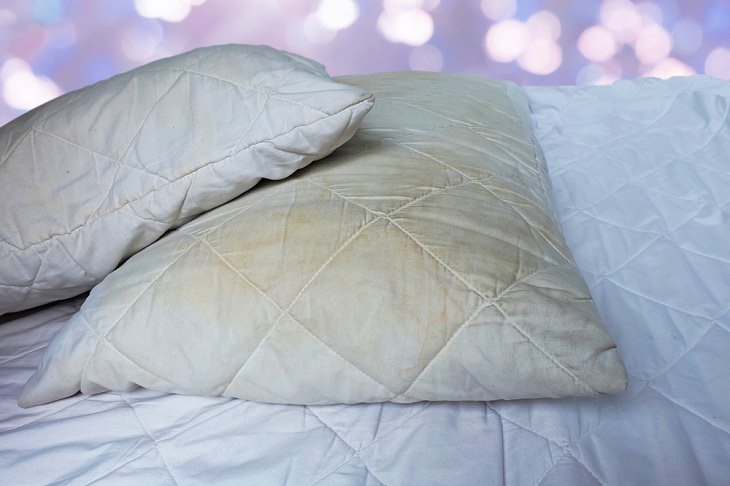
Experts say that, since pillows come in such close contact with our faces and tend to breed allergens, we should be washing them at least twice a year and even more if we live in a warm or humid climate. 
 
Washing our pillows at least twice a year will ensure that any unpleasant smells caused by sweat and saliva would be washed away. Moreover, you might not be aware that dust from the air, dead skin cells, dust mites, oil from our hair and skin, and other allergens cling onto our pillows when they aren’t cleaned over a long period of time. 
 
Before you go about washing your pillow, however, you must also test its viability. Is your pillow even worth washing? Or should it be replaced? If there are visible lumps on your pillows, then it’s a good sign they need to be replaced. Similarly, if your pillow is too flat, then it is time to swap it out. 
 
Also, while you may get rid of some of the existing bad odors after washing your pillows, some of them can be too stubborn. If you notice that the pillow still smells, even after a couple of washes, then it’s a good idea to get rid of it.

One proven way to test your pillow’s viability is to fold it in half and see if it stays folded while you're not holding it. If it remains folded, then it’s a sign that your pillow is probably way too old.
 
Handy tips on how to wash pillows 
 
Now that you know that you have to wash your pillows at least twice a year, the next question is how exactly do we wash them? Should we simply dump them in the washing machine? 
 
Here are some tips that will help you understand this better.

* The best way to wash pillows is in a front-loading machine. This is because pillows can float to the top of a top-loading washing machine where they don’t always get regularly wet. 
 
* Wash your pillows in warm water on the gentle cycle with a mild liquid detergent. Put it through an extra rinse and spin cycle on cold to get rid of any remaining detergent. 
 
* Wash your natural-fiber pillows on the delicate cycle in cold water, with a medium-to-low speed. 
 
* For feather pillows, it would be better to use powder detergent specifically designed for it as liquid detergent may leave a sticky residue. 
 
* You may need to wash one pillow at a time, depending on your pillow-to-washer size ratio. You don’t want the washing machine to be overloaded. 
 
* Roll your synthetic pillows like sausages and tie their ends and middle with rubber bands. This will ensure that the material inside doesn’t slide around too much in the machine. 
 
* Wash two pillows at a time if you can so that the balance of your washing machine is maintained. 
 
* Foam pillows can’t go in the washing machine since their movement makes the foam crumble. You can, however, hand wash them with cold water and detergent.

When it comes to drying pillows, the best method is to dry them on low heat, low tumble cycle, and repeat the cycle until all the moisture is gone. Removing your pillows from the machine when they are still damp runs the risk of mildew. Also, pillows have a tendency to clump when washed. Adding a couple of wool dryer balls will help redistribute the features and filling inside and also fluff them up nicely.

This is only for your information, kindly take the advice of your doctor for medicines, exercises and so on.   

https://gscrochetdesigns.blogspot.com. one can see my crochet creations  
https://gseasyrecipes.blogspot.com. feel free to view for easy, simple and healthy recipes    
https://kneereplacement-stickclub.blogspot.com. for info on knee replacement

Labels: , , , ,

Sunday, May 17, 2020

6 Surprising Face Mask Cleaning Mistakes to Avoid

Cloth face masks have quickly become a new and essential piece of the wardrobe, and people are still learning their way around this new addition to their daily life. We have already explained how you can determine if your face mask needs replacing, and we have shown you how to make a cloth face mask at home. In this article, we’ll focus on cleaning face masks effectively, as it turns out, there are several wrong ways to do so, which could ultimately make your mask less effective at protecting yourself and others from the Novel Coronavirus. We’ll highlight 6 common face mask laundry mistakes and explain what you can do instead.

1. Cleaning Your Face Mask Too Rarely


Reusing your cloth face mask throughout the day is fine, especially if you’re having an active day full of errands and keep running in and out of the house. However, you must wash your mask every day and every time you contaminate the face mask by touching it with your hands, for example. Reusing the mask too much without washing will render it less effective at protecting you and others from the Novel Coronavirus, and it will also increase your risk of skin rashes and irritation from a face mask.

Needless to say, this means that you should own several face masks and wash these regularly to always have at least two clean masks on hand. Get in the habit of replacing your masks daily, as well as carrying an extra clean mask in your bag just in case.

2. Not Using Detergent When Cleaning Your Masks
Soap remains one of the most effective killers of the Novel Coronavirus, as well as other germs and grime that accumulates on the mask throughout the day. Baking soda and vinegar, on the other hand, cannot destroy the virus on their own, so you have to use some sort of detergent when cleaning your masks, just like you do with your other clothes.
You can wash your face masks together with clothing of similar colors, but we recommend putting your face masks in a laundry bag if you decide to do so to avoid stretching out the elastics or causing snags. Dermatologists point out that you can also use cleaners that contain hydrogen peroxide to destroy any trace of the virus, and also that you should choose hypoallergenic detergents for your face masks if you find that regular detergents irritate your skin.

3. Washing Your Masks in Cold Water
Heat also kills many germs, including the SARS-CoV2 virus that causes COVID-19. Doctors point out that water hot enough can kill the Novel Coronavirus in just 10 minutes, but the temperature must be at least 140°F (60°C). If you rarely wash your clothes at such high temperatures because you’re afraid they will lose color or shrink, no need to worry, a combination of detergent and slightly less hot water will also be able to exterminate the virus.

4. You’re Overdoing It With the Bleach

It’s definitely true that bleach can annihilate COVID-19, but using too much of it isn’t always a great idea, as it can make cloth fibers thinner and weaker, and if you’re not careful, it can bleach out your clothing or face masks, rendering them unusable. With different cleaning options available, you should reserve bleach as a last resort.
If you do want to use bleach, here are the proportions you ought to follow: dilute 1 teaspoon of bleach in 4 cups of water and soak your mask in the solution for 1 hour to render it germ-free. For more information on how to handle bleach when disinfecting your home, click here: How to Kill Germs with Bleach in a Few Easy Steps.

5. You’re Microwaving Your Masks

There is a popular face mask hack circling around the internet these days that suggests you can disinfect your face mask by simply microwaving it like you would with a kitchen sponge. However, this hack isn’t as effective as people make it out to be, and in addition to that, it can be dangerous.
If you have any kind of underwire or metal pieces in a face mask, which is rather common both in disposable and reusable face masks, it can potentially melt and cause sparks in a microwave, and even cause a fire and ruin your microwave oven. Instead, simply wash your reusable masks in the washing machine or by hand using detergent or bleach, and avoid reusing single-use face masks.

6. Just Air-Drying Your Face Masks

Air-drying face masks isn't bad per se, but if you're looking for maximum effectiveness, we recommend using the dryer on the maximum setting to sanitize the masks completely, as any humid areas could potentially harbor germs. If you don’t own a dryer, you can also iron the masks after air-drying completely. When it comes to storing clean face masks, doctors recommend having a separate clean container or bag for the masks.


This is only for your information, kindly take the advice of your doctor for medicines, exercises and so on.     

https://gscrochetdesigns.blogspot.com. one can see my crochet creations  
https://gseasyrecipes.blogspot.com. feel free to view for easy, simple and healthy recipes    
https://kneereplacement-stickclub.blogspot.com. for info on knee replacement

Labels: , , , , , , , , , ,

Sunday, July 07, 2019

Top Tips To Help You Survive Hay Fever This Festival Season

The best way to avoid a hangover is to not get drunk. The best way to avoid having a baby is to not have sex. And the best way to avoid suffering from hay fever is to stay indoors. 

But is a summer really worth living, if you spend each waking day sober, celibate and inside?

What better way to stick two fingers up at hay fever than by buying a ticket to a festival and volunteering to spend an entire weekend living and sleeping in a field while the pollen count couldn't be higher? 

But however courageous and noble this may be, you're going to want to take as many measures as you can to make your martyrdom less excruciating. 

A leading pharmacist  conceded that rocking up at a festival at the moment as a hay fever sufferer was the behaviour of a maverick/moron, but nevertheless, he offered some pointers to help you get through it. 

He said: "Spending a long time in a field as a hay fever sufferer in the summer months is a recipe for disaster, especially if you haven't pre-packed all the usual medicines such as antihistamines and nasal sprays.

"However, there are a couple of things you can do to, at least, make your time a little better when it comes to being allergic to pollen. 

The first is to make sure you are washing as often as possible, and by that I don't mean full body washes, as we all know they are too far in between at festivals. However, washing your face is a great way to start as pollen easily attached itself to your skin. Even if it is a splash of water here or there, it can only help.

"On that note, you may have also packed baby wipes which can be really useful for removing pollen. There are even hay fever wipes now that do a great job of doing just that." 

So while being covered in mud, sweat and piss may be part of the charm of a festival for some, it mustn't be for hay fever sufferers; the same goes for wearing the same knickers four days straight.
he said: "A change of clothes is another great way of reducing the pollen around you - but make sure to seal your pollen filled clothes away in a sealed bag once you're done with them to stop the pollen lingering around in your tent over night."
By the same token, make sure to leave your tent zipped shut whenever you can, in order to keep the pollen out. Obviously, if it is really hot, this will turn your tent into an oven, which basically leaves you with the same dilemma you face at home when deciding whether or not to open the window at night: you can either wake up with swollen crusty eyes and a scabby nose, or barely sleep at all in a pool of your own sweat.

During the day though, it could be worth exploiting the fact that there aren't really the usual cultural norms when it comes to dress code. 

You thinking what I'm thinking? That's right, goggles. All the time. 

You're probably aware that sunglasses can help to prevent you from getting irritable eyes by keeping the pollen out, so why not go the whole hog with fully impenetrable goggles?
Could be a strong look. 

Whatever steps you take, good luck my hay fever hombres.

... And to those of you who are smug about not having hay fever and think it's pathetic, just remember, you can develop the allergy in later life - and I for one hope you do.

THIS IS ONLY FOR INFORMATION, ALWAYS CONSULT YOU PHYSICIAN BEFORE HAVING ANY PARTICULAR FOOD/ MEDICATION/EXERCISE/OTHER REMEDIES.                                    PS- THOSE INTERESTED IN RECIPES ARE FREE TO  VIEW MY BLOG-                                                                                           https://gseasyrecipes.blogspot.com/                                                                                                                                                FOR INFO ABOUT KNEE REPLACEMENT, YOU CAN VIEW MY BLOG-                                                  https:// kneereplacement-stickclub.blogspot.com/                                                                      FOR CROCHET DESIGNS                                                                                                                                                                                     https://gscrochetdesigns.blogspot.com

Labels: , , , , , , , , ,

Monday, April 15, 2019

Why patients need to be advised about washing hands

A new study suggests that hospitals need to disseminate the idea of washing hands, to their patients too, apart from their staff. 

The study gathered data from 399 hospitals, in which it was revealed that fourteen per cent of the hospital patients had 'superbug' antibiotic-resistant bacteria on their hands or their nostrils.

Another six per cent of the patients who didn't have multi-drug resistant organisms, or MDROs, on their hands at the start of their hospitalization tested positive for them on their hands later in their stay. One-fifth of the objects tested in their rooms had similar superbugs on them too.

However, researchers cautioned that the presence of MDROs didn't necessarily mean that patients would fall sick.

"Hand hygiene narrative has largely focused on physicians, nurses and other frontline staff, and all the policies and performance measurements have centred on them, and rightfully so," said the leader of the research.


The author notes that the study suggests that many of the MDROs seen on patients are also seen in their rooms early in their stay, suggesting that transmission to room surfaces is rapid.

She added, "But our findings make an argument for addressing transmission of MDROs in a way that involves patients, too."

Using genetic fingerprinting techniques, they looked to see if the strains of MRSA bacteria on the patients' hands were the same as the ones in their rooms. They found the two matched in nearly all cases - suggesting that transfer to and from the patient was happening.

They reported that six patients in their study who developed an infection with a superbug called MRSA while in the hospital; all had positive tests for MRSA on their hands and hospital room surfaces.

"This study highlights the importance of hand washing and environmental cleaning, especially within a healthcare setting where patients' immune systems are compromised," says the lead author.

When these germs are not washed off, they pass easily from person to person and objects to person and make people sick," he added.

She advised, "This study is a good reminder to clean your hands often, using good techniques--especially before and after preparing food, before eating food, after using a toilet, and before and after caring for someone who is sick-- to protect yourself and others."

"Infection prevention is everybody's business," she concluded.  


THIS IS ONLY FOR INFORMATION, ALWAYS CONSULT YOU PHYSICIAN BEFORE HAVING ANY PARTICULAR FOOD/ MEDICATION/EXERCISE/OTHER REMEDIES.                                    PS- THOSE INTERESTED IN RECIPES ARE FREE TO  VIEW MY BLOG-                                                                                           https://gseasyrecipes.blogspot.com/    
                                                                                                                                                     FOR INFO ABOUT KNEE REPLACEMENT, YOU CAN VIEW MY BLOG-                                                  https:// kneereplacement-stickclub.blogspot.com/  
         
                   FOR CROCHET DESIGNS                                                                                                                                                                                                  https://gscrochetdesigns.blogspot.com 

Labels: , , , , , ,

Thursday, January 03, 2019

8 Things That Are Causing Your Wrinkles

All women strive for soft and smooth skin. To ensure this they buy expensive skincare products but are unaware that some of their daily actions and habits can bring about negative effects. So, by changing your lifestyle and behavior you can drastically reduce the appearance of wrinkles. Discover how below!

1. Washing your face too often

Keep your face clean, especially if you have oily or combination skin that is prone to acne. If using a peel-off scrub, it is best to do so no more than twice per week. You also shouldn't cleanse your face with a lotion or tonic water every day as these things interfere with the natural environment of the skin. As a result, this reduces the skin's immunity and causes it to dry up, becoming one of the main reasons why wrinkles appear. 

2. Sleeping with your face on the pillow
 While most people like sleeping on their tummies, doing so squeezes and mechanically damages the skin as well as hindering normal circulation, which deprives it of oxygen at night. To minimize the risk, sleep in a different position, ideally on your back with a small sausage-shaped pillow to help keep your skin stay soft and smooth. It will also tighten your neck too. Alternatively, you can sleep on your side.
3. Smoking


Nicotine and tar dry the skin, making smoking incompatible with the desire to prolong youth. 
4. Excess makeup
Wearing a thick layer of cosmetics on your face all day prevents the skin from breathing. It is recommended that you apply a cream, makeup foundation and a light powder for your daytime makeup, leaving all other cosmetic items for evening makeup. Cosmetics should also be applied correctly in order not to stretch the skin. All makeup should be removed before going to sleep.
5. Time spent in front of the screen


A lot of time is spent in front of our mobile devices and laptop screens which can really cause harm to our skin. The neck is the first body part where you will experience damage because wrinkles on the border of the neck and the chin start to appear. Do facial exercises often and massage your face and neck as much as you can. If possible, try to keep a right angle between the neck and the chin line while working at a desk. 
6. Sitting near a heater
Central heating and other heating appliances can wreak havoc on your skin during the cold season. They dry out your skin and hair, causing premature aging. Be sure to drink more water and use a moisturizing cream.

7. Taking a hot shower


Taking a long hot shower or bath is a great way to relax after a day's work. But, it can cause skin problems including the appearance of wrinkles. Hot water deprives the skin of natural fats, and reduces its protective properties, causing it to age prematurely. Temperatures while bathing should not exceed more than 100°F, and if you have weak vessels, finish off with a cold shower to restore balance and strengthen the skin.  
8. Rarely changing bed linen
A pillowcase can cause harm to your skin as it holds onto makeup, hair products, and bacteria. As you sleep, all this can get on your face and the chemical elements that haircare items contain can cause premature aging. For this reason, change your pillowcase every 2-3 days. 

THIS IS ONLY FOR INFORMATION, ALWAYS CONSULT YOU PHYSICIAN BEFORE HAVING ANY PARTICULAR FOOD/ MEDICATION/EXERCISE/OTHER REMEDIES.                                                                                
 PS- THOSE INTERESTED IN RECIPES ARE FREE TO  VIEW MY BLOG-                                                                                           https://gseasyrecipes.blogspot.com/                                                                                                                                                                             FOR INFO ABOUT KNEE REPLACEMENT, YOU CAN VIEW MY BLOG-                                               
     https:// kneereplacement-stickclub.blogspot.com/                                                                                     
  FOR CROCHET DESIGNS                                                                                                                                                                                                              https://gscrochetdesigns.blogspot.com

Labels: , , , , , , , , , , , , , ,