Saturday, June 05, 2021

Simple Tips to Help Enhance the Durability of Your Pillows

When it comes to dirty things around our house that require regular cleaning, our list is generally the same: bed sheets, clothes, dishes, and even blankets and curtains. Then there are some less obvious everyday items that require cleaning on a semi-regular basis, too, like fan vents, furniture, the washing machine, makeup brushes, and gloves. However, there is one household item that we use every single day but don’t really consider it for regular cleaning. Pillows.
A pillow is essential for quality sleep. So many of us lie on the same pillow and despite hours of use, it never gets the care it needs. We do wash pillowcases from time to time, but what about the actual pillow? Let’s find out exactly how often we should be washing our pillows and also learn a few quick tips on the best ways to do that, too.

How often should you wash your pillows?  Washing Your Pillows, dirty
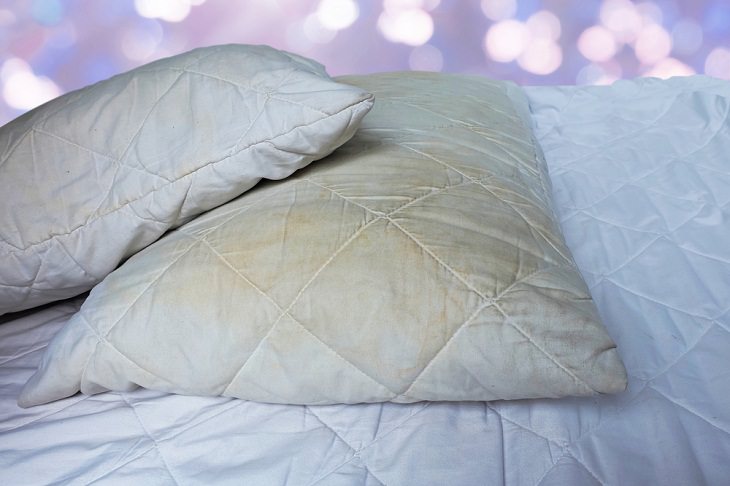
Experts say that, since pillows come in such close contact with our faces and tend to breed allergens, we should be washing them at least twice a year and even more if we live in a warm or humid climate. 
 
Washing our pillows at least twice a year will ensure that any unpleasant smells caused by sweat and saliva would be washed away. Moreover, you might not be aware that dust from the air, dead skin cells, dust mites, oil from our hair and skin, and other allergens cling onto our pillows when they aren’t cleaned over a long period of time. 
 
Before you go about washing your pillow, however, you must also test its viability. Is your pillow even worth washing? Or should it be replaced? If there are visible lumps on your pillows, then it’s a good sign they need to be replaced. Similarly, if your pillow is too flat, then it is time to swap it out. 
 
Also, while you may get rid of some of the existing bad odors after washing your pillows, some of them can be too stubborn. If you notice that the pillow still smells, even after a couple of washes, then it’s a good idea to get rid of it.

One proven way to test your pillow’s viability is to fold it in half and see if it stays folded while you're not holding it. If it remains folded, then it’s a sign that your pillow is probably way too old.
 
Handy tips on how to wash pillows 
 
Now that you know that you have to wash your pillows at least twice a year, the next question is how exactly do we wash them? Should we simply dump them in the washing machine? 
 
Here are some tips that will help you understand this better.

* The best way to wash pillows is in a front-loading machine. This is because pillows can float to the top of a top-loading washing machine where they don’t always get regularly wet. 
 
* Wash your pillows in warm water on the gentle cycle with a mild liquid detergent. Put it through an extra rinse and spin cycle on cold to get rid of any remaining detergent. 
 
* Wash your natural-fiber pillows on the delicate cycle in cold water, with a medium-to-low speed. 
 
* For feather pillows, it would be better to use powder detergent specifically designed for it as liquid detergent may leave a sticky residue. 
 
* You may need to wash one pillow at a time, depending on your pillow-to-washer size ratio. You don’t want the washing machine to be overloaded. 
 
* Roll your synthetic pillows like sausages and tie their ends and middle with rubber bands. This will ensure that the material inside doesn’t slide around too much in the machine. 
 
* Wash two pillows at a time if you can so that the balance of your washing machine is maintained. 
 
* Foam pillows can’t go in the washing machine since their movement makes the foam crumble. You can, however, hand wash them with cold water and detergent.

When it comes to drying pillows, the best method is to dry them on low heat, low tumble cycle, and repeat the cycle until all the moisture is gone. Removing your pillows from the machine when they are still damp runs the risk of mildew. Also, pillows have a tendency to clump when washed. Adding a couple of wool dryer balls will help redistribute the features and filling inside and also fluff them up nicely.

This is only for your information, kindly take the advice of your doctor for medicines, exercises and so on.   

https://gscrochetdesigns.blogspot.com. one can see my crochet creations  
https://gseasyrecipes.blogspot.com. feel free to view for easy, simple and healthy recipes    
https://kneereplacement-stickclub.blogspot.com. for info on knee replacement

Labels: , , , ,

Sunday, May 04, 2014

The Truth About Hand Washing and Bacteria

Are you a person that takes care to properly wash your hands? Well, if you answered yes then you are one of a worldwide minority of people who wash their hands. 

Surveys conducted in the United States suggest that while 2/3 of people do wash their hands, 95 percent of them are washing them wrong. In Britain, one experiment found that while 99 percent of the people tested admitted to washing their hands after using the facilities, a camera revealed that only 32% of the men and 64% of the women actually washed their hands with soap and water. 
 
You may be asking 'why did the test subjects lie?' Well the only viable answer to that question is that they sincerely believed that their hands weren't dirty enough to spread disease or infect. But after viewing these unexpected places that are dirtier than your toilet, we promise you will never not wash your hands (or lie about it) again!

washing hands
Keyboards: Your computer keyboard, yes the one you are typing on right now, can have up to 200 times more bacteria than a toilet seat. During a test of the equipment in a busy London office, microbiologists found a few keyboards that were so dirty that they were classified as 150 times the acceptable limit for bacteria. 
The most common bacteria found on the keyboards was Staphylococcus, which lives in our noses, throats, hair and skin. This is the bacteria that spreads when we touch our faces or sneeze into our hands, and fail to wash them after. Many of the items on this list are here because they are heavily ridden with staph. 
washing hands
Restaurant menus: Of course, with everyone touching, sneezing or coughing on the menu in front of them, it's no wonder that they usually carry 100 time more bacteria than a restaurant toilet seat. In fact, a large percentage of food-borne diseases like E. coli spread in restaurants when someone has contaminated hands. 
washing hands
Door knobs: It's not secret that hands are one of the dirtiest parts of the body, so when we touch a door knob, we are spreading all of our germs and then some onto the handle for the next unsuspecting person to pick up. 
washing hands
Your Pillow: Believe it or not, but your pillow is dirtier than a toilet seat! Dead skin cells, dust mites, spores, and other body secretions remain on the pillow you rest your head on every night. Therefore, it is important to change pillow cases once a week to ensure optimal hygiene. 
washing hands
Money: In a recent study in the United Kingdom, it was found that 26 percent of hands have fecal matter on them, as well as 14 percent of banknotes and 10 percent of credit cards. That means any of the money you handle could infect you with the common cold, the flu or even stomach poisoning. 
washing hands
Kitchen sponges: Everything that you make or do in the kitchen involves some form of bacteria. Yet what is meant to be a cleaning vehicle may actually be the dirtiest thing in your house! It has 10 million bacteria per square inch, making a quarter of million times dirtier than your toilet seat. 
washing hands
Cellphones: Your cellphone is packed with bacteria from your hands, face and everything in between. Cellphones are about 10 times dirtier than a toilet seat because we are touching them and spitting into them all day long.
ice
Ice: A recent study of fast food restaurants in the United States found that 70 percent of the ice served has more bacteria than the water in the toilet bowl. We'll take our soda lukewarm!
toothbrush
Toothbrush: Although it may only enter your mouth, your toothbrush is ridden with bacteria. Research has found that one tooth brush can harbor more than 100 million bacteria, including dangerous E. coli bacteria, which can cause diarrhea, and staph. Make sure you change your brush on a regular basis!
light switch
Light switch: The light switch can have up to 217 bacteria per square inch, which means that every time you turn the light on and off, you could be exposed to dangerous bacteria that has accumulated there over time. Make sure that you clean the light switches regularly at your home and office with bleach!

Remember, you should wash your hands thoroughly with antibacterial soap for a total of around 40 seconds to a minute. Make sure the soap reaches a rich lathery consistency before washing it off. If everyone washes their hands the way they should, it is predicted that over a million deaths from disease a year could be prevented. So for your good and the good of all, wash your hands responsibly!


PS- THIS IS ONLY FOR INFORMATION, ALWAYS CONSULT YOU PHYSICIAN BEFORE HAVING ANY PARTICULAR FOOD/ MEDICATION/EXERCISE/OTHER REMEDIES.
PS- THOSE INTERESTED IN RECIPES ARE FREE TO VIEW MY BLOG-
HTTP:GSEASYRECIPES.BLOGSPOT.COM/
FOR INFO ABOUT KNEE REPLACEMENT, YOU CAN VIEW MY BLOG-
HTTP://KNEE REPLACEMENT-STICK CLUB.BLOGSPOT.COM/

FOR CROCHET DESIGNS


HTTP://MY CROCHET CREATIONS.BLOGSPOT.COM

Labels: , , , , , , , , , , , ,