6 Exercises to Improve Hunchback
As the years go by, our bodies undergo many
changes, both external and internal. One of the most prominent is the
formation of a hunchback or kyphosis, which results from low physical
activity, improper posture, and osteoporosis. The weakening of the
muscles over the years leads to a worsening of the phenomenon that leads
to pain and to a non-aesthetic hump that can often undermine our
self-confidence and interfere with our normal functioning.
The following exercises will help you
improve your worsening posture by strengthening the chest muscles,
shoulders and back - all of which are important to support our upper
body, and treatment and prevention of kyphosis caused by an inactive
lifestyle.
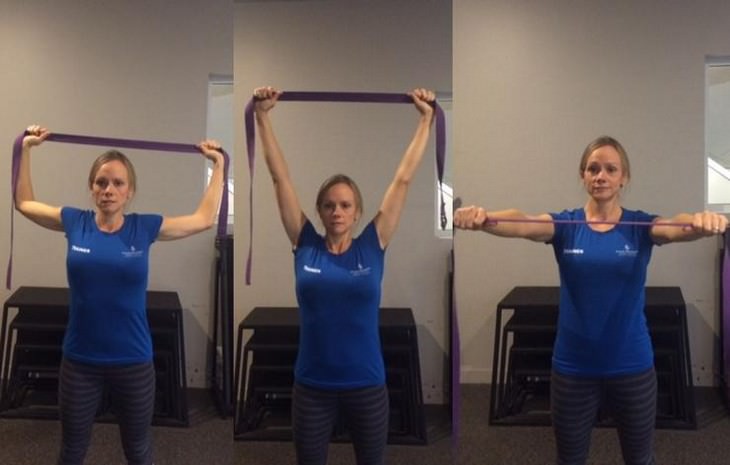
1. Shoulder stretch
When we lean forward for long hours, our shoulders bend in the same
direction because of the weakening of the chest muscles. The next
exercise will help you release these clenched muscles and keep your
shoulders in place. The instructions demonstrate the performance in a
standing position, but you can also do it while sitting.
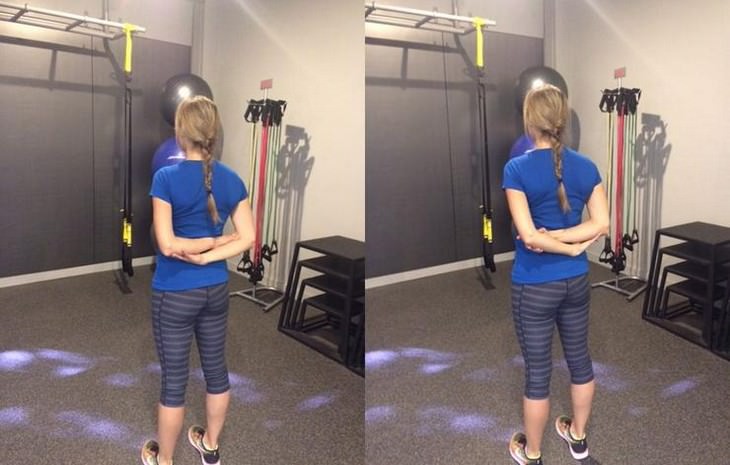
How to do the exercise:
Stand with your feet slightly apart at shoulder width, holding both
sides of a yoga strap, jump rope or belt.
Raise your hands and stretch them forward with your palms facing
down.
Make sure your arms are spread a little wider than your shoulders,
exhale and lift them up, palms facing forward.
When inhaling, lower your hands to shoulder height behind your head.
Repeat the exercise 3-5 times.
2. Shoulder blade stretch
When we spend most of our day with our shoulders slumped forward, this
movement can become a habit and cause us to slump forward regularly. The
purpose of the next exercise is to correct this problem by moving in a
way that counteracts shoulder slumping. The instructions demonstrate the
exercise in a standing position but it can be done while sitting as
well.
How to do the exercise:
Stand with your feet slightly apart at shoulder width.
Pull your
shoulder blades back and down toward your spine.
Bring your hands behind your back, then hold your right elbow with
your left hand and your left elbow with your right hand (so your right
hand is over your left hand).
If you find it difficult to do this, hold
your wrists or forearms instead of your elbows.
Lift your chest and push your shoulder blades back and down toward
your spine.
Take 3-5 deep breaths and then alternate between the hands (so that
the left hand is on top).
Raise your chest again and pull the shoulder blades back and down
toward your spine.
Take 3-5 deep breaths and finish the exercise.
3. Shoulder blade squeeze 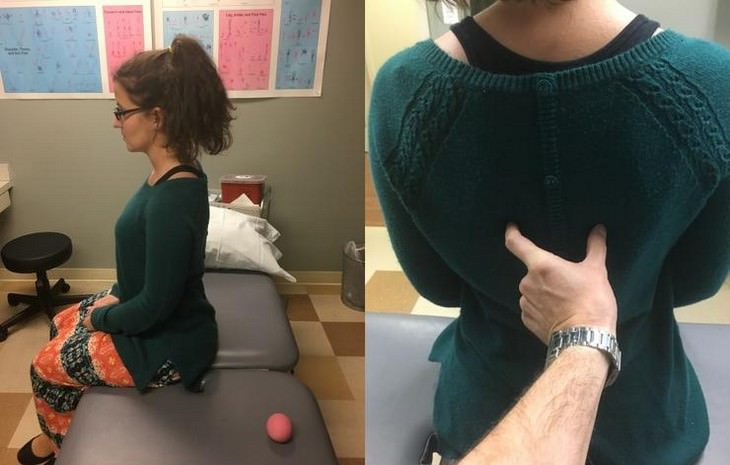
"This simple exercise will strengthen the scapular and shoulder blade
muscles, preventing your shoulders from slumping forward and make you
aware of your posture," said Jesse Lewis, a physiotherapist from the
United States.

How to do the exercise:
Sit with your back straight and press your shoulder blades together
as much as possible, as if you were holding a pencil between them.
When the shoulder blades are together, pull them back and down and
press firmly.
Stay in this position for 10 seconds and repeat 10 times.
It is recommended to do the exercise 3-4 times throughout the day to
see results quickly.
4. Soft tissue chest massage
Lewis says that the next move releases the chest muscles that are
strained because of the body's tendency to lean forward, what
characterizes the hunchback state. Its performance is essential because
when the chest muscles are stretched and tight, they pull the shoulders
forward creating an unnatural and harmful body position. Their release
will help both your posture and your hunchback, allowing you to look and
feel better.
How to do the exercise:
Use a tennis ball and place it next to your chest muscles, inside
the shoulder bone and under the collarbone.
Gently lean against a corner of a wall with your chest resting on
the ball and your face facing forward.
Press the ball lightly against the wall and massage the area
If you feel a sensitive spot, focus on it with the ball and massage
it until you feel a release.
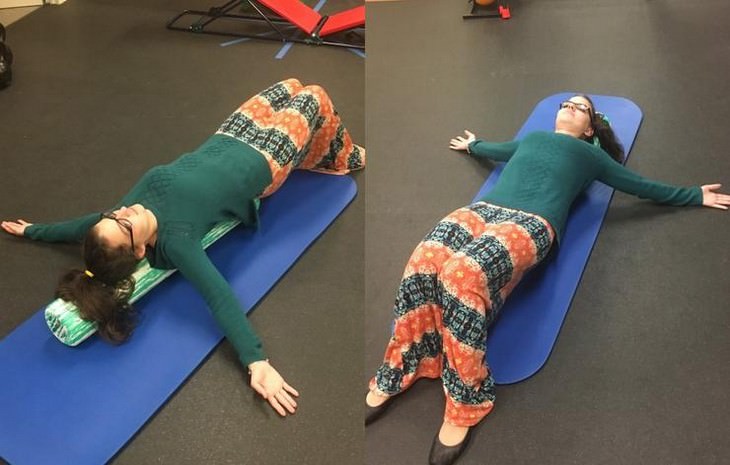
5. Laying down shoulder stretch
It’s recommended to do this exercise in the morning or before bed. The
move opens up the chest and releases and straightens the shoulders.
How to do the exercise:
Lie on a mattress or on the floor with your body stretched, your
knees bent and your feet slightly apart.
Stretch your arms to your sides to form the letter T.
You can
increase the stretch by placing a rolled towel or foam roll along your
spine.
Stay in this position for 30 seconds, lower your arms to your sides,
hold for 10 seconds and repeat the entire exercise again and again for
about 10 minutes.
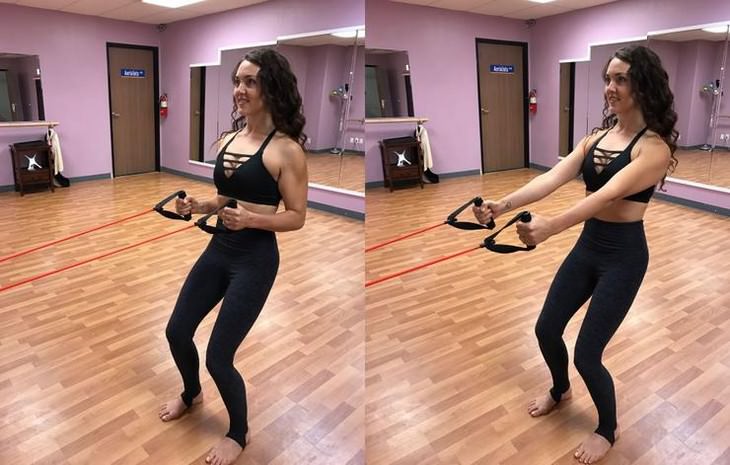
6. Resistance “rowing”
This is an excellent exercise for strengthening the upper back muscles,
which helps straighten the shoulders back to their natural position and
helps improve posture and prevents a hunchback from forming.
How to do the exercise:
Attach a resistance strap to a sturdy door handle or a heavy piece
of furniture at the height of your waist.
Grab the ends of the strap and
step back with your feet parallel and hip distance apart.
Bend your knees slightly while keeping your torso straight.
Start the exercise by bending the elbows behind your waist, pressing
the shoulder blades together.
Slowly return to your starting position and repeat the entire
exercise 10 more times.
When the exercise becomes too easy, perform 2-3 sets with 10
repetitions each, and to increase resistance, move away from the handle
or the furniture to which the strap is attached.
Remember, a hunched backs can cause pain and problems in our daily
functioning, but with a few simple exercises, it can be prevented and
even improved in a short time!