Fluoride vs. Fluoride-Free Toothpaste: Which Should You Choose?
In recent years, many chemicals that have
been in long use in the hygiene industry have been trialed and deemed
hazardous. Widely known examples are preservatives like parabens, other
ingredients like SLS, and many other chemicals. Some of them are
rightfully cast away and some are demonized in vain.
While using natural ingredients is almost always a healthy choice, even
they are sometimes deemed dangerous or unnecessary. Such is the case
with fluoride, giving rise to a market of fluoride-free toothpaste. We
set out to find all about fluoride.
What Is Fluoride?
It is a naturally occurring mineral found
in small and large bodies of water, both fresh and salt. It is a form of
the chemical element fluorine. In toothpaste, it is most beneficial in
quantities of 1,350 to 1,500 ppm (parts per million), for the prevention
and reduction of cavities on any type of natural tooth. Other uses for
it include the treatment of gingivitis (in a topical treatment) or
osteoporosis when taken internally. Dosage for the treatment of
osteoporosis should not exceed 20 mg per day.
It is widely considered safe for use in oral products and the low amount
added to drinking water in some countries. However, in high doses
(higher than 20 mg per day) is it possibly unsafe and may weaken bones
and muscles. In most cities in the US, fluoride is found in drinking
water in a concentration of 0.7 to 1.2 ppm.
It is safe for pregnant and breastfeeding women in doses of 10 mg per
day. For infants under the age of 6 months, it is advisable to use water
without fluoride when preparing a bottle of formula.
It is also safe for children when used in dental products. Children
shouldn't swallow it in high amounts, thus it is recommended to only
brush using a pea-size amount of paste and opt for a flavorless
toothpaste, which they're less likely to want to swallow.
Remineralization and demineralization
Did you know your teeth lose and gain
minerals from their enamel surface every single day? This all happens in
the mouth, and not through the bloodstream. Enamel loses minerals in
contact with acids in plaque. It gains minerals from foods and water
rich in calcium, fluoride, and phosphate. Fluoride will make your enamel
resistant to demineralization. Since this is a daily process, it is
recommended to use fluoride toothpaste every single day.
Fluorosis
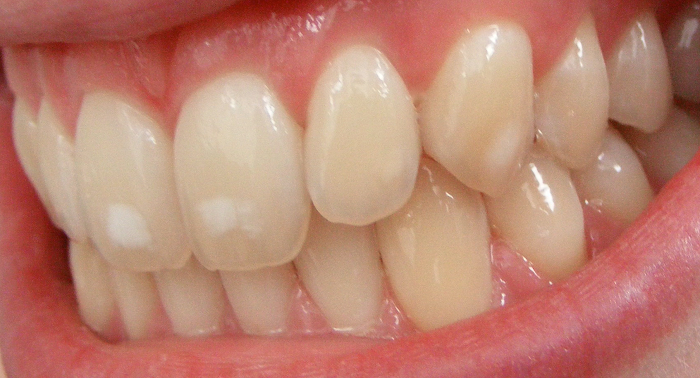
Fluorosis is the cosmetic result of
overexposure to fluoride. In mild cases, it will appear as small white
specs on the teeth, while in severe cases the stains will be large and
brown. Fluorosis happens to children up to the age of 8, when permanent
teeth form.
According to experts, "Fluorosis affects nearly one in every four
Americans ages 6 to 49". But only 2% of these cases will go noticed
since the majority of them are too mild to be seen by the naked eye.
Moreover, these numbers have been in decline since the 1980s.
As it is rather hard to fully remove, it is better to prevent it
altogether. If you're concerned about high amounts of fluoride in your
tap water you can contact local authorities to find out the exact
amounts, or simply drink filtered or bottled water, making sure that
your nutrition gives your sufficient minerals.
Foods that contain fluoride
Foods that contain fluoride will help the mineralization process. These
are:
Grapes - Any form of grape, including raisins and wine, contains
fluoride. The highest amounts are in raisins and white wine.
Vegetables: spinach and potatoes
Black tea
But your teeth require more than just fluoride to thrive. They also
benefit from calcium and phosphorus .
You'll find your calcium in dairy and green leafy vegetables, and your
phosphorus in meats, poultry, fish, nuts, beans, and dairy products.
The reasoning behind fluoride-free toothpaste
The main reason to use fluoride-free
toothpaste would be if you already receive more than enough fluoride
from your diet.
Otherwise, there isn't much reason in avoiding it.
In a conversation with The Scope, a health podcast from the University
of Utah Health, Dr. David Okano has even stated that toothpaste isn't
such a necessity. "You really do not need toothpaste to remove dental
plaque from your teeth. Purely the mechanical action of the toothbrush
bristles and your dental floss disrupts the dental plaque that
ultimately leads to tooth decay and gum disease." That is not to say
that toothpaste does not have its benefits. Dr. Okana mentioned
whitening ingredients and fresh breath, along with fluoride. "fluoride
will help reduce the demineralization process", he says, "which is the
first stage to tooth decay".
Regarding fluoride-free toothpaste, however, Dr. Okano clearly says that
the only benefits they can offer are a temporarily fresh breath, but in
no way will they prevent tooth decay as fluoride does.