Polyendocrine Metabolic Ovarian Syndrome (PMOS)
Polyendocrine metabolic ovarian syndrome (PMOS) is a common condition that affects your hormones. It causes irregular menstrual periods, excess hair growth, acne and infertility. Treatment for PMOS depends on if you wish to become pregnant. People with PMOS may be at higher risk for certain health conditions, like diabetes and high blood pressure.
What Is Polyendocrine Metabolic Ovarian Syndrome (PMOS)?
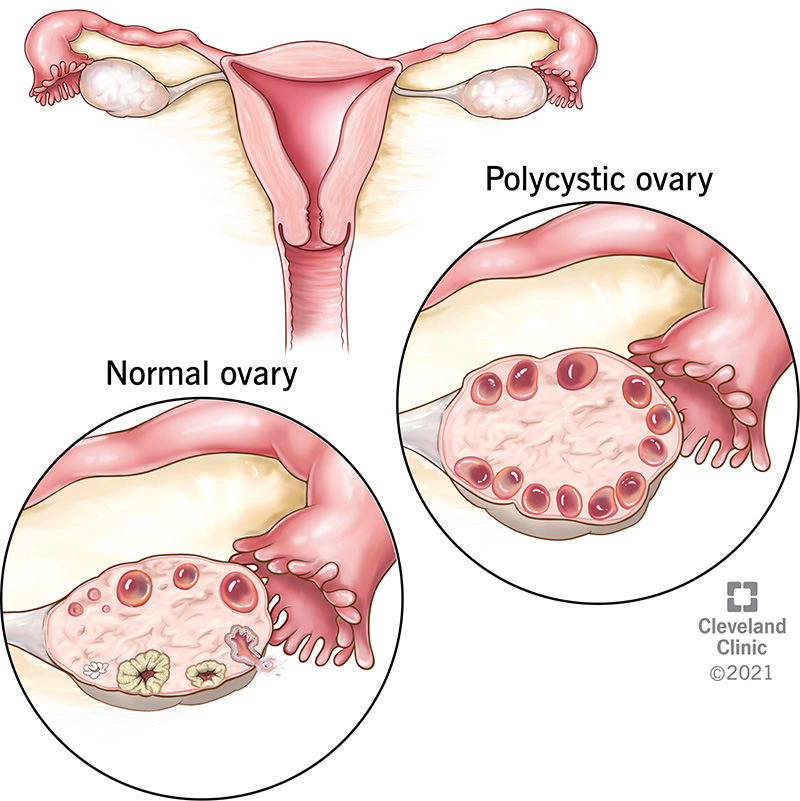 PMOS can involve enlarged ovaries with many small cysts around the edge.
Polyendocrine metabolic ovarian syndrome (PMOS) — formerly known as polycystic ovary syndrome (PCOS) — is a hormonal imbalance that occurs when your ovaries (the organ that produces and releases eggs) create excess hormones. If you have PMOS, your ovaries produce unusually high levels of hormones called androgens. This causes your reproductive hormones to become imbalanced. As a result, people with PMOS often have irregular menstrual cycles, missed periods and unpredictable ovulation. Small follicle cysts (fluid-filled sacs with immature eggs) may be visible on your ovaries on ultrasound due to lack of ovulation (anovulation). However, you don’t need to have cysts on your ovaries to have PMOS.
PMOS is one of the most common causes of female infertility. It can also increase your risk of other health conditions. Your healthcare provider can treat PMOS based on your symptoms and if you wish to become pregnant.
What age does PMOS start?
Females can get PMOS any time after puberty. Most people are diagnosed in their 20s or 30s when they’re trying to get pregnant. You may have a higher chance of getting PMOS if you have obesity or if other people in your biological family have PMOS.
How common is PMOS?
PMOS is very common — up to 15% of females of reproductive age have PMOS.
Symptoms and Causes
What are the signs of polyendocrine metabolic ovarian syndrome (PMOS)?
The most common signs and symptoms of PMOS include:
- Irregular periods: Abnormal menstruation involves missing periods or not having a period at all. It may also involve heavy bleeding during periods.
- Abnormal hair growth: You may grow excess facial hair or experience heavy hair growth on your arms, chest and abdomen (hirsutism). This affects up to 70% of people with PMOS.
- Acne: PMOS can cause acne, especially on your back, chest and face. This acne may continue past your teenage years and may be difficult to treat.
- Obesity: Between 40% and 80% of people with PMOS have obesity and have trouble maintaining a weight that’s healthy for them.
- Darkening of the skin: You may get patches of dark skin, especially in the folds of your neck, armpits, groin (between the legs) and under your breasts. This is known as acanthosis nigricans.
- Cysts: Many people with PMOS have ovaries that appear larger or with many follicles (egg sac cysts) on ultrasound.
- Skin tags: Skin tags are little flaps of extra skin. They’re often found in your armpits or on your neck.
- Thinning hair: People with PMOS may lose patches of hair on their head or start to bald.
- Infertility: PMOS is the most common cause of female infertility. Not ovulating regularly or frequently can result in not being able to conceive.
Can I have PMOS but not have any symptoms?
Yes, it’s possible to have PMOS and not have any symptoms. Many people don’t even realize they have the condition until they have trouble getting pregnant or are gaining weight for unknown reasons. It’s also possible to have mild PMOS, where the symptoms aren’t severe enough for you to notice.
What is the main cause of PMOS?
The exact cause of PMOS is unknown. There’s evidence that genetics play a role. Several other factors, most importantly obesity, also play a role in causing PMOS:
- Higher levels of androgens: High androgen levels prevent your ovaries from releasing eggs, which causes irregular menstrual cycles. Irregular ovulation can also cause small, fluid-filled sacs to develop on your ovaries. High androgen also causes acne and excess hair growth in females.
- Insulin resistance: An increase in insulin levels causes your ovaries to make and release male hormones (androgens). Increased male hormones suppress ovulation and contribute to other symptoms of PMOS. Insulin helps your body process glucose (sugar) and use it for energy. Insulin resistance means your body doesn’t process insulin correctly, leading to high glucose levels in your blood. Not all individuals with insulin resistance have elevated glucose or diabetes, but insulin resistance can lead to diabetes. Having overweight or obesity can also contribute to insulin resistance. An elevated insulin level, even if your blood glucose is normal, can indicate insulin resistance.
- Low-grade inflammation: People with PMOS tend to have chronic low-grade inflammation. Your healthcare provider can perform blood tests that measure levels of C-reactive protein (CRP) and white blood cells, which can indicate the level of inflammation in your body.
Can PMOS cause a miscarriage?
Having PMOS may increase your risk for certain pregnancy complications, although most people with PMOS are able to successfully carry a pregnancy. Other complications of PMOS related to pregnancy include increased risk of:
- Gestational diabetes, preeclampsia and high blood pressure.
- Preterm birth (birth before 37 weeks of pregnancy) or C-section delivery due to obesity, diabetes or high blood pressure.
Diagnosis and Tests
How is polyendocrine metabolic ovarian syndrome (PMOS) diagnosed?
In most cases, your healthcare provider can diagnose PMOS after an examination and discussing your symptoms. They may order blood tests or perform an ultrasound to help with the diagnosis.
Your healthcare provider will:
- Talk to you about your symptoms and medical history.
- Ask about your biological family’s medical history.
- Take your weight and blood pressure.
- Perform a physical exam, looking specifically for excess facial hair, hair loss, acne, discolored skin and skin tags.
- Perform a pelvic exam to look for other causes of abnormal bleeding.
- Order blood tests to check hormone levels and glucose levels.
- Perform a pelvic ultrasound to look at your ovaries, check the thickness of your uterine lining and look for other causes of abnormal bleeding.
What are the three symptoms to diagnose PMOS?
Typically, healthcare providers diagnose PMOS if you have at least two of the three symptoms:
- Irregular or missed periods. Some people with PMOS have very heavy bleeding when they do have a period.
- Signs of excess androgens such as acne or excessive hair growth. Or a blood test confirming high androgen levels.
- Enlarged ovaries or polycystic appearance of ovaries on ultrasound. Many people don’t develop cysts.
Management and Treatment
How is PMOS treated?
Your healthcare provider will determine treatment based on your symptoms, medical history and other health conditions, and if you want to get pregnant. Treatments can include medications, lifestyle changes or a combination of both.
If you don’t plan to become pregnant, treatments include:
- Hormonal birth control: Options include birth control pills, patches, shots, a vaginal ring or an intrauterine device (IUD). Hormonal birth control helps to regulate your menstrual cycle, some forms will also improve acne and help with excess hair growth.
- Insulin-sensitizing medicine: Metformin is a drug used to treat diabetes. It works by helping your body process insulin. Once insulin is under control, some people with PMOS see improvements in their menstrual cycles.
- Medications to block androgens: Some medications can block the effect of androgens. This helps control acne or hair growth. Talk to your healthcare provider about whether such treatment is right for you.
- Lifestyle changes: Eating a nutritious diet and maintaining a body weight that’s healthy for you can have a positive effect on insulin levels.
If you want to become pregnant now or in the future, treatment for PMOS includes:
- Drugs to induce ovulation (releasing an egg): A successful pregnancy begins with ovulation. Certain drugs have been proven to induce ovulation in people with PMOS. The medications clomiphene and letrozole are taken orally, while gonadotropins are given by injection.
- Surgery: A surgical procedure can help restore ovulation by removing tissue in your ovaries that produces androgen hormones. With newer medications available, surgeons rarely perform this procedure.
- In vitro fertilization (IVF): This is an option for people with PMOS when medication doesn’t help with ovulation. Your provider fertilizes your egg with your partner’s sperm in a lab before transferring it to your uterus.
Does PMOS ever go away?
While there isn’t a cure for PMOS, your healthcare provider can help you manage your symptoms. The effects of PMOS may change over time so that you become less aware of the condition. However, there isn’t a treatment that permanently cures it.
Can you be in menopause and have PMOS?
The hormone changes you experience during menopause often resolve the symptoms of PMOS. It doesn’t matter how old you are — if your symptoms affect your quality of life, talk to your healthcare provider.
Can I get pregnant if I have PMOS?
Yes, you can get pregnant if you have PMOS. PMOS can make it hard to conceive while also increasing your risk for certain pregnancy complications, but many people with PMOS do get pregnant on their own. Your healthcare provider will work with you to develop a treatment plan to help you ovulate. Your treatment plan could include medication or assisted reproductive technologies like in vitro fertilization (IVF).
Talk to your healthcare provider to make sure you understand your treatment plan and how you can increase your chances of a healthy pregnancy.
Outlook / Prognosis
Does PMOS put me at risk for other health conditions?
Research shows PMOS may raise your risk for several health conditions, including:
- Diabetes.
- High blood pressure.
- Cardiovascular disease.
- Endometrial hyperplasia.
- Endometrial cancer.
- Sleep disorders such as sleep apnea.
- Depression and anxiety.
Talk to your healthcare provider to make sure you understand your risk for developing these conditions.
Prevention
Can I prevent PMOS or its effects?
There’s no proven way to prevent PMOS, but you can take small steps to reduce your symptoms. For example, eating nutritious foods, exercising regularly and managing a healthy weight for your body can help you avoid the effects of PMOS.
Living With
How do I cope with PMOS?
One of the best ways to cope with PMOS is to maintain a healthy bodyweight, eat nutritious foods and exercise regularly. These changes to your lifestyle can affect hormone levels, in turn regulating your menstrual cycle and easing your symptoms.
If excess hair growth or acne is hurting your confidence, cosmetic treatments or working with a dermatologist might be helpful.
Finally, if you’re trying to conceive and have PMOS, know that you’re not alone. Nearly 1 in 10 people have PMOS. Your healthcare provider will work with you to help you get pregnant if that’s what you want.
When should I see my healthcare provider?
Contact a healthcare provider if you suspect you have PMOS. Some signs that may point to PMOS include:
- An irregular menstrual cycle. Menstrual cycles are often long (longer than 40 days between periods).
- Excess hair growth, acne or other signs of excess androgen hormones.
- Difficulty getting pregnant.
Additional Common Questions
Is PMOS genetic?
Researchers are learning more about the causes of PMOS. However, some evidence shows PMOS has a genetic or hereditary component. This means if your biological parent has PMOS, you may be more likely to have it, too.
What hormones affect PMOS?
People with PMOS have a hormonal imbalance that disrupts their menstrual cycle, ovulation and possibly, conception. These hormones are like an intricate web and the function of your reproductive system relies heavily on its balance. The hormones that play a role in PMOS are:
- Androgens (like testosterone and androstenedione).
- Luteinizing hormone (LH).
- Follicle-stimulating hormone (FSH).
- Estrogen.
- Progesterone.
- Insulin.
What's the difference between PMOS and endometriosis?
PMOS and endometriosis are different conditions, but both can cause ovarian cysts and infertility. Endometriosis is a condition where the lining of your uterus (endometrium) grows in other places like your ovaries, vagina or fallopian tubes. It typically causes pelvic pain or severe menstrual cramps. People with PMOS have irregular periods, unpredictable ovulation and other physical side effects due to excess male hormones.
A note from Cleveland Clinic
PMOS is a common condition that affects your menstrual cycle and causes other symptoms. Talk to your healthcare provider about your symptoms if you suspect you have PMOS. Lifestyle changes and medical treatments can help you manage the symptoms, lower your risk of other health conditions and help you get pregnant (if pregnancy is your goal).