Tuesday, November 02, 2021

10 Of the Worst Misconceptions About Breast Cancer

We all get some things wrong, and that’s usually fine, as the majority of our misconceptions are inconsequential. But some of our false beliefs have serious risks. It is due to their potential to cause harm that health myths are so important to tackle.
In the past year alone, 2.3 million women received a breast cancer diagnosis. Given that breast cancer is the most prevalent type of cancer in the world, it’s especially important for everyone, and we mean everyone, to know the most correct and up-to-date information about it. In this article, we clear 10 of the most widespread misunderstandings about this dangerous disease. 
 
Myth 1. Antiperspirants, underwire bras, and carrying a phone in your bra or shirt pockets all increase the risk of breast cancer
Breast Cancer Myths underwire bra
You may have heard on TV that carrying a phone in your bra or shirt pockets raises your risk of breast cancer. Deodorants and underwire bras have also been accused of tampering with the lymph nodes and causing toxic chemicals to build up in the breasts. All of these claims have no evidence to support them. 
Moreover, there is a study from 2014 that looked at the impact of bra wearing on breast cancer occurrence in 1,500 women that disproved the claim that any type of bra has an impact on one’s breast cancer risk. 
 
Likewise, there is no link between breast cancer and antiperspirants, and the overblown rumor about underarm antiperspirants causing cancer comes from studies that found aluminum in the breast tissue of women who used antiperspirants that contain aluminum or from test-tube studies in mice and hamsters. 
 
However, the presence of aluminum is not related to human breast cancer in any way, as shown by a review study from 2008 as well as a recent paper from 2021. Therefore, there’s no reason for you to stay away from antiperspirants, bras, and your smartphone in your jacket pocket if you’re worried about breast cancer. 
 
Myth 2. People with no family history of breast cancer will never get the disease.
While it is true that some types of breast cancer can be passed from parent to child, 90-95% of patients with this condition have no family history of the disease. Having a parent or distant relative who has had breast cancer, prostate cancer, or ovarian cancer is just one of the many risk factors of the disease - and it’s not even the biggest risk factor scientists know of. 
 
As Dr. Michael Zeidman, an assistant professor of breast surgery at Mount Sinai in New York City, told Medical News Today, “the most significant risk factor for developing breast cancer is being a woman. In the United States, 1 in 8 women will develop breast cancer over their lifetime.” 
 
The sad truth is that breast cancer is unpredictable and could develop in anyone, which is why every woman past age 40 is recommended to have a yearly mammogram. Those with a family history of cancer may need to start yearly screenings even earlier, so if that’s you, consult your doctor. 
 
Myth 3. Mammograms speed up the spread of breast cancer. 
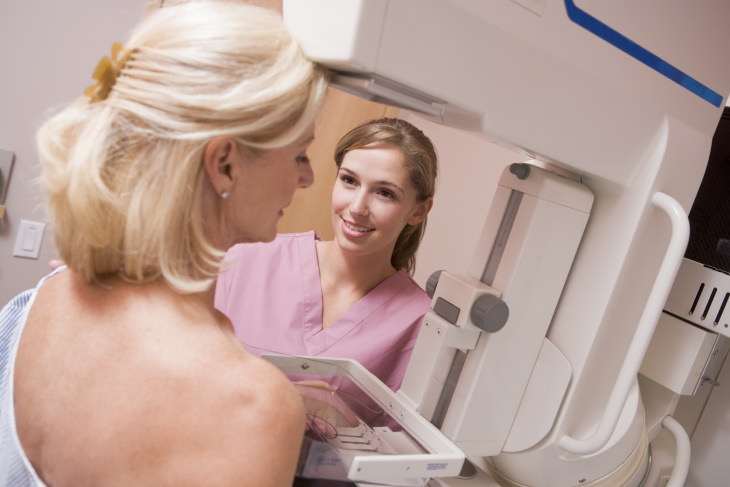
Breast Cancer Myths Mammogram
A mammogram is an or X-ray image of the breast, and it’s the most effective way to detect breast cancer early on. Patients who undergo the procedure are often concerned that the compression or radiation from the mammogram can make breast cancer spread to surrounding tissues. 
 
However, there is no evidence to confirm this claim. The National Cancer Institute assures patients, “Mammograms require very small doses of radiation. The risk of harm from this radiation exposure is extremely low.” Certainly, the potential benefit of early breast cancer detection far outweighs that minimal radiation exposure. 
 
Myth 4. Sugar can spawn or speed up the spread of breast cancer. 
Breast Cancer Myths candy
This myth is a bit more complicated. It comes from the correct assumption that cancer cells consume more sugar (glucose) than healthy cells. However, this doesn’t mean that sugar causes cancer or makes it spread faster. Glucose is simply the only fuel available to human cells. 
 
All cells absorb sugar from the blood and use it to sustain and develop, and cancer cells tend to develop faster, so they use up more glucose. There’s no direct and convincing evidence between sugar consumption and breast cancer, in particular. 
 
But don’t get us wrong - we’re not saying that you should go to town on sweets from now on because there’s no direct link between sugar and cancer. Excessive sugar consumption, especially from processed foods or added sugar, still increases inflammation, causes insulin spikes, and raises one’s risk of heart disease and diabetes. Diabetes, in particular, is linked with a higher risk of aggressive types of breast cancer, so so we still recommend consuming as little of it as you can. 

Myth 5. An injury to the breast causes breast cancer. 

Doctors assure that there is no link between breast injuries and breast cancer. However, a prior injury can make your doctor schedule a biopsy after a mammogram. This happens because signs of injury can look like cancer on an X-ray. As Dr. Zeidman pointed out in his statement, injuries “can cause changes in the breast that may mimic breast cancer on imaging. This process is called ‘fat necrosis,’ and it can look like an irregular mass with jagged edges on a mammogram, much like the appearance of a new breast cancer.” A biopsy is needed to distinguish between fat necrosis and breast cancer.

Myth 6. Every lump in the breasts is breast cancer.
Doctors are urging everyone to conduct a self-exam once a month and check for any lumps or masses. If you notice a persistent lump, schedule a meeting with your physician as soon as you can. In the vast majority of cases, a breast lump turns out to be something else, like a swollen lymph node or a cyst, for example, and not breast cancer. However, it’s still important to get a professional opinion, and some of these non-cancerous causes need treatment too. Long story short - when it comes to suspicious lumps, you're better off safe than sorry.
 
Myth 7. All types of breast cancer manifest themselves through a lump.

Self-exams are important and helpful, but not noticing a lump or anything unusual during a self-exam doesn’t mean you can skip your yearly mammograms. First of all, breast cancer doesn’t always feel like a lump in the breast. Some advanced breast cancers that spread to other parts of the body may not be noticeable during a self-exam. 
 
Second, early-stage breast cancer may not be noticed by simply feeling with your fingers. This is exactly why mammograms and other screenings exist - to catch these more dangerous and early-stage cancers as soon as possible. 
 
Myth 8. Only middle-aged and older women can have breast cancer.
Aging is a known risk factor of breast cancer: the average breast cancer patient is 61 years old. But the risk of developing the disease before age 40 is higher than you think. Around 5% of new breast cancer patients are in their 30s, 20s, and even in their teens. However, most of these early diagnoses are indeed linked to a family history of breast cancer, which is why those who have a genetic proclivity towards developing cancer should consider starting regular screenings at a younger age. 
 
Myth 9. IVF and abortions increase one’s risk of breast cancer.
Estrogen is a sex hormone that controls the female reproductive system, and doctors know that estrogen plays some role in breast cancer development too. Both in-vitro fertilization (IVF) treatments and abortions change the levels of estrogen in the body, which is why this myth that they increase the risk of breast cancer came to exist. 
 
There are over 30 years of research suggesting that IVF doesn’t contribute to breast cancer. Likewise, several large studies came to the same conclusion regarding abortions, including a massive study in Denmark that included 1.5 million women. All this evidence suggests that both procedures do not raise one’s risk of breast cancer. 
 
Myth 10. Men can’t have breast cancer.
The vast majority of breast cancer patients are female. But make no mistake, men can also have this condition, especially those with a family history of breast cancer. In 2017, for example, the Centers for Disease Control and Prevention (CDC) recorded 2,300 new male breast cancer cases, including 500 deaths, in the United States alone. 
 
Since many men are unaware that they can get breast cancer and often get diagnosed much later than women, the mortality rate of male breast cancer is higher than that of women. For this reason, self-examinations are equally important for both men and women. Make sure to point out any pain or lumps in the chest area to your doctor’s attention, no matter your physiological sex.


This is only for your information, kindly take the advice of your doctor for medicines, exercises and so on.   

https://gscrochetdesigns.blogspot.com. one can see my crochet creations  
https://gseasyrecipes.blogspot.com. feel free to view for easy, simple and healthy recipes    
https://kneereplacement-stickclub.blogspot.com. for info on knee replacement


Labels: , , , , , , , , , , , ,

Sunday, December 23, 2018

13 Things Your Breasts Won’t Tell You

Self exam? Here’s what to really look for.
 

Do you need to schedule a formal, sit-down monthly breast self exam to inspect every single centimeter? No. Experts now recommend against routine self exams, saying that they create unnecessary anxiety and don’t actually lower the risk of dying from breast cancer. But you should know what the red flags are: any lump or thickening in the breast or underarm area; swelling, warmth or redness; a change in size or shape, dimpling or puckering of the skin; an itchy, scaly sore or rash on the nipple; nipple discharge that starts suddenly; or new pain that doesn’t go away.

Lumps may freak you out, but they’re usually not cancer.
In fact, 80 percent of lumps biopsied turn out not to be cancer—so don’t panic if you uncover one while you’re showering or getting dressed. Odds are it’s a kind of cyst. Fibrocystic breast changes—in which breast tissue is overreacts to hormones, which results in lumps and cysts—affect 50 to 60 percent of women.

Of course, the worst thing you can do is ignore it and hope it’ll just go away. You should always see your doctor any time you spot anything abnormal.


Experts, make up your minds about mammograms already!
In 2009, the United States Preventive Services Task Force came out with controversial guidelines about delaying mammograms to age 50 (from 40) and getting them every two years (instead of annually). Experts who think women should still get annual mammograms starting at age 40 believe that delaying the screenings would miss too many cancers and lead to poorer outcomes among those eventually diagnosed. Those who support the new guidelines believe that too-early mammograms lead to too many false positive results (and corresponding over-treatment, including follow-up scans and biopsies), as well as over-treatment of breast cancers that may not actually be life threatening. What you decide to do may come down to how risk-averse you are, what your health insurance will cover, and what your doctor thinks.


85 percent of you wear the wrong size bra.
The right undergarments can make you look thinner, improve your posture, and ease pain in your back, neck, and shoulders. You need to toss bras after they're well worn, or if you gain or lose weight. Plus you should get measured for ones that provide the right support. Some signs of a proper fit: the band in the back is snug, and doesn’t ride up; and your breasts fit within—instead of bulging over—the cup.


It’s normal for one of us to be larger than the other.
We’re not as symmetrical as you may think. About half of women have a pretty notable difference in size, with the left breast often larger than the right. Make sure your bra fits the bigger breast, and use a pad to help fill out the smaller one. If a change in size is sudden, let your doctor know—it could be the sign of an infection, lump, or cyst.


Man's obsession with breasts? Blame evolution.
Our main reason for existence is to nourish and feed babies. When a baby nurses, your brain becomes flooded with the “bonding hormone” oxytocin, which is designed to get you to focus on taking care of your babe. Now, some researchers think a similar mechanism designed to strengthen romantic relationships is at work between you and your partner. Oxytocin is also released when a partner stimulates your breasts, which causes you to bond with and feel more affection for him.


Slimming down may reduce your risk of breast cancer by half.
A study published earlier this year found that overweight postmenopausal women who shed just 5 to 10 percent of their body weight slashed their breast cancer risk in half. (Fat can raise levels of the hormone estrogen, which is known to fuel certain kinds of breast cancer). What’s more, another recent study found that women who are overweight when diagnosed with breast cancer have a higher risk of recurrence than thinner women.

Exercise is also a boon for breasts: A Cancer study released this summer found that women who worked out 10 to 19 hours a week had a 30 percent reduced risk of breast cancer. Not only can exercise reduce body fat, it also lowers levels of stress and inflammation, which can affect how your immune system treats cancer cells.


Skip that second glass of wine to reduce cancer risk.
There’s no doubt that drinking is linked to an increased risk of breast cancer, which is why experts recommend limiting your intake to one glass a day and even less if you have a higher breast cancer risk (due to family history or other reasons). A study in the Journal of the American Medical Association published last fall found that women who had just a few cocktails a month had a 15 percent higher risk of cancer; those who imbibed more (the equivalent of two drinks a day) had a 51 percent greater chance of developing breast cancer over the next few decades.


Increase your vitamin D intake and you'll decrease your risk of breast cancer.
Many of you have too-low levels of this vitamin, which is a shame considering that it is linked to a reduced risk of breast cancer. One study presented at a meeting of the American Society of Clinical Oncologists a few years ago found that breast cancer patients deficient in D were 94 percent more likely to have their cancer spread than those with normal levels and a paper published earlier this year found that women diagnosed with breast cancer with higher vitamin D levels had better survival rates. The RDA for vitamin D is 600 IU, but some experts recommend getting 1,000 IU or even more. Ask your doctor and consider taking a supplement—it’s hard to get that much from your diet alone.


Not sleeping? You're increasing your cancer risk.
More research points to a correlation between not sleeping at night and a higher cancer risk. A study of women in the Danish Army, published this spring in Occupational and Environmental Medicine, found that those who worked at night had a 40 percent increased risk of breast cancer compared to those who didn’t. It's likely the hormone melatonin to blame, which regulates sleep cycles and may also affect estrogen levels. Sleep deprivation at night may also suppress the immune system, allowing cancer cells to grow.


Cigarettes not only increase cancer risks—they make breasts less perky.
Though cigarettes do raise the risk of breast cancer slightly, they’re especially harmful among heavy-duty smokers who start early, a study published last year in the Archives of Internal Medicine found. Women who smoked at least a pack a day for at least 30 years had a 28 percent higher breast cancer risk. Chemicals found in cigarettes also break down elastin, the protein that keeps us nice and perky. One study led by a University of Kentucky plastic surgeon a few years ago found that smoking, age, and the number of a woman’s pregnancies are the main factors that affect sagging.


This is what menopause does to your breasts.
Hot flashes get all the attention, but we go through a lot during menopause and the years leading up to it too. Breast tenderness—the kind you’re used to getting around your period and early on in pregnancy—can strike and worsen. We may start leaking fluid because hormone fluctuations can raise levels of the hormone prolactin (the same one that triggers us to start churning out milk after you have a baby). Your milk ducts can get clogged during this transitional time as well, which can cause green or black discharge.  And break out the tweezers: You may start to find errant hairs on the nipples now. (Waxing, lasering, and shaving work too.)


Want to know why we sag as you age?
Over time, collagen and elastin breaks down and we can’t help but start to let loose. Also, hormonal changes cause us to contain more fat—soft, spongy and prone to drooping—with age. There’s not a lot you can do about it, short of wearing a more supportive, well-fitting bra or opting for a breast lift. (Did you know more than 90,000 such procedures were performed last year? That’s a 72 percent increase since the year 2000.) 


 THIS IS ONLY FOR INFORMATION, ALWAYS CONSULT YOU PHYSICIAN BEFORE HAVING ANY PARTICULAR FOOD/ MEDICATION/EXERCISE/OTHER REMEDIES.                                                                                
 PS- THOSE INTERESTED IN RECIPES ARE FREE TO  VIEW MY BLOG-                                                                                           https://gseasyrecipes.blogspot.com/                                                                                                                                                                             FOR INFO ABOUT KNEE REPLACEMENT, YOU CAN VIEW MY BLOG-                                               
     https:// kneereplacement-stickclub.blogspot.com/                                                                                     
  FOR CROCHET DESIGNS                                                                                                                                                                                                                                 https://gscrochetdesigns.blogspot.com


Labels: , , , , , , , , , , , , , , ,